
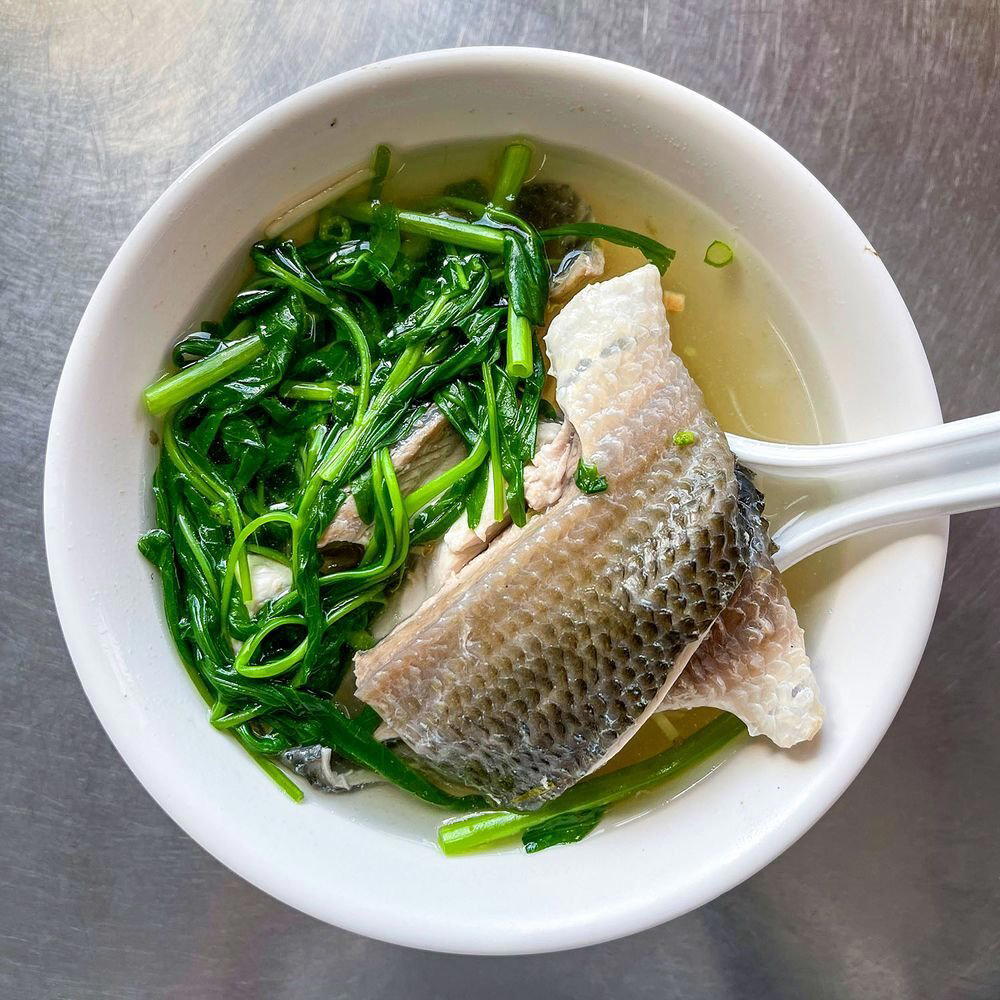
Lien Wu Chiao Lamb Soup sits in Xinhua District, Tainan, earning a Michelin Plate in 2025 for its no-frills lamb soup tradition.
Pearl is the En Primeur Club membership app — saves, bookings, and concierge access live there. Same editors, same standards.
- Address
- No. 361號, Zhongzheng Rd, Xinhua District, Tainan City, Taiwan 712
- Phone
- +886 937 789 004
- Directions
- Get directions
 Saves & bookings on Pearl
Xinhua and the Geography of Tainan's Specialist Stalls
Tainan's food reputation rests largely on the old city centre, where temple-flanked lanes and night-market clusters draw most of the attention. But some of the city's most committed single-dish operations sit further out, in working districts where the clientele is almost entirely local and the cooking has no reason to perform for anyone. Xinhua District, roughly 20 kilometres northeast of the historic core, is that kind of place. The market town atmosphere is functional rather than picturesque, and the food stalls that anchor it have developed over decades in response to what the surrounding community actually eats. Lien Wu Chiao Lamb Soup belongs to that tradition, operating on Zhongzheng Road in a district where the lamb soup ritual is embedded in daily life in a way it never quite is in the tourist-facing parts of the city.
What a Michelin Plate Means at This Price Point
The 2025 Michelin Plate recognition places Lien Wu Chiao Lamb Soup in a specific bracket of Taiwanese food culture: street-level and small-eats operations that Michelin has increasingly incorporated into its annual coverage. A Michelin Plate signals consistent quality and inspectors' attention without implying the tasting-menu format or formal service tier associated with starred restaurants. At the single-dollar price range, the award functions as an endorsement of cooking precision and ingredient consistency rather than of luxury. It is the same logic that has drawn Michelin attention to hawker stalls in Singapore and noodle shops in Bangkok, and it reflects a genuine shift in how the guide has positioned itself across Asia. The comparison is instructive: Arunwan in Bangkok and Bokkia Tha Din Daeng in Bangkok sit in a comparable tier of Michelin-recognised small-eats culture, where recognition is built on repetition and reliability rather than on invention.
Within Tainan itself, the small-eats category at the $ price tier is well represented. A Xing Shi Mu Yu operates in a similar framework, as does Bei Gang Tsai Rice Tube in Kaohsiung's Yancheng district, where the same logic of a focused, affordable, hyper-local operation applies. These venues do not compete with Tainan's more formal options, which include European contemporary restaurants at the $$$ tier, but they represent a parallel track of quality that the city takes seriously.
The Ritual of the Lamb Soup Bowl
Lamb soup in southern Taiwan follows a specific set of customs that differ from the beef soup traditions more commonly associated with Tainan's food identity. Where beef soup, particularly the clear-broth style served at dawn near the beef markets, is built around speed and a particular relationship between the kitchen and the butchers supplying it each morning, lamb soup operates on a slower rhythm. The broth is typically long-cooked, the cuts vary by what the animal offers rather than being standardised to a single premium portion, and the meal is structured to sustain rather than to impress.
At a specialist operation like this one, the ritual is embedded in how you order and how the meal arrives. Diners at lamb soup counters in Taiwan typically receive a bowl of broth alongside rice or bread for dipping, and the expectation is that you stay with the bowl rather than rushing through it. There is no tasting-menu pacing, no course structure, and no obligation to order multiple dishes. The single bowl is the point.
The contrast with Tainan's more formal end is worth stating plainly. JL Studio in Taichung and logy in Taipei represent one direction of Taiwanese fine dining, where multi-course precision and international technique are the frame. Lien Wu Chiao Lamb Soup represents a different but equally considered tradition, where the discipline is in the broth and the sourcing, not in the plating.
Eating Your Way Around Xinhua's Small-Eats Circuit
Xinhua rewards the kind of slow, district-by-district eating that Tainan's food culture is built for. A meal at the lamb soup counter pairs naturally with the kind of morning or midday circuit that takes in several small operations in sequence. For those building a day around the area, Tainan's broader small-eats network offers useful reference points: A Cun Beef Soup on Baoan Road and A Hai Taiwanese Oden represent the city's other dominant single-dish traditions, while A Ming Zhu Xing on Baoan Road and A Wen Rice Cake extend the picture of what the $ tier looks like when it is taken seriously.
For context on where lamb soup sits within Taiwan's wider restaurant spectrum, it helps to note that Michelin's Taiwan coverage now spans from hawker-level operations like this one through to venues such as GEN in Kaohsiung and Akame in Wutai Township, where indigenous ingredients and contemporary technique define a different kind of dining. The range reflects the breadth of what Taiwan's food culture actually contains, and it makes the case for treating the Michelin Plate at a lamb soup stall as a legitimate credential rather than a consolation category.
Planning Your Visit
The restaurant is located at No. 361, Zhongzheng Road, Xinhua District, Tainan City. Xinhua sits outside the main tourist circuit, so reaching it requires either a car, scooter, or a bus from Tainan's central station, making it more naturally suited to a dedicated half-day trip than a walk-in stop between sights. The $ price range means the meal will not strain any travel budget, and the near-5,000-review volume on Google suggests a consistently busy operation that draws from the surrounding community rather than from passing tourism. Walk-in service is the standard approach. Arriving during off-peak hours between main meal periods is generally the practical approach for high-volume stalls of this kind in Taiwanese markets.
For those whose Taiwan itinerary extends further, Volando Urai Spring Spa and Resort in Wulai District represents a completely different register of the country's hospitality range.
Credentials Lens
Comparable venues nearby, for context on price, style, and recognition.
| Venue | Cuisine | Price | Awards | Notes |
|---|---|---|---|---|
| Lien Wu Chiao Lamb SoupThis venue — the venue you are viewing | Taiwanese Lamb Soup | $ | Michelin Plate | Not listed |
| Lao Tseng Lamb | Taiwanese Lamb Stir-Fry | $ | Michelin Plate | West Central District |
| Hsin Hsin | Traditional Taiwanese | $$ | Michelin Plate | West Central District |
| Zai Fa Hao | Traditional Taiwanese Zongzi (Sticky Rice Dumplings) | $ | Michelin Plate | West Central District |
| A Hai Taiwanese Oden | Taiwanese Oden | $ | Michelin Plate | South District |
| å³çæ串çå± é å±-å°ååº | Taiwanese Hand-Skewered BBQ | $ | Not listed | West Central District |
Recognition history
Dated appearances from independent guides and award organizations, with the underlying list record or original source where available.
Michelin Bib Gourmand
Michelin
Michelin Plate
Michelin

At a Glance
- Classic
- Casual Hangout
- Historic Building
- Local Sourcing
Current opening hours
- Monday
- 5 AM–1 PM
- Tuesday
- 5 AM–1 PM
- Wednesday
- Closed
- Thursday
- 5 AM–1 PM
- Friday
- 5 AM–1 PM
- Saturday
- 5 AM–1 PM
- Sunday
- 5 AM–1 PM
Hours can change for holidays and private events. Last verified .
Classic local eatery with a no-frills atmosphere focused on traditional flavors.