Liberty Public Market
Set within a repurposed Naval Training Center building on Point Loma, Liberty Public Market is San Diego's most coherent argument for the food hall as a serious dining format. Dozens of independent vendors operate under one roof, drawing on Southern California's year-round produce calendar and the region's layered culinary influences. The result is a market where local sourcing and global technique coexist without either feeling like an afterthought.
Pearl is the En Primeur Club membership app — saves, bookings, and concierge access live there. Same editors, same standards.
- Address
- 2820 Historic Decatur Rd, San Diego, CA 92106
- Phone
- +16194879346
- Website
- libertypublicmarketsd.com
- Directions
- Get directions
 Saves & bookings on Pearl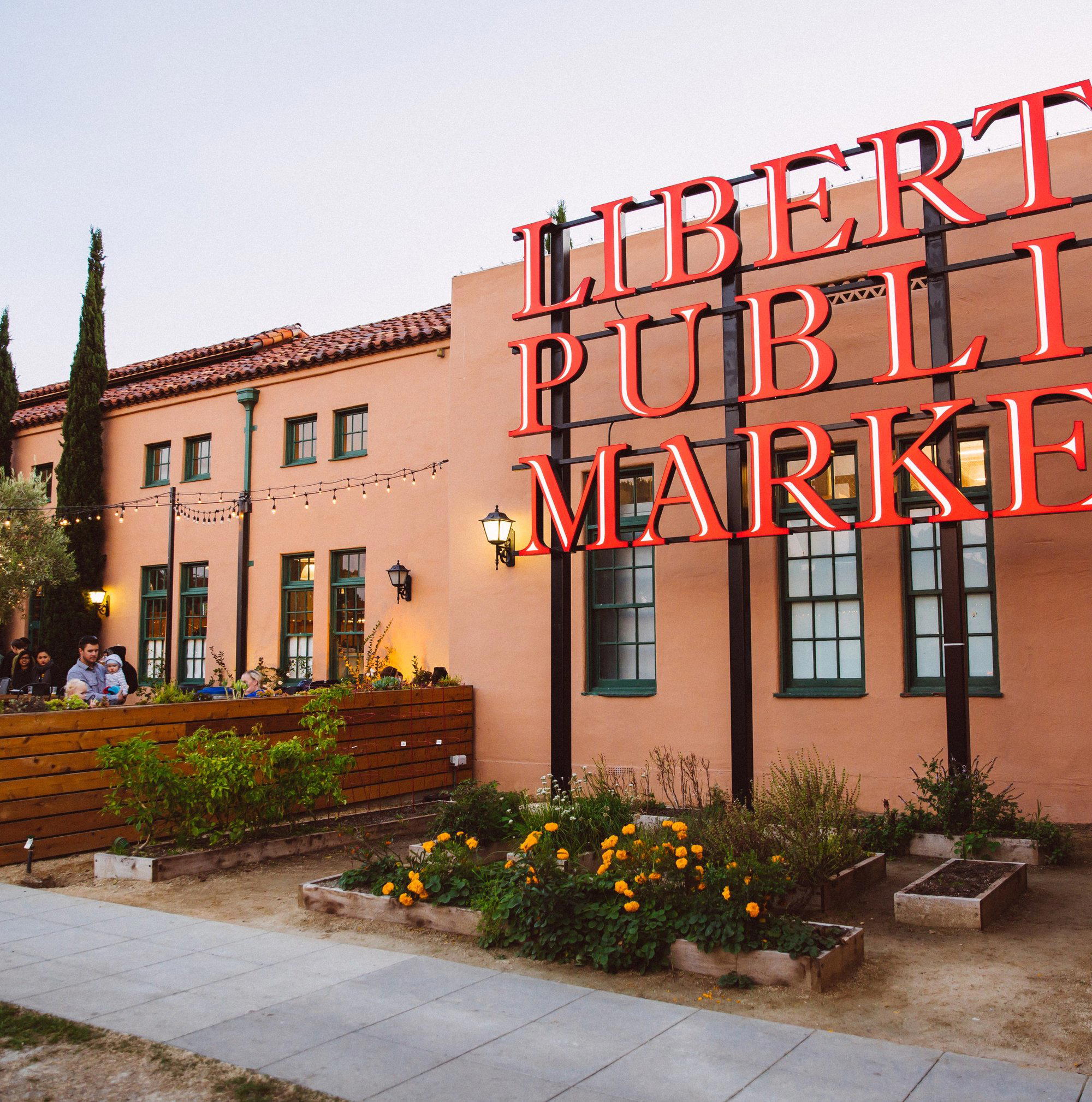
A Military Warehouse Turned Market Floor
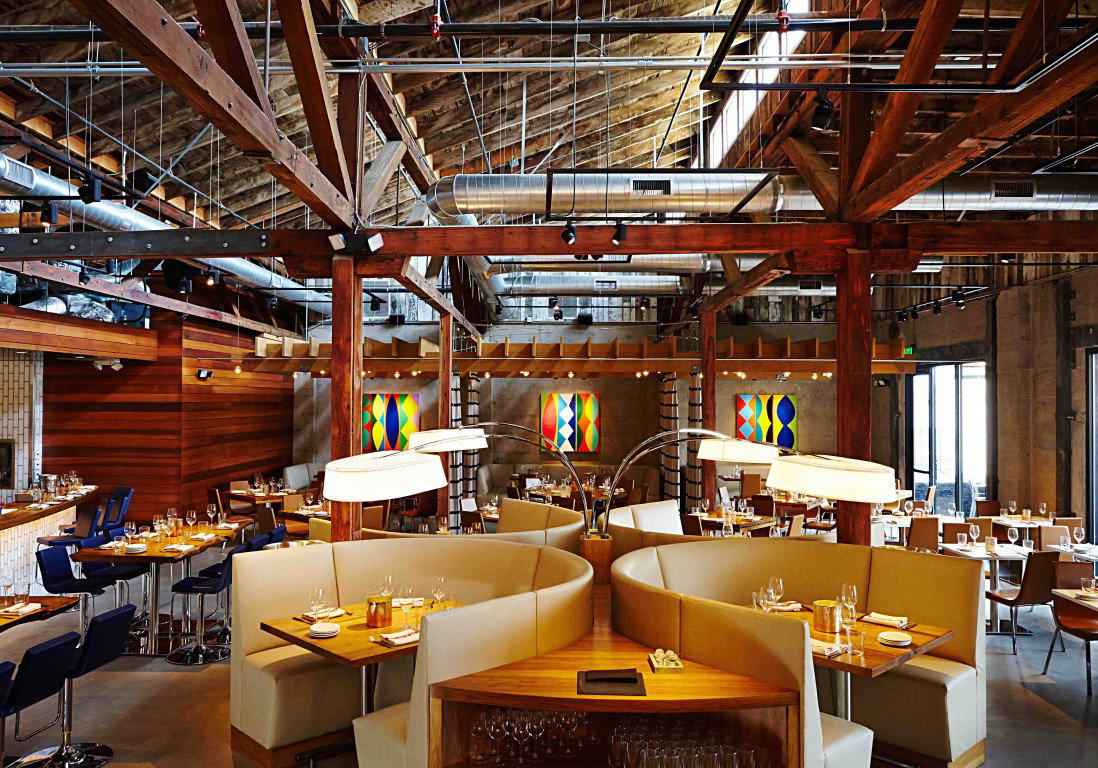
Point Loma's Historic Decatur Road runs through what was once a working Naval Training Center, and the architecture makes no effort to hide that past. The building Liberty Public Market occupies at 2820 Historic Decatur Rd retains the scale and industrial bones of a military facility, which gives the market a spatial generosity that newer purpose-built food halls rarely achieve. Exposed rafters, wide corridors, and natural light through oversized windows create a room that can absorb a crowd on a Saturday morning without feeling compressed. The physical environment matters here because it sets the operating premise: this is a market built for lingering, not throughput.
San Diego's food hall moment arrived later than Los Angeles or San Francisco, but Point Loma's geography made Liberty Public Market's location a considered choice rather than an accident of real estate. The neighbourhood sits at the southern edge of the city, close to the waterfront, and draws from a residential population that trends toward quality-conscious locals rather than tourist foot traffic. That context shapes what vendors stock and how they price.
Southern California Produce, Read Through Many Lenses
The editorial angle that makes Liberty Public Market worth taking seriously is the intersection between what Southern California grows and what its vendor community knows how to do with it. San Diego County is one of the more agriculturally diverse regions in California: avocados from Fallbrook, stone fruit from the inland valleys, citrus year-round, and seafood pulled from waters shared with Baja. What a market format allows, which a single-concept restaurant cannot, is the simultaneous application of multiple culinary traditions to that same regional larder.
This pattern appears across American food culture at its more considered end. Blue Hill at Stone Barns in Tarrytown made the case that a single farm's output could anchor a fine dining program. Single Thread Farm in Healdsburg layered Japanese technique over Sonoma County ingredients. At the restaurant, the same principle operates at a different scale and price point: local produce as the constant, applied technique as the variable. A vendor working in a Japanese idiom and a vendor drawing on Mexican coastal cooking may both be sourcing stone fruit from the same Ramona grower. The market format makes that convergence visible in a way a single kitchen cannot.
Southern California's Pacific Rim influences are well-documented, but the Baja connection in San Diego is more specific and worth naming directly. The culinary movement that emerged from Ensenada and Tijuana over the past two decades, sometimes called Baja Med, applies European and Japanese technique to Baja Peninsula ingredients and, by extension, to San Diego's shared regional pantry. That cross-border current runs through the vendor mix at the restaurant in ways that distinguish it from food halls in cities without a comparable geographical relationship to a neighbouring culinary culture. For comparable depth of regional grounding, you would need to look at something like Emeril's in New Orleans, where a city's specific culinary history saturates even the casual end of the dining spectrum.
The Market Format as a Serious Dining Argument
Food halls have proliferated across American cities to the point where the format itself is no longer a differentiator. What separates the serious examples from the themed retail exercise is vendor curation and sourcing discipline. The restaurant's vendor lineup operates on an independent-operator model rather than a franchise or corporate-tenant approach, which means the people making the food are typically the people who developed the recipes and sourced the ingredients. That accountability is felt in the product.
The comparison that matters for context is the broader San Diego restaurant scene, which has moved firmly upmarket over the past decade. Addison, San Diego's only Michelin three-star restaurant, sits at the apex of that shift, operating a French Contemporary program that competes with destination restaurants nationally. Soichi represents the city's serious omakase tier at the four-dollar-sign price point. The restaurant operates several brackets below those in cost, but it draws from the same pool of regional ingredients and, in some cases, the same supplier relationships. That positioning is not a concession; it is a different argument about where value sits in a regional food system.
For visitors building a broader San Diego itinerary, the market works as a counterpoint to the city's formal dining options. 1450 El Prado in Balboa Park and 94th Aero Squadron offer different registers of the San Diego dining experience. The restaurant fills the daytime, casual-but-considered gap that most cities' serious food scenes need but don't always have covered well.
Seasonal Timing and Practical Logistics
San Diego's near-constant growing season means the market's produce-driven vendors have less seasonal variation than their counterparts in Chicago or New York, but spring and early summer represent the regional sweet spot for stone fruit and citrus overlap. That window, roughly April through June, is when the vendor offer tends to be broadest and the sourcing most varied. The market draws its heaviest foot traffic on weekend mornings, when the combination of farmers market culture and brunch timing converges on the same floor.
Point Loma is accessible from downtown San Diego by car in under fifteen minutes, and the Liberty Station complex offers parking. The neighbourhood itself rewards an extended visit: the broader Liberty Station development includes additional food and retail, and the waterfront is within walking distance. For travellers using the city as a base for wider California exploration, the restaurant sits at a logical stopping point between downtown San Diego and the airport.
The market operates on a walk-in basis across its vendor stalls, which removes the booking friction of San Diego's formal dining tier. There is no dress code, no tasting menu commitment, and no minimum spend. Those conditions make it accessible to a range of budgets, though vendor pricing reflects the quality of sourcing rather than a budget positioning. For reference, prices generally sit around $15 per person.
City Peers
Comparable venues nearby, for context on price, style, and recognition.
| Venue | Cuisine | Price | Notes |
|---|---|---|---|
| Liberty Public MarketThis venue — the venue you are viewing | Multi-Vendor Food Hall - Global Cuisine | $$ | Not listed |
| AKA San Diego | Asian Fusion | $$$ | Downtown |
| Slater's 50/50 | Gourmet American Burgers | $$ | Peninsula |
| Communion Mission Hills | Modern Globally Inspired Small Plates | $$$ | Uptown |
| Civico 1845 | Southern Italian with Vegan Calabrian Specialties | $$ | Downtown |
| Roy's | Dining | Not listed | San Diego |
Continue exploring
More in San Diego
Restaurants in San Diego
Browse all →
Bars in San Diego
Browse all →

At a Glance
- Lively
- Trendy
- Energetic
- Modern
- Casual Hangout
- Group Dining
- Family
- Solo
- Historic Building
- Open Kitchen
- Design Destination
- Beer Program
- Local Sourcing
Current opening hours
- Monday
- 9 AM–8 PM
- Tuesday
- 9 AM–8 PM
- Wednesday
- 9 AM–8 PM
- Thursday
- 9 AM–8 PM
- Friday
- 9 AM–8 PM
- Saturday
- 9 AM–8 PM
- Sunday
- 9 AM–8 PM
Hours can change for holidays and private events. Last verified .