Libanon Restaurant
Our verdict
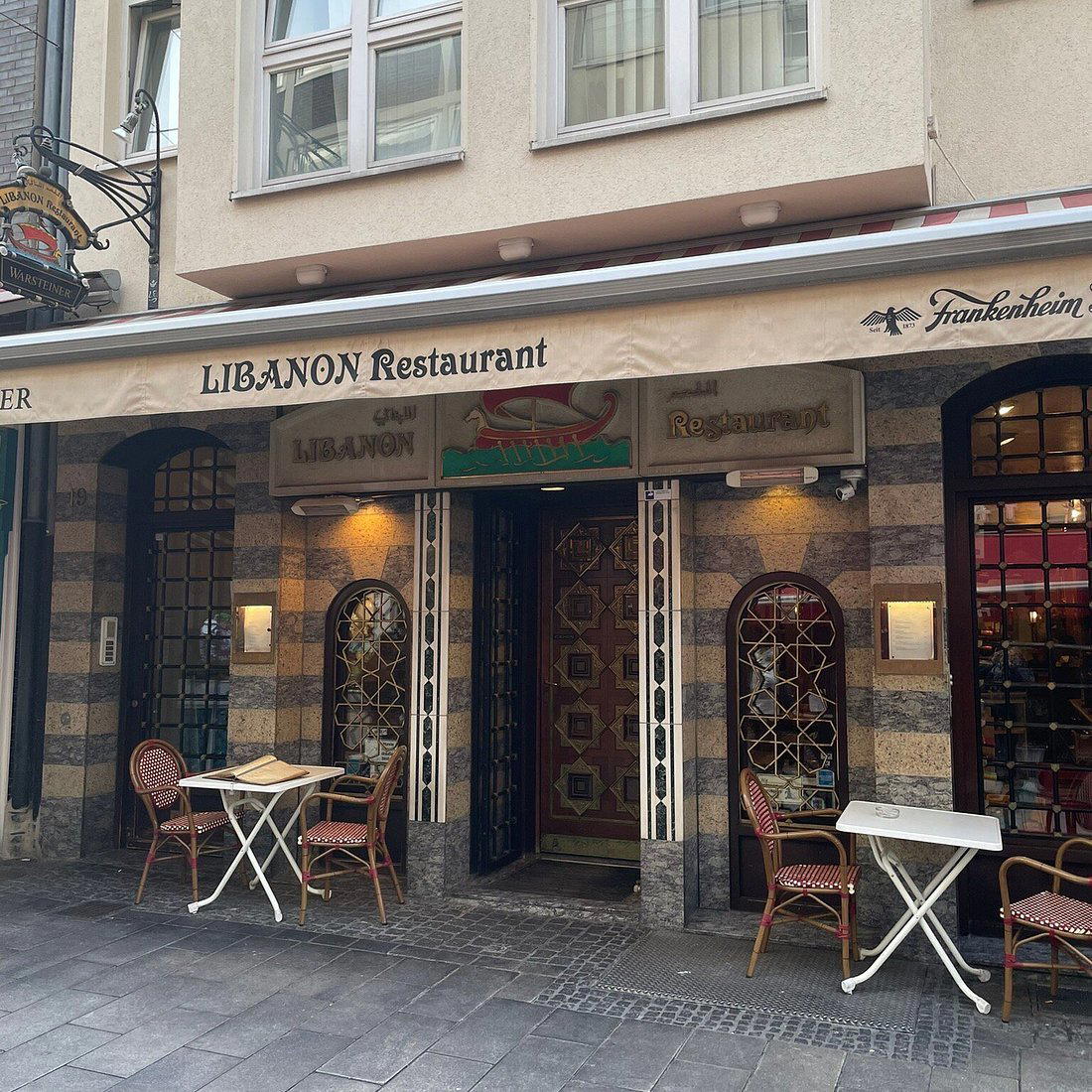
On Berger Strasse in Düsseldorf's Altstadt fringe, Libanon Restaurant occupies a stretch of the city where Middle Eastern and Mediterranean tables have quietly accumulated over decades. The address places it in one of the Rhine city's more culturally layered dining corridors, where Lebanese cuisine's tradition of shared plates and slow-cooked legumes finds a receptive audience among both the Arab diaspora community and curious locals.

Pearl is the En Primeur Club membership app — saves, bookings, and concierge access live there. Same editors, same standards.
- Address
- Berger Str. 19-21, 40213 Düsseldorf, Germany
- Phone
- +4949211134917
- Hours
- Daily 12–11 PM
- Website
- libanon-restaurant.de
- Directions
- Get directions
The menu
What to order
- Shish Tawouk
- Hummus Bil Tahineh
- Kibbeh
A Street That Tells You Something About the City
Berger Strasse cuts through one of Düsseldorf's more culturally mixed corridors, a few minutes from the Rhine embankment and the tourist density of the Altstadt proper. The stretch around numbers 19 to 21 has long carried a quiet concentration of immigrant-run kitchens, corner grocers with Arabic script in the window, and the kind of neighbourhood eateries that feed regulars rather than perform for visitors. In a city better known internationally for its Japanese quarter around Immermannstrasse, this less-photographed edge of the Altstadt functions as a parallel culinary record, one written in flatbreads and falafel rather than ramen and wagyu.
Libanon Restaurant sits in that corridor. Its name makes no attempt at branding distance from its origins, which is itself a form of editorial statement in a dining culture where restaurants frequently soften or abstract their identity for broader appeal. The kitchen here is rooted in Lebanese tradition: a cuisine built on mezze culture, on charcoal and grain, on the kind of hospitality that assumes food arrives collectively and is eaten over time.
What Lebanese Cuisine Actually Means in This Context
Lebanese cooking is among the most misread cuisines in European cities. In its casual-format versions, it tends to be reduced to shawarma and hummus plates, which are real enough dishes but represent only a sliver of a tradition that encompasses kibbeh nayyeh (raw lamb tartare with bulgur), slow-braised lamb shoulder with rice and pine nuts, and a dozen cold mezze categories ranging from muhammara to fattoush. The cuisine's foundation is generosity in quantity and complexity in layering: a good Lebanese table operates closer to a Persian feast than to the stripped-back Mediterranean diet the West has mythologised.
Düsseldorf's Lebanese dining scene is modest in scale but consistent in character. The city's Arab community, drawn partly through commercial ties and partly through migration patterns that reach back to the 1970s, has sustained a small tier of Lebanese and broader Levantine kitchens that operate outside the tourist economy. These are not restaurants designed to explain themselves to first-timers; they assume a clientele that knows what it wants and returns for consistency rather than novelty. Libanon Restaurant on Berger Strasse belongs to that tier.
The Dining Format and What It Asks of You
Mezze culture, as a format, runs counter to most Western dining conventions. There is no prescribed progression from starter to main; the table fills, dishes arrive when ready, and eating is understood as a social activity rather than a transactional one. For a diner accustomed to European tasting-menu logic, or even to the structured two-course lunch, Lebanese mezze requires a recalibration. You order more than you think you need, you share everything, and you leave slower than you arrived.
This format places Libanon Restaurant in a different competitive bracket from the more formal Middle Eastern restaurants that have emerged in German cities over the past decade. Those venues, some of which carry press recognition and premium pricing, have absorbed mezze culture into a fine-dining framework. The neighbourhood Lebanese restaurant operates on different terms: price accessibility, portion generosity, and a kitchen that prioritises the food over the frame. Visitors expecting theatrical plating will need to adjust their expectations; visitors looking for honest cooking with cultural depth will find their bearings quickly.
For a broader picture of where Libanon fits within Düsseldorf's wider dining map, the full Dusseldorf restaurants guide covers everything from casual street-food counters to the city's more ambitious contemporary tables. The German fine-dining circuit, for reference, extends across venues like Aqua in Wolfsburg, Schwarzwaldstube in Baiersbronn, and Vendôme in Bergisch Gladbach, operating on an entirely different register from the neighbourhood Lebanese table.
Düsseldorf's Immigrant Kitchen Economy
The Rhine city's diversity of immigrant-run restaurants is one of its least-discussed dining assets. While the Japanese quarter receives considerable attention from food media, the Turkish, Lebanese, and broader Middle Eastern kitchens distributed across neighbourhoods like Oberbilk, Flingern, and the Altstadt edges represent a parallel eating culture that has sustained itself for decades without significant critical infrastructure. Venues like Alanya Döner represent the Turkish side of this economy; Libanon Restaurant occupies the Lebanese register.
This kitchen ecosystem functions differently from the city's destination restaurant tier. Bookings are informal or walk-in; hours flex to demand; the menu changes with supply rather than season. It is a more fluid, less documented form of dining culture, and it is precisely the kind of thing that city food guides tend to undercount because it resists the standardisation that makes venues easy to categorise. Other Düsseldorf tables worth contextualising alongside it include Arca Alacati, Anfora, and Amuni Wein- und Käsebar, each sitting in a distinct niche of the city's mid-range and casual dining spectrum. For a different register entirely, 3h's burger & chicken covers the fast-casual end of the Altstadt's eating options.
Planning Your Visit
Berger Strasse 19-21 is reachable on foot from the Altstadt centre in under ten minutes, or via the U-Bahn to Heinrich-Heine-Allee. The format of the kitchen, a neighbourhood Lebanese table rather than a destination-dining proposition, generally means walk-in is viable outside peak Friday and Saturday evening slots, though that should not be assumed. Pricing at venues in this category in Düsseldorf typically sits well below the city's mid-market European tables, making over-ordering a low-risk strategy when exploring an unfamiliar menu.
Frequently asked questions
Where is Libanon Restaurant in Dusseldorf?
Libanon Restaurant is located at Berger Str. 19-21, 40213 Düsseldorf, Germany, Dusseldorf.
Is Libanon Restaurant in Düsseldorf suitable for a group dinner with shared plates?
The mezze format that defines Lebanese cooking is structured around shared plates from the outset, making it a natural fit for groups rather than solo dining. Berger Strasse 19-21 sits in one of Düsseldorf's more culturally layered neighbourhoods, where immigrant-run kitchens tend to run at a pace suited to longer, communal meals. Group visits allow you to move across a broader range of the menu than a two-person order would typically reach.
What's the best thing to order at Libanon Restaurant?
Lebanese mezze format means the table is built collectively rather than ordered dish by dish, so arriving in a group of three or more gives you the widest range across the spread. At a restaurant operating on Berger Strasse in Düsseldorf's culturally mixed corridor, the expectation is that cold mezze — dips, salads, flatbreads — anchor the table before anything hot arrives.
What's the best way to book Libanon Restaurant?
No phone number or website is currently listed for Libanon Restaurant at Berger Strasse 19-21, Düsseldorf. Walking in or visiting in person to confirm reservation arrangements is the most reliable approach at this stage. Heinrich-Heine-Allee U-Bahn puts you within a short walk of the address if you want to check availability directly.
Fast Comparison
Comparable venues nearby, for context on price, style, and recognition.
| Venue | Cuisine | Price | Notes |
|---|---|---|---|
| Libanon RestaurantThis venue — the venue you are viewing | Authentic Lebanese | $20–30 | Not listed |
| Sannin | Authentic Lebanese | $10–20 | Stadtmitte |
| da noi | Authentic Italian Pizzeria & Trattoria | $20–30 | Stadtmitte |
| Kyodaina Poke & Sushi | Japanese Poke & Sushi | $10–20 | Unterbilk |
| Simple & Fresh | Healthy Bowls & Burgers | $10–20 | Stadtmitte |
| Die Kurve | Modern Israeli Mezze | $20–30 | Pempelfort |