Les Bonnets Rouges
Our verdict
Les Bonnets Rouges occupies a quiet address on Rue des Ursulines in Carhaix-Plouguer, a market town in the agricultural heart of Finistère. The restaurant sits within a Breton dining scene defined by proximity to some of France's most productive coastal and inland food sources. For visitors to central Brittany, it represents a local point of entry into a region whose larder is rarely matched anywhere on the Atlantic seaboard.

Pearl is the En Primeur Club membership app, where members save venues, book tables and use the concierge.

Where Finistère's Larder Meets the Table
Carhaix-Plouguer sits at the geographical centre of Finistère, the westernmost department in continental France, and that positioning matters more than most visitors initially appreciate. The town is within reach of the Breton coastline's shellfish beds, the dairy farms of the Monts d'Arrée foothills, and the river systems that supply some of France's most consistent freshwater fish. Restaurants here do not need to source theatrically, the ingredients simply arrive, because they have always been produced nearby. Les Bonnets Rouges, at 12 Rue des Ursulines, sits inside that supply geography in a way that urban French restaurants, however decorated, cannot replicate.
The name itself carries a regional resonance. The bonnets rouges, red caps, were the symbol of 17th-century Breton peasant revolts against royal taxation, and the phrase later became shorthand for Breton cultural resistance more broadly. A restaurant bearing that name in Carhaix, the town that hosts one of France's largest Celtic music festivals each summer, is not making a neutral choice. It signals an orientation toward the local, the rooted, and the specifically Breton, rather than toward the generic regionalism that can blur into tourist-friendly approximation.
The Ingredient Geography of Central Brittany
To understand what a kitchen in Carhaix-Plouguer has access to, it helps to map the supply lines. Finistère's northern coast, the Côtes-d'Armor boundary and the Bay of Brest, produces oysters, sea urchins, and langoustines that reach inland markets with minimal transit time. The Aulne river, which flows through the Carhaix basin, has historically supplied trout and eels to local tables. Inland, the bocage landscape supports cattle breeds whose milk underpins Brittany's butter tradition, the same tradition that gave French cuisine its foundational fat before the dominance of Normandy's marketing apparatus rewrote the story.
This is the sourcing context that frames Breton cuisine at its most serious. When restaurants at the level of Christopher Coutanceau in La Rochelle or Mirazur in Menton build reputations on Atlantic-source ingredients, they are competing for the same raw material that a well-connected kitchen in central Brittany receives as a matter of geography. The difference is that coastal prestige addresses price that geography into their covers. In Carhaix, the equation is less mediated by reputation premium.
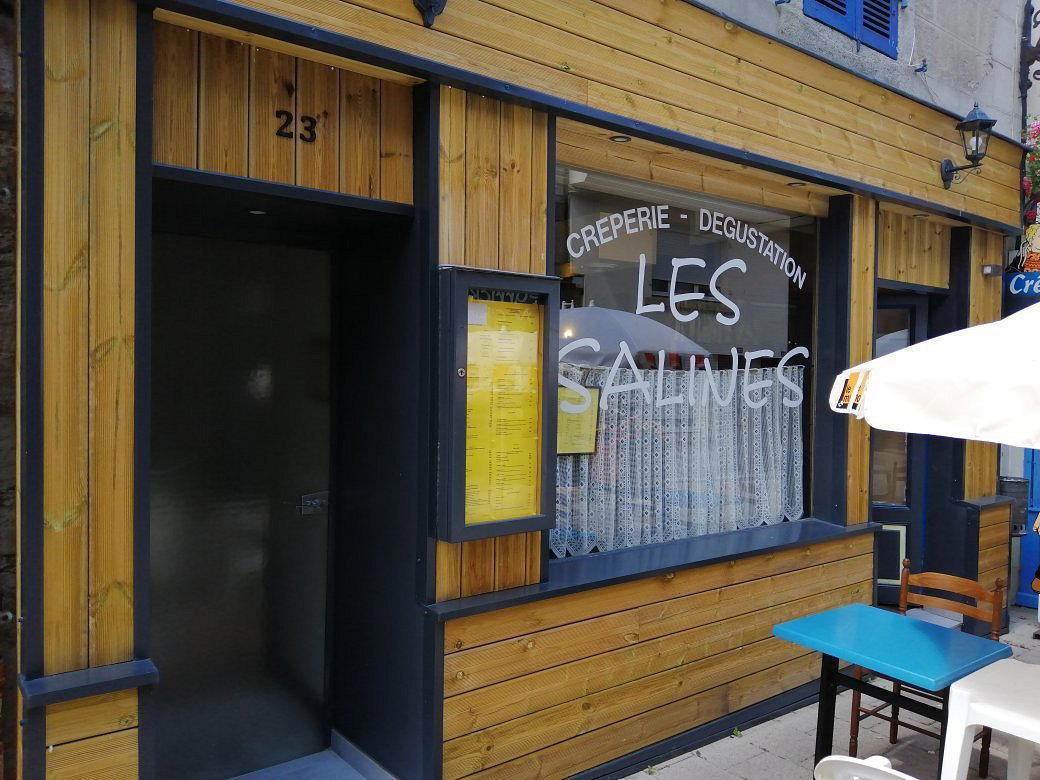
Brittany's culinary identity has also been shaped by a willingness to cook simply with excellent base ingredients rather than transforming them beyond recognition. The galette, buckwheat crêpe, remains the region's most emblematic dish precisely because it demands quality flour, proper fat, and technical discipline, with no opportunity to mask inferior sourcing. Visitors who want to understand the galette tradition in Carhaix can cross-reference the offering at Crêperie Les Salines, which represents the dedicated crêperie format in the same town. The two venues occupy different registers of the local dining scene.
Carhaix in the Context of French Regional Dining
French regional dining has moved through several phases of critical reassessment in the past two decades. The dominance of Paris-centred fine dining, represented at its apex by addresses like Alléno Paris au Pavillon Ledoyen or Assiette Champenoise in Reims, has gradually given ground to a recognition that France's most interesting cooking often happens where the ingredients are produced. Addresses like Bras in Laguiole and Auberge du Vieux Puits in Fontjoncouse built their reputations on exactly that argument: that proximity to source, rather than proximity to urban cultural capital, produces the most honest cooking.
Carhaix-Plouguer is not positioned within that decorated tier. It is a market town of roughly 7,000 residents, without the Michelin infrastructure that frames destinations like Flocons de Sel in Megève or Auberge de l'Ill in Illhaeusern. What it does have is a genuine local food culture, a population with agricultural roots, and the weekly markets that supply both households and restaurants with the seasonal rhythm that award-circuit kitchens try to simulate through sourcing programs. The restaurant that works with that rhythm honestly needs no critical apparatus to justify its existence.
For visitors accustomed to evaluating restaurants through the lens of Troisgros or Paul Bocuse, Carhaix requires a recalibration of what constitutes culinary seriousness. Ambition expressed through award pursuit is one form. Ambition expressed through a commitment to cooking the week's leading Finistère produce honestly, in a room where the clientele is largely local, is another. Neither is subordinate to the other.
Those seeking a second option within Carhaix's modern dining register should note Erasmo, which operates a contemporary cuisine format in the same town. The two addresses serve different ends of the local dining proposition, and a visit to both gives a more complete picture of what Carhaix has developed as a dining destination beyond its festival-week identity.
Planning a Visit
Carhaix-Plouguer sits approximately 90 kilometres from Brest and 180 kilometres from Rennes, accessible by the RN164 national road. The town has no commercial rail connection, making a car the practical choice for most visitors. Les Bonnets Rouges is located at 12 Rue des Ursulines in the town centre, within walking distance of the main market square. Given the limited available data on booking procedures, hours, and current pricing, visitors are advised to contact the restaurant directly or consult the full Carhaix-Plouguer restaurants guide for updated logistical detail before travelling. The Vieilles Charrues festival in July draws significant visitor numbers to the town each year, and restaurant availability during that period should be confirmed in advance. Outside festival weeks, Carhaix operates on a quieter rhythm that generally makes tables more accessible than in tourist-heavy Breton coastal towns.
Frequently asked questions
Is Les Bonnets Rouges suitable for children?
Brittany's restaurant culture is generally accommodating toward families, and in a town like Carhaix-Plouguer, where the clientele is predominantly local, children are a natural part of the dining room rather than an exception. There is no venue-specific policy data available, but the broader regional norm in non-tourist Finistère leans practical and unpretentious in its welcome.
How would you describe the vibe at Les Bonnets Rouges?
Carhaix-Plouguer is a working Breton market town with no significant tourist infrastructure, which shapes the atmosphere at restaurants here considerably. Expect a room oriented around local regulars rather than passing visitors, with the pace and directness that characterises Finistère's interior towns. The name itself, referencing the bonnets rouges movement and its long history of Breton civic identity, signals a deliberate rootedness in place rather than an appeal to outside trends.
Why does the name Les Bonnets Rouges matter in a Breton context?
The bonnets rouges, red caps, are a symbol of Breton resistance and cultural identity dating to a 17th-century tax revolt and revived repeatedly since, most recently in the 2013 regional protests against the ecotaxe. A restaurant in Carhaix-Plouguer adopting that name is making a statement about civic belonging, not just choosing a colourful label. Carhaix itself has long been associated with Breton cultural life, hosting the Festival de Cornouaille's regional circuit and sitting deep in the Breton-speaking heartland of Finistère.
What should I eat at Les Bonnets Rouges?
That said, Carhaix-Plouguer sits at the centre of Finistère, within reach of both the northern coast's shellfish and the agricultural interior's pork, lamb, and dairy, the raw material of serious Breton cooking. A kitchen here drawing on those supply lines would logically work with andouille de Guémené, local cheeses, and seasonal river catch rather than the tourist-facing crêpes and galettes that dominate coastal menus.
What part of town is Les Bonnets Rouges in?
Les Bonnets Rouges is located at 12 Rue des Ursulines, 29270 Carhaix-Plouguer, France, Carhaix-Plouguer.
Fast Comparison
Comparable venues nearby, for context on price, style, and recognition.
| Venue | Cuisine | Price | Awards | Notes |
|---|---|---|---|---|
| Les Bonnets RougesThis venue (the venue you are viewing) | Breton French Bistro with Pizzas | $20–30 | Not listed | Not listed |
| Crêperie Les Salines | Breton Crêperie | $10–20 | Not listed | centre historique |
| Erasmo | Modern French with Italian Touches | $30–50 | Michelin Bib Gourmand | centre-ville |
| La table de louannec | French Bistronomique | $30–50 | Not listed | Louannec |
| La Cassonade | Breton Crêperie | $10–20 | Not listed | Ile de Batz |
| La Tatanerie | French Brasserie | $20–30 | Not listed | Camaret-sur-Mer |
Continue exploring
More in Carhaix-Plouguer
Details
- Bohemian
- Rustic
- Cozy
- Group Dining
- Family
- Casual Hangout
- Historic Building
- Local Sourcing
- A La Carte
- Vegetarian Friendly
- Vegan Options
Current opening hours
- Monday
- 12–2 PM
- Tuesday
- 12–2 PM, 7:30–10:30 PM
- Wednesday
- 12–2 PM
- Thursday
- 12–2 PM
- Friday
- 12–2 PM, 7:30–11 PM
- Saturday
- Closed
- Sunday
- Closed
Hours can change for holidays and private events. Hours as of .
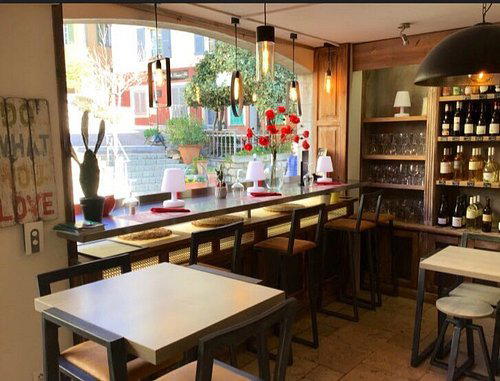
Busy, noisy atmosphere with a bohemian feel in a character-filled historic setting.