La Pomme d'Api


1 Michelin Star · Gault & Millau Remarkable Restaurant
Our verdict
A Michelin-starred address in the Breton town of Saint-Pol-de-Léon, La Pomme d'Api occupies a 17th-century stone house where chef Kunihisa Goto works with the seasons and the produce of Finistère to produce creative, ingredient-driven cooking. The €€€€ price point reflects the ambition of the menu and the care of the room. Guestrooms on site make it a practical base for exploring the far north of Brittany.

Pearl is the En Primeur Club membership app — saves, bookings, and concierge access live there. Same editors, same standards.
- Address
- 5 Rue Saint-Yves, 29250 Saint-Pol-de-Léon, France
- Phone
- +33 2 98 69 04 36
- Hours
- Mon ClosedTue–Sat 12:30–1:30 PM, 7:30–9 PMSun Closed
- Website
- lapommedapi.com
- Directions
- Get directions
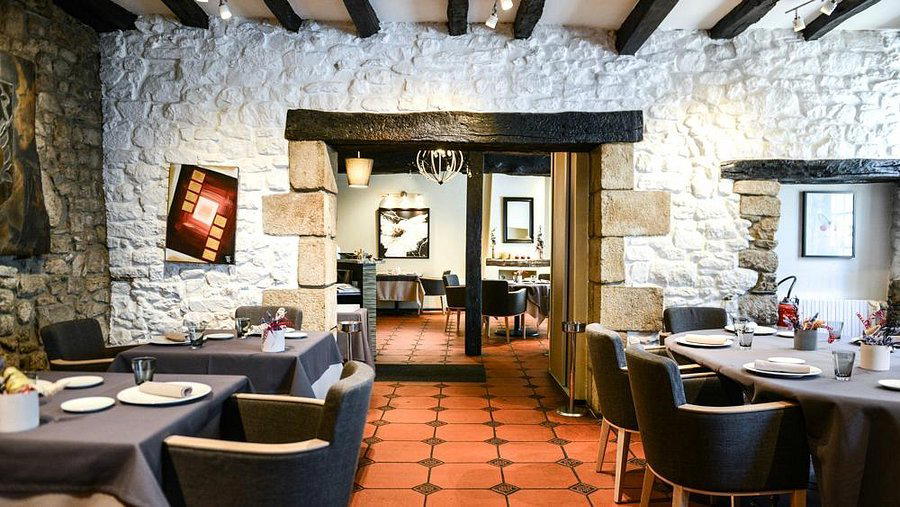
A 17th-Century Stone House in the Far Corner of Finistère
Saint-Pol-de-Léon sits at the northern tip of Brittany's Finistère department, a market town whose economy has long run on artichokes, cauliflower, and the cold-water produce of the English Channel. That a Michelin-starred restaurant has taken root here, inside a stone building that spent several centuries as a religious cabinet-making workshop before becoming Le Clos Saint Yves, says something specific about how Brittany's serious cooking has evolved: away from the grandes tables of Rennes and toward the source of the ingredients themselves.
La Pomme d'Api occupies that building at 5 Rue Saint-Yves, and the space carries its history without performing it. Exposed stonework, a small interior garden visible from the dining room, low ceilings that absorb rather than amplify noise: these are conditions that reward slow meals. The room is not decorative in the contemporary sense, but its restraint is what makes the cooking feel more present. At the upper end of that category sit restaurants like Alléno Paris au Pavillon Ledoyen and Mirazur in Menton, where the creative vocabulary operates at a three-star register and the infrastructure matches it. La Pomme d'Api does not compete in that tier.enprimeurclub.com/restaurants/bras-laguiole-restaurant">Bras in Laguiole, Auberge du Vieux Puits in Fontjoncouse, and Flocons de Sel in Megève, share a similar logic: excellence that is inseparable from place. The comparison is instructive because it clarifies what La Pomme d'Api is actually doing. This is not a restaurant transplanted into the provinces; it is a restaurant that only makes sense in Finistère.enprimeurclub.com/restaurants/arpge-paris-restaurant">Arpège in Paris, AM par Alexandre Mazzia in Marseille, and Assiette Champenoise in Reims each represent different registers of how the one- and multi-star creative category operates across the country's regions.
Chef Kunihisa Goto and the Franco-Japanese Framework
The presence of a Japanese chef in a Breton farmhouse kitchen is not the anomaly it might once have appeared.enprimeurclub.com/restaurants/au-crocodile-strasbourg-restaurant">Au Crocodile in Strasbourg, and the long-established cross-cultural dialogue between Japanese and French culinary culture is by now a structural feature of the country's food scene rather than a novelty.
What that background contributes at La Pomme d'Api is a specific kind of discipline: the willingness to let an ingredient speak before adding to it, and a rigorousness about seasonal timing that aligns well with Brittany's produce-driven identity. Chef Kunihisa Goto's approach, as described in the Michelin listing, is characterised as delicate and inventive, with emphasis on freshness and seasonal respect. That framing puts the kitchen in the tradition of terroir-led creative cooking rather than the technique-forward abstraction you find at addresses like Troisgros in Ouches or the historically significant Paul Bocuse in Collonges-au-Mont-d'Or.
The parallel with how Japanese sensibility has shaped creative cooking in other European contexts is also instructive. Cocina Hermanos Torres in Barcelona works in a similarly ingredient-conscious register, though within Catalan rather than Breton tradition. The shared thread is restraint used as technique rather than limitation. The department produces artichokes, pink onions, potatoes, and shellfish at a scale and quality that have made it the most agriculturally significant part of Brittany. A kitchen operating at this price point in Saint-Pol-de-Léon, at €€€€, is drawing on that supply chain as a structural advantage: the ingredients that arrive here are fresher, more varied, and more transparently sourced than those reaching kitchens several hundred kilometres away.
The Michelin citation specifically notes that the cuisine highlights the leading and freshest ingredients of Brittany and reverently respects the seasons. That language is notable for its directness. Michelin's vocabulary for seasonal sourcing has evolved to distinguish between kitchens that perform terroir as a concept and those that actually organise their menus around what is available week by week. The description of La Pomme d'Api falls into the latter category. At the Auberge de l'Ill in Illhaeusern, the relationship between Alsatian produce and classical cooking follows a similar structural logic, even if the cuisine itself is very different.
The Room, the Guestrooms, and the Case for Staying
The dining room at La Pomme d'Api is not large, and the service model, led by Jérémie Le Calvez and his wife Jessica according to the Michelin entry, is built around a personal welcome that is less common in larger city restaurants. The service windows are tight: lunch runs from 12:30 PM to 1:30 PM, dinner from 7:30 PM to 9:00 PM, Tuesday through Saturday. The restaurant is closed Sundays and Mondays. Those hours reflect a kitchen operating at full attention rather than across extended service periods, and they have practical implications for planning around a visit from outside the region.
Guestrooms within Le Clos Saint Yves change the calculation for travellers arriving from Paris or abroad. Saint-Pol-de-Léon is approximately four hours from Paris by TGV to Morlaix followed by a local connection, and the region does not have an obvious base for multi-night stays outside of Roscoff, which is six kilometres to the northwest. Staying at La Pomme d'Api removes the question of where to sleep after dinner and opens the possibility of using the restaurant as an anchor for a longer trip into the far north of Brittany.
For visitors building a broader itinerary in the area, our full Saint-Pol-de-Léon hotels guide covers additional accommodation options, and our Saint-Pol-de-Léon restaurants guide maps the wider dining picture across the town. Bars, wineries, and experiences in the area are covered in separate guides for those wanting to extend the visit.
Planning a Visit
The €€€€ price range places it at the top of Brittany's regional fine-dining tier. Booking ahead is advisable given the limited service windows, the small dining room, and the restaurant's recognition at Michelin level since 2024. The address is 5 Rue Saint-Yves, Saint-Pol-de-Léon, 29250.
Frequently asked questions
Does La Pomme d'Api work for a family meal?
The €€€€ price point and the measured pace of service make La Pomme d'Api better suited to adult-focused occasions. The Michelin entry describes a deliberate, personal dining room experience in a 17th-century stone building — a format that rewards unhurried attention rather than flexibility for younger guests.
What should I expect atmosphere-wise at La Pomme d'Api?
The setting is a handsomely preserved 17th-century stone house with exposed stonework and a view onto a small garden. Service is led by Jérémie Le Calvez and his wife Jessica, giving the room a personal, front-of-house character that distinguishes it from larger hotel-restaurant operations. The pace is quiet and considered.
What kind of recognition has La Pomme d'Api received?
La Pomme d'Api has received recognition including: Category: Remarkable; In the heart of Le Clos Saint Yves, this handsome 17C stone-built house (which was a major religious cabinet-making workshop until the late 19C) is the lair of Jérémie Le Calvez and his wife, Jessica, who warmly greet ….
What dish is La Pomme d'Api famous for?
No single signature dish defines the kitchen here, and given that the Michelin citation explicitly credits the chef's respect for seasonal ingredients from Brittany, the menu shifts with the produce rather than anchoring to a fixed showpiece. Finistère's seafood and vegetables are the consistent thread, not a single recurring plate.
At-a-Glance Comparison
| Venue | Cuisine | Price | Awards |
|---|---|---|---|
| La Pomme d'ApiThis venue — the venue you are viewing | Fine Dining French Breton | $50–100 | 1 Michelin Star · Gault & Millau Remarkable Restaurant |
| Alléno Paris au Pavillon Ledoyen | Creative | Not listed | Michelin 3 Star |
| Kei | Contemporary French, Modern Cuisine | Not listed | Michelin 3 Star |
| L'Ambroisie | French, Classic Cuisine | Not listed | Michelin 3 Star |
| Le Cinq - Four Seasons Hôtel George V | French, Modern Cuisine | Not listed | Michelin 3 Star |
| Plénitude | Contemporary French | Not listed | Michelin 3 Star |
Recognition history
Dated appearances from independent guides and award organizations, with the underlying list record or original source where available.
Michelin 1 Star
Michelin
Gault & Millau Remarkable Restaurant
Gault & Millau
Full recognition history (4 entries)
Michelin 1 Star
Michelin
Michelin 1 Star
Michelin
Continue exploring
More in Saint-Pol-de-Léon
Restaurants in Saint-Pol-de-Léon
Browse all →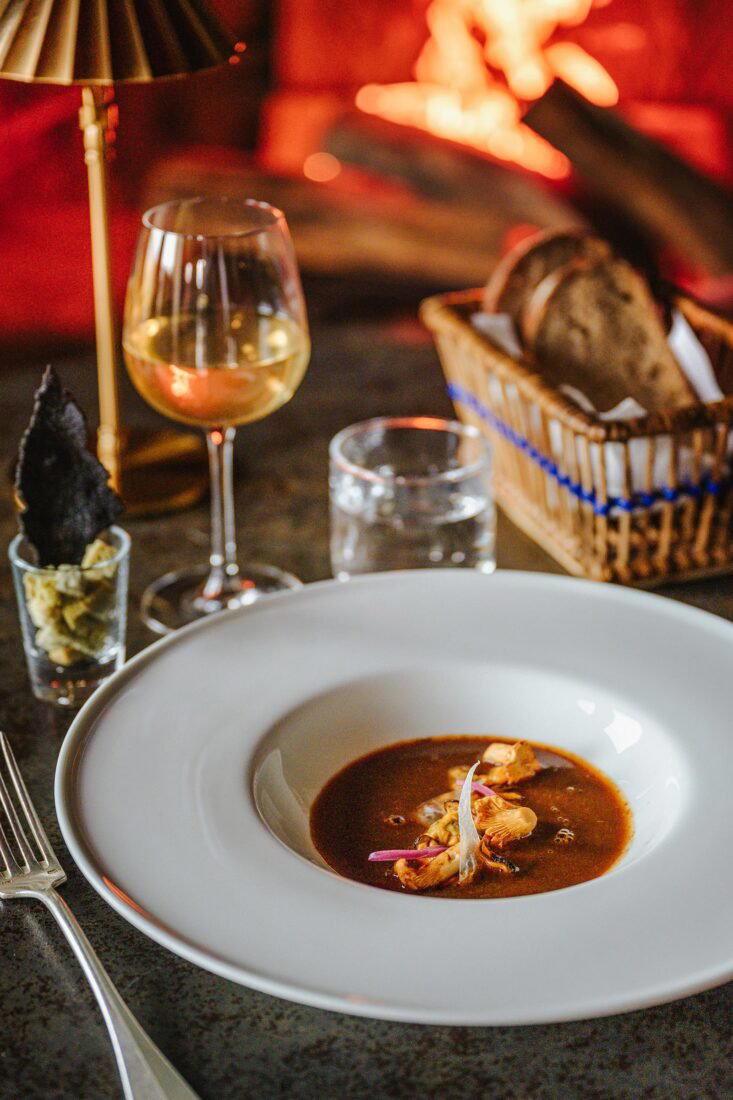
Details
- Romantic
- Cozy
- Elegant
- Intimate
- Classic
- Date Night
- Special Occasion
- Celebration
- Historic Building
- Private Dining
- Extensive Wine List
- Local Sourcing
- Garden
- A La Carte
- Prix Fixe
- Vegetarian Friendly
Current opening hours
- Monday
- Closed
- Tuesday
- 12:30–1:30 PM, 7:30–9 PM
- Wednesday
- 12:30–1:30 PM, 7:30–9 PM
- Thursday
- 12:30–1:30 PM, 7:30–9 PM
- Friday
- 12:30–1:30 PM, 7:30–9 PM
- Saturday
- 12:30–1:30 PM, 7:30–9 PM
- Sunday
- Closed
Hours can change for holidays and private events. Last verified .
Chaleureux et intimiste dans une maison en pierre du XVIIe siècle avec pierres apparentes, salle lumineuse et vue sur petit jardin.