Le Voyage (Xcel)

Le Voyage by Daniel Boulud brings French-inflected fine dining aboard the Celebrity Xcel cruise ship, docking the chef's decades-long presence in global gastronomy within a purpose-built at-sea dining format. For travelers departing Miami, it positions the cruise terminal at 1050 Caribbean Way as the starting point for a structured tasting experience connected to one of the most recognized names in French cooking outside France.
 Discover on Pearl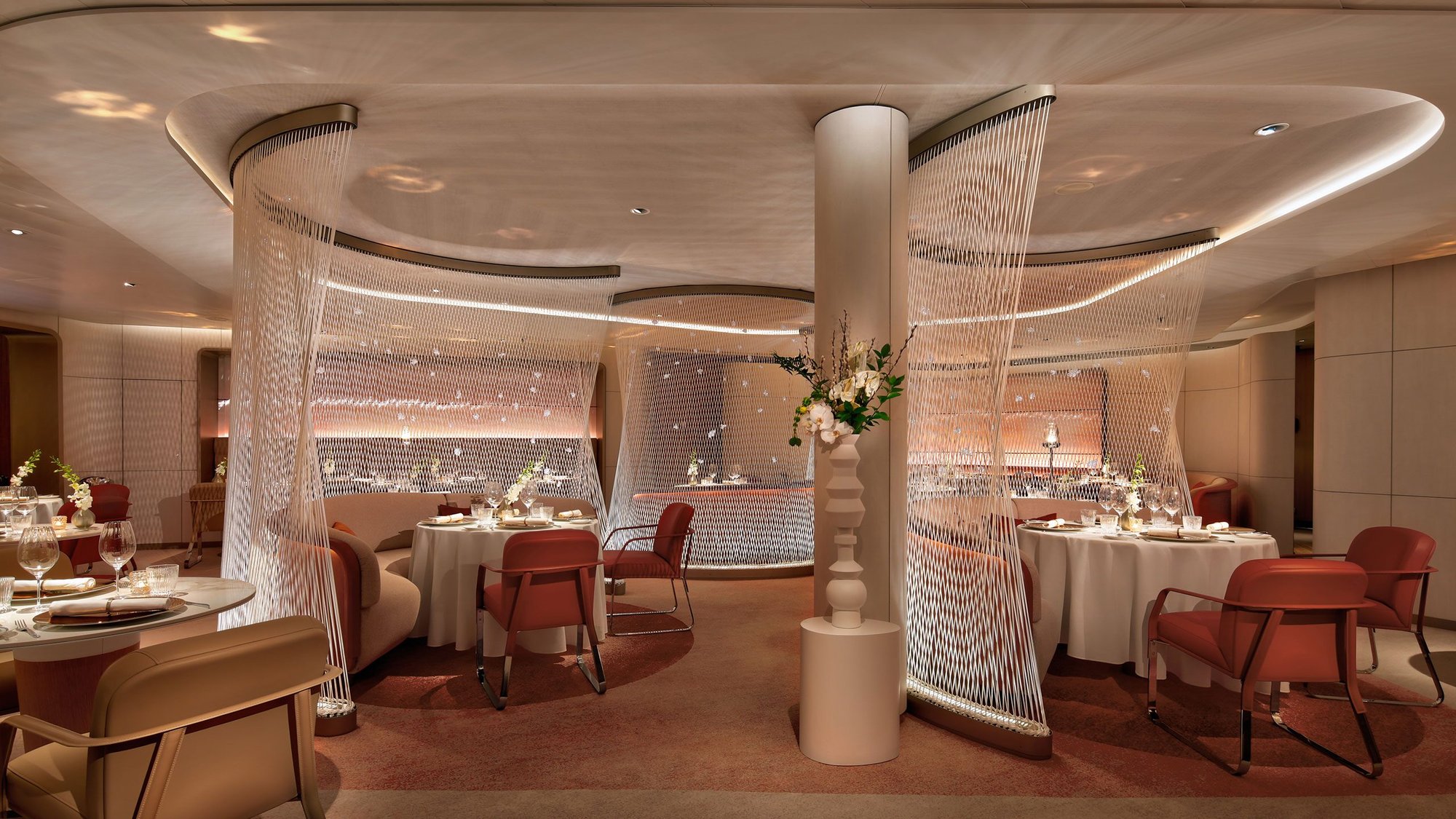
Fine Dining at Sea: The Cruise Ship Restaurant Tier That Changed the Calculus
The cruise industry's relationship with serious dining has shifted considerably over the past decade. Where shipboard restaurants once occupied a tier defined by volume service and predictable continental menus, the top-tier lines began recruiting chefs with genuine standing in the land-based fine dining world. The result is a category that now competes, at least conceptually, with urban restaurant programs rather than simply with other ships. Le Voyage, Daniel Boulud's restaurant aboard Celebrity Xcel, sits inside that shift. It departs from Miami's cruise terminal at 1050 Caribbean Way, placing it in a city that already holds some of the more demanding fine dining addresses on the American East Coast.
Miami's dining scene has consolidated around a core of genuinely ambitious programs. L'Atelier de Joël Robuchon Miami holds the French tasting-menu position on land, while Ariete and Boia De occupy the contemporary American and Italian brackets respectively. Cote Miami has established a firm foothold in the premium steakhouse tier. Against that backdrop, Le Voyage is not competing for a Miami dining reservation in the conventional sense. Its guests have already committed to a sailing itinerary. What the format asks, instead, is whether a purpose-built shipboard dining room connected to a major name in French gastronomy can deliver at the level the association implies.
The shortlist, unlocked.
Hard-to-book tables, cellar releases, and concierge-planned trips.
Get Exclusive Access →Daniel Boulud and the Weight of the Credential
In fine dining, the chef-name restaurant aboard a ship carries a different burden than a bricks-and-mortar address. The credential travels, but the kitchen does not replicate identically. Daniel Boulud's position in French gastronomy outside France is long-established. His New York flagship, Daniel, operated at the level that drew sustained critical recognition over multiple decades. The detail that has followed him most persistently in popular coverage — the creation of what was widely reported as the world's most expensive hamburger — is, in retrospect, a useful marker of when high-concept pricing became a public conversation in American dining. That moment landed Boulud at the intersection of culinary technique and media spectacle, which is a different kind of credential than a Michelin star but no less informative about positioning.
For reference points at comparable prestige levels in other cities, Le Bernardin in New York City and The French Laundry in Napa represent the tier of French-influenced American fine dining that has sustained recognition across multiple decades. Experience-driven formats like Alinea in Chicago and Lazy Bear in San Francisco demonstrate how ambitious menus translate into destination dining with high advance booking requirements. Internationally, Alain Ducasse at Louis XV in Monte Carlo and 8½ Otto e Mezzo Bombana in Hong Kong illustrate how French-trained chefs operate flagship dining rooms outside their home country, which is the structural category Boulud has occupied in New York and now extends to sea. Other chef-driven restaurant projects at American landmarks, including Emeril's in New Orleans and precision farm-to-table formats like Single Thread Farm in Healdsburg, show that the named-chef restaurant operates across a wide range of venue types and formats.
Planning Around the Format
The booking structure for Le Voyage differs materially from a land-based reservation. Access is tied to the Celebrity Xcel sailing schedule rather than a standalone restaurant calendar. Guests secure a place on the ship first, then book the restaurant as part of a dining package or as a supplemental reservation within the cruise booking system. This two-step structure means the planning window is longer than for most urban fine dining rooms, where a three-to-four-month lead time is standard. Here, the lead time is effectively the cruise booking horizon, which for peak Caribbean sailings from Miami can extend six months or further for desired cabin categories and itineraries.
For those building a broader Miami itinerary around an embarkation or disembarkation, the city's restaurant scene warrants time before or after sailing. The Peruvian counter at ITAMAE represents a distinct culinary tradition that has no equivalent aboard a ship-based French program. Miami's full range of options is covered across our guides: our full Miami restaurants guide, our full Miami hotels guide, our full Miami bars guide, our full Miami wineries guide, and our full Miami experiences guide cover the breadth of what the city offers before you board.
What the Format Signals for the Reader
The celebrity-chef shipboard restaurant is now a recognized format rather than a novelty, and the question for any specific example is how faithfully it executes against the name it carries. Le Voyage operates within that scrutiny. Boulud's standing in French gastronomy is long enough and consistent enough that the association is not merely decorative. What the restaurant delivers in practice , the menu structure, service cadence, and kitchen output aboard a moving vessel , falls outside what can be assessed from publicly available data alone. What can be assessed is the positioning: this is a named-chef tasting format attached to a premium cruise line, departing from one of the more competitive dining cities in the United States, with a booking structure that requires planning at the itinerary level rather than the reservation level.
For travelers accustomed to fine dining ashore, the ship-based format introduces variables that land-based rooms do not carry. Kitchen logistics, the physical constraints of a marine environment, and the captive-audience dynamic of a cruise ship all shape what a restaurant of this type can plausibly deliver. Whether the Boulud connection translates consistently to the shipboard experience is the central question any guest brings to the table. The credential is substantial. The format is demanding. The gap between those two facts is where the real planning question sits.
1050 Caribbean Way
888-751-7804
Cost Snapshot
A short peer set to help you calibrate price, style, and recognition.
| Venue | Price | Awards | Notes |
|---|---|---|---|
| Le Voyage (Xcel) | Chef Daniel Boulud has been at the forefront of French gastronomy on the global… | This venue | |
| Ariete | $$$$ | Michelin 1 Star | Modern American, Contemporary, $$$$ |
| Boia De | $$$ | Michelin 1 Star | Italian, Contemporary, $$$ |
| Cote Miami | $$$ | Michelin 1 Star | Korean Steakhouse, Korean, $$$ |
| Stubborn Seed | $$$$ | Michelin 1 Star | Progressive American, Contemporary, $$$$ |
| Los Fuegos by Francis Mallmann | $$$$ | Argentinian, $$$$ |
Need a table?
Our members enjoy priority alerts and concierge-led booking support for the world's most difficult tables.
Get Exclusive AccessThe shortlist, unlocked.
Hard-to-book tables, cellar releases, and concierge-planned trips.
Get Exclusive Access →