Our verdict
Le Tablier Bariolé sits in Sassenage, a town at the foot of the Vercors plateau where the Isère valley funnels Alpine produce toward Grenoble. The address places it squarely in a regional dining tradition that prizes proximity to source over metropolitan polish. For travellers moving between the French Alps and the Rhône corridor, it represents a local alternative to the area's more prominent destination restaurants.

Pearl is the En Primeur Club membership app — saves, bookings, and concierge access live there. Same editors, same standards.
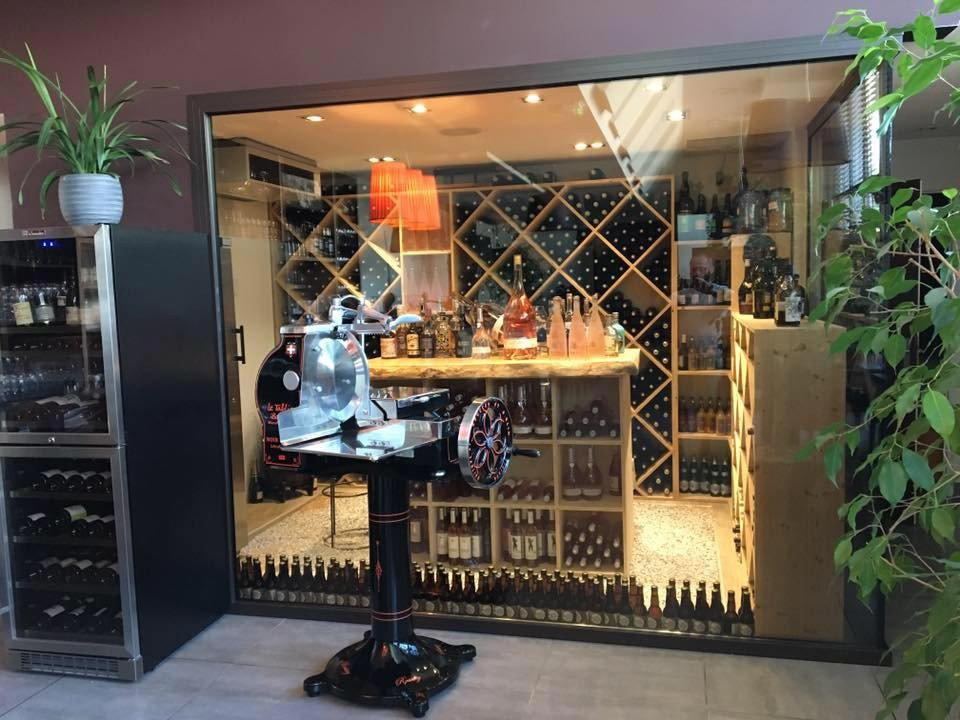
The menu
What to order
- Gratinée d'escargots au bleu de Sassenage
- Homard de Bretagne en croûte sauce Newburg
Where the Vercors Meets the Table
Sassenage occupies a specific geographic position that shapes every serious kitchen in the area: the town sits at the confluence of the Furon and Isère rivers, pressed against the limestone cliffs of the Vercors massif, with Grenoble's urban sprawl beginning just a few kilometres to the east. That geography is not incidental to dining here. The Vercors plateau above has, for generations, supplied the Grenoble basin with raw milk cheeses, foraged herbs, and game, while the Isère valley floor runs market gardens and orchards that feed restaurants across the département. A kitchen in Sassenage that takes its address seriously draws on one of the most compressed and diverse agricultural supply lines in the French Alps.
Le Tablier Bariolé, at 48 Rue François Blumet, occupies that context. The name itself signals something about approach: tablier bariolé translates loosely as a motley or multicoloured apron, a working image rather than an aspirational one, which tends to indicate a room where craft is taken seriously but ceremony is kept to a minimum. The address on Rue François Blumet is residential Sassenage, away from the tourist circuits that track toward the château and the fontaines pétillantes further up the valley. Arriving here is not a performance of destination dining; it is a quieter commitment to a neighbourhood and its producers.
The Ingredient Logic of the Vercors Corridor
To understand what distinguishes this tier of regional French restaurant from the Michelin-tracked establishments further down the road toward Grenoble or Lyon, it helps to understand how ingredient sourcing functions differently at this scale. The great destination houses of French gastronomy, from Flocons de Sel in Megève to Mirazur in Menton, build sourcing programs that are themselves editorial statements: named farms, documented provenance, produce that arrives with a biography. That approach requires resources, relationships, and volume that a neighbourhood restaurant in Sassenage is unlikely to replicate at the same formal register.
What a kitchen at this scale can do instead is something different and in some ways more direct: buy from the Wednesday and Saturday markets in Grenoble, work with the cheese affineurs of Saint-Marcellin and Sassenage itself, and respond to what the season actually delivers rather than what a sourcing brief requires. Sassenage has its own AOC cheese, Bleu de Sassenage, one of the older documented blues of the French Alps, and any kitchen working this address with seriousness will have an opinion on it. The Vercors plateau supplies wild mushrooms, walnuts, and lamb that appear in bistro and fine-dining kitchens across the Grenoble area in autumn. At the neighbourhood level, the relationship between kitchen and market tends to be faster and less mediated than at destination houses, which is its own form of integrity.
This pattern of hyper-local sourcing with minimal supply-chain abstraction is visible across a particular tier of French regional cooking: the Bras kitchen in Laguiole built its identity on the Aubrac plateau's flora; Auberge du Vieux Puits in Fontjoncouse works Languedoc's garrigue. In each case, the ingredient story is inseparable from the geographic address. Sassenage's version of that story is the Vercors.
Regional Scale and What It Signals
The broader Grenoble dining scene occupies an interesting position in French gastronomy: large enough to support specialist kitchens, close enough to Lyon and the Alps to draw comparison with both, but not yet a destination city in the way that Michelin tourism functions for Roanne or Bras country. That means the restaurants operating in satellite towns like Sassenage tend to serve a genuinely local clientele rather than a transient one, which shifts the calculus around format, pricing, and the weight placed on each visit. A kitchen serving its neighbours weekly will prioritise consistency and value differently than one built to justify a two-hour drive.
Across France, the neighbourhood bistro and the regional table restaurant have held distinct positions: the former built around a blackboard menu, familiar service, and a carafe rather than a wine list; the latter more composed, with printed menus, longer sourcing notes, and a slightly more deliberate pace. Le Tablier Bariolé's name suggests an identity somewhere in that territory, though the specific format, seat count, and menu register are not in the public record. For comparable regional traditions at higher documentation levels, consider how Georges Blanc in Vonnas or Auberge de l'Ill in Illhaeusern have anchored multi-generational regional identity. Le Tablier Bariolé operates at a different scale and without the documented history of those institutions, but within the same broad tradition of the French regional table that prizes place over trend.
Planning a Visit
Sassenage is accessible from Grenoble in under fifteen minutes by car and connects to the broader Isère département via the D531, which also leads into the Vercors park. Visitors combining a day in the Vercors with an evening meal will find Sassenage a logical stopping point on the return. The town's position between the plateau and the city means it draws both mountain traffic and suburban Grenoble residents, so weekday lunch and weekend dinner are the periods most likely to see the room occupied. Those planning a wider journey through French restaurant culture in the region may also want to note how the Grenoble-Savoie corridor connects southward toward AM par Alexandre Mazzia in Marseille and northward toward Troisgros in Ouches. For a wider view of what the French regional table looks like across price tiers and geographies, see our full Sassenage restaurants guide.
Further reference points across the French dining spectrum, from the Atlantic coast at Christopher Coutanceau in La Rochelle and La Marine in Noirmoutier to the Champagne country of Assiette Champenoise in Reims and the Alsatian tradition at Au Crocodile in Strasbourg, indicate how varied the regional French table is at its documented extremes. The Provence benchmark at L'Oustau de Baumanière in Les Baux and the Parisian pinnacle at Alléno Paris au Pavillon Ledoyen define the upper tier of the same tradition. International comparisons for French-influenced cooking at the highest documented level include Le Bernardin in New York City and, for cross-cultural technique, Atomix in New York City. And at the heritage end of the canon, Paul Bocuse in Collonges-au-Mont-d'Or remains the fixed reference for what Lyon-rooted classical French cooking looks like at institutional scale.
Frequently asked questions
Can I bring kids to Le Tablier Bariolé?
Le Tablier Bariolé sits on Rue François Blumet in Sassenage, a town-scale setting that tends to suit relaxed, family-oriented visits rather than high-formality dining rooms. Nothing in the venue's profile points to an adults-only or counter-service format that would make it unsuitable for children. Contacting the restaurant directly before visiting with young children is advisable, as service pace and menu flexibility can vary.
Is Le Tablier Bariolé formal or casual?
Sassenage operates outside the Michelin-tracked corridor that runs into central Grenoble, and restaurants at this address on Rue François Blumet generally reflect the town's unpretentious character rather than the dress-code formality of starred rooms. Le Tablier Bariolé's name — literally 'the colourful apron' — signals a kitchen-forward identity without ceremony. Expect a relaxed register rather than a white-tablecloth occasion, though the specifics of dress expectations are best confirmed with the venue.
Is Le Tablier Bariolé a good option for dining near Grenoble without going into the city centre?
Sassenage sits at the western edge of the Grenoble urban area, reachable in under fifteen minutes by car via the D531, making Le Tablier Bariolé a practical alternative to city-centre dining for visitors staying near the Vercors or passing through Isère. The address at 48 Rue François Blumet places it in the heart of Sassenage rather than on a commercial bypass, which typically signals a restaurant oriented toward local regulars rather than passing trade. For travellers who want regional French cooking without the Grenoble city-centre price pressure, this corridor is worth considering.
What's the signature dish at Le Tablier Bariolé?
What the Sassenage location does indicate is proximity to the Vercors plateau, a corridor that supplies serious kitchens in this area with mountain dairy, river fish from the Furon and Isère, and foraged ingredients from the massif. Any kitchen working this geography has strong local sourcing logic to draw from, but confirmed dishes require direct enquiry with the restaurant.
Where exactly is Le Tablier Bariolé?
Le Tablier Bariolé is located at 48 Rue François Blumet, 38360 Sassenage, France, Sassenage.
Fast Comparison
Comparable venues nearby, for context on price, style, and recognition.
| Venue | Cuisine | Price | Notes |
|---|---|---|---|
| Le Tablier BarioléThis venue — the venue you are viewing | Modern French Bistronomique | $50–100 | Not listed |
| À Ma Façon | Modern French Seasonal Bistro | $30–50 | Hyper-Centre |
| Château des Comtes de Challes | Traditional French Regional Gastronomy | $50–100 | Challes-les-Eaux |
| Restaurant le Tournesol en ARDECHE | French Bistronomique | $30–50 | Tournon-sur-Rhone |
| L'Art & la Manière | French Bistronomy | $30–50 | Quartier Guillotière |
| Les Apothicaires | Modern French Bistro with Scandinavian & Brazilian Influences | Not listed | Quartier Saxe Roosevelt |
Continue exploring
More in Sassenage
Restaurants in Sassenage
All restaurants in Sassenage →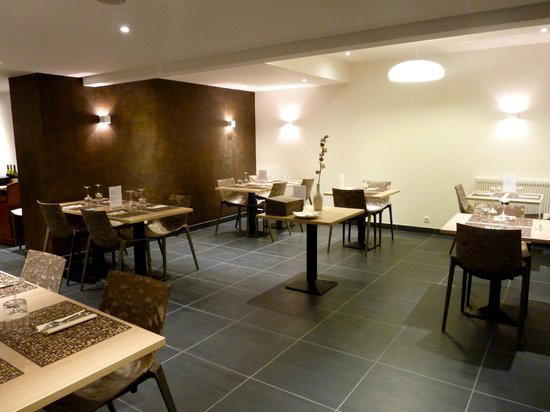
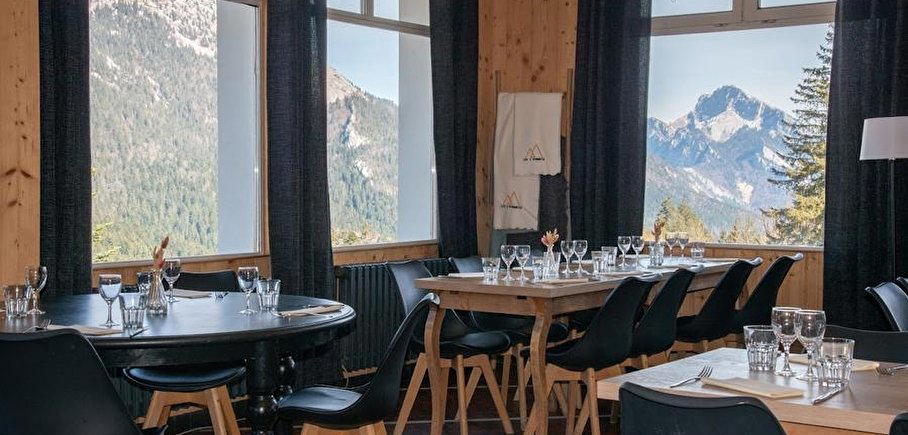
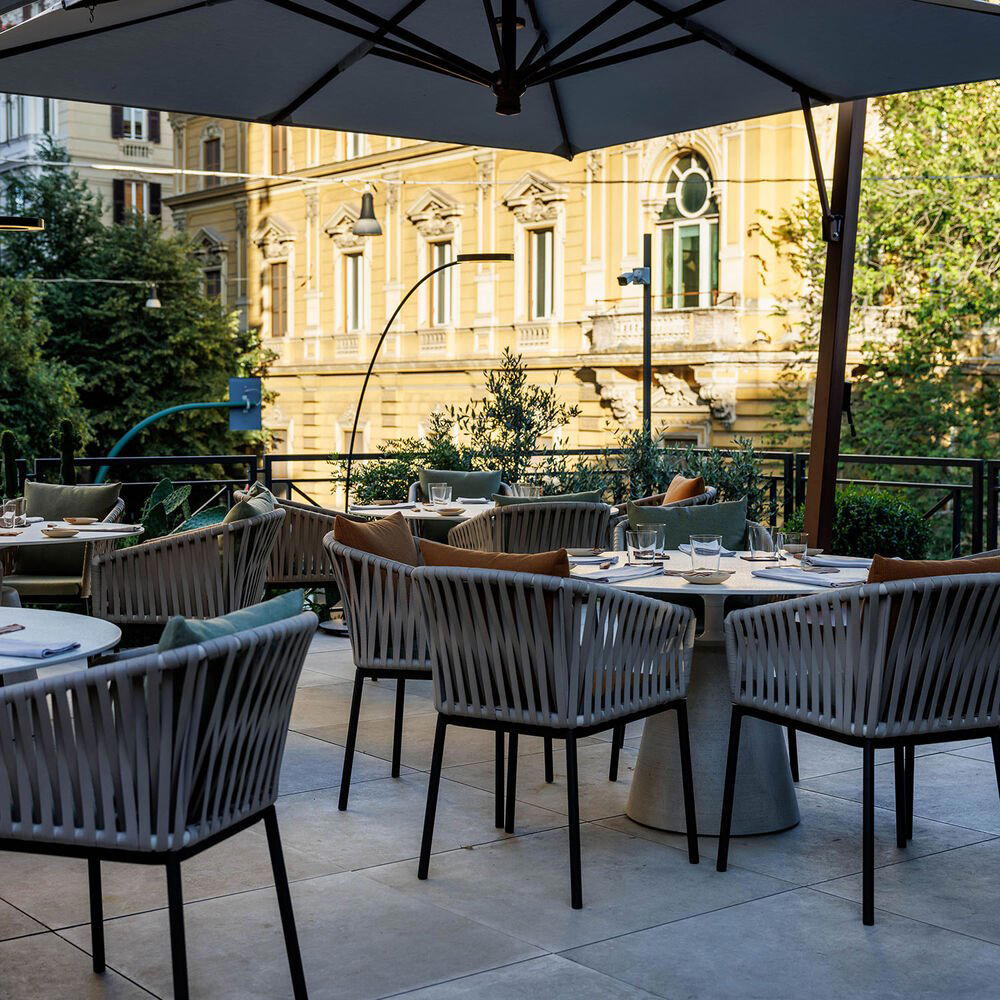
Bars in Sassenage
Browse all →

Details
- Elegant
- Cozy
- Sophisticated
- Date Night
- Special Occasion
- Terrace
- Local Sourcing
- A La Carte
Current opening hours
- Monday
- Closed
- Tuesday
- Closed
- Wednesday
- 11:30 AM–2 PM
- Thursday
- 11:30 AM–2 PM, 7–10 PM
- Friday
- 11:30 AM–2 PM, 7–10 PM
- Saturday
- 11:30 AM–2 PM, 7–10 PM
- Sunday
- 11:30 AM–2 PM
Hours can change for holidays and private events. Last verified .
Charming atmosphere with friendly, attentive, and discreet service.