

Michelin Plate · Relais Chateaux Award
Our verdict
Le Montaigu holds a Michelin Plate at the Domaine de la Bretesche estate in Missillac, southern Loire-Atlantique, where chef Marc Fontanne anchors the menu in regional terroir. The €€€ pricing places it at the upper tier of château-adjacent dining in this corner of Brittany's borderlands, with Michelin recognition across both 2024 and 2025 confirming consistent form.

Pearl is the En Primeur Club membership app — saves, bookings, and concierge access live there. Same editors, same standards.
- Address
- Domaine de la Bretesche, 44780 Missillac, France
- Phone
- +33 2 51 76 86 96
- Hours
- Daily Closed
- Website
- bretesche.com
- Directions
- Get directions
- Booking
- Book on TheFork
The menu
What to order
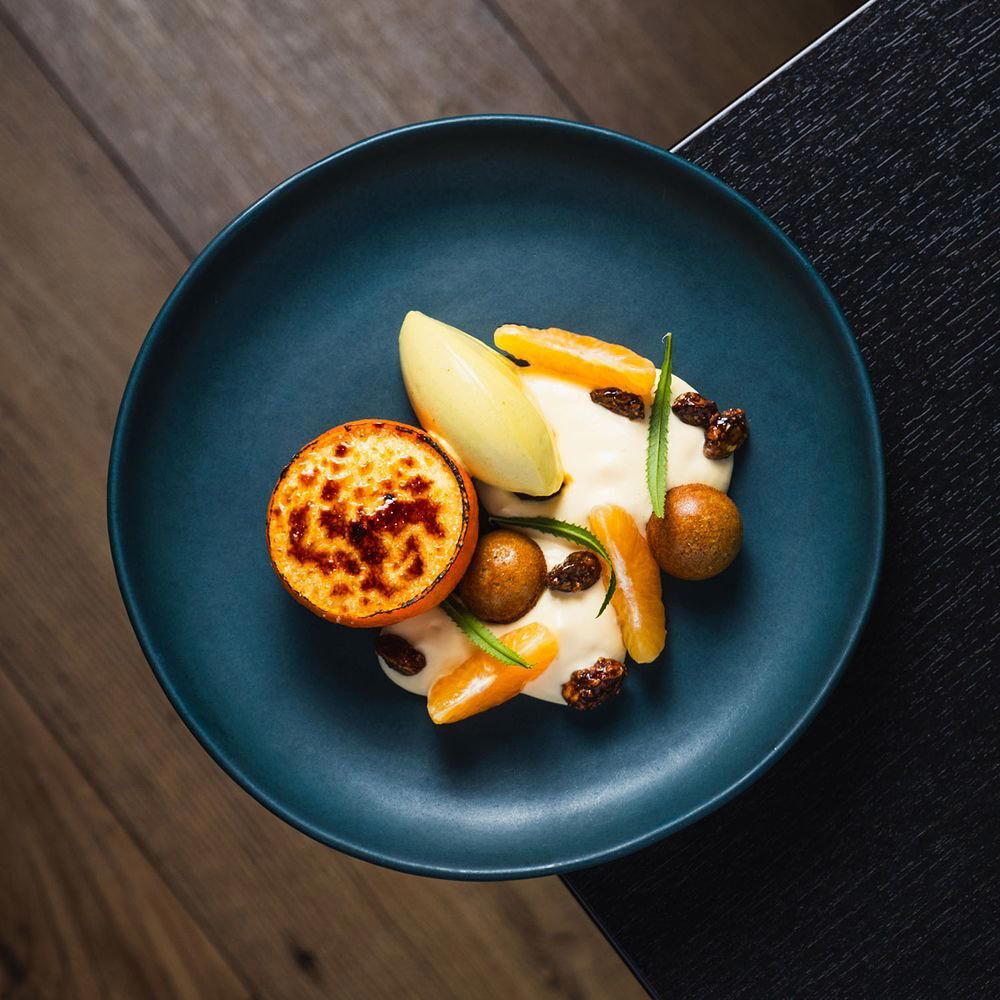
- Langoustine légèrement fumée, tomate confite et citron caviar
- Veal with turnip prepared three ways
Château Dining and the Logic of the Land
There is a particular kind of French country restaurant that earns its authority not from urban density or media proximity, but from the land directly surrounding it. These are not trophy destinations in the way that Alléno Paris au Pavillon Ledoyen in Paris or Mirazur in Menton draw international pilgrimages. They are something quieter and, in their own way, harder to sustain: restaurants whose cooking is answerable to a specific place, where the supply chain is the argument and the terroir is the story.
Le Montaigu sits inside this tradition. Positioned within the Domaine de la Bretesche estate in Missillac, a commune on the edge of Loire-Atlantique where the bocage of southern Brittany begins to flatten toward the Grande Brière wetlands, the restaurant operates in a landscape that has produced serious agricultural and coastal produce for centuries. The estate format, château, grounds, and restaurant occupying the same address, creates a different set of expectations from a standalone urban table. The menu here is, in that context, both a product of place and an argument for it.
What Marc Fontanne Is Working With
Modern cuisine in France, as a category, covers a wide range of intentions. At its weakest, it signals a kitchen that has absorbed the formal vocabulary of contemporary cooking without a clear point of view. At its most considered, it describes a kitchen that applies current technique to local material with genuine discipline. The Michelin Plate designation awarded to Le Montaigu in both 2024 and 2025, which recognises good cooking without the star tier's demand for faultless execution across every dimension, places chef Marc Fontanne in that second category: a cook whose sourcing instincts and kitchen literacy have earned consistent institutional recognition.
The terrain around Missillac is productive. Loire-Atlantique borders the Atlantic to the west and the Loire estuary to the south, which means the larder includes estuary fish, salt-marsh lamb from the Guérande peninsula, the region's own sel de Guérande, freshwater produce from the Brière, and woodland game when the season allows. The Michelin notation specifically highlights expression of the terroir as a characteristic of the kitchen, which is a meaningful signal: it suggests sourcing is not decorative here but structural, the kind of regional rootedness you find at a different price tier and higher star count at Bras in Laguiole or Flocons de Sel in Megève.
That positioning matters when reading the €€€ price range. This is not bargain dining, but it is priced meaningfully below the €€€€ tier occupied by destinations like Assiette Champenoise in Reims or Au Crocodile in Strasbourg, which operate at higher cover counts and greater brand visibility. Le Montaigu's price-to-recognition ratio reflects the estate context: overhead and expectation are shaped by the property, not the competitive density of a city food scene.
The Domaine Setting and What It Changes
Approaching the Domaine de la Bretesche means driving through gate posts and under trees before arriving at a medieval château reflected in a lake. The dining room within this frame operates differently from an urban restaurant of comparable quality. The pace is different. The expectation of the visit is different. Guests are not squeezing a table into a packed Tuesday schedule; the estate format invites the kind of extended lunch or dinner that the surrounding countryside enforces by sheer absence of competing urgency.
For visitors staying on the property, the Domaine de la Bretesche Golf and Spa provides the broader context for the stay. Le Montaigu functions as the fine-dining anchor within that ecosystem, sitting at a different register from the casual dining and terrace options the estate also offers. The separation matters: the restaurant makes a distinct culinary argument rather than serving as a hotel restaurant in the generic sense.
Missillac itself offers limited dining competition at this level, which concentrates the estate's appeal. Visitors arriving from Nantes, approximately 70 kilometres to the east, or from the Guérande salt peninsula to the south, will find little in the immediate zone that operates at an equivalent register. For a fuller picture of what the area offers across categories, the Missillac restaurants guide maps the wider field.
Reading the Michelin Signal
Two consecutive Michelin Plates, 2024 and 2025, tell a consistent story. The Plate, which was formalised by Michelin as a positive recommendation for kitchens below the star threshold, does not carry the weight of a star in international press, but it is a meaningful quality floor. It means Michelin's inspectors have returned, found the cooking worth recommending, and found no reason to revise that recommendation downward.
For a rural estate restaurant in Loire-Atlantique, that consistency is the relevant credential. The comparison set for Le Montaigu is not the three-star rooms at Paul Bocuse's Auberge du Pont de Collonges or Auberge de l'Ill in Illhaeusern, both of which carry decades of institutional prestige and an entirely different pricing structure. The relevant comparison is with other terroir-focused regional tables operating in château or estate contexts, where consistent Michelin recognition over multiple years signals a kitchen that has solved the supply and execution problems that defeat most properties in this category.
It is a supporting data point rather than a primary credential, but it adds to the picture of a room that is managing the guest experience adequately alongside the food.
Planning a Visit
Le Montaigu is at Domaine de la Bretesche, 44780 Missillac. The estate sits roughly midway between Saint-Nazaire to the west and Redon to the north, accessible by car from Nantes in under an hour. Given the estate's position, driving is the practical approach; the nearest TGV connection is at Saint-Nazaire or Nantes, from which the Domaine is a 30-to-60-minute transfer. Booking ahead is advisable given the limited cover count typical of château dining rooms of this type and the absence of a dense local walk-in market to fill gaps. For those planning to spend more time in the region, the Missillac hotels guide, bars guide, wineries guide, and experiences guide provide the surrounding framework. Internationally, the terroir-forward approach at Le Montaigu shares structural DNA with kitchens like AM par Alexandre Mazzia in Marseille, Troisgros in Ouches, Frantzén in Stockholm, and FZN by Björn Frantzén in Dubai, all of which treat provenance as the organising principle of the menu rather than a background detail.
What to Order
Dishes built around Guérande salt, Loire-Atlantique estuary fish, and local game, when the season supports it, represent the kitchen's clearest argument. Ask at booking or on arrival what the current regional focus is, as Fontanne's approach to expression of terroir suggests the menu moves with the season rather than holding fixed signatures year-round. That responsiveness to the local supply calendar is both the kitchen's editorial statement and its practical strength in a region this well-provisioned.
Budget Reality Check
| Venue | Cuisine | Price | Awards |
|---|---|---|---|
| Le Montaigu - Domaine de la BretescheThis venue — the venue you are viewing | Modern French Fine Dining | $50–100 | Michelin Plate · Relais Chateaux Award |
| Alléno Paris au Pavillon Ledoyen | Creative | Not listed | Michelin 3 Star |
| Kei | Contemporary French, Modern Cuisine | Not listed | Michelin 3 Star |
| L'Ambroisie | French, Classic Cuisine | Not listed | Michelin 3 Star |
| Le Cinq - Four Seasons Hôtel George V | French, Modern Cuisine | Not listed | Michelin 3 Star |
| Plénitude | Contemporary French | Not listed | Michelin 3 Star |
Recognition history
Dated appearances from independent guides and award organizations, with the underlying list record or original source where available.
Michelin Plate
Michelin
Relais Chateaux Award
Relais Chateaux
Full recognition history (3 entries)
Michelin Plate
Michelin
Continue exploring
More in Missillac
Restaurants in Missillac
Browse all →
Bars in Missillac
Browse all →
Hotels in Missillac
Browse all →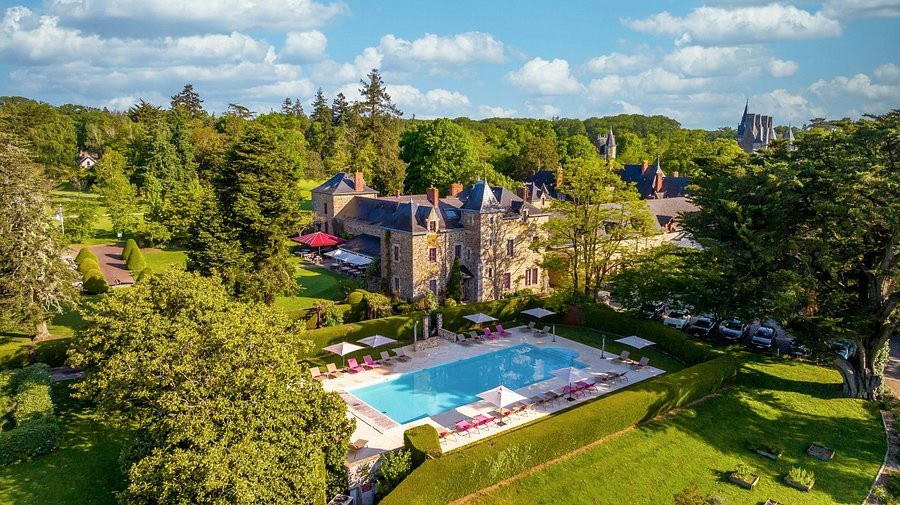
Wineries in Missillac
Browse all →
Le Montaigu - Domaine de la Bretesche
The wine
- Wine program
- Exceptional wine program
- Extensive wine list
- Sommelier-led
Details
- Romantic
- Elegant
- Scenic
- Sophisticated
- Intimate
- Date Night
- Special Occasion
- Celebration
- Business Dinner
- Private Dining
- Waterfront
- Garden
- Historic Building
- Hotel Restaurant
- Terrace
- Extensive Wine List
- Sommelier Led
- Farm To Table
- Local Sourcing
- Organic
- Waterfront
- Garden
- Tasting Menu
- Prix Fixe
- A La Carte
- Wine
- Cocktails
- Vegetarian Friendly
- Allergy Accommodating
Current opening hours
- Monday
- Closed
- Tuesday
- Closed
- Wednesday
- Closed
- Thursday
- Closed
- Friday
- Closed
- Saturday
- Closed
- Sunday
- Closed
Hours can change for holidays and private events. Last verified .
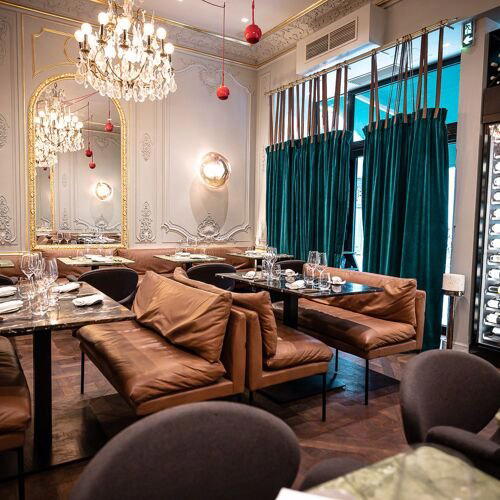
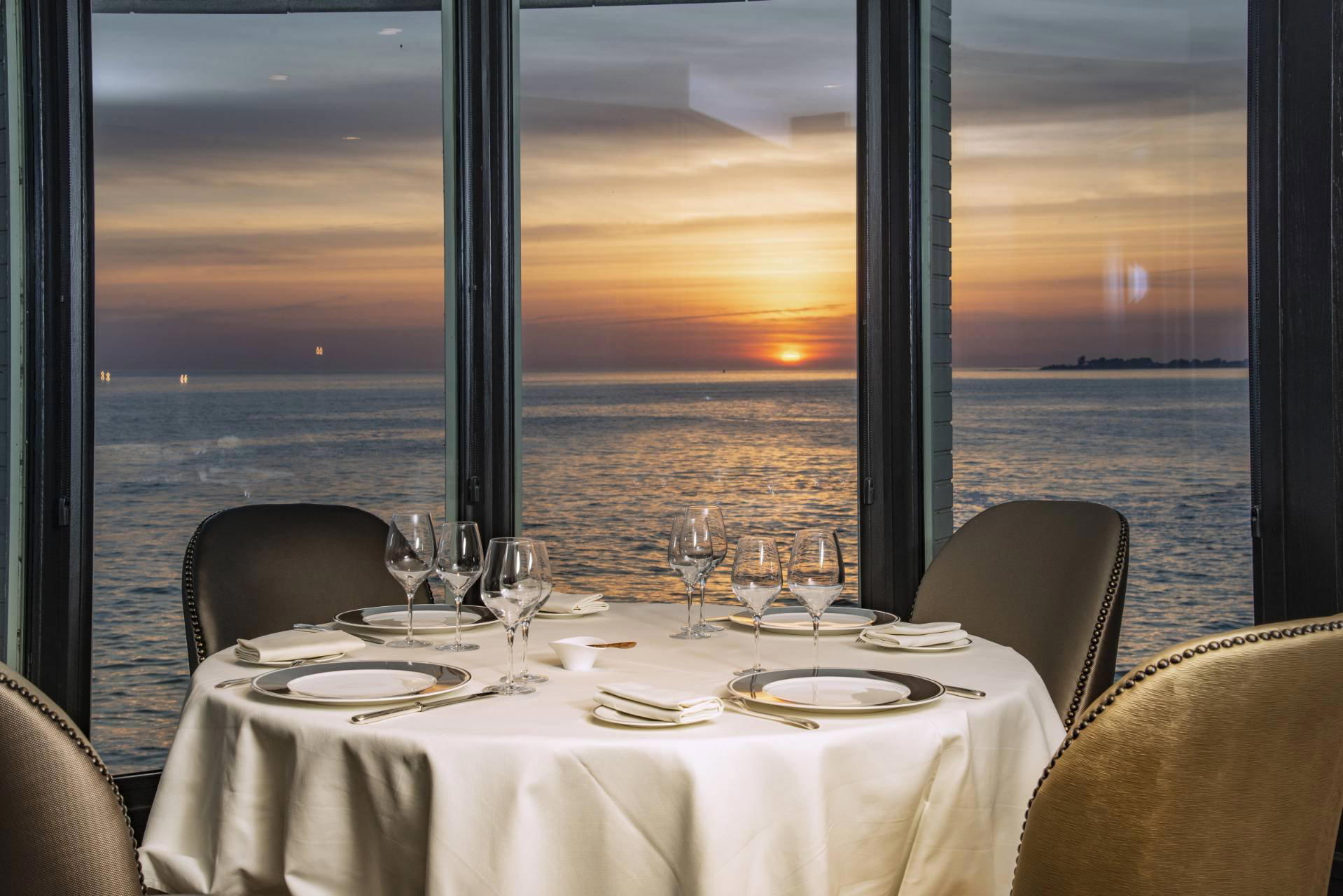
Refined and intimate with patinated wood paneling and floor-to-ceiling windows opening onto the castle and lake; candlelit and sophisticated yet warm and welcoming.