
Michelin Bib Gourmand
Our verdict
Le Faitout holds back-to-back Michelin Bib Gourmand recognition (2024 and 2025), positioning it among the Hainaut region's most consistent value-led kitchens. Chef Louis-Philippe Vigilant works in the traditional cuisine register at the €€ price point, running a neighbourhood address on Place de la Résistance in Saint-Ghislain.

Pearl is the En Primeur Club membership app — saves, bookings, and concierge access live there. Same editors, same standards.
- Address
- Pl. de la Résistance 1, 7331 Saint-Ghislain, Belgium
- Phone
- +32 65 64 48 57
- Hours
- Mon–Thu 11:45 AM–2:30 PM, 6:30–10 PMFri–Sat 11:45 AM–2:30 PM, 6:30–10:30 PMSun 11:45 AM–2:30 PM, 6:30–10 PM
- Website
- fernez.com
- Directions
- Get directions
Traditional Cooking in the Hainaut Lowlands
Belgium's restaurant recognition tends to cluster around Antwerp, Brussels, and the Flemish coast. Venues like Zilte in Antwerp, Boury in Roeselare, and Bozar Restaurant in Brussels attract the critical attention and the expense accounts. The Walloon interior, by contrast, operates at a quieter register: fewer destination kitchens, more cooking that exists to feed a community rather than to perform for it. In Saint-Ghislain, a small industrial town in the province of Hainaut just outside Baudour, Le Faitout sits in that quieter register and has been drawing Michelin notice precisely because of it.
The Bib Gourmand, awarded in both 2024 and 2025, is Michelin's marker for cooking that delivers quality above expectation at a price point — not a consolation for venues that missed a star, but a distinct category that rewards kitchens running honest, technically sound food at accessible prices.
What the Bib Gourmand Means Here
The Bib Gourmand bracket in Belgium is competitive. Across Wallonia and Flanders, the guide recognises kitchens working in traditional and bistro formats where ingredient quality and technique are applied to dishes priced below the starred tier. Chef Louis-Philippe Vigilant's kitchen at Le Faitout falls into traditional cuisine, a category that in the Belgian context covers dishes rooted in regional and Franco-Belgian cooking: preparations where the sourcing of base ingredients and the execution of classical methods carry more weight than novelty or conceptual framing.
Sourcing and the Logic of Traditional Kitchens
Traditional cuisine restaurants carry a specific relationship to ingredient sourcing that separates them from concept-driven kitchens. Where a creative format might build a dish around a technique or a presentation idea and source to fit, the traditional register tends to invert that process: the season and the supplier determine what gets cooked. In the Hainaut region, that means proximity to market gardens in the Ath and Mons hinterlands, to livestock farming on the Hesbaye plateau, and to the broader northern French and Belgian agricultural supply chains that feed this part of the country.
A kitchen earning consecutive Bib Gourmands at the €€ price point has to make disciplined sourcing decisions. Margins at this tier do not support the same supplier relationships as a starred kitchen at three or four times the price. What tends to follow is a menu built around what is genuinely seasonal and genuinely local, where the value proposition rests on ingredient integrity rather than on luxury provenance. That is not a compromise; it is a different and in some ways more demanding editorial discipline applied to food.
Across Belgium, some of the most instructive eating happens in exactly this category. The Auberge Grand'Maison in Mûr-de-Bretagne and Auga in Gijón work in comparable traditional registers in their own regions, where the local supply chain shapes the plate more directly than a chef's conceptual ambitions. Le Faitout fits that pattern in Hainaut.
The Room and the Setting
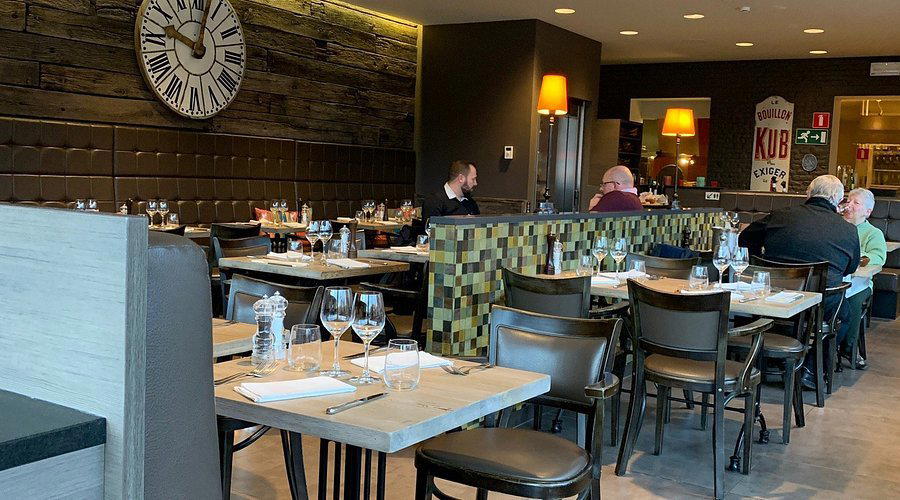
Place de la Résistance in Saint-Ghislain is a working town square, not a tourist focal point. The address places Le Faitout at the centre of a neighbourhood rather than at a remove from it, which tends to shape the atmosphere inside: a dining room used by locals across a range of occasions, from midweek lunches to weekend family meals.
The physical environment at this address and price point would typically involve a modest room: no architectural gesture, no designed drama, tables close enough together that conversation carries across them. What fills that space, in the traditional cuisine format, is the occasion itself and the cooking that occasions it. For visitors arriving from Brussels or Mons, the drive into Saint-Ghislain is not a detour toward spectacle; it is a deliberate choice to eat at a table where the cooking is the point.
For broader context on dining and hospitality in the area, see our full Baudour restaurants guide, as well as our guides to hotels, bars, wineries, and experiences in Baudour.
Where Le Faitout Sits in the Belgian Context
Belgium's restaurant culture has a strong tradition of placing serious cooking in non-urban or semi-rural settings. Hof van Cleve in Kruishoutem, Willem Hiele in Oudenburg, and Bartholomeus in Heist all demonstrate that destination-calibre cooking does not require a city address. Le Faitout operates at a different tier, but the pattern is consistent: technically sound, locally grounded kitchens in modest settings have long held their own in Belgian dining culture.
Among traditional cuisine addresses in the broader region, the closest Baudour comparison in the Franco-Belgian register is d'Eugénie à Emilie, which works in the classic French tradition. At the higher end of Walloon cooking, venues like Sir Kwinten in Sint-Kwintens-Lennik and Ralf Berendsen in Neerharen operate in more refined registers, which frames Le Faitout's €€ Bib position more clearly: it is not trying to be those kitchens, and is the better for it.
Planning a Visit
Le Faitout is at Place de la Résistance 1, 7331 Saint-Ghislain, accessible from both Mons and the Baudour area. Dress code and format details are similarly unverified, though the price tier and neighbourhood setting point to a relaxed, informal room where smart casual is ample.
Frequently asked questions
Would Le Faitout be comfortable with kids?
At the €€ price point in a neighbourhood square setting, Le Faitout fits the profile of a family-accessible restaurant.
What is the atmosphere like at Le Faitout?
Belgian traditional cuisine restaurants in this bracket tend to be convivial rather than formal: the emphasis is on the table and the food, not on architectural staging. The back-to-back Bib Gourmand recognition in 2024 and 2025 confirms that Michelin's inspectors have found the cooking consistent enough to return for.
What do regulars order at Le Faitout?
In the traditional cuisine register, Chef Louis-Philippe Vigilant's kitchen would be expected to work with seasonal and regionally sourced ingredients, with preparations rooted in Franco-Belgian cooking tradition. The Bib Gourmand award signals that quality-to-price ratio is a defining characteristic; the dishes most worth ordering are likely those that reflect what is in season at the time of your visit.
Price and Positioning
| Venue | Cuisine | Price | Awards |
|---|---|---|---|
| Le FaitoutThis venue — the venue you are viewing | Modern French-Belgian Brasserie | $30–50 | Michelin Bib Gourmand |
| Boury | Modern Frlemish, Creative French | Not listed | Michelin 3 Star |
| Comme chez Soi | French - Belgian, Classic Cuisine | Not listed | Michelin 1 Star |
| Hertog Jan at Botanic | Modern Flemish, Creative | Not listed | Michelin 2 Star |
| L'Eau Vive | French, Modern French | Not listed | Michelin 2 Star |
| La Durée | French-Belgian, Creative | Not listed | Michelin 2 Star |
Recognition history
Dated appearances from independent guides and award organizations, with the underlying list record or original source where available.
Michelin Bib Gourmand
Michelin
Full recognition history (3 entries)
Michelin Bib Gourmand
Michelin
Michelin Bib Gourmand
Michelin
Continue exploring
More in Baudour
Restaurants in Baudour
Browse all →
Hotels in Baudour
Browse all →
Wineries in Baudour
Browse all →
Le Faitout
The wine
- Wine program
- Curated wine list
- Extensive wine list
Details
- Cozy
- Lively
- Classic
- Family
- Group Dining
- Casual Hangout
- Open Kitchen
- Terrace
- Private Dining
- Extensive Wine List
- A La Carte
- Gluten Free Options
Current opening hours
- Monday
- 11:45 AM–2:30 PM, 6:30–10 PM
- Tuesday
- 11:45 AM–2:30 PM, 6:30–10 PM
- Wednesday
- 11:45 AM–2:30 PM, 6:30–10 PM
- Thursday
- 11:45 AM–2:30 PM, 6:30–10 PM
- Friday
- 11:45 AM–2:30 PM, 6:30–10:30 PM
- Saturday
- 11:45 AM–2:30 PM, 6:30–10:30 PM
- Sunday
- 11:45 AM–2:30 PM, 6:30–10 PM
Hours can change for holidays and private events. Last verified .
Warm and welcoming with a buzzy, cozy atmosphere featuring a modern glass extension, veranda, and open wood-fired grill.