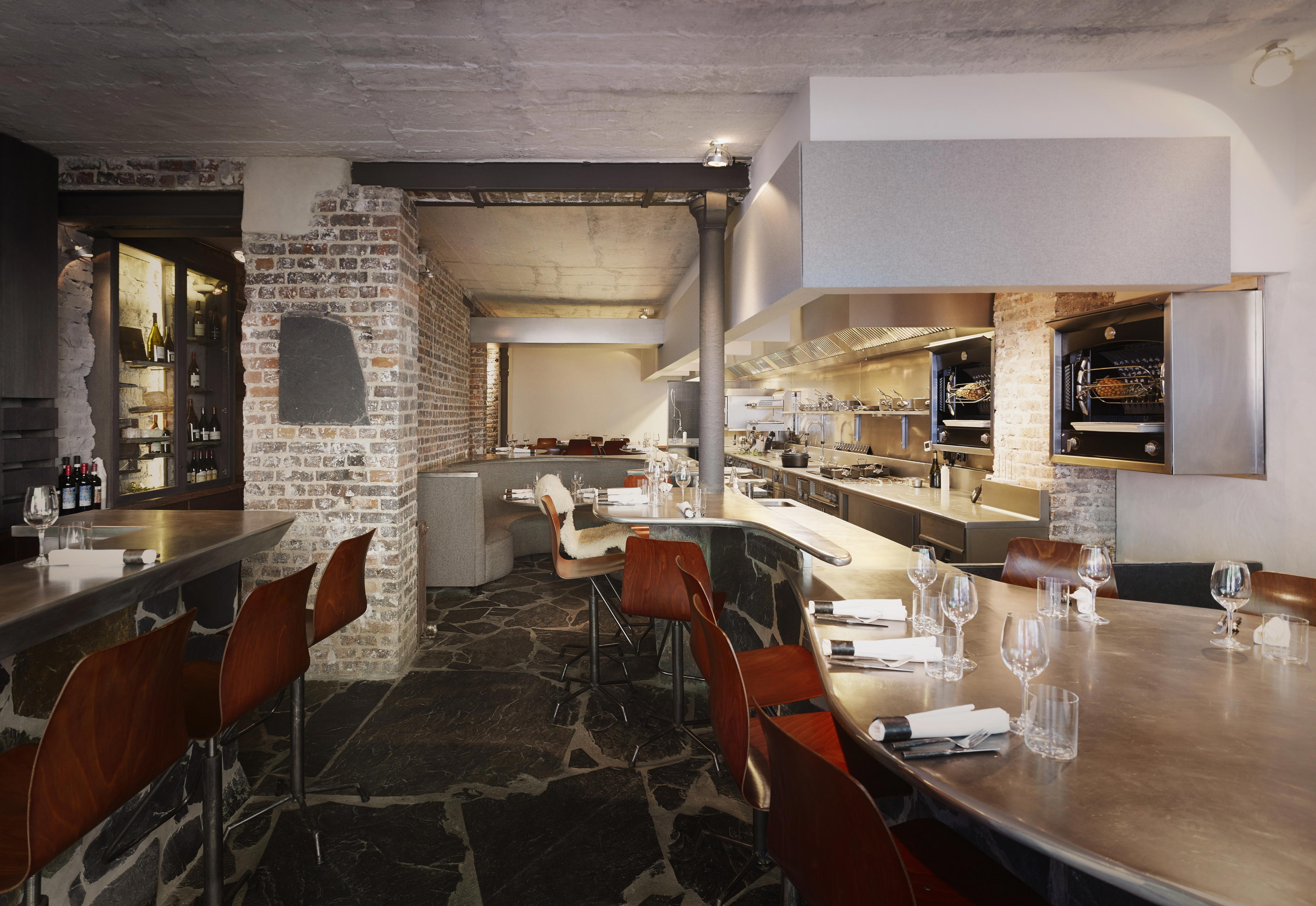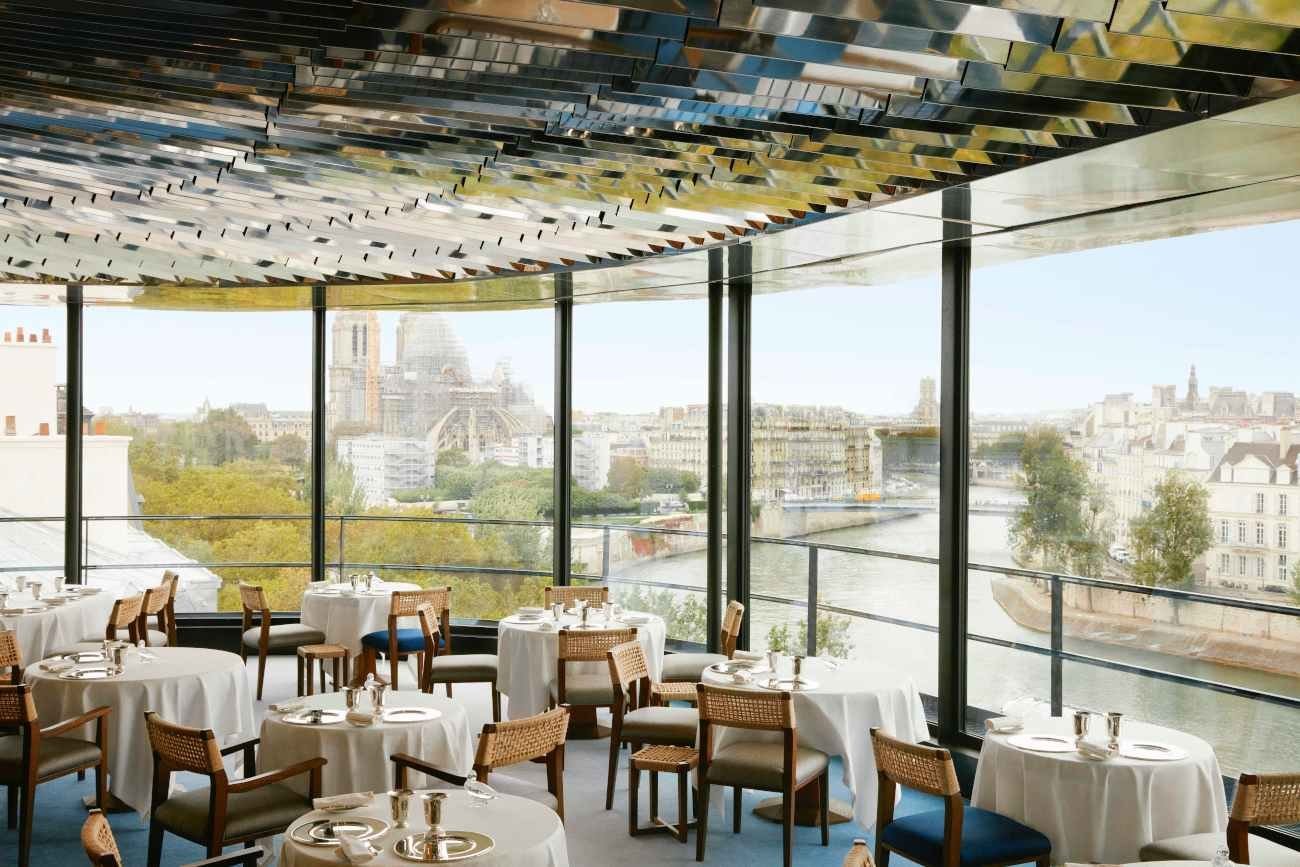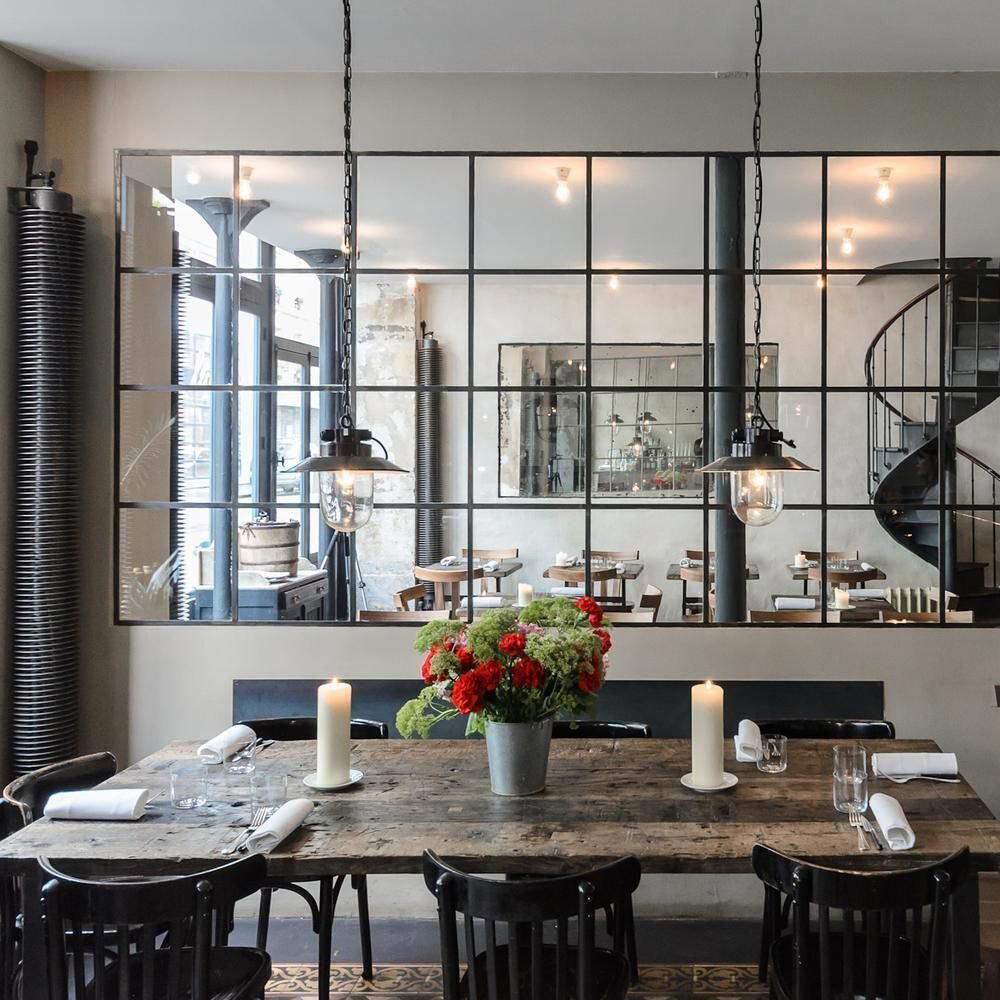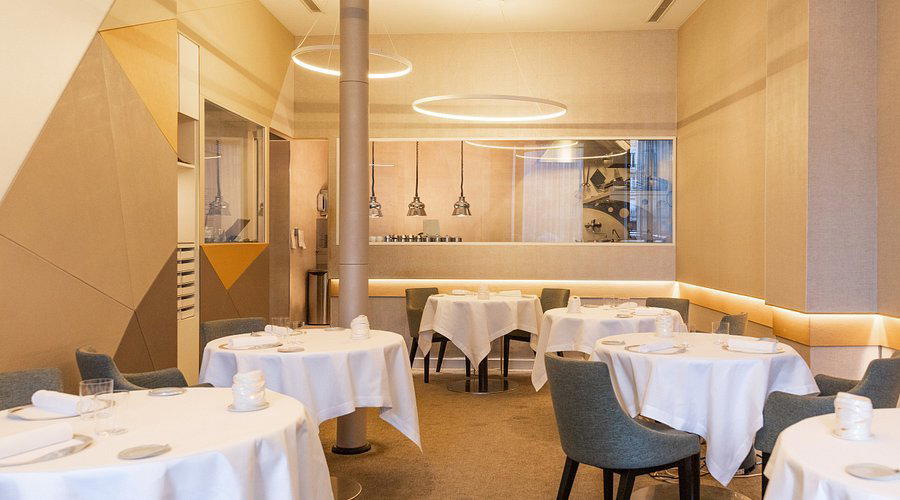
We're Smart World 1 Radish
Our verdict
Le Débonnaire occupies the 13th arrondissement's quieter dining register, building its menu around seasonal vegetables and locally sourced produce under the 'Bon pour le climat' charter. The kitchen's commitment to plant-forward sequences and climate-conscious sourcing places it in a growing tier of Paris restaurants where environmental alignment shapes the menu as much as classical technique does.

Pearl is the En Primeur Club membership app, where members save venues, book tables and use the concierge.
The 13th Arrondissement and the Case for Eating Lower on the Food Chain
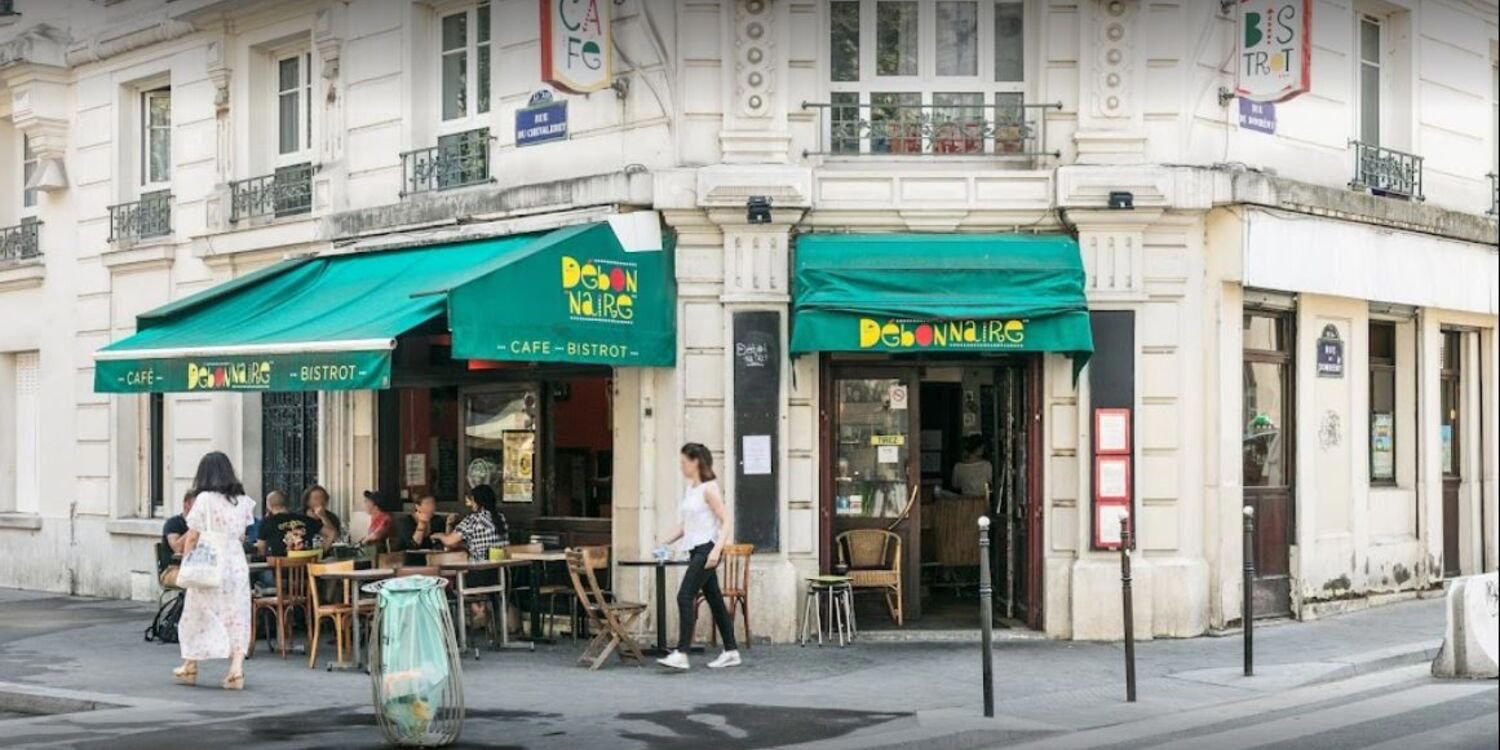
Paris dining has always had its hierarchies. The palace restaurants of the 8th Le Cinq at the Four Seasons George V, Alléno at Pavillon Ledoyen, occupy one end of the spectrum. At the other, a quieter but increasingly deliberate movement has taken hold in the outer arrondissements, where a cluster of kitchens has made the sourcing decision itself into the central act of the meal. Le Débonnaire, at 107 Rue du Chevaleret in the 13th, belongs to this latter register. The address is a few metro stops from the tourist circuits, in a neighbourhood that reads more as working city than dining destination, which is partly the point: restaurants in this cohort tend to operate without the overhead that drives tasting-menu prices toward triple digits, and that structural difference shapes everything from the plate to the pacing.
The 13th has its own culinary personality, a significant Southeast Asian food presence around Avenue de Choisy, a scattering of independent wine bars, and, increasingly, addresses with a serious commitment to what the French food press has taken to calling cuisine engagée, cooking that takes a position. Le Débonnaire holds one such position explicitly, through its affiliation with 'Bon pour le climat,' a French organisation that certifies restaurants for measurable reductions in their carbon footprint, primarily through sourcing choices and the proportion of plant-based dishes on the menu.
What 'Bon pour le Climat' Actually Means on the Plate
The certification is not decoration. 'Bon pour le climat' restaurants commit to reducing the greenhouse gas emissions associated with their menus, which in practice means restructuring the proportion of animal protein served, prioritising short-supply-chain sourcing, and, for many kitchens in the program, building menus where vegetables are the architectural centre of the meal rather than its accompaniment. This is a meaningful departure from the classical French model, where the protein anchors the plate and the vegetable is the supporting character, a model that persists across much of the Parisian restaurant scene, from the bistrot tradition to the high-end addresses like L'Ambroisie and Kei.
For context on how unusual this is in the French fine-dining register, consider that even the country's most celebrated plant-forward address, Arpège under Alain Passard, occupies a three-Michelin-star tier with prices to match. The 'Bon pour le climat' cohort operates further down the price register, making the plant-forward approach accessible to a different diner, one who is choosing it not because it is the only option at a certain price point, but because the kitchen has made a coherent argument for why it matters.
Reading the Meal as a Sequence
The editorial angle worth applying to a kitchen like this is not the individual dish but the arc of the meal. In a vegetable-forward, climate-conscious framework, the progression of a menu tends to follow a different logic than the classical French sequence. Rather than building toward a dominant protein, the structure shifts: early courses typically introduce the season's most delicate produce, raw or minimally cooked; mid-sequence dishes do more transformative work, using heat, fermentation, or reduction to develop depth; and the final savoury courses often carry the meal's most concentrated flavours, drawing on aged cheeses, pulses, or slow-cooked roots in ways that satisfy the satiety function that meat once served.
Seasonality is the mechanism that drives this structure forward. Spring menus at such kitchens tend toward asparagus, peas, and fresh herbs; summer sequences lean on tomatoes, courgettes, and stone fruits used in savoury contexts; autumn brings squash, celeriac, and mushrooms that carry enough textural weight to anchor a course; winter sequences rely more heavily on preserved, fermented, and slow-cooked preparations. The 'local seasonal products with an emphasis on vegetables' framing in Le Débonnaire's sourcing charter means the menu shifts with the calendar in ways that reward multiple visits across the year, a February meal and a June meal are effectively different experiences built from different raw materials. France's regional depth supports this approach: the country's market garden tradition, concentrated in regions from the Loire Valley to Provence, supplies Paris kitchens year-round with produce that needs little transformation to carry a course.
For comparison, this seasonal-arc approach has been applied at the highest levels of French cooking at addresses like Bras in Laguiole, where Michel Bras built a philosophy of gargouillou, a living, seasonal vegetable dish that changes daily, long before plant-forward menus became a marker of environmental seriousness. Flocons de Sel in Megève and Mirazur in Menton have also built their reputations partly on hyper-seasonal sourcing that responds to what the surrounding territory produces. Le Débonnaire operates in a different price tier and neighbourhood context, but the underlying logic, that the season, not the protein, should set the menu's agenda, places it in a coherent French culinary lineage.
Where This Sits in Paris's Current Dining Map
Paris has seen a meaningful proliferation of climate-aligned restaurants over the past several years, driven partly by the 'Bon pour le climat' programme and partly by a generational shift among younger chefs who trained in the post-Escoffier tradition but have chosen to depart from its protein-centred orthodoxies. The 13th arrondissement, with lower rents than the Marais or Saint-Germain and a diverse, neighbourhood-oriented clientele, has attracted several of these kitchens. Le Débonnaire's address on Rue du Chevaleret is a 10-to-15-minute walk from the Bibliothèque François-Mitterrand metro station, which serves lines 14 and RER C, making it accessible from central Paris without significant travel time.
The contrast with the 8th's grand address restaurants is instructive rather than competitive. Dining at Troisgros or Paul Bocuse means engaging with the formal architecture of classical French hospitality, where the occasion is as much the point as the food. Dining at a 'Bon pour le climat' address in the 13th means engaging with a different kind of argument: that the sourcing decision is a form of hospitality in itself, and that a well-constructed vegetable sequence can carry the same meal-length narrative arc as a menu built around protein. Whether that argument lands depends on how the kitchen executes it, and on what the diner brings to the table. For EP Club readers planning a Paris visit, Le Débonnaire works well alongside the city's broader dining offer; see our full Paris restaurants guide, Paris bars guide, Paris hotels guide, Paris wineries guide, and Paris experiences guide for context on how to build around it. For international comparison, the climate-aligned sourcing model has found expression further afield at Le Bernardin in New York City and, at a more accessible tier, at Emeril's in New Orleans, where regional sourcing has been a consistent programme commitment. And for those tracing the deep roots of cuisine du terroir in France itself, Auberge de l'Ill in Illhaeusern provides the Alsatian counterpoint to Paris's increasingly outward-looking sourcing conversations.
Planning a Visit
Le Débonnaire is at 107 Rue du Chevaleret, 75013 Paris. The address rewards a visit during the seasonal transitions, late autumn, when root vegetables and preserved preparations take over from summer produce, and early spring, when the first tender greens arrive, because the menu's investment in local, seasonal sourcing means those moments of change are most legible on the plate.
Frequently asked questions
What awards or recognition does Le Débonnaire have?
Le Débonnaire has received recognition including: This restaurant is affiliated with the organization 'Bon pour le climat' and also prefers local seasonal products with an emphasis on vegetables.
How do I find Le Débonnaire?
Le Débonnaire is located at 107 Rue du Chevaleret, 75013 Paris, France, Paris.
What should I eat at Le Débonnaire?
The kitchen is built around seasonal vegetables and local produce, aligned with the Bon pour le climat certification, which requires menus to actively reduce greenhouse gas emissions. That means the strongest choices on any given visit will be whatever is at peak season, the menu is designed to follow that logic rather than anchor to a fixed roster of signature dishes. Arriving with flexibility rather than a specific craving in mind is the more productive approach here.
Do they take walk-ins at Le Débonnaire?
Checking directly via the venue or a current reservations platform before visiting is advisable, particularly given that climate-aligned restaurants in Paris have seen growing demand over recent years.
What's Le Débonnaire best at?
The kitchen's organising principle is vegetables and local seasonal sourcing, backed by the Bon pour le climat affiliation, a certification that commits restaurants to measurable reductions in menu-related emissions, not simply a preference statement. That discipline tends to produce cooking where produce quality and sequencing carry the meal rather than protein or luxury ingredients. It positions Le Débonnaire squarely in the wave of Paris restaurants rewriting the terms of serious French dining.
Is Le Débonnaire allergy-friendly?
The menu's emphasis on vegetables and local seasonal ingredients means the kitchen already works with a narrower, more transparent ingredient set than most conventional French restaurants.
Is Le Débonnaire part of a formal sustainability certification programme?
Yes, Le Débonnaire is affiliated with Bon pour le climat, a French programme that requires participating restaurants to assess and reduce the carbon footprint of their menus, with an emphasis on sourcing local produce and prioritising vegetables over high-emission proteins. The certification goes beyond seasonal rhetoric: member kitchens commit to structured emissions targets. Among Paris's growing cohort of climate-aligned restaurants, that formal affiliation gives Le Débonnaire a verifiable accountability framework that most sustainable-leaning venues do not carry.
Comparable Options
Comparable venues nearby, for context on price, style, and recognition.
| Venue | Cuisine | Price | Awards | Notes |
|---|---|---|---|---|
| Le DébonnaireThis venue (the venue you are viewing) | Neighborhood French Bistro | $20–30 | We're Smart World 1 Radish | Not listed |
| Restaurant Janine | Modern French Bistro | $30–50 | Star Wine List | Batignolles |
| L'Ébauchoir | Modern French Bistro | $30–50 | Star Wine List | Bastille |
| Le Relais de l'Entrecote | Classic French Steak-Frites Bistro | $30–50 | Not listed | 6th arrondissement (Saint-Germain-des-Prés) |
| Le Petit Célestin | Classic French Bistro | $50–100 | Not listed | Le Marais |
| La Petite Périgourdine | South-West French Bistro | $30–50 | Not listed | 5th Arrondissement |
Recognition history
Dated appearances from independent guides and award organizations, with the underlying list record or original source where available.
We're Smart World 1 Radish
We're Smart World