Le Coq d'Or

A Michelin Plate-recognised address on Chénérailles' market square, Le Coq d'Or serves creative takes on Creuse and broader Limousin specialities at accessible prices. The dining room has accumulated a collection of rooster figures brought in by regulars over decades, giving it a character no decorator could manufacture. It holds a clear position among Creuse's better tables.
Pearl is the En Primeur Club membership app — saves, bookings, and concierge access live there. Same editors, same standards.
- Address
- 7 Pl. du Champ de Foire, 23130 Chénérailles, France
- Phone
- +33 5 55 52 01 74
- Website
- restaurant-coqdor-23.com
- Directions
- Get directions
 Saves & bookings on Pearl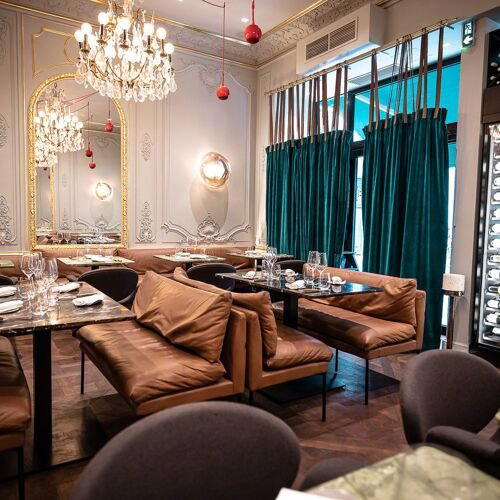
A Market Square Table in the Creuse Interior
Place du Champ de Foire in Chénérailles is the kind of square that still functions the way French provincial squares were designed to: as a gathering point for a rural community, framed by modest civic architecture and a church that predates the republic. Le Coq d'Or occupies a corner of that square, and arriving on foot across the open cobblestones, the exterior gives nothing away beyond a sign and a sense of quiet permanence. This is not a restaurant designed to attract passing traffic from a motorway. It belongs to a specific place, and that specificity carries through to the plate.
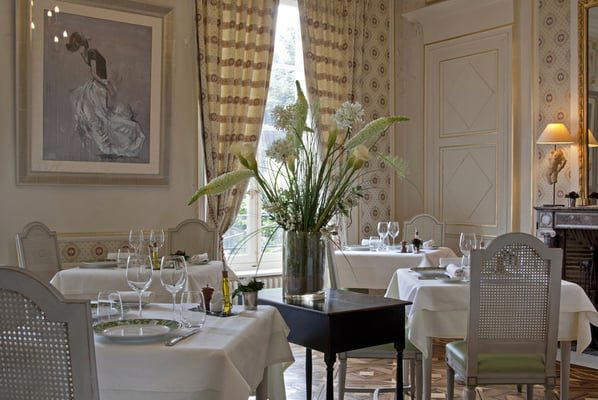
Inside, the dining room has accumulated something unusual: a collection of rooster figurines, brought in by customers returning from travels, that has grown over years into a display dense enough to give the room a personality of its own. It reads as a record of a loyal, long-running clientele rather than an interior design choice, and it sets a tone for what follows, grounded, slightly idiosyncratic, and more interesting than the first impression suggests.
Creuse Produce and What It Actually Means at This Price Point
The Creuse and the wider Limousin region carry a reputation in French agriculture that rarely travels as far as it deserves. Limousin beef holds an AOC designation and is among the more consistently cited breeds in French butchery. The Creuse valley produces lamb raised at altitude on open pasture, and the forests and river corridors of the Massif Central supply foraged ingredients, mushrooms, chestnuts, river fish, that appear in regional cooking as a matter of routine rather than as a selling point. In the better tables of Paris, this provenance is noted on menus with some ceremony. At Le Coq d'Or, the same ingredients are close to home.
The Michelin Plate recognition the restaurant holds for 2025 is a signal worth reading carefully in this context. It indicates food prepared with care and skill rather than a kitchen chasing complexity for its own sake. At the €€ price point, the expectation is that local sourcing is expressed through direct, well-executed dishes rather than elaborate tasting menus. The creative angle on regional specialities noted in the Michelin assessment suggests a kitchen that applies technique thoughtfully without departing from what the surrounding land produces. That balance, regional fidelity with a degree of invention, sits in a tradition that runs through some of France's most respected rural restaurants, including Bras in Laguiole and Auberge du Vieux Puits in Fontjoncouse, though those operate at entirely different price tiers and scale of ambition.
Broader context is worth holding: the restaurants that have defined French cooking at its most serious, Alléno Paris au Pavillon Ledoyen, Mirazur in Menton, Flocons de Sel in Megève, Troisgros in Ouches, are all, in different ways, rooted in territory. The produce-led discipline that earns recognition at those levels filters down into how regional kitchens at every tier approach their sourcing. A Michelin Plate in a Creuse town of under a thousand residents is not incidental; it is the inspectorate recognising that the discipline is present even where the setting is unassuming.
Where Le Coq d'Or Sits Among French Regional Cooking
French restaurant culture has a well-established tier below the starred houses that often goes unremarked in international travel writing. The auberge and bistrot de terroir format, a dining room in a market town, seasonal menus drawn from the immediate region, pricing calibrated to local incomes as much as tourist footfall, represents a significant portion of how France actually eats.
The restaurant sits squarely in that tradition. The comparison set is not the starred houses of Paris, Assiette Champenoise in Reims, Auberge de l'Ill in Illhaeusern, or Paul Bocuse's Auberge du Pont de Collonges, but rather the network of quality regional tables that make driving through rural France worthwhile. Within Creuse, which has limited dining options at any price point, holding Michelin recognition at accessible prices places the restaurant in a notably thin peer group. For travellers moving through the Massif Central, or staying within the department, it functions as the kind of address that warrants a detour rather than an afterthought.
Planning Your Visit
Chénérailles sits in the Creuse department of the Nouvelle-Aquitaine region, roughly midway between Guéret and Aubusson, both reachable by road in under thirty minutes. The town itself is small, and the restaurant at 7 Place du Champ de Foire is oriented around the central square, making it direct to locate on foot from any parking in the centre. The €€ pricing puts it within reach of a wide range of travellers, and the Michelin Plate recognition means the cooking justifies the stop rather than merely filling a gap in a thin local market. Booking ahead is advisable, particularly at weekends and during the summer months.
For reference, the kind of Modern Cuisine discipline represented at a different register internationally, from AM par Alexandre Mazzia in Marseille to Au Crocodile in Strasbourg, or further afield at Frantzén in Stockholm and FZN by Björn Frantzén in Dubai, shares a common thread with what regional French tables have long practiced: grounding a menu in what the surrounding environment produces, then applying technique in service of that material rather than against it.
Side-by-Side Snapshot
Comparable venues nearby, for context on price, style, and recognition.
| Venue | Cuisine | Price | Awards | Notes |
|---|---|---|---|---|
| Le Coq d'Or | French Gastronomic Terroir | $$$ | Michelin Plate | Chénérailles |
| Château du Bost | Gastronomic French with seasonal organic ingredients | $$$ | Michelin Plate | Bellerive-sur-Allier |
| La Forge | Modern French Garden-Led | $$$ | Michelin Plate | Le Subdray |
| Les 3 Cépages | Franco-Japanese Fusion | $$$ | Michelin Plate | Reuilly |
| L'Auberge - Les Sources de Cheverny | Loire Valley Bistro | $$$ | Michelin Plate | Cheverny |
| La Table de Jérôme | Modern French Gastronomic | $$$ | Michelin Plate | Luzy |
Recognition history
Dated appearances from independent guides and award organizations, with the underlying list record or original source where available.
Michelin Plate
Michelin
Michelin Plate
Michelin
Continue exploring
More in Chénérailles
Restaurants in Chénérailles
Browse all →
Hotels in Chénérailles
Browse all →
At a Glance
- Cozy
- Elegant
- Classic
- Special Occasion
- Family
- Group Dining
- Historic Building
- Local Sourcing
Current opening hours
- Monday
- Closed
- Tuesday
- Closed
- Wednesday
- 12–2 PM, 7–10 PM
- Thursday
- 12–2 PM, 7–10 PM
- Friday
- 12–2 PM, 7–10 PM
- Saturday
- 12–2 PM, 7–10 PM
- Sunday
- 12–2 PM
Hours can change for holidays and private events. Last verified .
Warm and welcoming decor mixing ancient objects with modern touches, featuring coq motifs throughout, in a cozy and elegant setting.