Le Colonne

Michelin Plate
Our verdict
In the historic center of Santa Maria Maggiore, Le Colonne occupies a dining room framed by marble columns and a grand piano, serving Mediterranean dishes rooted in the ingredients of Caserta and Campania. The kitchen holds a 2025 Michelin Plate, recognized for balancing comforting classical flavours with considered modern ideas. Buffalo mozzarella anchors the menu, appearing across multiple courses including dessert, and the €€ pricing keeps the experience accessible for the Val Vigezzo valley.

Pearl is the En Primeur Club membership app, where members save venues, book tables and use the concierge.
The menu
What to order
- Paccheri with lobster
- Beetroot marinated trout
Where the Room Sets the Register
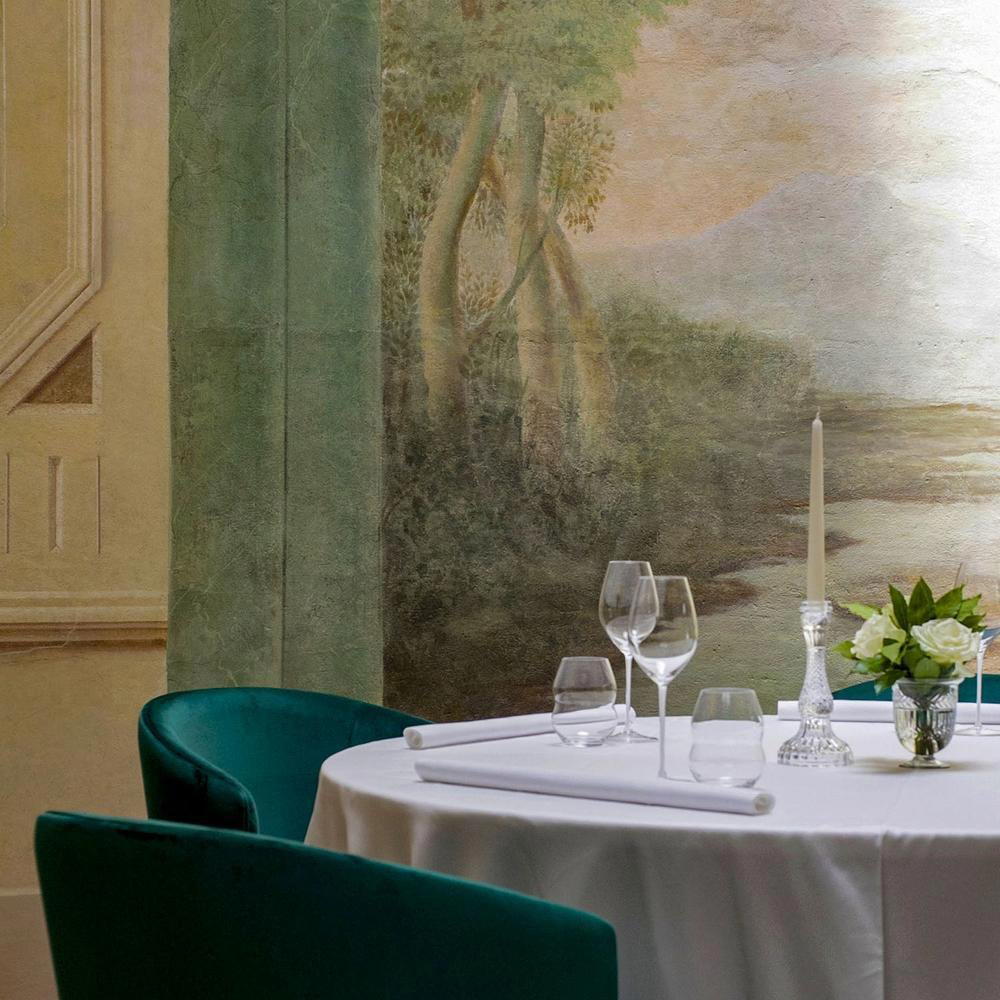
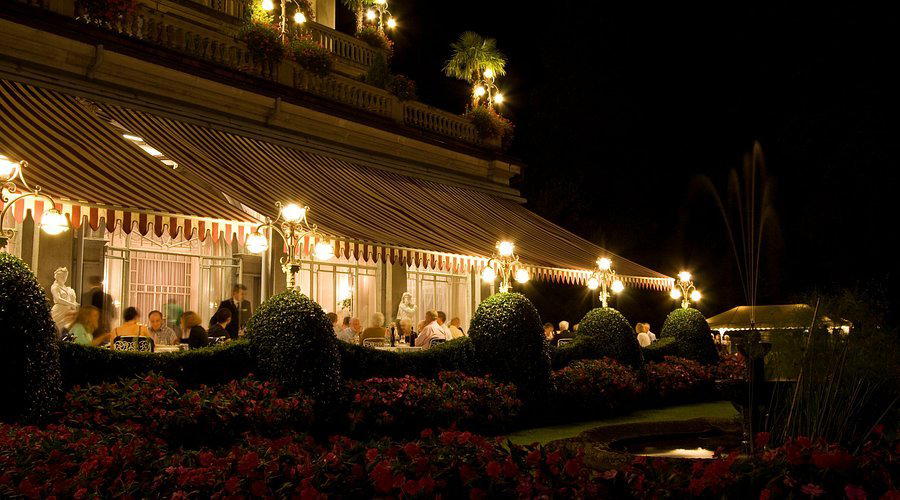
The first thing visitors notice at Le Colonne is not the menu but the architecture. Marble columns and matching flooring anchor the dining room in a register that reads formal without feeling stiff, and a grand piano positioned in the space signals that the owners have thought carefully about atmosphere as an ingredient in itself. In a small Alpine-border town like Santa Maria Maggiore, perched in the Val Vigezzo between Lake Maggiore and the Swiss canton of Ticino, that kind of considered interior is not a given. It is a deliberate choice, and it shapes how the food lands.
The restaurant sits on Via Benefattori in the historic center of town, run by a couple with what Michelin describes as comprehensive management experience. That operational fluency shows in the polish of the room and the coherence of the offer: a modest, well-maintained restaurant that reaches across culinary traditions without losing its footing. For the broader context of where to eat and stay in the area, see our full Santa Maria Maggiore restaurants guide, our full Santa Maria Maggiore hotels guide, and our full Santa Maria Maggiore bars guide.
Campania in the Alps: The Sourcing Logic
Editorial angle that makes Le Colonne worth examining is not its Alpine address but the deliberate southward pull of its sourcing. The kitchen draws its primary identity from the ingredients of Caserta and Campania, a region roughly 800 kilometres south that sits at the opposite end of the Italian peninsula. This is a meaningful choice. Caserta is the province that produces some of Italy’s most closely protected buffalo mozzarella, and Campania’s agricultural identity, built on volcanic soil from Vesuvius and a long Mediterranean coastline, generates a distinct flavour profile: acidity, salinity, freshness, and depth from sun-intensive cultivation.
Bringing those ingredients north to a dining room in the Piedmontese pre-Alps creates a productive tension. The cooking does not pretend to be local in the strict agri-tourism sense; it is explicitly transplanted, championing the produce of a distant region with care and specificity. That approach places Le Colonne in a different conversation from the mountain-seasonal trattoria model that dominates this corridor of northern Italy. It is closer in spirit to the way certain Italian chefs in northern cities have used southern sourcing as a point of distinction, though the context here is small-town rather than urban.
Buffalo mozzarella functions as the kitchen’s organizing principle. It appears across multiple courses and, notably, extends into dessert, which is an unusual deployment that signals genuine engagement with the ingredient rather than token inclusion. Mozzarella as a dessert component requires technique and confidence: the milk fat and acidity need to work against sweetness without curdling the palate. The fact that Michelin’s 2025 inspectors recognized the kitchen with a Plate award suggests that the balance holds.
The Michelin Plate in Context
The Michelin Plate, introduced in the 2016 guide cycle, recognizes restaurants where inspectors ate well without awarding a star. It is a meaningful distinction in a country where the density of strong regional cooking makes Plate recognition competitive. Italy’s Michelin geography skews heavily toward the north, with starred clusters around Piedmont, Lombardy, and the Veneto. Within that field, a Plate award in a town the size of Santa Maria Maggiore carries weight as a signal of consistency and craft above the immediate local baseline.
For comparison, northern Italy’s most decorated tables operate at a different price tier entirely. Atelier Moessmer Norbert Niederkofler in Brunico, Dal Pescatore in Runate, and Le Calandre in Rubano each sit at €€€€ and pitch to an international tasting-menu audience. Further south, recognized addresses such as Quattro Passi in Marina del Cantone and Uliassi in Senigallia operate at starred level with corresponding price expectations.
Italy’s broader creative elite, from Osteria Francescana in Modena to Enoteca Pinchiorri in Florence and Enrico Bartolini in Milan, occupy a national conversation about progressive Italian cuisine. Le Colonne does not court that conversation, but it shares the underlying Italian instinct: let the ingredient carry the dish, and do not complicate what is already working. Other addresses in the country cooking register worth noting as reference points include 21.9 in Piobesi d’Alba and Andrea Monesi at Locanda di Orta in Orta San Giulio, both operating in a similar register in the wider Piedmont and Lago d’Orta area.
The Eclectic Frame
Michelin’s description of the cooking as “eclectic cuisine” is worth pausing on. In Italian dining criticism, eclectic is not a dismissal; it is a recognition that the kitchen draws from more than one tradition. Here, the Mediterranean base from Campania sits alongside modern ideas applied to classical forms. That combination, comfort and creativity in balance, is harder to execute than it sounds. Dishes that read as familiar can carry technical ambition without announcing it, and that restraint is itself a skill.
Planning a Visit
Santa Maria Maggiore is a compact historic center, accessible by the Vigezzina-Centovalli railway that connects Locarno in Switzerland to Domodossola in Italy, a route well known among rail travelers for its scenery through the Val Vigezzo. Le Colonne is on Via Benefattori in the town center, meaning most visitors arrive on foot from wherever they are staying. The €€ price range places it within reach for a relaxed lunch or dinner without the advance financial planning that Italy’s starred circuit demands. Booking ahead is advisable for dinner, particularly on weekends, given the room’s size and the limited dining options in a town of this scale. For anyone building a longer itinerary around the area, the Santa Maria Maggiore wineries guide and experiences guide offer additional context. Those extending south toward Campania will find the starred table comparisons above useful for benchmarking the cuisine’s home region: Piazza Duomo in Alba, Reale in Castel di Sangro, and Casa Perbellini 12 Apostoli in Verona map the range of what serious Italian regional cooking looks like across price tiers.
Frequently asked questions
Can I bring kids to Le Colonne?
Nothing in the venue's profile or Michelin recognition suggests a format hostile to families. The setting is a modest, well-maintained restaurant in Santa Maria Maggiore's historic center, and the cooking leans toward comforting classic flavours alongside more creative ideas, a range that generally works across generations. The €€ price point keeps the outing low-stakes.
How would you describe the vibe at Le Colonne?
The room is more formal than the mountain address implies: marble columns, marble flooring, and a grand piano set a composed, unhurried register. Michelin describes it as a well-maintained, modest restaurant, which reads as relaxed confidence rather than austerity. A couple with comprehensive management experience runs the operation, and that front-of-house continuity tends to produce consistent, considered service.
What awards or recognition does Le Colonne have?
Le Colonne has received recognition including: In a dining room with marble columns and flooring and enhanced by a beautiful grand piano, Rossana Marziale serves Mediterranean dishes that showcase the ingredients of Caserta and the Campania with a perfect balance of comforting classic f….
What should I eat at Le Colonne?
Michelin inspectors single out buffalo mozzarella as the kitchen's signature ingredient, sourced from Caserta and Campania and served across multiple preparations, including in desserts, an unconventional move that signals genuine creative investment rather than token regional gesture. The broader menu draws on Campania produce within a Mediterranean frame, which puts the kitchen at some distance from what you would expect in the Vigezzo Valley.
Quick Comparison
| Venue | Cuisine | Price | Awards | Notes |
|---|---|---|---|---|
| Le ColonneThis venue (the venue you are viewing) | Traditional Italian Alpine Cuisine | Not listed | Michelin Plate | Not listed |
| Atelier Moessmer Norbert Niederkofler | Modern Alpine Fine Dining | $300–500 | 3 Michelin Stars · World's 50 Best #20 | Italian, Creative |
| Dal Pescatore | Classic Italian Fine Dining | $200–300 | 3 Michelin Stars · World's 50 Best #38 | Italian, Italian Contemporary |
| Enoteca Pinchiorri | Contemporary Italian Fine Dining | $200–300 | 3 Michelin Stars · World's 50 Best #32 | Italian - French, Italian Contemporary |
| Enrico Bartolini | Modern Italian Fine Dining | $300–500 | 3 Michelin Stars · World's 50 Best #85 | Creative |
| Osteria Francescana | Avant-Garde Italian Contemporary | $300–500 | 3 Michelin Stars · World's 50 Best #1 | Progressive Italian, Creative |
Recognition history
Dated appearances from independent guides and award organizations, with the underlying list record or original source where available.
Michelin Plate
Michelin
Full recognition history (3 entries)
Michelin Plate
Michelin
Michelin Plate
Michelin
Continue exploring
More in Santa Maria Maggiore
Restaurants in Santa Maria Maggiore
All restaurants in Santa Maria Maggiore →
Bars in Santa Maria Maggiore
Browse all →

Details
- Rustic
- Elegant
- Cozy
- Family
- Date Night
- Special Occasion
- Historic Building
- Extensive Wine List
- Local Sourcing
- A La Carte
- Vegetarian Friendly
- Gluten Free Options
Current opening hours
- Monday
- 12–2 PM
- Tuesday
- Closed
- Wednesday
- 12–2 PM, 7–10 PM
- Thursday
- 12–2 PM, 7–10 PM
- Friday
- 12–2 PM, 7–10 PM
- Saturday
- 12–2 PM, 7–10 PM
- Sunday
- 12–2 PM, 7–10 PM
Hours can change for holidays and private events. Hours as of .
Warm rustic decor with a casual yet elegant atmosphere, described as simple, cute, and quiet for pleasant conversations.