.png)
Set inside a UNESCO-protected building that preserves a section of Guimarães' medieval city wall, Le Babachris sits at the intersection of French technique and Portuguese seasonal produce. The bistro-style room frames a menu that moves between daily suggestions, an executive lunch, and a chef's menu with haute-cuisine ambition. A Michelin Plate holder in 2025, it occupies a distinct position in the city's mid-range dining tier.
 Discover on Pearl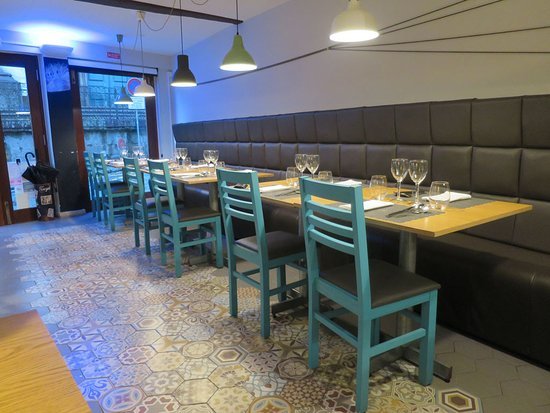
Stone Walls, French Roots, and the Flavours of the North Minho
Walking toward Largo Condessa do Juncal, the stonework of Guimarães does what it has always done: it announces history before a word is spoken. The building at number 19 is not simply old; it is a classified structure, protected under UNESCO designation as part of the historic city's defensive perimeter. The walls that once marked the edge of a medieval city now enclose a bistro where the cooking moves between southern French discipline and the herb-forward registers of the broader Mediterranean. That friction between the ancient and the contemporary is the defining texture of dining in Guimarães, a city that carries its past with unusual lightness.
Portugal's fine-dining conversation is overwhelmingly anchored in Lisbon and the Algarve. Belcanto in Lisbon, Vila Joya in Albufeira, and Ocean in Porches set the national benchmark at the starred level. Porto has its own serious contenders, including Antiqvvm and the tidal-edged Casa de Chá da Boa Nova in Leça da Palmeira. Against that backdrop, Guimarães operates as a quieter, more intimate dining city, where the competition for serious cooking is genuine but the volume of venues is smaller. Within that local set, Le Babachris earned a Michelin Plate in 2025, a recognition that signals cooking worth the detour without the ceremony or price architecture of a full starred house.
The shortlist, unlocked.
Hard-to-book tables, cellar releases, and concierge-planned trips.
Get Exclusive Access →Where Mediterranean Herbs Meet Minho Produce
Mediterranean cuisine, at its most precise, is not a single tradition but a family of herb-driven approaches that share a grammar: fresh oregano folded into sauces, thyme used to scent roasted proteins, basil layered into cold preparations, za'atar-adjacent spice combinations drawn from the eastern shore of the same sea. The cooking here draws on that wider syntax while grounding its primary ingredients in northern Portuguese agriculture. The Minho region produces strong, seasonal raw material, and the menu's stated reliance on the finest seasonal Portuguese ingredients is what distinguishes this approach from a generic Franco-Mediterranean concept.
The result sits usefully apart from the dominant local alternatives. A Cozinha operates at the €€€ tier with modern Portuguese as its core register. Hool occupies a similar price band with a traditional cuisine focus. Norma and 34 work at the same €€ level as Le Babachris but with creative and international orientations respectively. Le Babachris is the only venue in the immediate Guimarães peer set carrying Michelin recognition alongside a Franco-Mediterranean culinary identity. That combination creates a specific draw for visitors who want to eat seriously without committing to the price structure or formality of the region's more elaborate options.
For context on how Mediterranean-rooted cooking operates at different scales and latitudes, La Brezza in Ascona and Arnaud Donckele & Maxime Frédéric at Louis Vuitton in Saint-Tropez represent the upper end of that spectrum. Le Babachris operates at a more accessible register, where the technique is demonstrably there but the atmosphere remains informal and the menu adapts to what the season and the market offer.
The Menu Structure and What to Order
The format here runs on three parallel tracks: a small à la carte with daily suggestions that shift according to availability; an executive lunch offering pitched at a weekday pace; and a chef's menu that commits to a more sequenced haute-cuisine approach. That three-tier structure gives the kitchen flexibility and gives the diner a clear choice between a quick working lunch and a longer, more deliberate meal.
The rice dishes carry a particular reputation among regulars, reflecting a Portuguese cooking tradition in which rice is treated as a primary vehicle for flavour rather than a side. The beef tartare, referenced in the venue's own documentation with a nod to precise seasoning and depth of flavour, belongs to a French bistro canon that the kitchen adapts rather than merely replicates. Those two reference points, one rooted in Minho tradition, one in Paris technique, summarise what the cooking is trying to do.
Connection to the École Lenôtre, one of France's most respected culinary training institutions, appears as a credential for the kitchen's technical foundation rather than as a defining narrative. Schools of that calibre produce graduates who understand classical structure; what happens to that structure once it meets Portuguese ingredients is the more interesting editorial question, and here it produces a menu with genuine character.
Room and Atmosphere
Main dining room operates in a bistro register: informal enough that the meal does not feel ceremonial, considered enough that the details hold. A private room is available for smaller groups or occasions that call for separation from the main floor. The physical setting, inside a building that preserves a section of the medieval city wall, gives the space a weight that no amount of interior design could manufacture. The stone is original; the cooking that takes place in front of it is resolutely contemporary.
At a Google rating of 4.7 across 413 reviews, the consistency of the experience is well-documented. That volume of reviews over a sustained period indicates a dining room that serves repeat visitors and informed tourists in roughly equal measure, which is the reliable composition of a neighbourhood restaurant that has earned its place in the local fabric.
Planning Your Visit
Le Babachris sits at Largo Condessa do Juncal 19 in the historic centre of Guimarães, within easy walking distance of the UNESCO core. The €€ price range places it below the city's top-tier restaurants, making it a practical choice for visitors who want a quality meal without the full budget commitment of a starred or near-starred alternative. Given the Michelin Plate recognition and the small, market-driven menu format, booking ahead is advisable, particularly for weekends and for the chef's menu format. Walk-in availability at lunch, especially the executive menu track, is generally more accessible. For a fuller picture of where Le Babachris sits within the city's dining options, the full Guimarães restaurants guide provides the broader map. Those also planning time in the city can consult the Guimarães hotels guide, the bars guide, the wineries guide, and the experiences guide for a complete itinerary. For those extending north into Portugal's wine country or across to the Atlantic coast, Il Gallo d'Oro in Funchal and The Yeatman in Vila Nova de Gaia offer useful points of comparison at the starred level.
The shortlist, unlocked.
Hard-to-book tables, cellar releases, and concierge-planned trips.
Get Exclusive Access →Frequently Asked Questions
A Tight Comparison
A short peer set to help you calibrate price, style, and recognition.
| Venue | Notes | Price |
|---|---|---|
| Le Babachris | This venue | €€ |
| A Cozinha | Modern Cuisine, €€€ | €€€ |
| Norma | Creative, €€ | €€ |
| 34 | International, €€ | €€ |
| Hool | Traditional Cuisine, €€€ | €€€ |
Need a table?
Our members enjoy priority alerts and concierge-led booking support for the world's most difficult tables.
Get Exclusive AccessThe shortlist, unlocked.
Hard-to-book tables, cellar releases, and concierge-planned trips.
Get Exclusive Access →