Laya Hollywood
On North Cahuenga Boulevard in the heart of Hollywood, Laya sits within a dining district where technique-driven restaurants have quietly displaced the neighborhood's older casual strip. The kitchen works at the intersection of locally sourced California produce and globally informed methods, placing it alongside a cohort of Los Angeles restaurants rethinking what regional cooking can look like at a serious level.
Pearl is the En Primeur Club membership app — saves, bookings, and concierge access live there. Same editors, same standards.
- Address
- 1430 N Cahuenga Blvd, Los Angeles, CA 90028
- Website
- layarestaurant.com
- Directions
- Get directions
 Saves & bookings on Pearl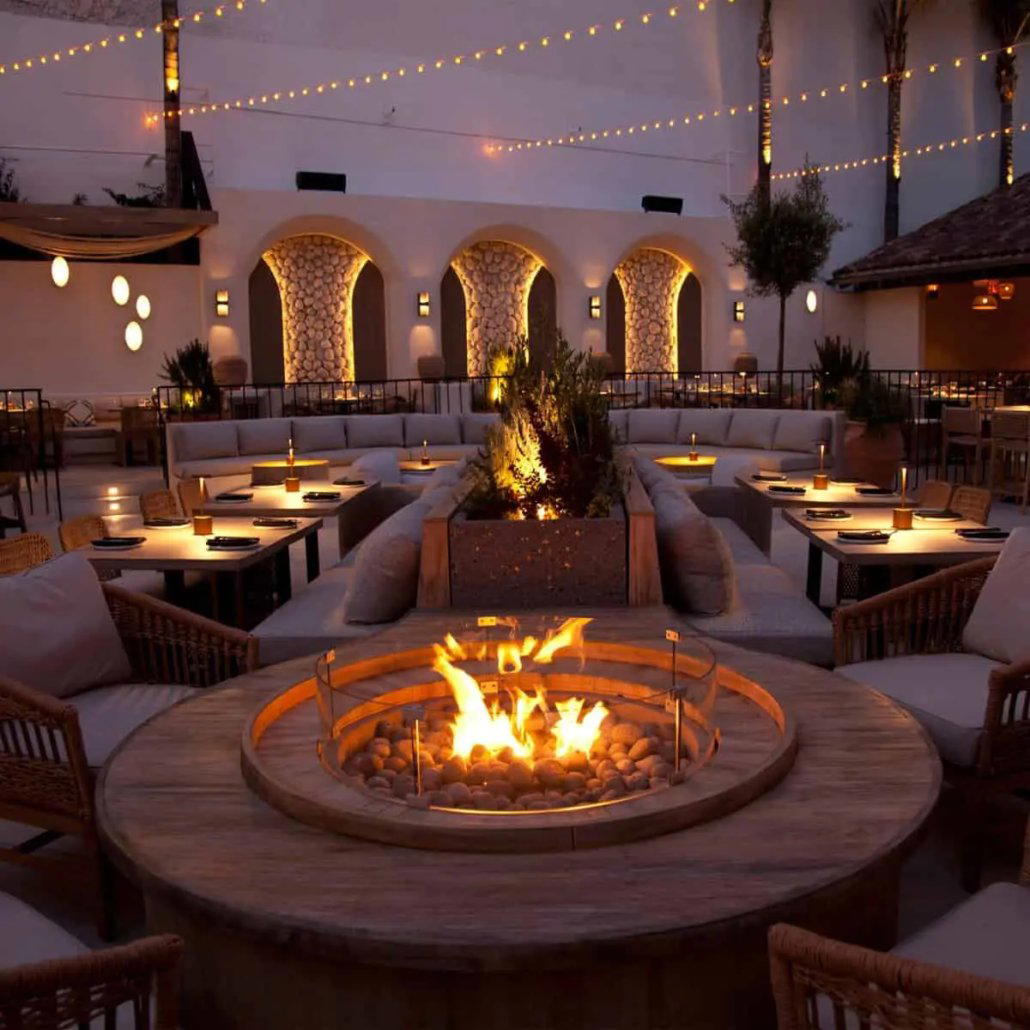
Hollywood's Shifting Dining Register
North Cahuenga Boulevard has undergone a gradual but unmistakable shift over the past decade. The stretch between Hollywood Boulevard and Fountain Avenue, once defined by low-key bars and convenience dining aimed at the industry crowd, now holds a more considered set of operations. Laya Hollywood, at 1430 N Cahuenga Blvd, is a restaurant in Los Angeles serving Modern Middle Eastern cooking at a $60 price point, and it arrives in that context: a neighborhood where the competitive pressure comes not from tourist volume but from a local audience with specific expectations around sourcing, technique, and format. Understanding what Laya is doing requires placing it against that backdrop first.
Hollywood as a dining district is often underestimated relative to Silver Lake, Los Feliz, or even the Westside corridors where much of Los Angeles's critical attention has historically pooled. That underestimation creates space for restaurants operating at a serious level to build a loyal following before the broader city catches up. The model has worked before in this part of town, and Laya appears positioned to follow a similar trajectory.
Local Produce, Imported Discipline
Particularly consequential tension in contemporary Los Angeles dining is not between cuisines but between methods. Southern California produces particularly diverse agricultural output in the country: stone fruit from the Central Valley, coastal seafood, dry-farmed tomatoes, heritage grains, and a citrus range that European kitchens would require import logistics to replicate. The question serious Los Angeles restaurants must answer is what framework to apply to that raw material. Do you default to a French organizational logic, lean into Japanese precision, or build something that reflects the city's own demographic layering?
Laya Hollywood sits at that intersection. The name itself points toward a Middle Eastern or South Asian register, a direction that aligns with a broader movement in Los Angeles where chefs trained in European or Japanese kitchens are applying those disciplines to ingredients and flavor frameworks from other culinary traditions. Restaurants like Kato (New Taiwanese) and Hayato (Japanese kaiseki) demonstrate how high-technique formats can anchor deeply in a non-European culinary tradition while still commanding the city's leading price tier. Laya appears to be working along a related axis, though from a different cultural starting point.
This approach has precedent at scale. Somni built its reputation on molecular technique applied to Spanish and broader Mediterranean source material. Providence anchored itself to California's coastal seafood supply and applied French fine-dining rigour to it. What these restaurants share is not a cuisine category but a structural commitment: the discipline of the method matches the quality of the ingredient. That alignment is what separates the city's serious operations from its merely ambitious ones.
The Hollywood Address and What It Signals
Location in Los Angeles carries more weight than in most cities because the distance between neighborhoods is not merely geographical but cultural and logistical. A restaurant on North Cahuenga draws a different baseline diner than one in the Arts District or on Melrose. The Hollywood corridor attracts industry regulars, pre-show diners heading to nearby venues, and an increasingly food-aware residential base that has followed the neighborhood's broader gentrification arc.
For a restaurant operating at a higher register, that mix is useful. Industry diners are experienced travelers who have eaten across the city and beyond. They benchmark against places like Osteria Mozza, which holds its position near Hollywood as a long-running benchmark for Italian cooking in the city, or against reference points further afield: Lazy Bear in San Francisco, The French Laundry in Napa, or at the global end, Le Bernardin in New York and Alain Ducasse at Louis XV in Monte Carlo. A restaurant that earns repeat visits from that cohort is operating at a different level of accountability than one sustained by foot traffic and tourist volume.
Technique Traditions and the Southern California Advantage
The editorial argument for restaurants operating at the local-ingredients, global-technique intersection is direct: Southern California's agricultural calendar is almost uniquely forgiving. Farmers' markets in Los Angeles run year-round, and the state's microclimates mean that the seasonal windows for premium ingredients overlap rather than succeed each other. A kitchen in Chicago, even one as technically accomplished as Alinea, works against harder seasonal constraints. A kitchen in Los Angeles can maintain a high-quality tasting format across the calendar without the same reliance on preservation, fermentation, or imported product to fill winter gaps.
That structural advantage does not guarantee execution, but it raises the ceiling. The restaurants that have exploited it most effectively in recent years have done so by importing discipline rather than ingredients. SingleThread Farm in Healdsburg models this at a highly formalized level, with kaiseki-influenced structure applied entirely to Northern California produce. At the other end of the spectrum, Emeril's in New Orleans demonstrated two decades ago that a clear regional identity combined with classical training produces a more durable restaurant than either element alone. The principle holds in Los Angeles as much as anywhere.
Planning Your Visit
Laya Hollywood is located at 1430 N Cahuenga Blvd, Los Angeles, CA 90028, in the central Hollywood corridor with reasonable access from the 101 freeway and street parking on adjacent blocks. Given the venue's positioning and neighborhood, evening reservations are recommended. 8½ Otto e Mezzo Bombana in Hong Kong is a useful international reference point for how white-tablecloth operations handle dietary accommodation within a fixed menu framework.
Comparable Options
Comparable venues nearby, for context on price, style, and recognition.
| Venue | Cuisine | Price | Notes |
|---|---|---|---|
| Laya HollywoodThis venue — the venue you are viewing | Modern Middle Eastern | $$$ | Not listed |
| Berenjak | Modern Persian Kebabs | $$$ | Wholesale District |
| Tehran Market | Persian Market with Kebabs | $$ | Encino |
| Shaherzad | Authentic Persian | $$ | Westwood |
| Ladyhawk | Modern Lebanese | $$$$ | Norma Triangle |
| ALK | SoCal-Centric Brasserie | $$$ | Hollywood |
Continue exploring
More in Los Angeles
Restaurants in Los Angeles
Browse all →
Bars in Los Angeles
Browse all →
Hotels in Los Angeles
Browse all →
Wineries in Los Angeles
Browse all →
At a Glance
- Modern
- Trendy
- Cozy
- Elegant
- Date Night
- Special Occasion
- Group Dining
- Live Music
- Open Kitchen
- Craft Cocktails
- Local Sourcing
Current opening hours
- Monday
- Closed
- Tuesday
- 6–11 PM
- Wednesday
- 6–11 PM
- Thursday
- 6 PM–1 AM
- Friday
- 6 PM–1 AM
- Saturday
- 6 PM–1 AM
- Sunday
- Closed
Hours can change for holidays and private events. Last verified .
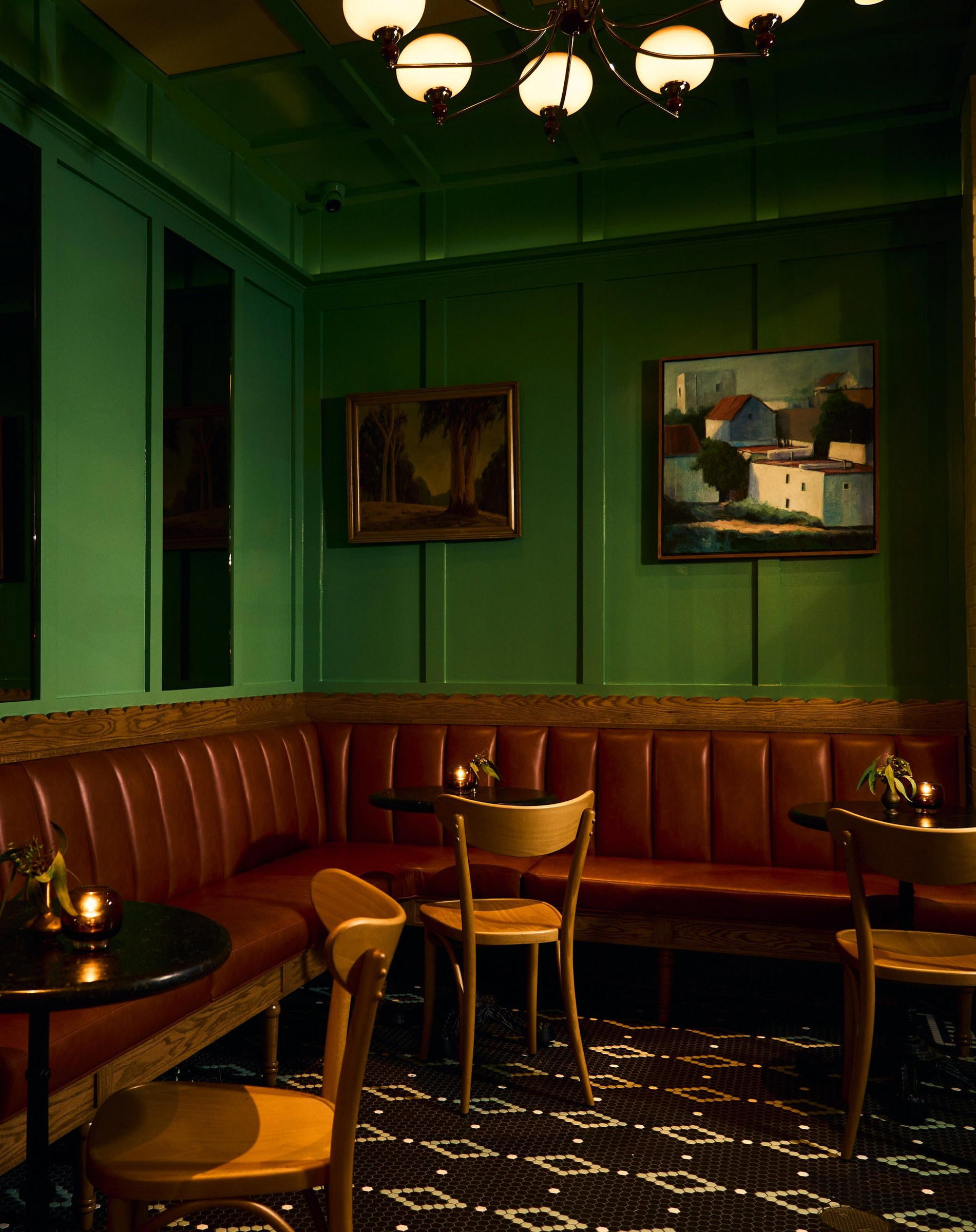
Warm and inviting minimalist-meets-Tulum design with comfortable lounge seating, fire pit, warm lighting, and lively atmosphere enhanced by live music.