L'artgiano
L'artgiano occupies a Fountainbridge address in Edinburgh, placing it at some distance from the New Town restaurant cluster but within a neighbourhood undergoing sustained dining investment. The name signals artisan intent, and its position in a city where Italian culinary traditions compete with an increasingly confident Modern Scottish scene gives it a clear editorial context worth examining.
Pearl is the En Primeur Club membership app — saves, bookings, and concierge access live there. Same editors, same standards.
- Address
- 73 Fountainbridge, Edinburgh EH3 9PU, United Kingdom
- Phone
- +441312414018
- Website
- artigianoedinburgh.co.uk
- Directions
- Get directions
 Saves & bookings on Pearl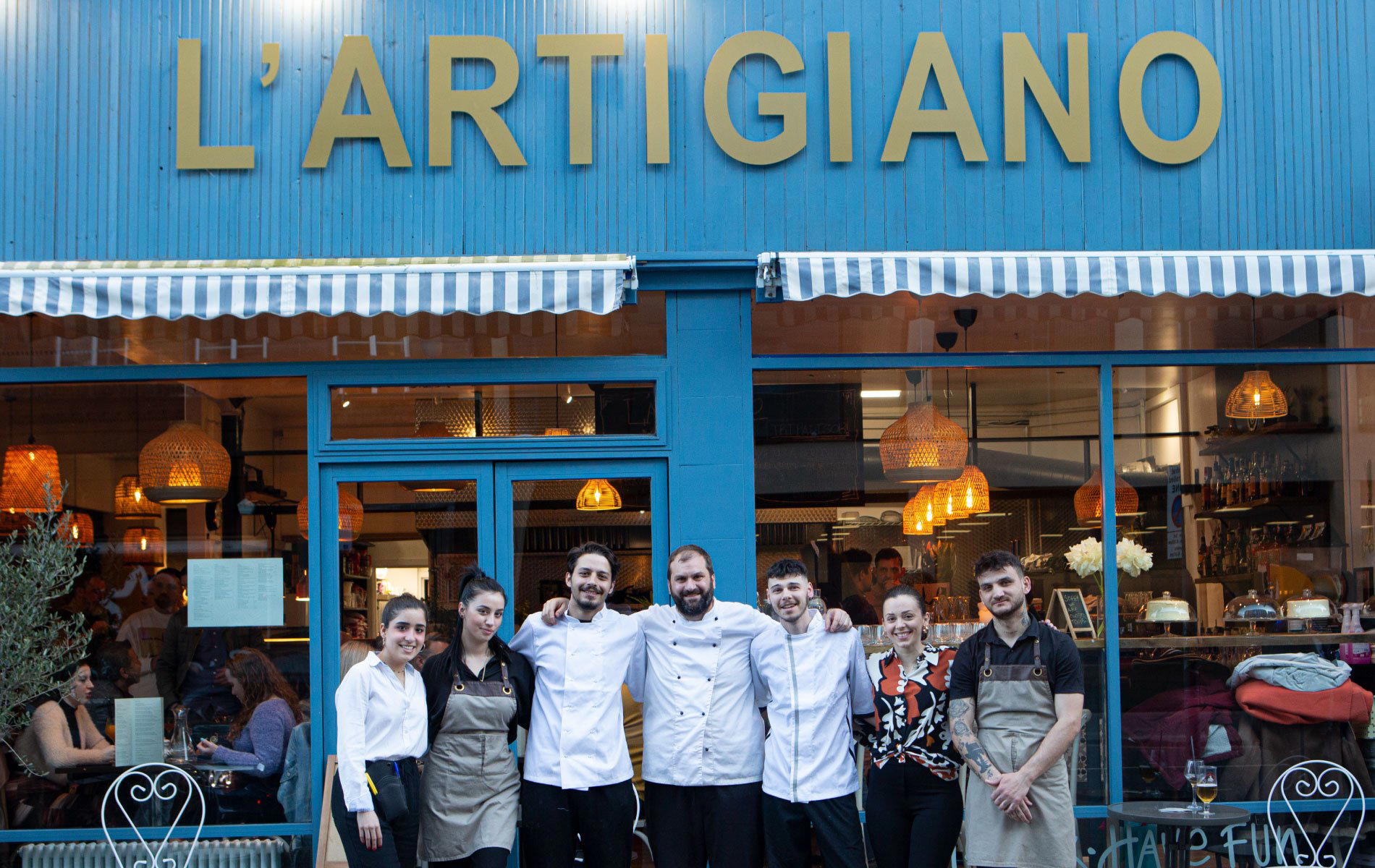
Fountainbridge and the Drift West
Edinburgh's dining gravity has long pulled toward the New Town and Leith, where critical attention has clustered for two decades. The Fountainbridge corridor tells a different story. Sitting on the south-western edge of the city centre, the area carries the memory of an industrial canal district that has been gradually converted into residential and hospitality space. At 73 Fountainbridge, L'artgiano occupies a position that already says something about its intended audience: a neighbourhood clientele with a specific expectation of what the name promises.
The name itself is instructive. A deliberate hybrid of art and artigiano (the Italian for craftsman or artisan), it signals a positioning that aligns with the broader wave of Italian-influenced casual dining that has moved steadily away from the red-sauce trattoria model. This shift, visible across British cities over the past fifteen years, places the emphasis on product sourcing, dough technique, and regional specificity rather than volume and familiarity. Edinburgh has not been immune to that current, and Fountainbridge provides the kind of neighbourhood canvas where that proposition can take root without the overhead pressure of a George Street address.
Italian Craft Dining in a Scottish Context
To understand where L'artgiano sits, it helps to map the broader Edinburgh dining picture. The city's highest-profile restaurants operate in the ££££ tier with tasting-menu formats: Martin Wishart in Leith and The Kitchin on Commercial Quay have defined the Modern European and Modern Scottish end of the market. Timberyard anchors a Nordic-inflected Modern British sensibility in the West Port. AVERY and Condita operate creative tasting formats with significant critical attention.
Against that cohort, Italian artisan dining occupies a different competitive register entirely. The comparison set is less about Michelin tiers and more about the craft-casual axis: places where the product discipline is high but the format is accessible. That distinction matters for how a venue like L'artgiano is evaluated. The question is not whether it competes with Edinburgh's tasting-menu rooms, but whether its craft proposition holds up against the broader UK standard for serious Italian-leaning independent dining.
That standard, across the UK, is demanding. At the higher end of the national market, venues like Le Bernardin in New York City and Atomix in New York City demonstrate what committed culinary craft looks like at its most technically disciplined. Closer to home, the UK's Michelin-decorated independents, from L'Enclume in Cartmel to Moor Hall in Aughton and Waterside Inn in Bray, have raised what careful sourcing and technique-led cooking means in a British context. Le Manoir aux Quat'Saisons in Oxford, Gidleigh Park in Chagford, Hand and Flowers in Marlow, hide and fox in Saltwood, Midsummer House in Cambridge, Opheem in Birmingham, and CORE by Clare Smyth in London collectively illustrate a market in which the craft vocabulary is now well-established. For the restaurant, the relevant question is whether the artisan label translates into a differentiated experience.
What Artisan Actually Means in Practice
The word artigiano carries specific weight in Italian food culture. It describes a maker whose process is inseparable from their product: the cheesemaker who knows the milk source, the pasta maker whose dough hydration adjusts with the season, the pizzaiolo whose fermentation timing is not a formula but a daily judgement. When Italian immigrants and Italian-trained chefs brought this sensibility to Britain, the challenge was always maintaining that specificity outside its original agricultural and cultural context.
Edinburgh poses this challenge. Scottish larder produce is notable by any measure: the seafood, game, and dairy that supply the city's serious kitchens are among the strongest raw ingredients available in the UK. Whether an Italian-leaning kitchen in Fountainbridge chooses to integrate that local produce or to import its key Italian ingredients is a meaningful choice, and one that defines its relationship to both traditions. The tension between fidelity to Italian craft roots and engagement with Scottish locality is, in fact, one of the more interesting editorial questions in Edinburgh's current dining picture.
Neighbourhood Character and Practical Considerations
Fountainbridge sits roughly equidistant between Haymarket station and the Tollcross junction, making it walkable from the city's main transport arteries without being particularly convenient from the Royal Mile or the New Town's hotel cluster. For visitors, that walk or short cab ride is worth factoring in. The area has changed materially in the past decade as the Union Canal corridor has attracted residential development, and the dining scene has followed: a cluster of independent operators has settled along the stretch rather than a single anchor destination.
The restaurant is at 73 Fountainbridge, Edinburgh EH3 9PU, and reservations are recommended.
Where It Sits in the Edinburgh Picture
Edinburgh's restaurant scene has matured considerably since The Kitchin's 2006 Michelin recognition signalled that the city could support serious destination dining. What followed was a gradual deepening of the market: more formats, more price tiers, more neighbourhood-specific character rather than a single concentration of critical attention. Fountainbridge's trajectory fits that pattern. An Italian artisan operator choosing the neighbourhood is making a bet on local loyalty and repeat custom rather than tourist footfall, which is a durable foundation for a craft-focused kitchen.
The comparison with Edinburgh's tasting-menu tier is worth keeping in perspective: those rooms at Martin Wishart, The Kitchin, Condita, AVERY, and Timberyard serve a different function in a visitor's or local's dining calendar. The restaurant, if its craft proposition is coherent, serves more frequent visits, casual occasions, and the kind of neighbourhood reliability that Edinburgh's west side has historically lacked at the serious end of Italian cooking. That gap, if it genuinely fills it, is a more meaningful contribution to the city's dining range than any single award or critical ranking would suggest.
Planning Your Visit
The address, 73 Fountainbridge EH3 9PU, is accessible from the city centre by cab or bus along Lothian Road. Visitors combining the restaurant with Edinburgh's broader dining programme should note that the venue's west-side location pairs logically with Timberyard at West Port, making a neighbourhood circuit possible for those exploring beyond the New Town.
Comparison Snapshot
Comparable venues nearby, for context on price, style, and recognition.
| Venue | Cuisine | Price | Notes |
|---|---|---|---|
| L'artgianoThis venue — the venue you are viewing | Italian Artisan Pizza and Pasta | $$ | Not listed |
| Domenico's | Sicilian Italian | $$ | Leith |
| Civerinos Hunter Square | East Coast-Style Deep-Dish Pizza | $$ | Old Town |
| Novapizza Vegan Kitchen | Vegan Roman-Style Pizza | $$ | Stockbridge |
| Civerinos Forrest Road | New York-Style Pizza Slices | $ | Lauriston |
| WestRoom | Venetian Cicchetti | $$ | Dean |
Continue exploring
More in Edinburgh
Restaurants in Edinburgh
Browse all →
Bars in Edinburgh
Browse all →
At a Glance
- Cozy
- Modern
- Casual Hangout
- Family
- Open Kitchen
Current opening hours
- Monday
- 12–9 PM
- Tuesday
- 12–9 PM
- Wednesday
- 12–9 PM
- Thursday
- 12–9 PM
- Friday
- 12–9 PM
- Saturday
- 12–9 PM
- Sunday
- 12–9 PM
Hours can change for holidays and private events. Last verified .
Energetic and welcoming atmosphere with friendly service, striking a balance between lively and cozy as per guest reviews.