Our verdict
On Langres's principal commercial street, L'Aromatic occupies a position in a town better known for its washed-rind cheese than its restaurant scene. The address at 52 Rue Diderot places it within the walled haute-ville, where the regional larder, from plateau grazing land to Champagne-adjacent vineyards, sits within reach. For visitors exploring the fortified hilltop town, it represents a practical anchor point in a limited but growing dining circuit.

Pearl is the En Primeur Club membership app, where members save venues, book tables and use the concierge.
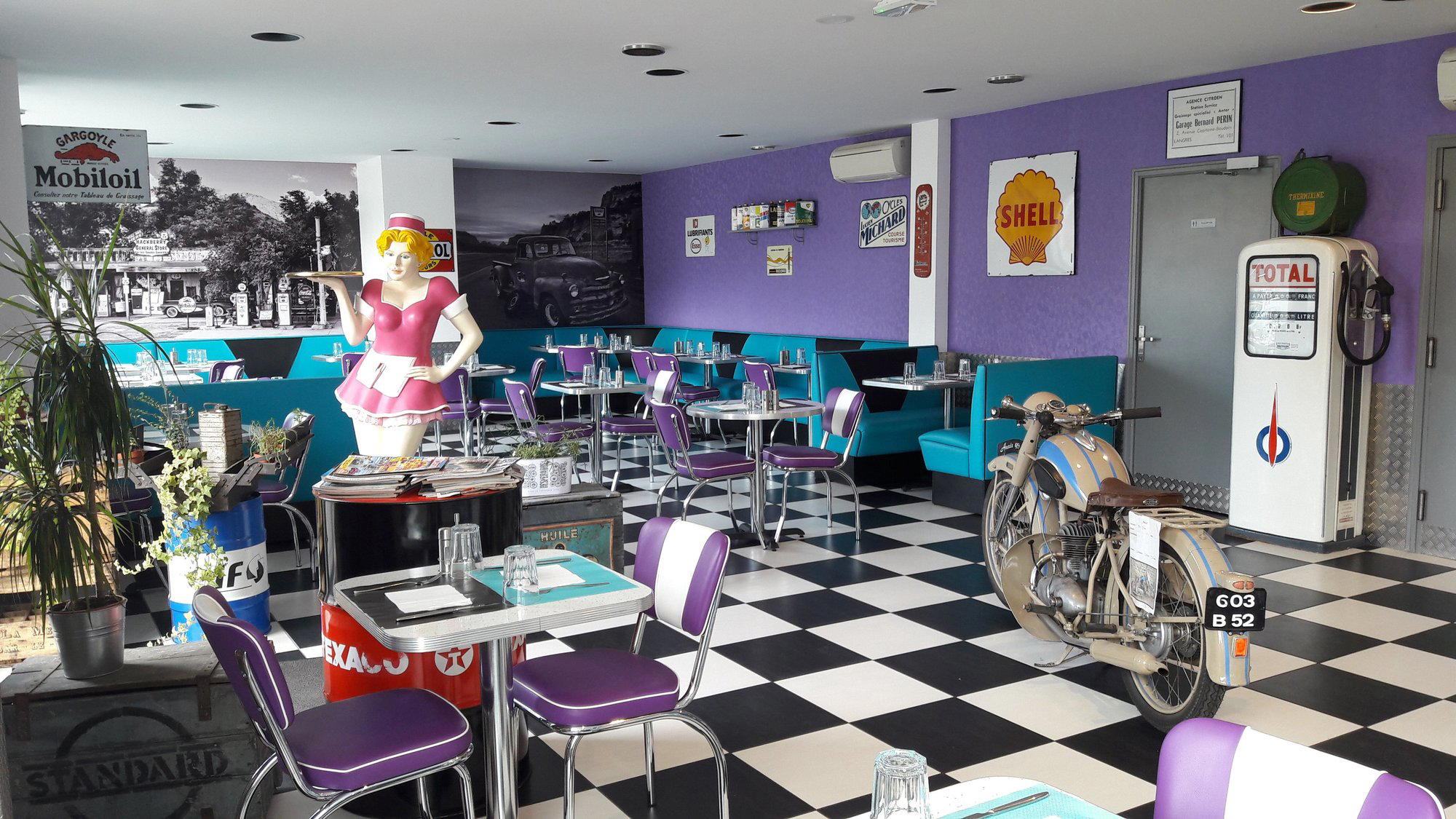
A Walled Town With Something to Prove at the Table
The haute-ville of Langres sits on a limestone plateau above the Marne valley, ringed by Renaissance ramparts that have defined the town's geography for five centuries. The streets inside those walls are narrow and largely residential, punctuated by a handful of working restaurants. Rue Diderot, named for the philosopher born here in 1713, is the town's main artery, and L'Aromatic operates from number 52, in the commercial heart of a settlement that most travellers pass through on the way between Dijon and Reims rather than treating as a destination in its own right.
That positioning matters for understanding what dining in Langres actually involves. This is not a city with multiple competing tasting-menu formats or a dense cluster of chef-driven addresses. The scene is small: Bulle d'Osier (Creative) and Mirabelle (Modern Cuisine) represent the broader range, with Le Clos Vauban (French Gastronomic) occupying the more formal French gastronomic tier and Chez Nina filling a more relaxed neighbourhood role. Within this modest but coherent cluster, L'Aromatic holds a place on our full Langres restaurants guide as part of a town whose dining identity is still being written.
The Ingredient Story That Defines This Region
Whatever a kitchen in Langres puts on the plate, the surrounding landscape makes a strong argument for quality sourcing almost by default. The Haute-Marne department sits at the intersection of several strong regional food traditions: to the south, the cattle pastures and mustard culture of Burgundy; to the north, the Champagne appellation zone; to the west, the forests and river systems that supply game, freshwater fish, and foraged produce through the colder months.
Langres cheese itself, the AOP-protected washed-rind round with its characteristic hollow centre traditionally filled with Champagne or Marc de Bourgogne, is produced in the area around the town. That a local cheese carries controlled-origin certification speaks to an agricultural seriousness in the region that a restaurant with a name meaning aromatic would have good reason to reference. The name L'Aromatic signals, at minimum, an orientation toward the herbaceous and the grown rather than the industrial, though the specifics of its sourcing approach remain, from available data, unconfirmed.
French regional cooking at this scale has historically functioned as an extension of the farm and the market rather than as a showcase for imported luxury product. The addresses that endure in small plateau towns like this tend to be those that read the local calendar correctly, moving with seasonal availability rather than against it. Kitchens that get this right in places like Langres are doing something structurally different from celebrated addresses such as Bras in Laguiole, which has codified plateau-country sourcing into a nationally recognised philosophy, or Mirazur in Menton, where the kitchen-garden model has been taken to an international level. But the underlying logic, cooking what is closest and freshest, runs through both the starred and the unstarred versions of French regional cuisine.
Rue Diderot: What the Address Tells You
Approaching from the town's main gate, Rue Diderot functions as the pedestrian and commercial spine of the haute-ville. The street is compact, with stone facades that have seen several centuries of French provincial life. A restaurant here is not trying to compete with the drama of a cellar dining room in a medieval property or a terrace overlooking the ramparts. It is operating in the practical rhythm of a working town: lunch trade from the local population, dinner from visitors making a night of the hilltop, occasional group bookings from travellers using Langres as a staging point.
The address at number 52 sits close enough to the centre that foot traffic is natural. There is no particular theatre to arriving, but in a town where the rampart walk and the Diderot museum constitute the main daytime activities, a restaurant that provides a readable, well-sourced midday or evening meal fills a real gap. The competition for that position is limited: unlike Reims, where Assiette Champenoise operates at a Michelin-starred level and the city supports multiple dining formats, or Strasbourg, where Au Crocodile anchors a deep restaurant culture, Langres asks its kitchens to do more with less infrastructure around them.
Contextualising the Langres Dining Scene
A restaurant on Rue Diderot is not competing with Alléno Paris au Pavillon Ledoyen or with the long-established prestige of Auberge de l'Ill in Illhaeusern. Nor is it in the same conversation as technically ambitious urban formats like Atomix in New York or Le Bernardin.
That tier, when it operates well, produces cooking that places like Auberge du Vieux Puits in Fontjoncouse and Flocons de Sel in Megève have demonstrated can reach significant critical heights when the sourcing and technique align. The model is not impossible. In Langres, where the raw ingredients of a strong regional menu are genuinely available, the question for any kitchen is how seriously those ingredients are treated.
For travellers making the circuit of Champagne-adjacent and Burgundy-adjacent towns, or those following the route between Paris and the Jura, a stop in Langres has reasonable justification. The ramparts alone warrant an hour. A reliable table on Rue Diderot makes an overnight worth considering.
Planning a Visit
L'Aromatic is at 52 Rue Diderot, 52200 Langres, in the walled upper town. Langres is accessible by rail from Dijon (approximately one hour) and from Paris Gare de Lyon via Chaumont. As with most restaurants in small French plateau towns, lunch service is typically the primary sitting, and advance contact before arriving is advisable, particularly outside summer months when hours may be reduced. For context on the full dining options in the area, see our Langres restaurants guide, which covers the competing addresses including Bulle d'Osier, Mirabelle, and Le Clos Vauban.
Frequently asked questions
Would L'Aromatic be comfortable with kids?
Langres is a compact walled town with a relatively unhurried pace, and a restaurant on Rue Diderot, the pedestrian spine of the haute-ville, typically sees a mixed local clientele rather than a formal fine-dining crowd. Contacting the restaurant directly before visiting with young children is the practical approach.
What is the atmosphere like at L'Aromatic?
The setting on Rue Diderot places L'Aromatic within the historic walled upper town of Langres, a limestone-plateau town above the Marne valley with Renaissance ramparts still intact. Dining here carries the character of small-town French restaurant culture: local, unhurried, and tied to the rhythms of the surrounding Haute-Marne countryside.
Is L'Aromatic a good choice for dinner before or after exploring the Langres ramparts?
Positioned at 52 Rue Diderot in the heart of the haute-ville, L'Aromatic sits within easy walking distance of Langres's Renaissance rampart circuit, one of the most complete in Burgundy-Franche-Comté. The town is accessible by rail from Dijon in approximately one hour, making L'Aromatic a practical stop for visitors combining the rampart walk with a meal in the upper town.
What's the must-try dish at L'Aromatic?
What is well-documented is that the Haute-Marne region around Langres supports strong local sourcing, notably Langres AOC cheese, produced in the surrounding plateau, which tends to inform what kitchens in the town put forward. Checking directly with the restaurant will give you the current offering.
How do I find L'Aromatic?
L'Aromatic is located at 52 Rue Diderot, 52200 Langres, France, Langres.
A Quick Peer Check
Comparable venues nearby, for context on price, style, and recognition.
| Venue | Cuisine | Price | Awards | Notes |
|---|---|---|---|---|
| L'AromaticThis venue (the venue you are viewing) | Contemporary French Bistro | $20–30 | Not listed | Not listed |
| Chez Nina | French with Caribbean Fusion | Not listed | Not listed | Avenue Turenne |
| Le Clos Vauban | Poetic French Gastronomic | $150–200 | Relais Chateaux Award | Langres Old Town |
| Mirabelle | Contemporary French Brasserie | $30–50 | Michelin Bib Gourmand | Historic Center of Langres |
| Bulle d'Osier | Modern French Fine Dining | $150–200 | 2 Michelin Stars · Relais Chateaux Award | Clos Vauban |
| Basilic Instant | Vegetarian French Buffet | Not listed | Not listed | Besancon Old Town |
Continue exploring
More in Langres
Restaurants in Langres
All restaurants in Langres →
Hotels in Langres
All hotels in Langres →
Details
- Cozy
- Classic
- Rustic
- Casual Hangout
- Family
- Date Night
- Standalone
- Local Sourcing
- Farm To Table
- A La Carte
- Gluten Free Options
- Allergy Accommodating
- Vegetarian Friendly
Current opening hours
- Monday
- Closed
- Tuesday
- 12–1:30 PM, 6:30–9 PM
- Wednesday
- 12–1:30 PM, 6:30–9 PM
- Thursday
- 12–1:30 PM, 6:30–9 PM
- Friday
- 12–1:30 PM, 6:30–9 PM
- Saturday
- 12–1:30 PM, 6:30–9 PM
- Sunday
- 12–1:30 PM, 6:30–9 PM
Hours can change for holidays and private events. Hours as of .
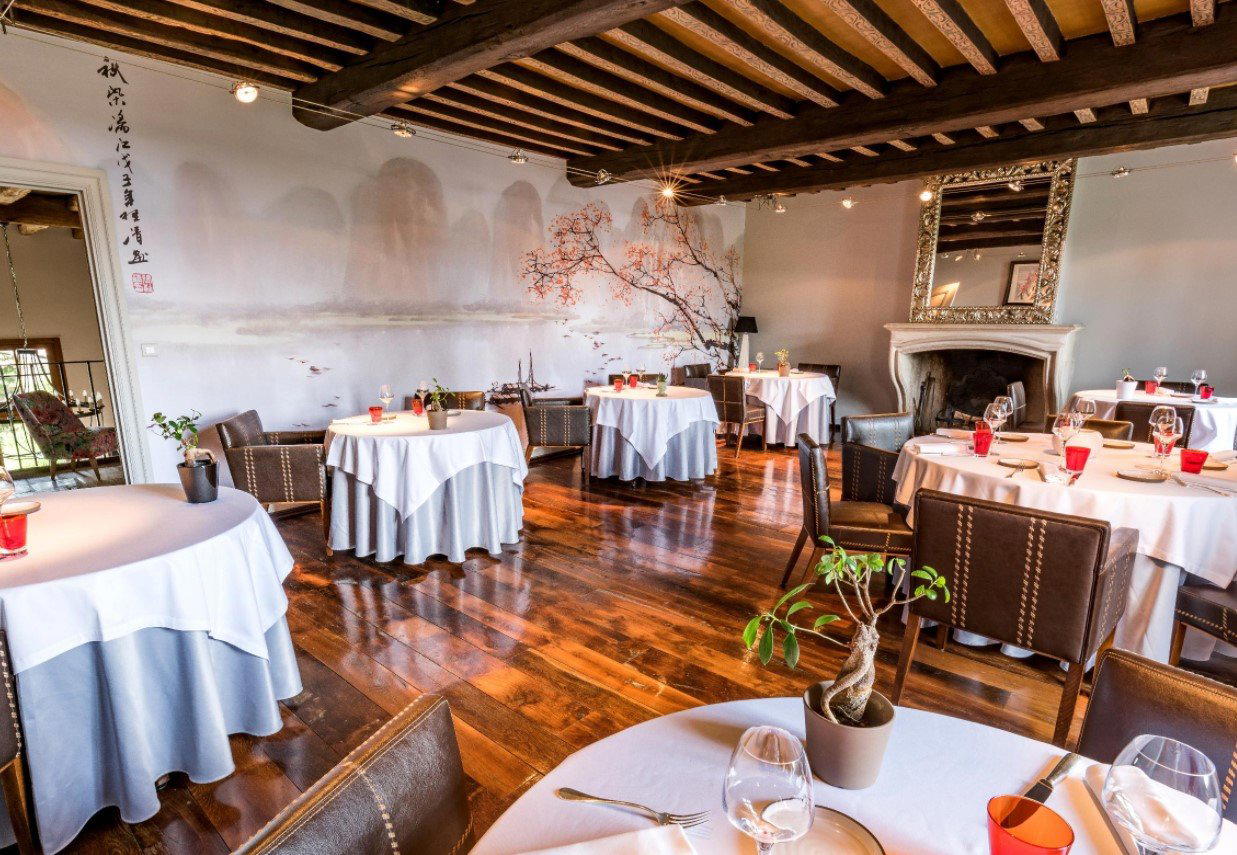
Charming intimate setting with exposed beams in a fortified medieval town, warm and welcoming atmosphere emphasizing fresh, locally-sourced cooking.