Our verdict
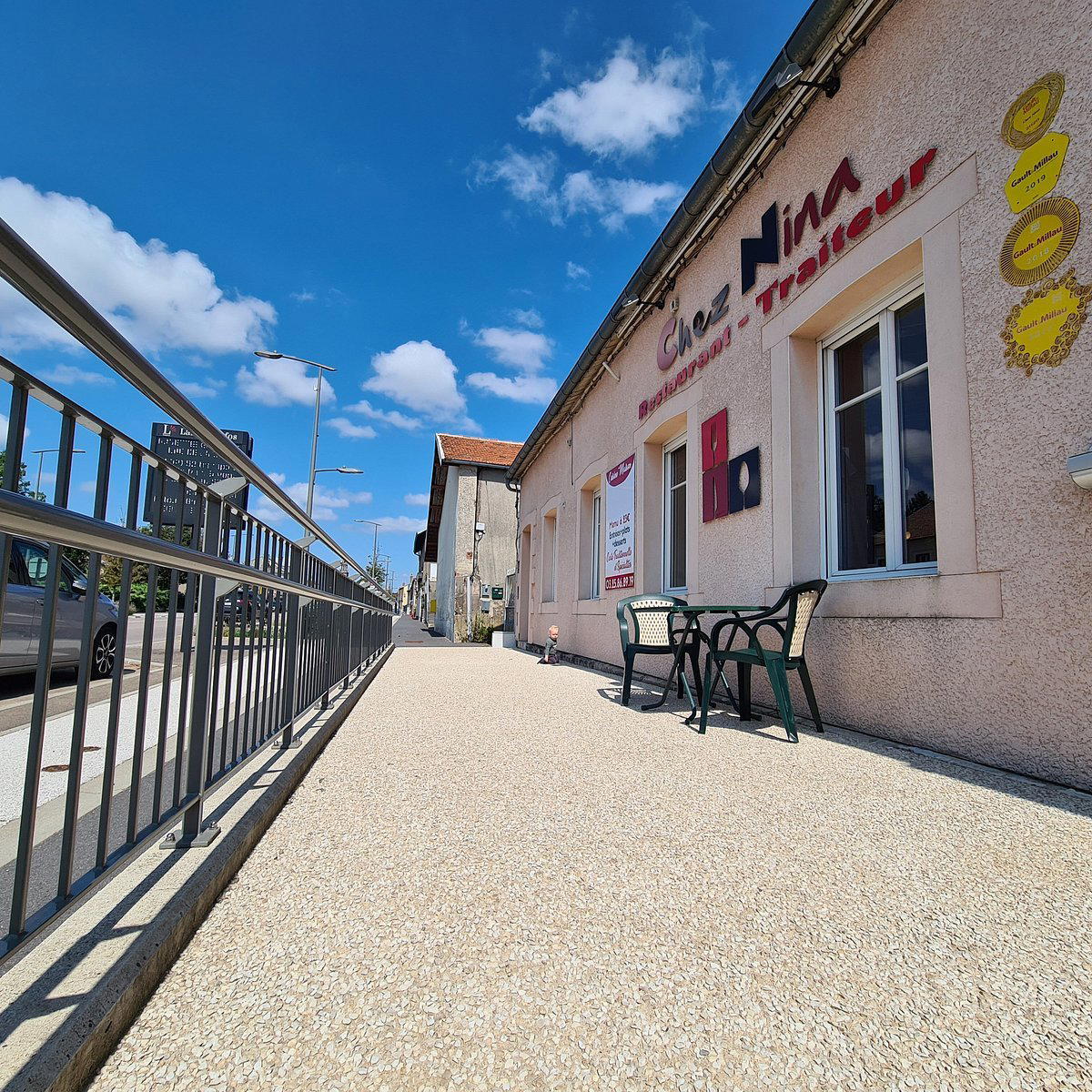
Chez Nina occupies a quiet address on Avenue Turenne in Langres, the fortified hilltop city in Haute-Marne known as much for its cheese as its Roman ramparts. In a town where dining options remain deliberately limited, this address draws locals and passing visitors alike, sitting in the mid-range tier between Langres's more ambitious tables and its everyday bistros.
The menu
What to order
- Poulet yassa
- Pavé de rumsteak au gorgonzola
Dining in a Town That Still Farms Its Own Flavour
Langres sits on a limestone plateau above the Marne valley, enclosed by towers and gates that have changed little since the sixteenth century. The city's food culture is shaped less by restaurant fashion than by what the surrounding countryside produces: the plateau's raw milk feeds the AOC-protected Langres cheese, the forests supply game, and the rivers and reservoirs of Haute-Marne provide freshwater fish that rarely make it far from where they are caught. In a town of fewer than 8,000 residents, restaurants here draw on that agricultural proximity as a matter of practicality, not marketing positioning. Chez Nina, at 17 Avenue Turenne, sits within that context, a neighbourhood address in a city where the provenance question answers itself before the menu even arrives.
This is the broader condition of serious provincial French cooking: the supply chain is short enough that ingredient integrity is a structural feature, not a philosophy that needs to be announced. The grands maisons of French gastronomy, from Bras in Laguiole with its Aubrac terroir to Auberge de l'Ill in Illhaeusern rooted in Alsatian landscape, built their reputations in part on the honesty of place. Provincial tables working far below that level of recognition operate on the same principle at a quieter register.
The Langres Dining Tier and Where Chez Nina Fits
Langres supports a small but layered dining scene relative to its size. At the more ambitious end, Bulle d'Osier operates a creative format at the €€€€ price point, while Mirabelle works a modern cuisine approach at €€, the entry-level tier for composed cooking in the city. Le Clos Vauban occupies the French gastronomic category, and L'Aromatic rounds out a scene that, across all formats, remains compact enough for a visitor to cover meaningfully in a weekend. For the full picture, the EP Club Langres restaurants guide maps the current options with comparative context.
Chez Nina's position in that structure is that of the neighbourhood constant: an address that locals return to without ceremony, and that visitors on the rampart circuit find by asking rather than by algorithm. In towns like Langres, these are often the tables that carry the most accurate read on what the region actually eats week to week, as opposed to what gets composed for the destination-dining visitor. They function as a form of culinary ground truth.
Ingredient Provenance in Haute-Marne
The agricultural character of Haute-Marne shapes what ends up on plates across the department. The Langres cheese itself, a washed-rind disc with a characteristic concave crown traditionally filled with Burgundy or Champagne before eating, is produced in a defined zone that includes the plateau directly around the town. Its presence on any serious local table is less a curatorial choice than an expression of geography. Beyond the cheese, the plateau's cattle and game, deer, boar, and pheasant depending on season, define the heavier register of cold-season menus, while spring and summer bring river fish and foraged aromatics from the surrounding forests.
This is the ingredient logic that French provincial cooking at its most grounded has always relied on. The Michelin-starred operations that have built reputations on terroir specificity, Flocons de Sel in Megève in the Alps, Mirazur in Menton on the Mediterranean, Les Prés d'Eugénie in Eugénie-les-Bains in the thermal Landes, have formalised and amplified what smaller regional tables enact more quietly. A place like Chez Nina does not need to narrate its sourcing to be doing it. The surrounding land makes the argument by default.
French Provincial Cooking and the Institutional Benchmark
It is worth calibrating expectations against the wider French dining canon when approaching any table in a town of Langres's scale. The institutions that define French gastronomic identity, Paul Bocuse's Auberge du Pont de Collonges, Troisgros in Ouches, Georges Blanc in Vonnas, Auberge du Vieux Puits in Fontjoncouse, or at the formal Parisian end, Alléno Paris au Pavillon Ledoyen, represent one axis of French restaurant culture. But French culinary identity has always been sustained equally by what happens in smaller towns: the brasserie that knows its cheesemakers by name, the family table that adjusts its menu to market day rather than to a fixed concept. Chez Nina is read correctly through that second lens.
For comparison, the format discipline and technical ambition visible at destination operations like La Table du Castellet or the community-driven format of Lazy Bear in San Francisco represent what happens when the neighbourhood-table ethos gets amplified into a deliberate concept. The ethos itself, however, starts at the local level, in towns where the sourcing logic is structural rather than aspirational.
Planning a Visit
Langres is reachable by train from Dijon in under an hour and from Paris in roughly two hours with a change, making it a viable day trip or an anchor for a longer Burgundy-Champagne border itinerary. Avenue Turenne is within the old town's rampart circuit, meaning Chez Nina is accessible on foot from the main hotels in the historic centre. Given the town's size and the limited number of dining seats available across all formats, tables here fill earlier than urban equivalents. Arriving without a reservation midweek carries lower risk, but weekends during the summer rampart season warrant more planning.
Chez Nina in Context
In a city that carries more culinary heritage than its modest visitor infrastructure suggests, AOC cheese, a position at the edge of both the Burgundy and Champagne supply regions, and a food culture that predates the restaurant concept entirely, Chez Nina represents the accessible register of that inheritance. It is not the place to benchmark against France's grand provincial institutions, but it is a reasonable place to understand what those institutions are rooted in.
Frequently asked questions
Is Chez Nina okay with children?
Langres is a compact, unhurried town, and its restaurants tend to reflect that pace rather than operating with the formality of a city dining room. Chez Nina's address at 17 Avenue Turenne places it in a civic, accessible part of town rather than a high-end quarter, which suggests a relaxed environment.
What should I expect atmosphere-wise at Chez Nina?
Chez Nina sits on Avenue Turenne in Langres, a town whose medieval ramparts and slow rhythms set the register for most of its dining rooms: unhurried, local in clientele, and grounded in the routines of a working provincial city rather than a tourist circuit. Expect a room that fills at lunch with people who live and work nearby, not one performing for visitors. The surrounding Haute-Marne context points toward straightforward, ingredient-led cooking over theatrical presentation.
Is Chez Nina a good option for lunch before visiting the Langres ramparts?
Langres's medieval circuit of towers and gates is walkable in an afternoon, and Avenue Turenne, where Chez Nina is located at number 17, runs through the heart of the old city, making it a logical stop before or after the ramparts.
What do regulars order at Chez Nina?
What is well established is that Haute-Marne kitchens are shaped by the region's agricultural output, most prominently Langres AOC cheese, a washed-rind disc produced on the plateau, alongside game, river fish, and produce from the surrounding farmland. A table in this setting would be expected to draw from those same sources, though confirming the current menu directly is necessary.
Where is Chez Nina in Langres?
Chez Nina is located at 17 Av. Turenne, 52200 Langres, France, Langres.
What's the best way to book Chez Nina?
Arriving in person or checking via local aggregators such as Google Maps or LaFourchette are the most practical routes for confirming availability and hours. For a town the size of Langres, advance contact is advisable especially around weekends and regional market days.
What makes Chez Nina worth seeking out?
Langres carries more culinary seriousness than its visitor footprint suggests, it holds an AOC cheese designation with centuries of production history and sits at the edge of both the Burgundy and Champagne agricultural zones. Chez Nina's position on Avenue Turenne places it within that context, offering access to a regional table in a city more often passed through than properly visited. For anyone already in Haute-Marne, it represents a local option in a town with genuine provenance behind its plate.
Comparable Spots, Quickly
| Venue | Cuisine | Price | Awards | Notes |
|---|---|---|---|---|
| Chez NinaThis venue (the venue you are viewing) | French with Caribbean Fusion | Not listed | Not listed | Not listed |
| Bulle d'Osier | Modern French Fine Dining | $150–200 | 2 Michelin Stars · Relais Chateaux Award | Creative |
| Mirabelle | Contemporary French Brasserie | $30–50 | Michelin Bib Gourmand | Modern Cuisine |
| Le Clos Vauban | Poetic French Gastronomic | $150–200 | Relais Chateaux Award | French Gastronomic |
| L'Aromatic | Contemporary French Bistro | $20–30 | Not listed | Not listed |
Continue exploring
More in Langres
Restaurants in Langres
All restaurants in Langres →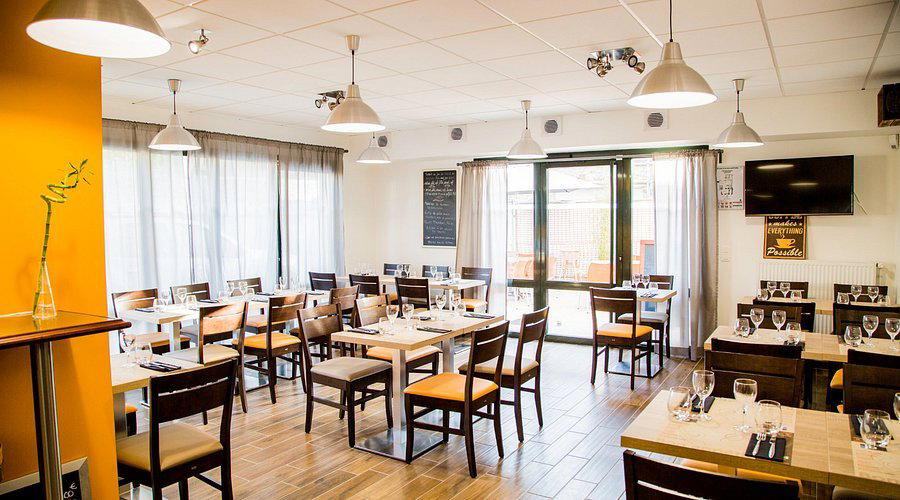
Hotels in Langres
All hotels in Langres →
Details
- Cozy
- Intimate
- Date Night
- Casual Hangout
- Family
- Standalone
- A La Carte
- Vegetarian Friendly
Cozy and intimate small restaurant with warm, home-like atmosphere created by personal service.