On Chilanga Road in Lilongwe, Lark Café occupies a quieter register than the capital's more formal dining rooms, drawing a crowd that values sourced ingredients and a relaxed pace over ceremony. It sits within a growing tier of Malawian café-restaurants where local produce shapes the menu rather than imported convention. For visitors oriented around ingredient-led cooking in sub-Saharan Africa, Lark is a reference point worth knowing.
Pearl is the En Primeur Club membership app — saves, bookings, and concierge access live there. Same editors, same standards.
- Address
- Chilanga Road, Lilongwe
- Directions
- Get directions
 Saves & bookings on Pearl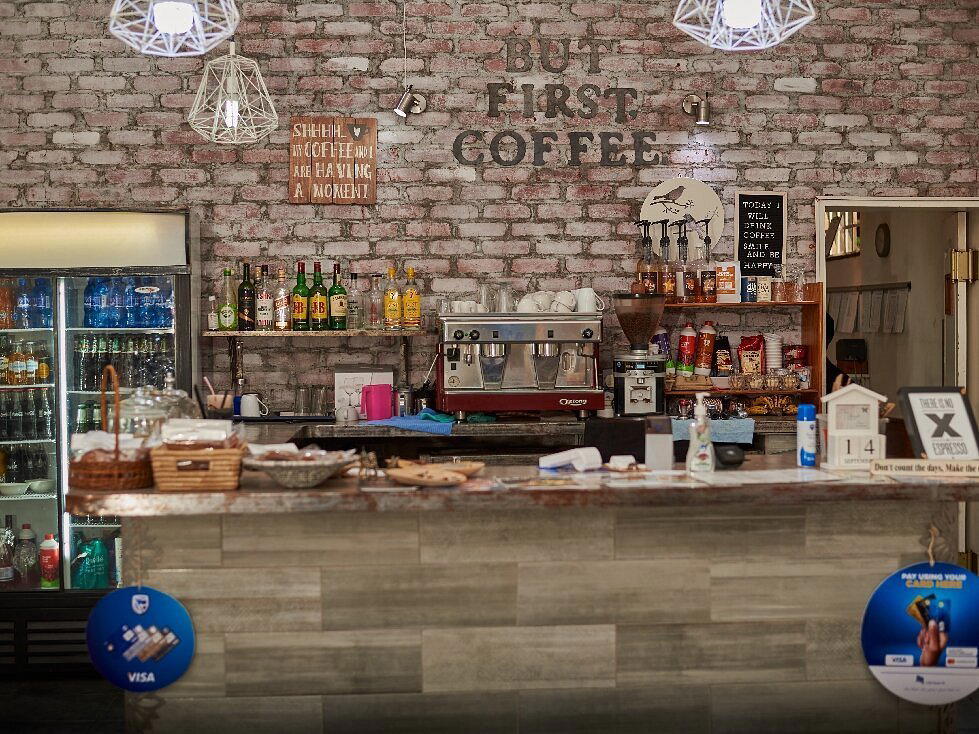
Chilanga Road and What It Tells You About Lilongwe Dining
Arrive on Chilanga Road at a measured hour and you get a clear read on how Lilongwe's café culture actually works. This is not the city's embassy-district formality, nor the fast-turnover lunch trade near the Old Town market. The street sits in a middle register that has become the address of choice for places that want a settled neighbourhood feel without the performance of fine dining. Lark Café occupies that position on Chilanga Road, and the physical approach — low-key signage, a sense that regulars arrive without consulting a map — tells you something before you've sat down. In cities with shallow café infrastructure, this kind of address legibility is meaningful. It signals a place that has earned its clientele rather than advertised for one. For a fuller orientation to where Lark sits among the capital's options, our full Lilongwe restaurants guide maps the broader scene.
Ingredient Sourcing as the Central Argument
Malawi's agricultural geography is unusually varied for a landlocked country of its size. The Shire Highlands in the south, the lakeshore plains running the length of Lake Malawi, and the fertile plateaux around Lilongwe itself produce a range of vegetables, legumes, freshwater fish, and smallholder crops that rarely travel far before reaching a kitchen. The question for any café-restaurant operating in this context is whether it treats that supply chain as a cost advantage or as a culinary argument. The better places in Lilongwe's emerging café tier make it the latter.
This is the frame through which ingredient-led dining in sub-Saharan capitals has started to develop its own critical language. In cities like Nairobi and Accra, the past decade has seen a cohort of restaurants build menus explicitly around provenance: the farm region, the fishing community, the smallholder cooperative. The model owes something to the sourcing movements that reshaped European and North American kitchens, from the hyperlocal commitments visible at places like Arzak in San Sebastián or Azurmendi in Larrabetzu to the producer-first logic behind Arpège in Paris. At that register, sourcing is a prestige signal backed by tasting menus and Michelin recognition. In Lilongwe, the same instinct operates at street level, in casual formats, where the claim is quieter but the geographic logic is just as coherent.
Lark Café sits within this pattern. Its address on Chilanga Road places it in a residential-commercial pocket where supply from nearby smallholders and market networks is practical rather than aspirational. That proximity matters: in markets where cold-chain logistics are limited, short supply lines are not a lifestyle choice but a structural reality, and kitchens that work with that constraint rather than against it tend to produce more honest food.
The Café Format in Context
Across sub-Saharan Africa, the café-restaurant format has become the most responsive vehicle for ingredient-led cooking precisely because it carries fewer obligations than a full-service restaurant. Without a fixed tasting menu or a rigid à la carte structure, a kitchen can respond to what arrived that morning. The format also lowers the threshold for local clientele: you don't need a reservation culture or a dress code framework to make the room work. This flexibility is what distinguishes the better Lilongwe cafés from their more formal counterparts elsewhere on the continent.
Compare this to the dynamics at play in, say, Blantyre, Malawi's commercial capital, where Bombay Palace operates in a more structured dining format shaped by a different clientele and a longer-established restaurant tradition. Lilongwe's café tier is newer, less codified, and more directly connected to the city's residential fabric. That makes it harder to evaluate by conventional restaurant metrics, but more interesting as a document of how a city's food culture actually evolves.
How the Room Works
The atmosphere at Lark Café reads as deliberately unhurried. In Lilongwe's café scene, where the pace of service often reflects genuine kitchen-to-table rhythms rather than inattention, this is a feature rather than a flaw. The room functions as a place where the midday stretch can extend without social pressure, where a single table can accommodate a working lunch and then a longer conversation without the chair-clearing signals common in higher-turnover formats. That quality is increasingly valued by the international NGO and diplomatic community that makes up a significant share of Lilongwe's daytime café clientele, as well as by Malawian professionals who have absorbed a similar preference for the unhurried register.
This is a different category of experience from the technically demanding formats at places like Atomix in New York City, Alinea in Chicago, or Lazy Bear in San Francisco, where the room's architecture is designed to focus attention and calibrate the pace of a meal. Lark operates without that apparatus, and the comparison is instructive rather than unflattering: different formats serve different arguments about what a meal is for.
Planning Your Visit
Lark Café is located on Chilanga Road in Lilongwe, accessible from the city's main residential and commercial areas. Lilongwe's café culture does not yet operate on the advance-reservation infrastructure common in cities with deeper restaurant industries, so walk-in visits during daytime hours are generally the working model. Visitors arriving from outside the city should factor this into itinerary planning, particularly if Lark is a primary stop rather than an incidental one.
At a Glance
- Cozy
- Quiet
- Scenic
- Casual Hangout
- Family
- Brunch
- Garden
- Local Sourcing
- Garden
Cozy and inviting with a peaceful garden oasis, shaded outdoor patio, lush plants, and a relaxing atmosphere filled with birdsong.
Know Before You Go
- Getting there
- Chilanga Road, Lilongwe