Our verdict
La Vieille Porte occupies a historic address in Le Mans's old quarter, placing it within a small tier of restaurants where setting and tradition carry as much weight as what arrives on the plate. The address alone — 12 Rue de la Vieille Porte — signals its position inside the medieval city walls, a neighbourhood where French provincial dining culture has remained largely intact. Visitors planning a meal here should book in advance and arrive with an appetite for place as much as food.

Pearl is the En Primeur Club membership app — saves, bookings, and concierge access live there. Same editors, same standards.
- Address
- 12 Rue de la Vieille Prte, 72100 Le Mans, France
- Phone
- +33243240376
- Hours
- Daily Closed
- Website
- la-vieille-porte.fr
- Directions
- Get directions
The menu
What to order
- Foie gras maison
- Brochettes de viande
- Cocotte d'escargots
French provincial dining operates on a logic quite different from the capital. In Paris, a restaurant earns attention through novelty, critical momentum, and the compressed competition of a city with more serious tables per square kilometre than perhaps any other. In a city like Le Mans — leading known internationally for its 24-hour motor race and, to historians, for its Plantagenet royal heritage, the dynamic shifts. Restaurants in the old quarter draw on a slower, deeper kind of authority: the authority of place, continuity, and the trust of a local population that dines out with frequency and with expectations grounded in regional tradition rather than trend cycles. That context is useful to carry with you when you arrive at La Vieille Porte. The city is not a gastronomic capital in the national press's reckoning, which means its better restaurants operate without the external validation machine that propels Parisian or Lyonnaise addresses to international visibility.
Within Le Mans, the mid-to-upper dining tier is defined by a handful of addresses. L'Auberge de Bagatelle works a modern cuisine format at the €€€ tier. L'insouciant takes a creative approach within the same price bracket. L'épi'Curieux, La Reserve, and Le Bellifontain fill out the map of options worth consulting before any visit. La Vieille Porte occupies the historic core of this set, its address in the old city lending it a physical specificity that newer venues cannot replicate. See our full Le Mans restaurants guide for a complete picture of where the city's table currently stands.
Cultural Roots: The French Tradition of the Regional Table
The broader French dining tradition that a restaurant like La Vieille Porte inhabits has its lineage in the auberge and the table d'hôte, formats that predate the modern restaurant concept and were built around hospitality as a civic and social function rather than a commercial one. The cooking that emerged from this tradition was specific to its geography: what the local markets provided, what the local climate demanded, what local families expected at the table. That tradition did not produce the fireworks of Nouvelle Cuisine or the technical precision of the generation that followed, see what those formats look like at their most developed at Alléno Paris au Pavillon Ledoyen or Mirazur in Menton, but it produced something arguably more durable: a cuisine of deep local intelligence.
That lineage connects La Vieille Porte to a wider French provincial tradition whose most celebrated expressions include Auberge de l'Ill in Illhaeusern, Bras in Laguiole, and the historic benchmark of Paul Bocuse's Auberge du Pont de Collonges. Those addresses operate at the top of a nationally recognised hierarchy. What they share with smaller, less heralded provincial rooms is a rootedness in place that the most technically adventurous urban restaurants, however impressive, whether AM par Alexandre Mazzia in Marseille or Assiette Champenoise in Reims, often sacrifice in exchange for ambition. Neither approach is superior; they serve different purposes and different dining moods.
Restaurants in the French provincial tradition also tend to have a different relationship with the dining room itself. The room is not a canvas for a designer's statement; it is a container for a specific social ritual. Conversation carries. The service pace respects the meal as an event with a beginning and an end that is not hurried toward. This is not inefficiency, it is a structural feature of a dining culture that treats the table as a commitment rather than a transaction. It is what separates a two-hour lunch in the Sarthe from a power-lunch format in New York, where the technical ambition at a place like Le Bernardin or the creative density of Atomix operates inside a completely different set of cultural expectations. The Roman wall that rings it dates to the third and fourth centuries; the half-timbered houses filling the interior date from the fifteenth and sixteenth. Walking into this district for dinner is an exercise in temporal dislocation that the surrounding ring road and race-circuit infrastructure make all the more pronounced by contrast. Restaurants in this quarter benefit from that dislocation in a specific way: the setting does preliminary work on the diner's psychology before anything is poured or plated. A meal here reads differently from one taken in a contemporary room, and that reading is part of what you are choosing when you book.
For visitors arriving for the 24 Hours of Le Mans in June, one of motorsport's most attended events, drawing well over 250,000 spectators across race weekend, the old city offers a counterpoint to the circuit's industrial scale. Booking in the weeks around the race requires significantly more lead time than during the rest of the year, and the Cité Plantagenêt in particular fills quickly with visitors who have done the research.
Planning a Visit
La Vieille Porte is located at 12 Rue de la Vieille Porte, 72100 Le Mans, in the heart of the Cité Plantagenêt. The old city is walkable from Le Mans city centre and reachable from Le Mans railway station, a TGV stop with direct services from Paris Montparnasse in approximately one hour, in under fifteen minutes on foot. Given the venue's location and the cultural weight the neighbourhood carries, smart-casual dress is a reasonable default. As with most French provincial rooms in this category, lunch service tends to be quieter than dinner and is frequently the better entry point for a first visit. Flocons de Sel in Megève and Troisgros in Ouches demonstrate what this category looks like at its most decorated; La Vieille Porte operates within the same national tradition, at a regional scale that Le Mans's dining scene makes its own. Also worth considering in Strasbourg for a comparable provincial-tradition experience is Au Crocodile, which navigates a similar relationship between historic address and French culinary inheritance.
Frequently asked questions
Is La Vieille Porte better for a quiet night or a lively one?
The address inside the Cité Plantagenêt at 12 Rue de la Vieille Porte points firmly toward the quieter end of the spectrum. This is a neighbourhood built on Roman foundations and narrow medieval lanes — the ambient register is low and the pace unhurried. Visitors arriving during the 24 Hours of Le Mans in June will find the city itself significantly louder, but the old quarter retains more calm than the circuit-adjacent areas.
How do I find La Vieille Porte?
La Vieille Porte is located at 12 Rue de la Vieille Prte, 72100 Le Mans, France, Le Mans.
Is La Vieille Porte worth visiting if I'm in Le Mans for the 24 Hours race?
The restaurant's location at 12 Rue de la Vieille Porte places it inside the Cité Plantagenêt, Le Mans's preserved medieval core, which sits apart from the circuit crowds that concentrate further south during race week in June. For visitors who want a meal grounded in Sarthe regional cooking rather than race-week catering, this address offers a different register entirely. Booking ahead during that period is essential given the city-wide demand surge.
What should I eat at La Vieille Porte?
In the broader Sarthe dining context, rillettes are the defining regional preparation — a slow-cooked pork spread with a longer history in this department than almost anywhere else in France. Any kitchen operating at this address in Le Mans would be working within that tradition, whether or not it appears explicitly on the menu.
How hard is it to get a table at La Vieille Porte?
Booking difficulty in Le Mans's old quarter follows a clear seasonal pattern. The 24 Hours of Le Mans in June draws more than 250,000 visitors annually, and restaurants within walking distance of the Cité Plantagenêt fill well in advance during that window. Outside the race period, demand at venues of this type in the medieval quarter is considerably more manageable, though contacting the restaurant directly before any visit to Le Mans is advisable regardless of season.
What's the signature at La Vieille Porte?
The regional frame is Sarthe cookery, where rillettes, freshwater fish from the Sarthe river, and slow-braised preparations define the table. A kitchen at this address in Le Mans would have strong reason to anchor its identity in those traditions.
Budget Reality Check
Comparable venues nearby, for context on price, style, and recognition.
| Venue | Cuisine | Price | Awards | Notes |
|---|---|---|---|---|
| La Vieille PorteThis venue — the venue you are viewing | Traditional French Bistro | $30–50 | Not listed | Not listed |
| L'épi'Curieux | Modern French Bistronomy | $30–50 | Not listed | Cité Plantagenêt, Modern French Bistronomy |
| Le Bellifontain | French Bistronomique | $30–50 | Not listed | near gare du Mans, French Bistronomique |
| Zilwa Le Mans restaurant Mauricien | Mauritian Fusion | $20–30 | Not listed | Vieux Mans, Mauritian Fusion |
| La Reserve | French Bistro | $20–30 | Not listed | Place de la République, city center, French Bistro |
| L'insouciant | Modern French Bistronomy | $50–100 | Michelin Plate | Le Mans City, Modern French Bistronomy |
Continue exploring
More in Le Mans
Restaurants in Le Mans
Browse all →
Hotels in Le Mans
Browse all →
Wineries in Le Mans
Browse all →
Details
- Cozy
- Intimate
- Rustic
- Elegant
- Classic
- Date Night
- Special Occasion
- Historic Building
- Terrace
- A La Carte
- Vegetarian Friendly
Current opening hours
- Monday
- Closed
- Tuesday
- Closed
- Wednesday
- Closed
- Thursday
- Closed
- Friday
- Closed
- Saturday
- Closed
- Sunday
- Closed
Hours can change for holidays and private events. Last verified .
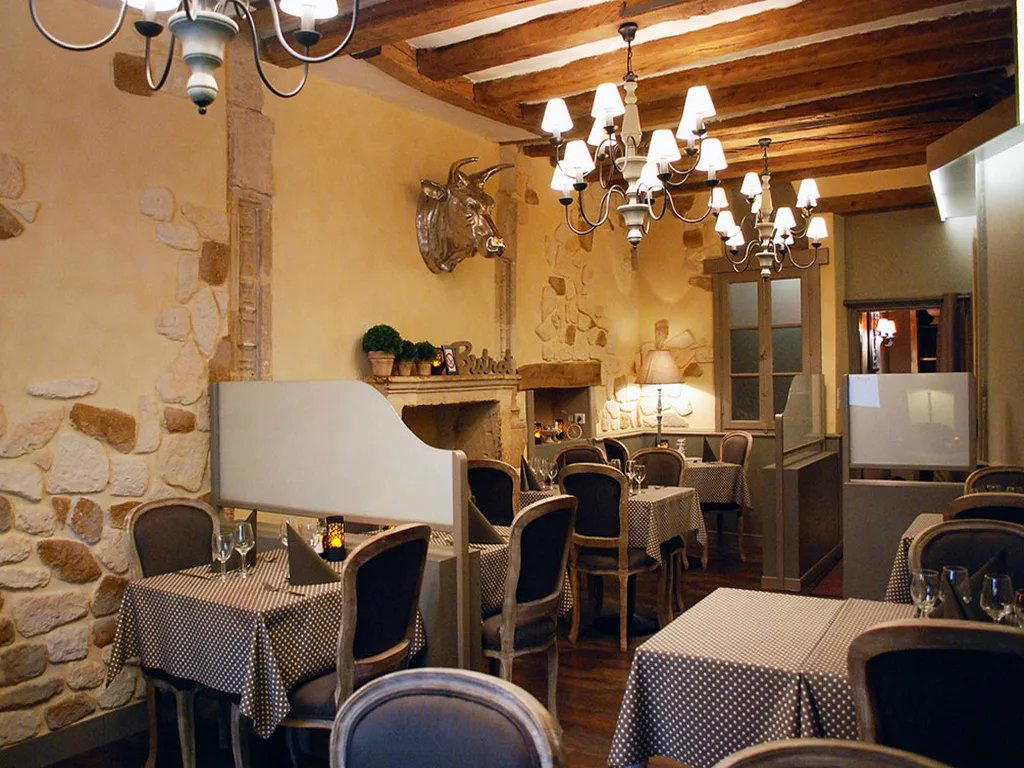
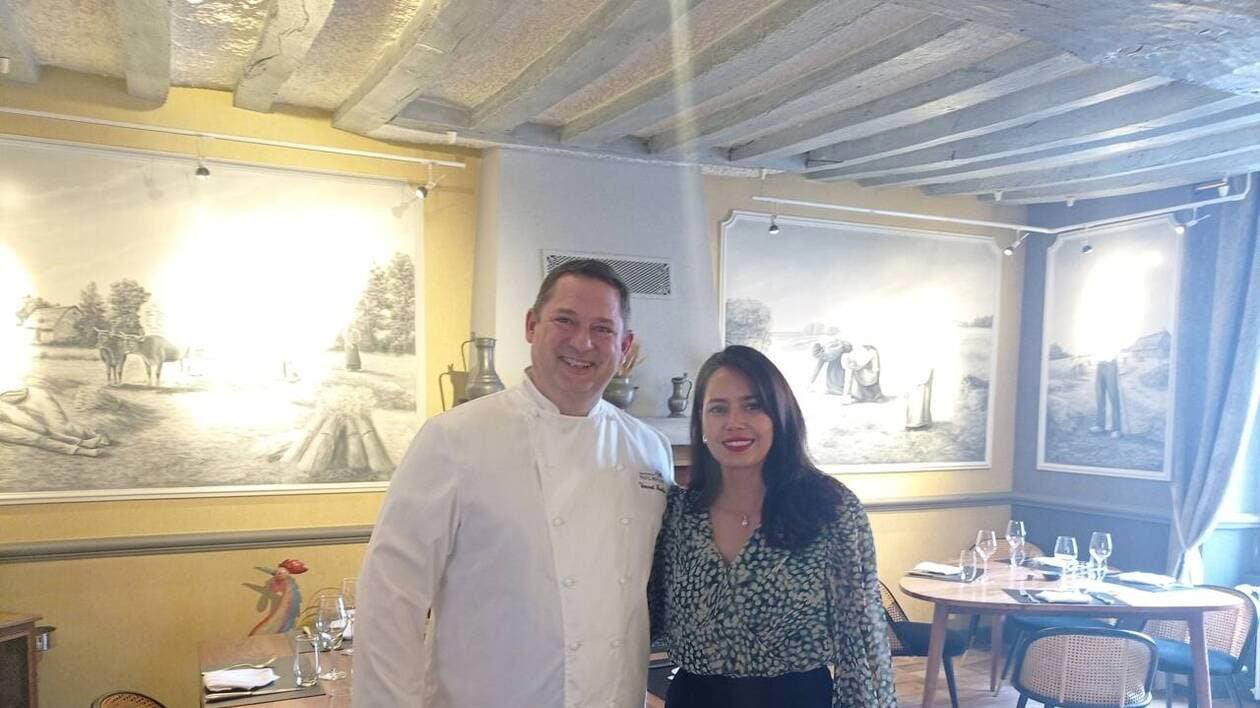
Warm and intimate atmosphere with exposed beams, stone walls, beige and gray tones, and a rustic charm enhanced by a decorative fireplace.