La Table du Palafitte

The kitchen draws on Mediterranean coastal traditions, with a Menu Découverte format that gives the meal structure and direction. Guests choose between an indoor dining room and a large waterfront terrace facing Lake Neuchâtel.
Pearl is the En Primeur Club membership app — saves, bookings, and concierge access live there. Same editors, same standards.
- Address
- Rte des Gouttes-d'Or 2, 2000 Neuchâtel, Switzerland
- Phone
- +41 32 723 02 02
- Website
- palafitte.ch
- Directions
- Get directions
 Saves & bookings on Pearl
Where the Lake Sets the Table
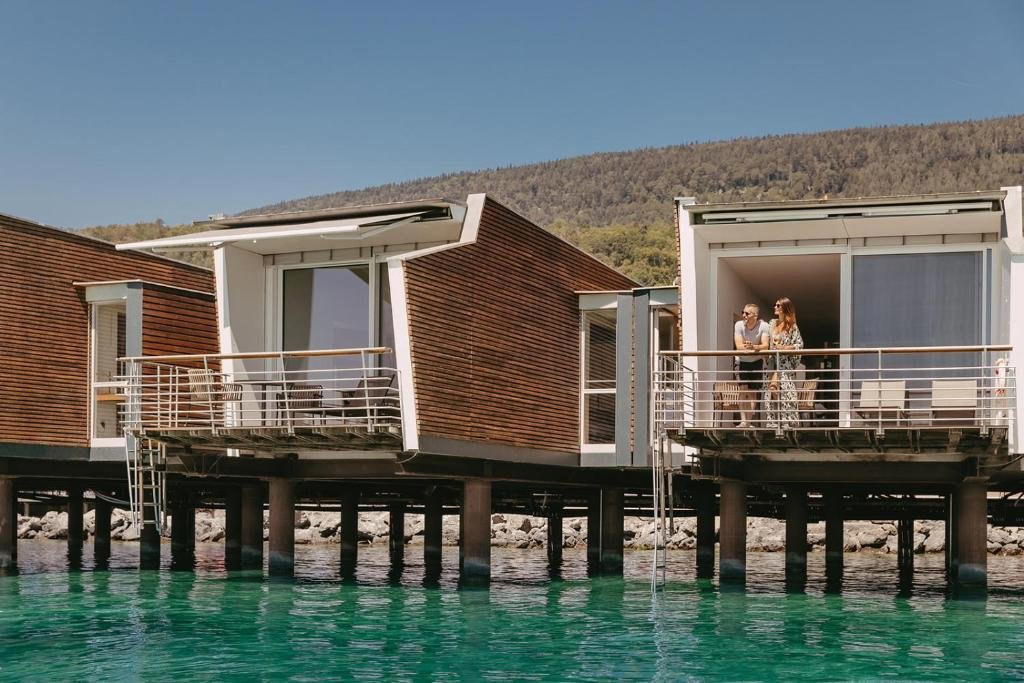
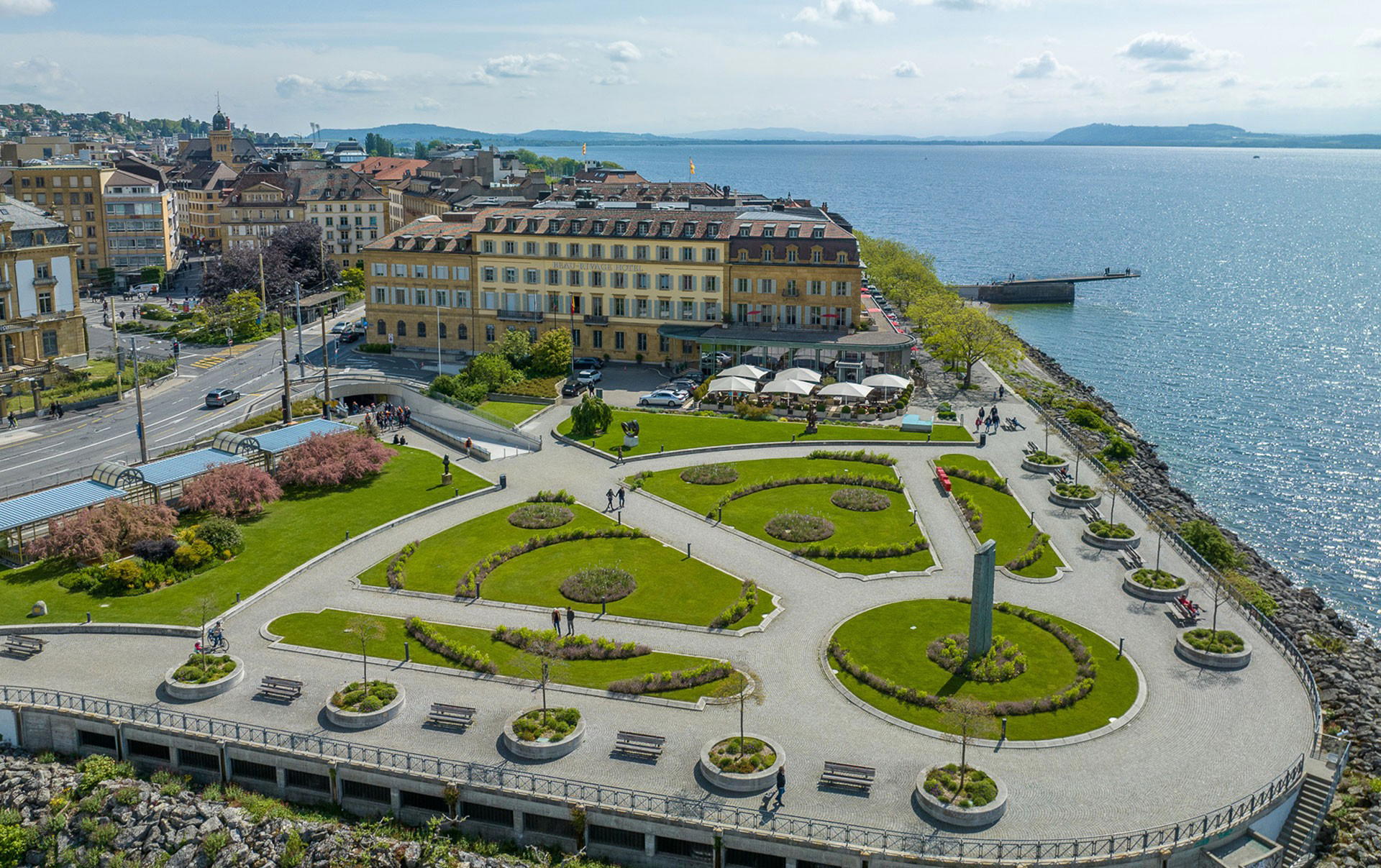
Arriving at La Table du Palafitte, the first thing you register is the water. Lake Neuchâtel sits at the edge of the terrace with a closeness that shapes every decision about when to eat and where to sit. In summer, the large waterfront terrace functions as the primary dining space, and the light off the lake shifts through the meal in a way that no interior room can replicate. In cooler months, the dining room absorbs that same orientation, with views that keep the lake present even when the terrace is closed. The setting is not incidental; it is the frame through which the kitchen's Mediterranean references acquire their logic.
A Mediterranean Thread in a Swiss-German Canton
Switzerland's restaurant scene operates across a wide spectrum of registers, from the three-Michelin-star precision of Schloss Schauenstein in Fürstenau and Memories in Bad Ragaz to Michelin Plate addresses where the standard is consistent quality without the ceremony of a full tasting progression. La Table du Palafitte, in Neuchâtel, serves modern French-Swiss fine dining with a lakeside setting on Lake Neuchâtel.
That southward orientation is meaningful in Neuchâtel, a canton whose vineyards and light share more with the Jura arc than with the Alpine heartland. The lake itself sits at 430 metres, temperate enough that the city's culinary references have long included France's Rhône corridor and the Ligurian coast. La Table du Palafitte's Menu Découverte draws explicitly on those time-honoured Mediterranean coastal traditions, framing the meal as a sequence of references rather than a single-nation declaration. In the broader Swiss context, where venues like Da Vittorio in St. Moritz make similar Mediterranean gestures from an Alpine base, Palafitte's lakeside geography gives the approach a more literal grounding.
Sourcing Logic: When Geography Drives the Plate
Classic Cuisine, as a category, tends to foreground product quality over technical novelty. The repertoire is established; what distinguishes one table from another is how seriously the kitchen engages with its ingredients and where those ingredients originate. For a restaurant anchored in Mediterranean coastal tradition, that sourcing question is structural. The flavours of the Ligurian coast, Provence, and the western Mediterranean depend on olive oils with a particular character, on fish from specific waters, on herbs that carry a different intensity when grown in drier, sunnier conditions than Switzerland's interior typically offers.
The Menu Découverte format concentrates that sourcing argument into a single sequence. Rather than allowing guests to construct their own path through the menu, the tasting format commits the kitchen to a position: these ingredients, in this order, represent what we believe the Mediterranean tradition means. That editorial stance is more demanding than à la carte flexibility, and it is where a Michelin Plate recognition carries its weight.
For context on how other Swiss addresses handle the relationship between local sourcing and international culinary tradition, the focus ATELIER in Vitznau and the Colonnade in Lucerne each take different positions. Vitznau leans into Swiss-Creative, Lucerne into a broader European framework. Palafitte's Mediterranean specificity is the narrower, more committed editorial choice.
Neuchâtel's Dining Position
Neuchâtel sits outside the usual Swiss fine-dining itinerary, which concentrates on Zurich, Geneva, Basel, and a handful of destination properties. That relative quiet is an advantage for a restaurant that relies on a terrace and a particular quality of light: the city does not generate the volume of business dining that can distort a kitchen's priorities. The local restaurant scene is small enough that each address occupies a distinct position. Restaurant de l'Hôtel DuPeyrou anchors the formal end of the market with a historic property and classical French references. O'terroirs takes a Swiss Contemporary approach that foregrounds local producers. The restaurant occupies the third distinct space: a hotel restaurant with a lakeside setting and a menu that looks toward the Mediterranean.
That triangulation matters for planning. Guests who want one rigorous engagement with local Neuchâtelois producers should consider O'terroirs. Those seeking classical French formality in a heritage building should consider DuPeyrou. The restaurant is the address where setting and cuisine reinforce each other most directly, and where the terrace makes the physical experience of the lake central to the meal.
Classic Cuisine as a Category Signal
Classic Cuisine, when positioned against the creative formats that dominate the Swiss top tier, the sharing menus at venues like those in the IGNIV group, the hyper-local modernism of Einstein Gourmet in Sankt Gallen, or the Alsatian-Swiss rigour at Cheval Blanc by Peter Knogl in Basel, signals a different kind of ambition. The goal is not to redefine technique but to execute a known tradition with enough discipline that the product speaks clearly. Internationally, that register connects Palafitte to venues like Maison Rostang in Paris and KOMU in Munich, both of which hold Classic Cuisine as a category identity.
Within Switzerland, the €€€€ price range positions the restaurant above the casual end of the market. It is a price point where the Michelin Plate recognition carries specific reassurance: the kitchen is operating at a level where the recognition means something, without the expectation-management complexity of a starred address.4 across 294 reviews suggests the broader dining public reaches the same conclusion. And for 7132 Silver in Vals-level destination spending, Palafitte offers a more accessible entry into recognised Swiss fine dining, with the lake as a setting that justifies the journey on its own terms.
Planning Your Visit
The terrace is the primary reason to time a visit carefully. Summer evenings, when the lake catches the last of the day's light, represent the strongest case for booking. The price range sits at €€€, meaning a dinner with wine will land in the range of a considered evening out rather than a special-occasion ceiling. The Menu Découverte format means the kitchen's pace sets the rhythm; guests who prefer to control their own progression through a meal should note this before booking. The restaurant address is Rte des Gouttes-d'Or 2, 2000 Neuchâtel, Switzerland.
Comparable Venues
Comparable venues nearby, for context on price, style, and recognition.
| Venue | Cuisine | Price | Awards | Notes |
|---|---|---|---|---|
| La Table du PalafitteThis venue — the venue you are viewing | Modern French-Swiss Fine Dining | $$$$ | Michelin Plate | Not listed |
| Le Cardinal | Swiss-French Brasserie | $$ | Not listed | City Center |
| O'terroirs | French Terroir Fine Dining | $$$$ | Not listed | Neuchâtel |
| La Dispensa | Modern Italian Fine Dining | $$$ | Michelin Plate | vieille ville |
| Restaurant de l'Hôtel DuPeyrou | Classic French Fine Dining | $$$$ | Michelin Plate | Neuchâtel |
| Paprika | Modern Indian | $$ | Not listed | City Center |
Recognition history
Dated appearances from independent guides and award organizations, with the underlying list record or original source where available.
Michelin Plate
Michelin
Michelin Plate
Michelin
Continue exploring
More in Neuchâtel
Restaurants in Neuchâtel
Browse all →
Bars in Neuchâtel
Browse all →
At a Glance
- Romantic
- Elegant
- Sophisticated
- Scenic
- Date Night
- Special Occasion
- Celebration
- Waterfront
- Terrace
- Hotel Restaurant
- Extensive Wine List
- Local Sourcing
- Waterfront
- Mountain
Current opening hours
- Monday
- 12–2 PM, 6:30–9 PM
- Tuesday
- 12–2 PM, 6:30–9 PM
- Wednesday
- 12–2 PM, 6:30–9 PM
- Thursday
- 12–2 PM, 6:30–9 PM
- Friday
- 12–2 PM, 6:30–9 PM
- Saturday
- 12–2 PM, 6:30–9 PM
- Sunday
- 12–2 PM, 6:30–9 PM
Hours can change for holidays and private events. Last verified .
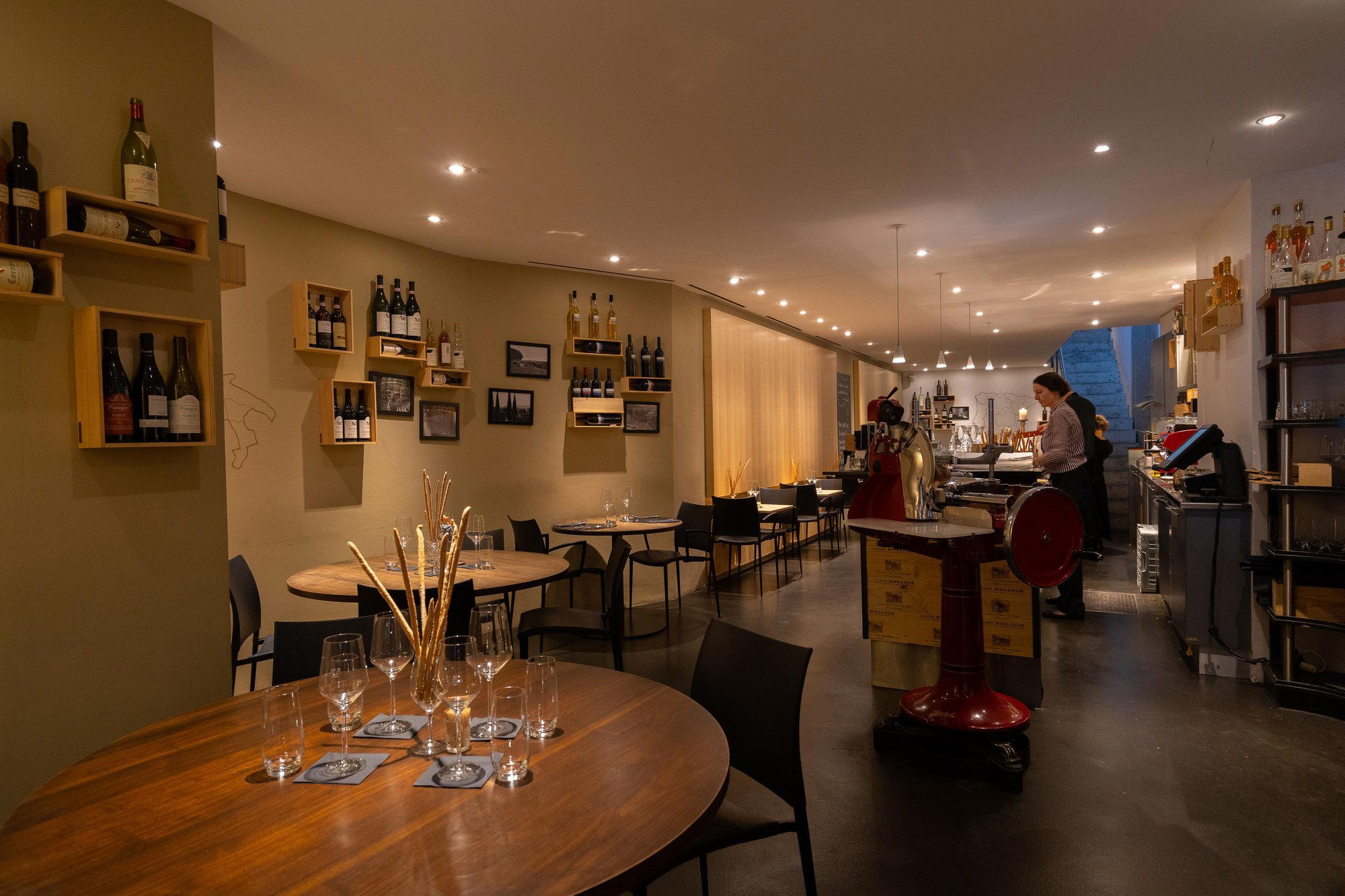
Sophisticated and inviting atmosphere with large windows framing far-reaching lake and mountain views, enhanced by soft natural light.