La Sablonnerie

The Good Food Guide GFG Good
Our verdict
A whitewashed farmhouse hotel on car-free Sark, La Sablonnerie operates at a remove from modern restaurant conventions. Guests arrive by horse-drawn carriage, the kitchen draws on its own farm and garden, and the menu reads like a document from an earlier era of French-inflected British hospitality — crab tians, Sark lobster in season, and desserts finished with local cream.

Pearl is the En Primeur Club membership app — saves, bookings, and concierge access live there. Same editors, same standards.
- Address
- Little Sark Sark GY10 1SD GB
- Phone
- 01481 832061
- Website
- sablonneriehotel.gg
- Directions
- Get directions
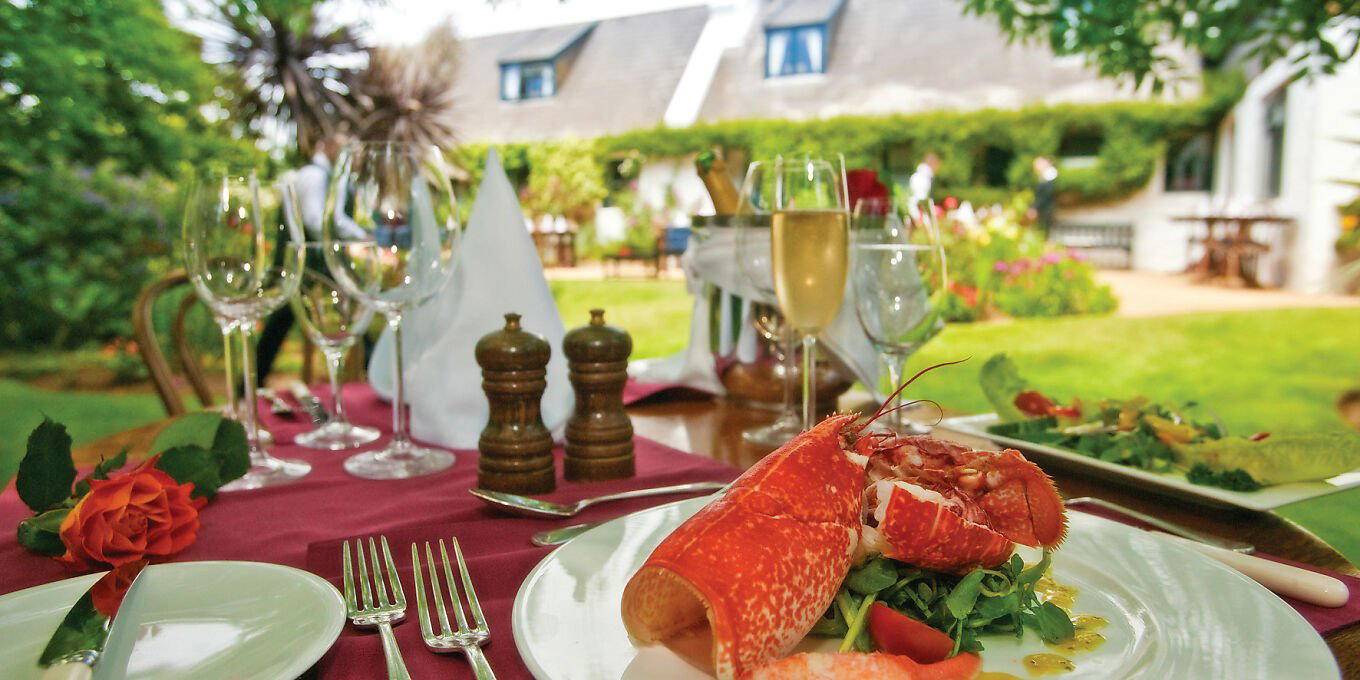
The Last Carriage Road in the Channel Islands
Getting to La Sablonnerie requires commitment that most restaurants cannot demand. Sark, a 5.5-square-kilometre island in the Bailiwick of Guernsey, operates without motor vehicles. Transport is by horse, bicycle, or foot, and guests arriving at Sark harbour for Little Sark are met by horse-drawn carriage — a logistical reality rather than an affectation. By the time a visitor reaches the whitewashed farmhouse, the transition from mainland dining habits is already complete. This physical separation is the single most important fact about eating here. It shapes what the kitchen can source, how the menu is structured, and what kind of experience the room can plausibly offer.
That context matters when situating La Sablonnerie in the broader scene of British destination dining. Properties like Gidleigh Park in Chagford or Le Manoir aux Quat' Saisons in Great Milton also trade on rural remove, but they remain accessible by road and operate within a supply chain that can reach them daily. La Sablonnerie's situation is categorically different: the island's geography enforces a degree of self-sufficiency that few mainland country-house hotels could replicate even if they chose to.
A Kitchen Rooted in What the Island Grows and Catches
The sourcing model at La Sablonnerie is not a marketing position. It is a structural necessity that the kitchen has, over time, turned into the dominant character of the menu. Vegetables arrive from the hotel's own farm and kitchen garden. Beef on the menu is home-reared. The sub-tropical microclimate that Sark enjoys — the island sits in the Gulf Stream corridor, supports growing conditions that would surprise visitors expecting Channel Island austerity.
That farm-to-table relationship is most legible in the main course section: fillet of home-reared beef, breast of duckling with green peppercorn sauce, and a duo of spring lamb and veal with a light Madeira sauce, all supported by vegetables from the property's own growing operation. This is not the kind of sourcing narrative that restaurants elsewhere attach retrospectively to supplier relationships; the land producing the food is visible from the dining room.
The most instructive item on the menu, though, is the Sark lobster. In season, it receives its own dedicated sub-menu, grilled with a lime and ginger glaze, served classic thermidor, poached in a brandy-laced lobster bisque, or cold with dill mayo. The Channel Islands have long supported sustainable lobster populations, and the waters around Sark in particular carry a reputation among fishermen for quality. A single ingredient with four preparation options signals a kitchen confident enough in its primary material to let the sourcing do the argumentative work. Few British country properties, even those at the price tier of Moor Hall in Aughton or L'Enclume in Cartmel, can say that a key protein arrives from within sight of the building.
A Menu That Reads as History
The culinary language of La Sablonnerie is firmly classical French, operating in the register that shaped British fine dining from the 1970s through the 1990s. Water ices served between courses as a palate interlude. Desserts finished with Sark cream. A tian of local crab with chilled asparagus soup and confit pink grapefruit as a starter. This is the vocabulary of an earlier era, and the menu wears it without apology.
That positioning is more interesting than it might first appear. Contemporary British fine dining has largely moved toward modernist technique, hyper-seasonal small-plate formats, and open kitchens, the direction represented by restaurants like The Ledbury in London or Midsummer House in Cambridge. La Sablonnerie sits at the opposite end of that spectrum, closer in spirit to the classical French-inflected country-house tradition once embodied by the Waterside Inn in Bray. Whether that represents conservatism or an earned refusal to chase trend is a question each visitor will answer for themselves, but the position is coherent rather than simply dated.
Desserts described as strictly old school, crème brûlée with a combination of exotic fruits and berries, for instance, carry the same logic. The richness of Sark cream, produced on the island, elevates a familiar format without requiring technique to carry the weight. It is a sensible deployment of exceptional local material.
The Setting as a Structural Argument
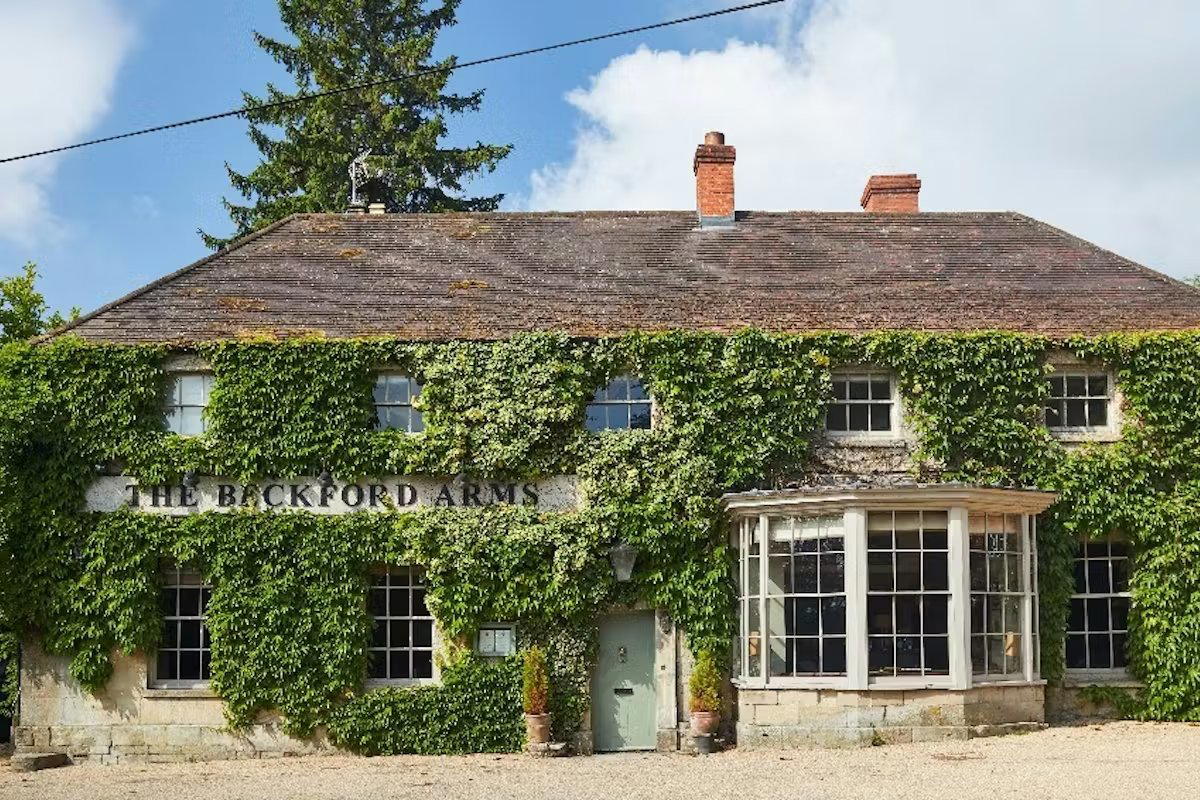
The physical environment of La Sablonnerie operates as evidence for everything the kitchen claims. Hanging baskets and flower beds in summer. A croquet lawn. A tea garden that collects afternoon sun. A refurbished interior that preserves the proportions and character of a working farmhouse rather than importing the visual conventions of luxury hotel design. These details are not decorative, they establish the terms on which the experience operates.
Fewer than 500 people live permanently on Sark. The island has no airport, no cars, and no road network in the conventional sense. The comparison is not useful. La Sablonnerie occupies a category that is, in structural terms, largely its own, a hotel-restaurant in a car-free, near-subsistence-capable island environment, serving a classical menu built substantially from what the property grows and catches nearby.
For those building a Channel Islands itinerary, the local guides for Little Sark restaurants, Little Sark hotels, Little Sark bars, Little Sark wineries, and Little Sark experiences cover the full picture beyond this single property.
Planning a Visit
Sark is reached by ferry from Guernsey, which is itself served by scheduled flights from several UK airports. The crossing to Sark takes approximately an hour. From the island's main harbour, La Sablonnerie arranges horse-drawn carriage transport to the property in Little Sark, a journey that, depending on your tolerance for the unhurried, is either the most charming or the most inconvenient part of the visit. The wine list is described as offering value and variety at fair prices, which for an island with limited import infrastructure is worth noting. Visiting outside peak summer months is feasible, but the Sark lobster sub-menu is a seasonal offering; July and August represent the most reliable window for it. Booking in advance is advisable given the island's limited total accommodation capacity.
Frequently asked questions
Is La Sablonnerie child-friendly?
Sark's complete ban on motor vehicles removes the primary hazard that makes countryside travel stressful with children, and the horse-and-carriage transfer from the harbour is a practical draw in itself. The farm and kitchen garden setting, croquet lawn, and open-air tea garden give younger guests space to occupy between courses. Families should confirm seasonal availability and any specific arrangements directly before travelling, given the logistics of reaching the island.
What is the atmosphere like at La Sablonnerie?
The atmosphere is shaped by geography before anything else: no cars, fewer than 500 permanent residents, and a whitewashed farmhouse exterior draped in hanging baskets and sub-tropical greenery. Inside, the refurbished dining room reads as a preserved period piece, where a water ice arrives between courses and the service register matches the classical French menu. It is unhurried in a way that is structural rather than affected.
Is La Sablonnerie award-winning?
La Sablonnerie has received recognition including: Located by the roadside, this beautiful old white farmhouse is exactly what you might expect to find on a car-less island inhabited by fewer than 500 people. Guests are transported from Sark harbour by horse-drawn carriage, while the place ….
What should I order at La Sablonnerie?
During lobster season, the dedicated sub-menu is the clearest argument for why the restaurant exists: options run from grilled with lime and ginger glaze to classic thermidor to cold with dill mayo, all sourced locally from Sark waters. Outside of lobster season, the kitchen's own farm supplies the beef and vegetables, and dishes such as spring lamb and veal with Madeira sauce or duckling with green peppercorn sauce illustrate the classical French register the menu works in throughout. Desserts lean firmly old school, finished with Sark cream.
In Context: Similar Options
Comparable venues nearby, for context on price, style, and recognition.
| Venue | Cuisine | Price | Awards | Notes |
|---|---|---|---|---|
| La SablonnerieThis venue — the venue you are viewing | Traditional British Seafood | Not listed | The Good Food Guide GFG Good | Not listed |
| The Highland Laddie | Modern British Gastropub | $30–50 | Not listed | Burley |
| The Three Horseshoes | British Gastropub | $30–50 | Michelin Plate | Batcombe |
| Glencoe Gathering | Scottish Highland Pub and Seafood | $20–30 | Not listed | Glencoe Village |
| Fisherton Mill Gallery Café | Modern British Café | $20–30 | Not listed | Fisherton Street |
| The Griffin | Modern British Gastropub | Not listed | The Good Food Guide GFG Good | Old Amersham |
Recognition history
Dated appearances from independent guides and award organizations, with the underlying list record or original source where available.
The Good Food Guide GFG Good
The Good Food Guide
Continue exploring
More in Little Sark
Restaurants in Little Sark
Browse all →
Bars in Little Sark
Browse all →
Hotels in Little Sark
Browse all →
Wineries in Little Sark
Browse all →
Details
- Rustic
- Cozy
- Scenic
- Classic
- Special Occasion
- Date Night
- Garden
- Historic Building
- Standalone
- Extensive Wine List
- Local Sourcing
- Waterfront
- A La Carte
Rustic cozy farmhouse interior with charming garden ambiance and leisurely no-rush service.