La Porte Arrière

Michelin Plate
Our verdict
La Porte Arrière holds a 2025 Michelin Plate at 356 Rue Lafontaine in Rivière-du-Loup, placing modern cuisine well outside Québec's urban dining centres. Lawrence corridor worthwhile.

Pearl is the En Primeur Club membership app, where members save venues, book tables and use the concierge.
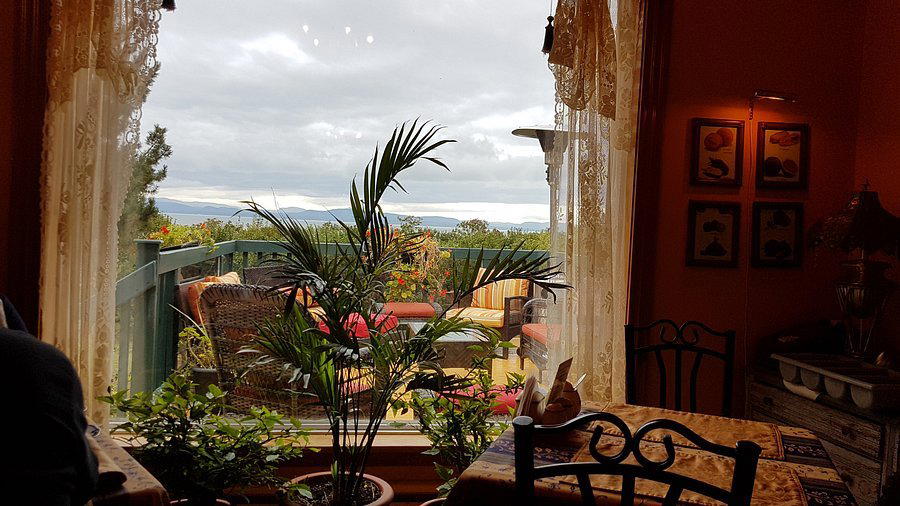
The menu
What to order
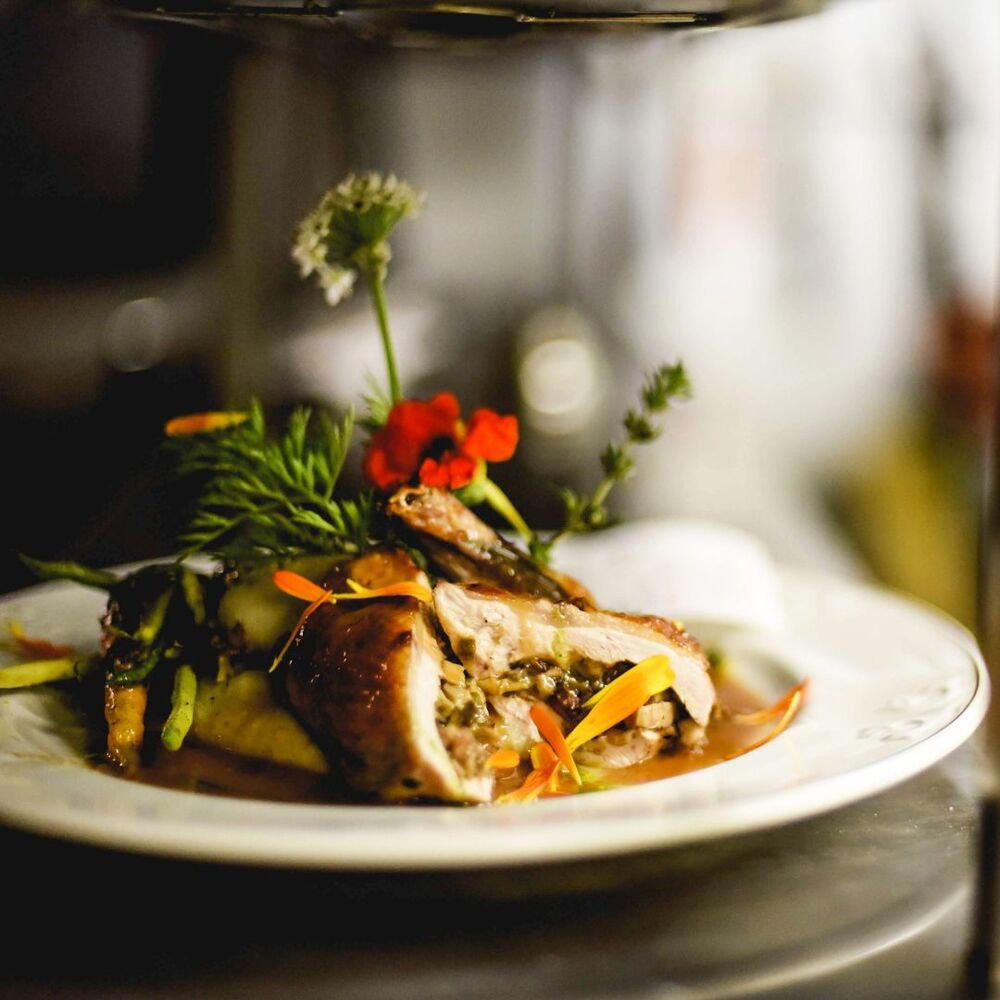
- Ris de veau (veal sweetbreads)
- Crème brûlée au foie gras
- Boudin noir
Modern Cooking at the Edge of the St. Lawrence
Rivière-du-Loup sits at a geographic hinge point: where the St. Lawrence River widens into something closer to an estuary, and where the farmland of the Bas-Saint-Laurent begins to assert itself between the water and the Appalachian foothills. For most travellers, it registers as a transit stop on the Quebec City-to-Gaspésie route, or a departure point for the ferry crossing to the North Shore. That transit-town reputation has long obscured the fact that a serious dining culture has been developing quietly along this stretch of the river, anchored in the agricultural and marine abundance that defines the region. La Porte Arrière, at 356 Rue Lafontaine, is the clearest expression of that shift.
The restaurant earned a Michelin Plate in 2025, the year Michelin's inspectors first extended coverage into Québec beyond the island of Montréal. That timing matters. Michelin Plate recognition signals cooking that meets the guide's standard of good quality in its category, it is not a star, but it is a deliberate inclusion, and its appearance in a town of this size signals that the inspectors found something worth documenting.
Where the Food Comes From
The Bas-Saint-Laurent is not a region that needs to import its identity. The St. Lawrence delivers some of the most prized cold-water seafood in North America, shrimp from Matane, snow crab, smelt, and the various species of groundfish that have defined the regional diet for centuries. Inland, the farms of the river valley produce lamb, pork, and dairy under conditions that serious kitchens elsewhere in Canada spend considerable effort trying to replicate or approximate. The soil, the climate, and the short growing season impose a discipline on what can be served and when.
Modern kitchens in this part of Québec tend to treat that constraint as an editorial position rather than a limitation. The cooking at La Porte Arrière sits within a broader provincial tradition, one that has been articulated most visibly in Québec City at Tanière³, where hyper-local sourcing and wild ingredient foraging have shaped one of the country's more discussed tasting menus. The difference is scale and remove: Rivière-du-Loup is 200 kilometres further downriver, closer to the source of much of what those urban restaurants import, and La Porte Arrière operates in a context where the supply chain is shorter by geography rather than by deliberate design philosophy.
That proximity to primary producers shapes how modern cuisine reads in this part of the province. A kitchen drawing on farmers and fishers within an hour's drive is not making the same set of choices as an urban restaurant building sourcing relationships across a province. The seasonality is more immediate, the adjustments more frequent, and the menu more susceptible to what arrived that week. For a diner accustomed to the polished consistency of a city tasting counter, this can read as variability; for a diner who understands what it means to be cooking this close to the source, it reads as fidelity.
How La Porte Arrière Fits the Canadian Regional Picture
Canada's Michelin-recognised regional cooking scene has expanded rapidly since the guides began covering cities beyond Toronto. The pattern is consistent: a handful of kitchens in smaller markets demonstrate that serious, technically accomplished food is not restricted to major urban centres. Narval in Rimouski operates roughly 100 kilometres further east along the same river, in a similar market context. Together, these restaurants suggest that the Bas-Saint-Laurent is developing a dining identity with enough coherence to support critical attention, not as isolated curiosities but as part of a regional tradition.
The comparison extends further into English Canada. Restaurant Pearl Morissette in Lincoln, The Pine in Creemore, and Eigensinn Farm in Singhampton all operate in the same general category: Michelin-recognised modern cooking in markets that most dining itineraries would overlook in favour of a major city. ÄNKÔR in Canmore and ARLO in Ottawa extend the pattern into western and central Canada. Auberge Saint-Mathieu in Saint-Mathieu-du-Parc provides a closer Québec analogue, where a rural address has not prevented critical recognition. La Porte Arrière belongs to this cohort rather than to the urban tasting-menu circuit of Alo in Toronto or AnnaLena in Vancouver, and it should be assessed on that basis.
Within Québec's own dining conversation, the reference points include Jérôme Ferrer - Europea in Montreal at the urban, formally ambitious end of the spectrum. La Porte Arrière occupies a different position on that spectrum: the price range of $$$ places it solidly in serious-restaurant territory without reaching the $$$$-tier investment of a Montréal destination counter. For international frame of reference on what modern cuisine at this level can achieve, Frantzén in Stockholm and FZN by Björn Frantzén in Dubai represent what the category looks like at its most resource-intensive extreme, a useful illustration of how wide the modern cuisine designation actually spans.
Planning Your Visit
Rivière-du-Loup is accessible by car from Québec City in under two hours along Highway 20, making La Porte Arrière a viable dinner destination for travellers moving between the city and the Gaspésie, rather than a detour requiring separate accommodation. That said, the town itself warrants an overnight stay if the drive is the point rather than the endpoint; see our full Rivière-du-Loup hotels guide for where to stay in the area. Booking in advance is advisable given the restaurant's rating and limited regional competition at this price point: a Michelin Plate recognition in a town this size concentrates demand considerably. The $$$ price range places a meal here above casual dining but below the four-course tasting menu investment of the province's most formally ambitious tables.
For a fuller picture of what the town offers beyond the restaurant, our Rivière-du-Loup restaurants guide, bars guide, wineries guide, and experiences guide cover the broader scene in the area.
Frequently asked questions
Is La Porte Arrière suitable for children?
The $$$ price point and Michelin Plate recognition place La Porte Arrière in a format oriented toward focused, unhurried dining. Older children or teenagers comfortable with a longer, course-driven meal will fit more naturally than younger ones. It is not a casual family restaurant.
Is La Porte Arrière better for a quiet night or a lively one?
Rivière-du-Loup does not run a late-night dining circuit, and a Michelin-recognised $$$ address on Rue Lafontaine operates firmly in the considered-dinner category. Expect a quieter, conversation-friendly room rather than a high-energy one.
Is La Porte Arrière award-winning?
La Porte Arrière has received recognition including: Michelin Plate (2025).
What's the best thing to order at La Porte Arrière?
With a 2025 Michelin Plate awarded for modern cuisine, the kitchen's strength is in interpreting whatever the Bas-Saint-Laurent and the St. Lawrence supply that week. Follow the server's guidance on seasonal specials rather than anchoring to a fixed signature dish.
In Context: Similar Options
Comparable venues nearby, for context on price, style, and recognition.
| Venue | Cuisine | Price | Awards | Notes |
|---|---|---|---|---|
| La Porte ArrièreThis venue (the venue you are viewing) | Modern Canadian Bistro | Not listed | Michelin Plate | Not listed |
| Le Parlementaire | Quebecois Bistro | $30–50 | Michelin Plate | Vieux-Québec, Cap-Blanc, Colline parlementaire |
| Poppy Brasserie | French-Canadian Brasserie | Not listed | Not listed | Lake Louise |
| Chez Boulay - Bistro Boréal | Boreal French Bistro | $50–100 | Michelin Plate | Vieux-Québec, Cap-Blanc, Colline parlementaire |
| Épi, Buvette de Quartier | Modern Quebecois Buvette | Not listed | Michelin Plate | centre-ville |
| Chez Mathilde | Modern Regional Fine Dining | $50–100 | Michelin Plate | Tadoussac |
Recognition history
Dated appearances from independent guides and award organizations, with the underlying list record or original source where available.
Michelin Plate
Michelin
Full recognition history (2 entries)
Michelin Plate
Michelin
Continue exploring
More in Rivière-du-Loup
Restaurants in Rivière-du-Loup
All restaurants in Rivière-du-Loup →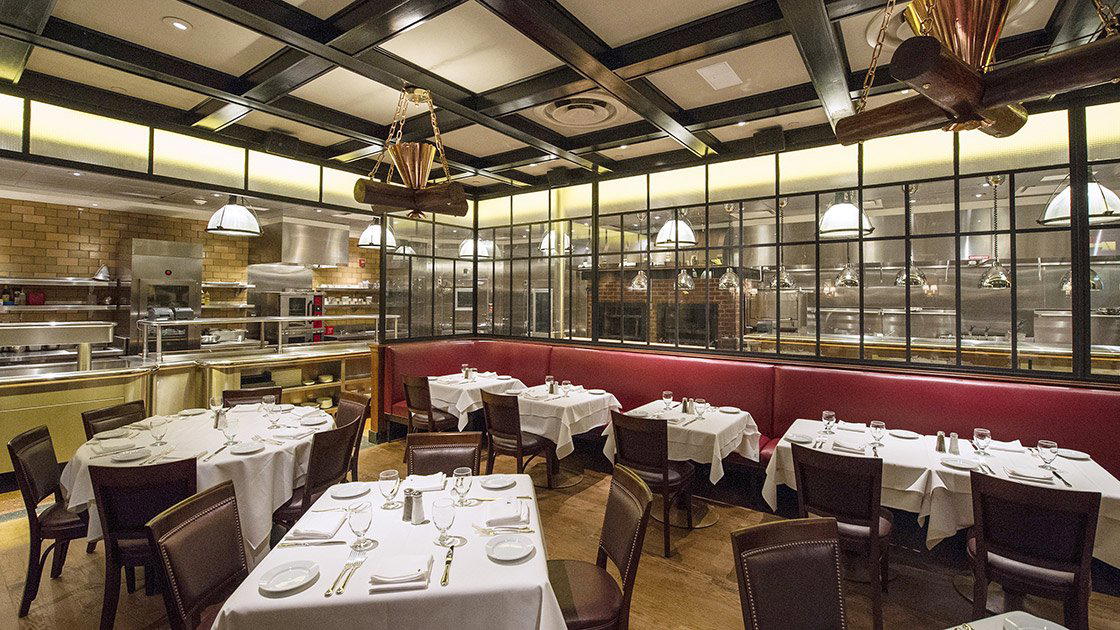
Details
- Cozy
- Modern
- Intimate
- Trendy
- Lively
- Date Night
- Special Occasion
- Open Kitchen
- Local Sourcing
- A La Carte
Current opening hours
- Monday
- Closed
- Tuesday
- 5–9 PM
- Wednesday
- 5–9 PM
- Thursday
- 5–9 PM
- Friday
- 5–9 PM
- Saturday
- 5–9 PM
- Sunday
- Closed
Hours can change for holidays and private events. Hours as of .
Trendy, long narrow space with warm, modern decor, festive atmosphere, and direct views into the open kitchen.