La Mère Hamard
.png)
La Mère Hamard holds a Michelin Plate in 2024 and 2025, signalling consistent kitchen discipline in a village setting twelve kilometres north of Tours. The modern cuisine format situates it within the Loire Valley's broader tradition of produce-led cooking, where proximity to market gardens, river fish, and regional cheesemakers shapes what arrives on the plate. A 4.5 Google rating across nearly 400 reviews underlines its standing with regulars and first-time visitors alike.
 Discover on Pearl
Pearl is the En Primeur Club membership app — saves, bookings, and concierge access live there. Same editors, same standards.
- Address
- 2 Rue du Petit Bercy, 37360 Semblançay, France
- Phone
- +33 2 47 56 62 04
- Website
- logishotels.com
The Village Table as a Loire Valley Argument
France's most decorated restaurant tables tend to cluster in Paris, Lyon, or the alpine resort towns, where the density of high-spending visitors sustains the economics of three-star ambition. The Loire Valley operates by a different logic. Here, the argument for serious cooking has always run through terroir rather than prestige address: proximity to Anjou's market gardens, the river's freshwater species, Touraine's goat's cheese tradition, and a wine corridor that runs from Muscadet in the west to Sancerre in the east. La Mère Hamard, positioned in Semblançay roughly twelve kilometres north of Tours, sits inside that argument. Its recognition in 2024 and 2025 places it in the tier of kitchens that Michelin inspectors consider worth a detour without yet assigning a star, a category that, in rural France, often signals genuine craft operating below the radar of the capital's dining circuit.
The village of Semblançay itself gives the address part of its meaning. Cooking in a small commune rather than a city arrondissement carries an implicit sourcing commitment: supply chains are shorter, relationships with producers tend to be direct, and the kitchen's output is visible to the community it serves. That accountability, informal as it is, shapes what modern cuisine means in this context. It is less about technique as spectacle and more about technique in service of ingredients that are already close to their leading.
What the Loire Puts on the Plate
The Loire Valley's produce calendar is among the most varied in France. Spring brings asparagus from the sandy soils around Vineuil and Contres; summer delivers courgettes, tomatoes, and stone fruit from the market gardens of the Loir-et-Cher; autumn turns to mushrooms foraged from the tufa hillsides and game from the region's extensive forests. For a kitchen operating modern cuisine at the €€€ price point, this calendar is the scaffolding around which menus are built. At that tier, the expectation is not just that ingredients are local but that the kitchen's choices make legible sense of the season, selecting what is genuinely at its peak rather than what is available year-round through wholesale channels.
Loire also produces freshwater fish that rarely appear on restaurant menus outside the region: pike-perch (sandre), shad (alose), and the increasingly rare Loire salmon, whose population has recovered modestly in recent decades following river-management changes. A kitchen with serious intent at a Touraine address has access to these species through the fishing communities between Tours and Angers. Whether La Mère Hamard works with river fish specifically is not confirmed in the available record, but the regional infrastructure for that kind of sourcing is present in a way it simply is not for a restaurant in Paris or Marseille. For comparison, kitchens like Mirazur in Menton or Bras in Laguiole have made geographic rootedness central to their identity, and that same logic applies, at a different scale and price point, to a Michelin-recognised table in a Loire village.
Placing the Michelin Plate in Context
Michelin Plate, introduced in the 2016 Guide as a formal category, designates restaurants where inspectors found cooking of quality without the full constellation of factors required for a star. In rural France, where the star tier is partly gated by the infrastructure expectations Michelin attaches to it (dining room formality, depth of wine service, front-of-house consistency), the Plate often marks kitchens that punch above their setting. Two consecutive years of recognition for La Mère Hamard suggests the cooking is not an anomaly: the 2024 and 2025 awards indicate a kitchen that held its standard across the inspection cycle.
At €€€, La Mère Hamard sits in a different competitive bracket than the multi-star Loire addresses. Grand tables like those found along the lines of Auberge de l'Ill in Illhaeusern or the high-end Paris rooms listed in our guide, Alléno Paris au Pavillon Ledoyen in Paris, Assiette Champenoise in Reims, operate at €€€€ with the full formal apparatus that pricing implies. La Mère Hamard's positioning at one tier below that places it in the category of serious regional cooking that does not require the full ceremony, a category with its own value proposition for the visitor who wants quality without the coordination overhead of a destination-fine-dining evening.
The 4.5 Google rating drawn from 413 reviews reinforces a picture of consistent satisfaction across a wide visitor base. That volume of reviews for a village restaurant is notable and suggests a clientele that extends beyond the immediate commune to include visitors from Tours and day-trippers from further along the N138 corridor.
Atmosphere and Practical Approach
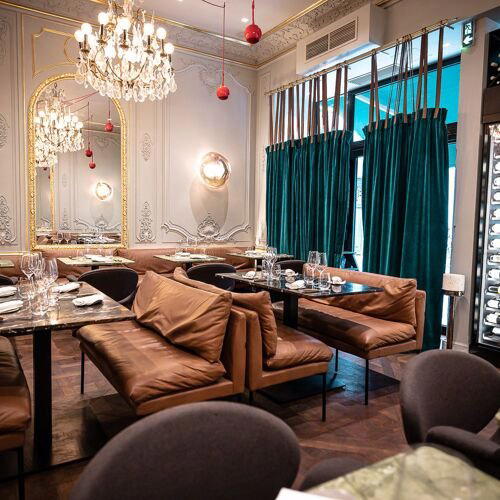
Village restaurants in the Touraine follow a pattern that is distinct from either the urban bistro or the grand country auberge. The physical environment tends toward the intimate: a modest façade on a village street, a dining room that reads as genuinely local rather than staged-rustic, and a pace that matches a long lunch rather than a table-turn operation. La Mère Hamard's address at 2 Rue du Petit Bercy, Semblançay places it at the centre of a small commune whose built character is typical of the Indre-et-Loire: stone, slate, and the contained scale of a settlement that has not been absorbed into Tours's suburban expansion.
If you are arriving from Tours, the journey north takes under twenty minutes by car along the D2. Public transport options to Semblançay are limited, which makes this primarily a destination for those with private transport or who are staying in the area. For visitors combining the meal with Loire Valley wine tourism, the appellations of Vouvray, Bourgueil, and Chinon are all within an hour, the location makes geographic sense as a midday stop rather than an evening destination,
At the €€€ price point in the Touraine, the experience sits above the everyday bistro but below the formal pacing of a multi-course tasting dinner. Expect a menu built around the season's dominant produce, a wine list oriented toward the Loire's own appellations, and a room where the gap between kitchen and table is smaller than in city restaurants of comparable award status.
The Wider France Reference Point
For readers building a broader itinerary of French regional cooking, the range of Michelin-recognised tables outside Paris and Lyon is extensive. Kitchens like Flocons de Sel in Megève, Troisgros - Le Bois sans Feuilles in Ouches, Auberge du Vieux Puits in Fontjoncouse, AM par Alexandre Mazzia in Marseille, and Paul Bocuse - L'Auberge du Pont de Collonges in Collonges-au-Mont-d'Or all demonstrate how French serious cooking distributes itself across regions rather than concentrating in a single city. For international reference points in the modern cuisine category, Au Crocodile in Strasbourg, Frantzén in Stockholm, and FZN by Björn Frantzén in Dubai represent how the format travels across different contexts and price tiers.
La Mère Hamard operates in a different register than those rooms, but the same underlying principle applies: the leading argument for cooking in a specific place is that only that place could produce it. In the Loire Valley, that argument has genuine material support.
Comparable Venues
Comparable venues nearby, for context on price, style, and recognition.
| Venue | Cuisine | Price | Awards | Notes |
|---|---|---|---|---|
| La Mère HamardThis venue — the venue you are viewing | Creative French Bistro | $$$ | Michelin Plate | |
| Moris | Contemporary French Bistro | $$$ | Michelin Plate | Vendôme |
| Le Castellane - Château Le Prieuré | Modern French Fine Dining | $$$ | Michelin Plate | Gennes-Val-de-Loire |
| Autour d'un Cep | Eco-responsible French Gastronomic Bistronomy | $$$ | Michelin Plate | centre ville |
| Les Jardiniers | French Potager Cuisine | $$$ | Michelin Plate | Ligré |
| Osma | Modern Creative French | $$$ | Michelin Plate | Sargé-sur-Braye |
Continue exploring
More in Semblançay
Restaurants in Semblançay
Browse all →
Hotels in Semblançay
Browse all →
Wineries in Semblançay
Browse all →
At a Glance
- Classic
- Elegant
- Cozy
- Intimate
- Date Night
- Special Occasion
- Terrace
- Historic Building
- Extensive Wine List
- Local Sourcing
- Garden
Refined decor with a delightful stone-built dining room and welcoming wisteria-shaded terrace, offering a restful, authentic, and hospitable atmosphere.