La Bistrote
On a quiet street in Montpellier's historic centre, La Bistrote occupies the kind of address that rewards those who pay attention to neighbourhood rather than algorithm. The menu structure tells you more about the kitchen's priorities than any single dish could. A reference point for understanding how the city's mid-register dining scene operates between southern tradition and contemporary French technique.
Pearl is the En Primeur Club membership app — saves, bookings, and concierge access live there. Same editors, same standards.
- Address
- 4 Rue Philippy, 34000 Montpellier, France
- Phone
- +33467661417
- Website
- facebook.com
- Directions
- Get directions
 Saves & bookings on Pearl
The Street, The Room, The Register
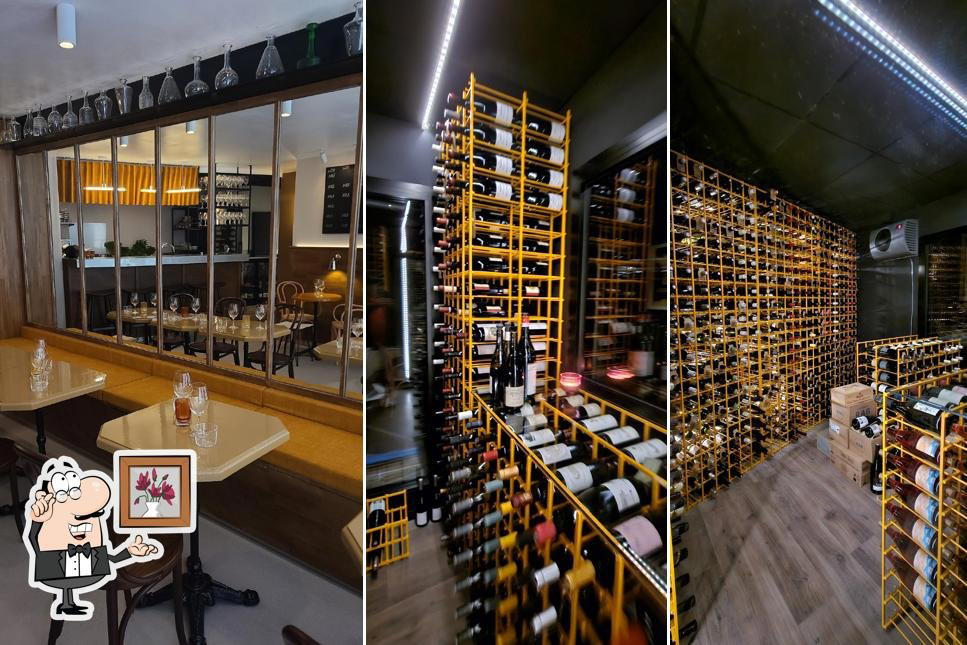
Rue Philippy sits at a remove from Montpellier's more trafficked restaurant corridors. The address, 4 Rue Philippy, places La Bistrote inside the dense medieval grid of the city's historic centre, where stone facades press close and the scale of the street itself does much of the work that marketing budgets do elsewhere. Walking toward a restaurant on a street like this, the visual noise drops. What arrives at the door is something quieter and more considered than the terrace-heavy dining that defines the squares around Place de la Comédie.
That physical context matters when reading a restaurant like this one. Montpellier's dining scene has a clear tiering. At the leading sits the formal gastronomic register, represented by addresses such as Jardin des Sens, operating with the institutional weight that multi-starred French restaurants carry. Below that, a productive middle tier has grown around places like Leclère and Pastis Restaurant, where modern French technique runs against southern Languedoc ingredients at price points accessible enough to sustain repeat visits. La Bistrote operates within that middle register, though its bistrot framing signals something specific: a deliberate choice not to climb toward the tasting-menu formalism that defines the tier above.
What the Menu Architecture Says
The word bistrote is not decorative. In French dining culture, the bistrot format carries a set of structural commitments: shorter menus, a preference for well-executed classical preparation over conceptual elaboration, and an implicit promise that the food will not require explanation. The format has been under pressure for two decades from the rise of neo-bistrot cooking, which layers natural wine programs, chalkboard informality, and market-driven daily changes onto the original frame. Where a given restaurant lands within that evolution tells you a great deal about its kitchen priorities.
At La Bistrote, the menu architecture itself functions as editorial. A shorter, more focused menu, which the bistrot tradition demands, forces the kitchen to commit. There is nowhere to hide behind the variety that a long carte provides. Each section of the menu has to justify its presence, which means the selection of dishes reflects genuine hierarchy of confidence rather than the accumulation that larger menus sometimes mask. This is a fundamentally different creative contract than what operates at, say, Reflet d'Obione, where the modern cuisine format encourages more elaborate construction, or at La Réserve Rimbaud, which operates with the fuller format of a destination dining room.
The bistrot menu structure also positions the wine list differently. In southern France, where the Languedoc appellation system produces serious bottles at prices that still undercut Burgundy and Bordeaux, a well-chosen short list is a statement. The region's AOCs, from Pic Saint-Loup to Terrasses du Larzac, give a kitchen in this part of France access to materials that would cost considerably more to assemble in Lyon or Paris. That regional context runs underneath any Montpellier restaurant at this level, whether acknowledged explicitly or not.
The Montpellier Mid-Register: What It Means to Be Here
Understanding La Bistrote requires placing it inside the specific competitive logic of Montpellier's mid-tier. The city is not Lyon, with its embedded bouchon culture and density of starred tables. Nor is it a village gastronomy destination in the mould of Bras in Laguiole, where a single restaurant defines a region's culinary identity. Montpellier is a university city with a young population, a large medical and research sector, and a dining culture that skews toward accessibility without sacrificing seriousness. The addresses that survive and matter here tend to be the ones that commit to a format and execute it with consistency.
At the starred and near-starred end of the French spectrum, the logic of ambition is well-documented. Restaurants like Mirazur in Menton, Alléno Paris au Pavillon Ledoyen, or Flocons de Sel in Megève operate with resources, teams, and international recognition that define one end of French dining ambition. The bistrot format is not reaching for that. It is doing something harder in some respects: sustaining quality and relevance inside a format that limits elaboration and charges accordingly.
Across France, the bistrot as a category has proved more durable than some critics predicted when the neo-bistrot wave crested in the 2010s. The format's discipline, its insistence on approachability without condescension, keeps it relevant. In Montpellier particularly, where the contrast between tourist-facing squares and neighbourhood streets remains sharp, a bistrot on a quiet address carries a particular kind of local legitimacy.
Regional Anchors and Culinary Tradition
The Languedoc-Roussillon culinary tradition that surrounds Montpellier is one of the more underread chapters in French regional cooking. The influence of Catalan cuisine to the south, the pastoral traditions of the Aveyron and Cévennes to the north, and the coastal produce of the Étang de Thau lagoon combine to give kitchens here access to a genuinely varied larder. Oysters from Bouzigues, lamb from the garrigue, salt cod in its many forms: these are the materials that distinguish southern French cooking from its northern counterparts. A kitchen operating in the bistrot format in this city should, at its leading, serve as a conduit for those traditions rather than an imposition of technique over them.
That is the central question the bistrot format poses here: is the menu acting as a frame for regional material, or is it simply applying French classical cooking onto whatever the market provides? The answer, at restaurants that have earned their neighbourhood standing, is usually legible within the first course. The same question applies across the broader French scene, from Auberge de l'Ill in Illhaeusern reading Alsatian tradition at its most formal, to AM par Alexandre Mazzia in Marseille reworking Mediterranean material through a more conceptual lens. The restaurant operates at a more intimate scale than either, but the underlying question of regional fidelity is the same.
Planning a Visit
The restaurant is located at 4 Rue Philippy, 34000 Montpellier, within walking distance of the historic centre's main squares. As with most small bistrot-format restaurants in French cities, seats are finite and demand at popular service times will exceed supply; arriving with a reservation rather than expecting walk-in availability is the practical approach, particularly on weekend evenings. For readers building a Montpellier itinerary, the broader dining picture ranges from the gastronomic register at Jardin des Sens to the modern cuisine tier and neighbourhood tables. Those travelling across southern France who want contrast points at the summit of the French fine dining spectrum will find relevant reference at Troisgros in Ouches, Paul Bocuse in Collonges-au-Mont-d'Or, Assiette Champenoise in Reims, and Au Crocodile in Strasbourg. For international comparisons in the bistrot-adjacent mid-register, Le Bernardin in New York City and Atomix illustrate how differently the focused-format restaurant operates when the ambition and price tier shift dramatically upward.
Accolades, Compared
Comparable venues nearby, for context on price, style, and recognition.
| Venue | Cuisine | Price | Notes |
|---|---|---|---|
| La BistroteThis venue — the venue you are viewing | French Bistro | $$ | Not listed |
| Balthazar café & restaurant | Classic French Brasserie | $$ | Ursulines |
| Le Bourdon | Bistronomique French | $$$ | Saint-Roch |
| L'Original | French Seafood Mediterranean Contemporary | $$$ | Pont De Sète |
| Le Sens Six | Modern French Bistro with Regional Mediterranean Influences | $$ | Astruc |
| La Factory | Modern French Bistro | $$$ | Port Marianne |
Continue exploring
More in Montpellier
Restaurants in Montpellier
Browse all →
Bars in Montpellier
Browse all →
Hotels in Montpellier
Browse all →

At a Glance
- Cozy
- Relaxed
- Family
- Casual Hangout
- Terrace
- Local Sourcing
- Street Scene
Current opening hours
- Monday
- 12–4 PM
- Tuesday
- 12–4 PM
- Wednesday
- 12–4 PM
- Thursday
- 12–4 PM
- Friday
- 12–4 PM
- Saturday
- 12–4 PM
- Sunday
- Closed
Hours can change for holidays and private events. Last verified .
Relaxed and friendly atmosphere on a shady terrace in a quiet pedestrian alley with warm welcoming service.