Our verdict
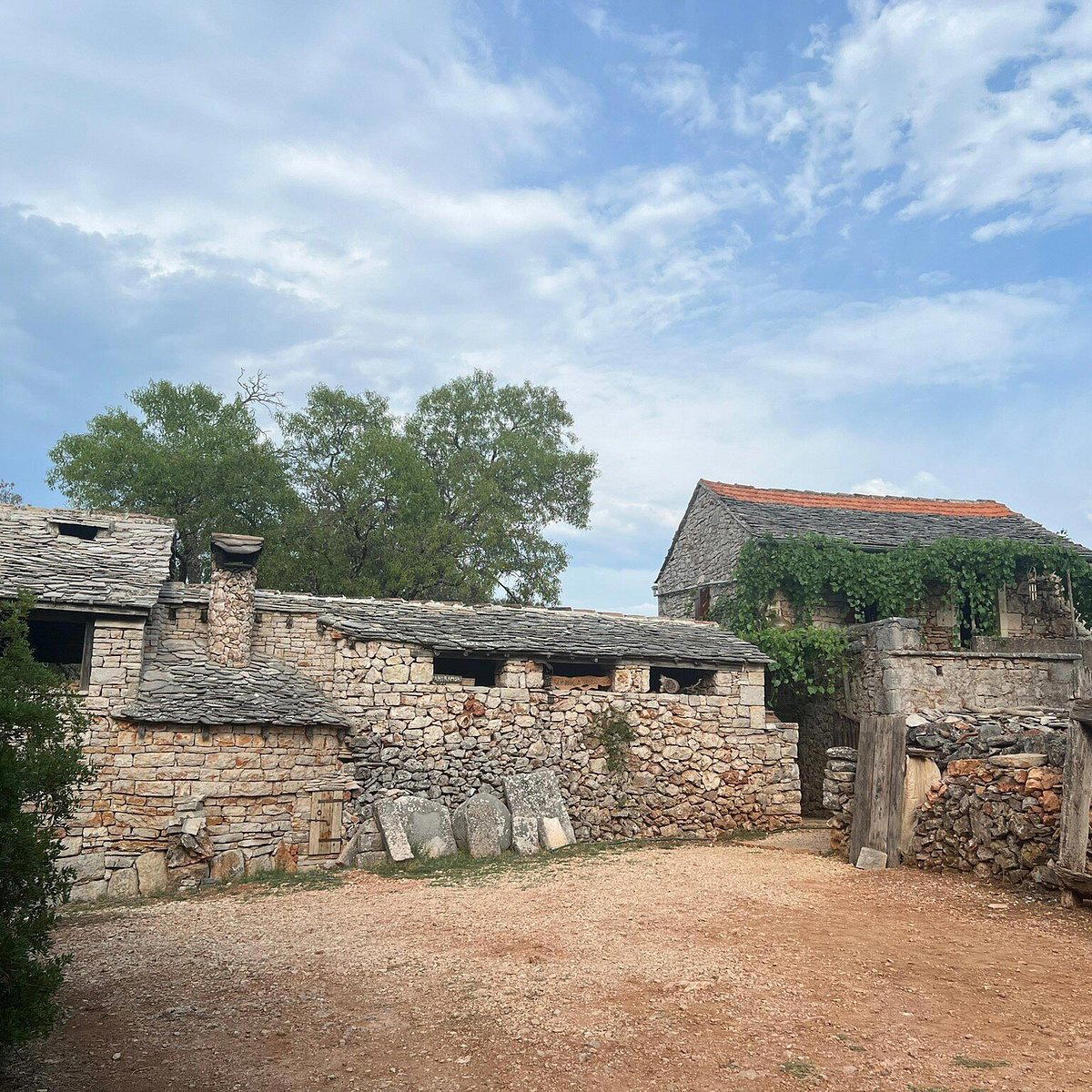
Konoba Humac sits in one of Dalmatia's most isolated villages, where the food arriving at the table is shaped almost entirely by what the surrounding karst terrain and local producers provide. The setting alone, stone buildings in a car-free hamlet above the Blaca canyon on Brač island, frames a meal rooted in the pastoral traditions of the Dalmatian interior rather than the coastal tourism circuit.

Pearl is the En Primeur Club membership app, where members save venues, book tables and use the concierge.
The menu
What to order
- Peka with lamb
- Peka with octopus
- Slow-cooked veal
- Grilled fish
Stone, Smoke, and the Logic of the Karst Kitchen
There is a category of Dalmatian dining that exists almost entirely outside the coastal tourism economy. It does not occupy a harbourfront terrace or compete for covers against the summer crowd. It operates from villages that require commitment to reach, where the food on the table is a direct expression of what the surrounding land and the people who work it actually produce. Konoba Humac, situated in the abandoned-then-revived hamlet of Humac on the island of Brač, belongs firmly to that tradition. The village is accessible only on foot or by off-road vehicle along an unpaved track, which means every ingredient that arrives in the kitchen, and every guest who sits down to eat, has made a deliberate journey to be there.
That geography is not incidental. The karst interior of Brač, dry and rocky and wind-scoured, shapes what grows and what is raised. Lamb from this terrain carries the flavour of the sage and aromatic herbs that define the island's scrubland. Produce is local by necessity as much as by philosophy. Cooking is done on open fire and under the peka, the cast-iron bell that defines the slow-roast tradition of the Dalmatian interior. The result is food that reads as a record of place rather than a statement of culinary ambition, which is, in the context of Croatian dining, its own kind of ambition.
The Sourcing Logic of the Dalmatian Interior
Croatia's premium restaurant circuit, represented by addresses like Pelegrini in Sibenik and Restaurant 360 in Dubrovnik, tends to frame local sourcing through the lens of Mediterranean refinement: seasonal tasting menus, plated precision, wine pairings drawn from the leading Dalmatian producers. The konoba tradition operates from a different premise entirely. Sourcing here is not a menu concept; it is simply the condition of operating in a place where supply chains from the mainland are impractical. What the island produces is what the kitchen uses.
On Brač, that means lamb above almost everything else. The island's sheep graze on karst scrub at altitude, and the meat produced is leaner and more aromatic than lowland equivalents. Slow-cooked under the peka, it absorbs smoke and its own rendered fat over hours, and the technique, unchanged across generations, is not a revival of heritage cooking so much as a continuation of it. Vegetables grown in the thin island soil, olive oil pressed from Brač's own groves, and whatever the Adriatic yields complete a table that has almost no need to import its identity.
This positions Humac and its konoba in a peer group defined less by price or style than by geographic logic. Venues like BioMania Bistro Bol in Bol, also on Brač, approach island sourcing from a more contemporary angle. Humac takes no such position. The cooking here predates the language of farm-to-table by several generations.
What the Village Itself Tells You
Humac as a settlement had been largely uninhabited for decades before a small number of families returned to sustain it. The konoba operates as one of the village's few functioning establishments, which means it carries an unusual weight: it is simultaneously a restaurant and evidence that the place is alive. The stone architecture, dry-built walls, and absence of vehicular traffic create an environment that most of the Croatian coast has long since traded away for infrastructure. Approaching the village, the silence and the scale of the surrounding canyon are the first things that register.
That context shapes the meal before anyone sits down. Dalmatia has no shortage of atmospheric settings, from the walled terraces of LD Restaurant in Korčula to the urban polish of Krug in Split, but the atmosphere at Humac is produced by genuine remoteness rather than designed experience. There is no curated lighting scheme at work here. The konoba sits where it sits, and the landscape does the rest.
Where Humac Fits in Croatia's Broader Dining Picture
Croatia's premium dining scene has grown substantially over the past decade, with addresses in Zagreb such as Dubravkin Put and island restaurants like Boskinac in Novalja drawing international attention alongside recognized names on the Adriatic coast. That circuit prioritises technical cooking, wine programs drawn from Croatia's best-known appellations, and formats that translate easily to an internationally mobile dining audience.
Konoba Humac occupies an entirely different register. It does not compete with Nebo by Deni Srdoč in Rijeka or Agli Amici Rovinj on any of the axes those venues are measured by. What it offers instead is a form of credibility that is harder to manufacture: food produced within the logic of its own geography, served in a place that exists for reasons other than tourism. For a reader used to benchmarking against Alfred Keller in Mali Lošinj or the coastal refinement of Cubo in Opatija, Humac reads as a deliberate step outside that framework.
The broader context for places like this extends well beyond Croatia. At the level of concept, the sourcing logic here rhymes with what drives pilgrimage dining globally, whether that is rural Basque ciderhouses or remote Japanese farm tables. The destination is inseparable from what you eat. See our full Humac restaurants guide for more on what the village and its surroundings offer.
Planning the Visit
Humac is located in the interior of Brač island, reached from towns including Nerežišća and Milna. The access road is unpaved and requires either a sturdy vehicle or a walk of several kilometres through the canyon. Visitors coming from the mainland cross to Brač by ferry from Split, a route that runs regularly throughout the year with higher frequency in summer. Because the konoba operates in a remote village with limited infrastructure, visiting outside peak season requires advance confirmation that the kitchen is open on any given day. Arriving without checking is a gamble the terrain does not forgive easily. The meal itself is leading understood as an event that takes the better part of an afternoon rather than a quick stop.
Frequently asked questions
Is Konoba Humac suitable for children?
The setting in Humac, a small stone village in the interior of Brač, is informal and unhurried, which tends to suit families better than high-formality dining rooms. The access road is unpaved, so getting there is part of the experience and requires a sturdy vehicle or a willing walk. There is no published children's menu, so it is worth confirming available dishes before the visit.
How would you describe the vibe at Konoba Humac?
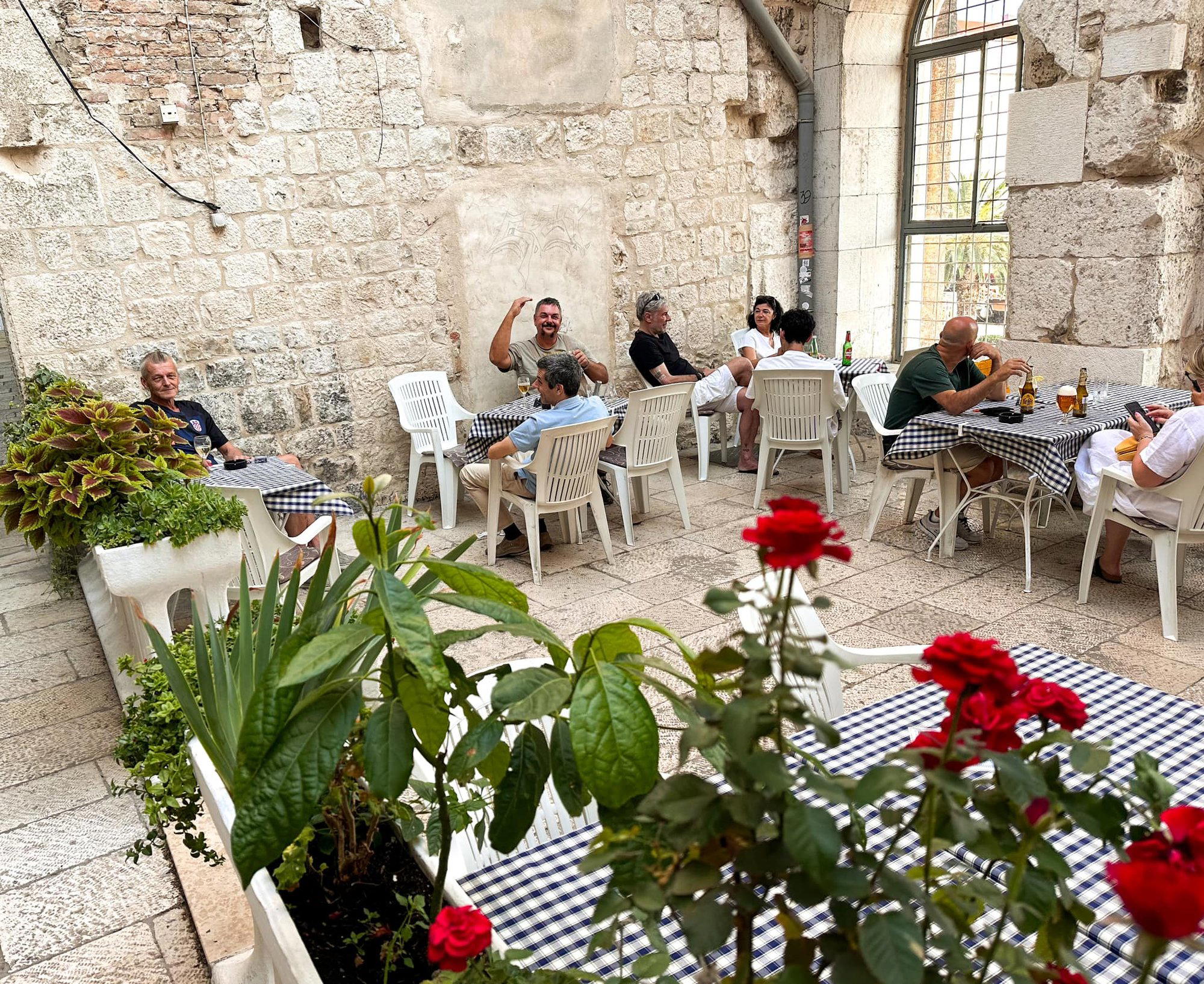
Humac itself was largely uninhabited for decades before a small number of families returned to keep it alive, and the konoba carries that atmosphere: sparse, deliberate, and completely removed from the coastal tourism circuit. There are no harbour views or linen tablecloths. What you get instead is a stone-built interior, open-fire cooking, and the particular quiet of a village where almost nobody lives.
How do you get to Konoba Humac on Brač island, and is advance booking required?
Humac sits in the interior of Brač, reachable from towns including Nerežišća and Milna via an unpaved road that requires a sturdy vehicle or a reasonable walk. Because the konoba operates as one of the only functioning reasons to visit the village, capacity is limited and the kitchen does not run on a standard restaurant schedule. Contacting the venue directly before travelling is strongly advised, as no online booking system or published hours are currently listed.
What's the must-try dish at Konoba Humac?
The cooking tradition here is centred on slow-roasted and ember-cooked meat, typical of Brač island's karst farming culture rather than the seafood focus of the coast. Arriving with an open brief rather than a fixed order in mind is the practical approach.
Comparison Snapshot
| Venue | Cuisine | Price | Awards | Notes |
|---|---|---|---|---|
| Konoba HumacThis venue (the venue you are viewing) | Traditional Dalmatian Grill | $50–100 | Not listed | Not listed |
| Pelegrini | Modern Dalmatian Fine Dining | $100–150 | 1 Michelin Star · La Liste Top Restaurants | Mediterranean, Modern Cuisine |
| Restaurant 360 | Modern Mediterranean with Asian and French Influences | $200–300 | 1 Michelin Star · La Liste Top Restaurants | International, Modern Cuisine |
| Foša | Modern Seafood | $50–100 | Michelin Plate | Croatian, Classic Cuisine |
| Nautika | Traditional Mediterranean Seafood | $100–150 | Michelin Plate · Star Wine List | Modern European, Classic Cuisine |
| Agli Amici Rovinj | Modern Mediterranean Fine Dining | $200–300 | 2 Michelin Stars · La Liste Top Restaurants | Italian Contemporary |
Continue exploring
More in Humac
Restaurants in Humac
All restaurants in Humac →
Bars in Humac
Browse all →

Details
- Romantic
- Quiet
- Scenic
- Rustic
- Intimate
- Date Night
- Group Dining
- Special Occasion
- Celebration
- Waterfront
- Panoramic View
- Open Kitchen
- Standalone
- Historic Building
- Beer Program
- Local Sourcing
- Farm To Table
- Waterfront
- Mountain
- A La Carte
- Family Style
- Local Wine
- House Wine
- Beer
- Vegetarian Friendly
- Gluten Free Options
Candlelit and starlit evenings with stone tables under ancient trees; intimate, peaceful atmosphere with no artificial lighting except a generator-powered kitchen bulb; feels like stepping back in time to traditional Dalmatian life.