Konoba Cigale
Our verdict
Konoba Cigale sits on the seafront promenade of Mali Lošinj, a small Adriatic island town with a centuries-old fishing tradition. The restaurant occupies the konoba format, Croatia's informal coastal tavern, placing it squarely within the Kvarner Gulf's long history of simple, sea-driven cooking. For visitors to the island, it serves as a direct entry point into that tradition, alongside local peers including Baracuda and BoccaVera.

Pearl is the En Primeur Club membership app, where members save venues, book tables and use the concierge.
The menu
What to order
- Lobster alla buzara with homemade pasta
- Cigale brodetto
- Tuna tartare
- Scampi tartare
- Grilled Adriatic fish
- Salt-baked fish
The Promenade, the Format, and What the Konoba Tradition Actually Means
Mali Lošinj's seafront promenade, Šetalište Dr. Alfreda Edlera von Manusso Montesole, runs along the inner harbour where fishing boats and pleasure craft share the same moorings they have shared for generations. Konoba Cigale sits directly on that promenade, at number four, and that address is not incidental, it places the restaurant inside one of the Adriatic's older patterns of coastal hospitality, where the dining room and the catch point are separated by a few hundred metres at most.
The word konoba carries specific meaning in Croatian coastal culture. It originally referred to the ground-floor storage room of a Dalmatian or Kvarner stone house, the cool, dark space where wine, olive oil, and preserved fish were kept. Over centuries, the konoba evolved into an informal eating and drinking space, and eventually into a category of restaurant that signals a particular set of values: local ingredients, limited menus, unpretentious interiors, and cooking that treats the sea as the primary source of authority. Across the Kvarner islands and down through Dalmatia, the konoba remains the dominant format for serious local eating, and it sits in a different competitive register from the hotel dining rooms or fine-dining destinations that have emerged at the upper end of Croatia's restaurant scene, places like Alfred Keller (Modern Cuisine) in Mali Lošinj itself, which operates at a considerably higher price point and with a more elaborate culinary framework.
Understanding that distinction matters for anyone planning a meal on the island. The konoba format is not a lesser version of fine dining, it is a different genre entirely, with its own standards and its own relationship to place.
Kvarner on the Plate: What Adriatic Island Cooking Looks Like Here
The Kvarner Gulf sits between the Istrian peninsula to the northwest and the Dalmatian coast to the south, and its cuisine reflects that geography. The waters around Lošinj are cold and clear, fed by Adriatic currents that produce fish and shellfish with pronounced mineral character. The cooking tradition that developed around these waters is restrained by design: grilling over open flame, slow braising with local olive oil and wine, and preparations that let the quality of the raw material carry the plate. Herbs common to the Lošinj hillsides, aromatic species that thrive in the island's mild microclimate, which has historically attracted health-minded visitors, appear in both the cooking and in the broader island identity.
Agli Amici Rovinj in Rovinj operates at the fine-dining end of Istrian seafood, with a Michelin star that places it in a different tier from most konoba-format restaurants. Pelegrini in Sibenik and LD Restaurant in Korčula similarly represent the more structured, award-recognised layer of Croatian coastal cooking. The konoba sits below that layer in formality and price, but often much closer to the source, the daily catch, the family recipe, the unreconstructed preparation.
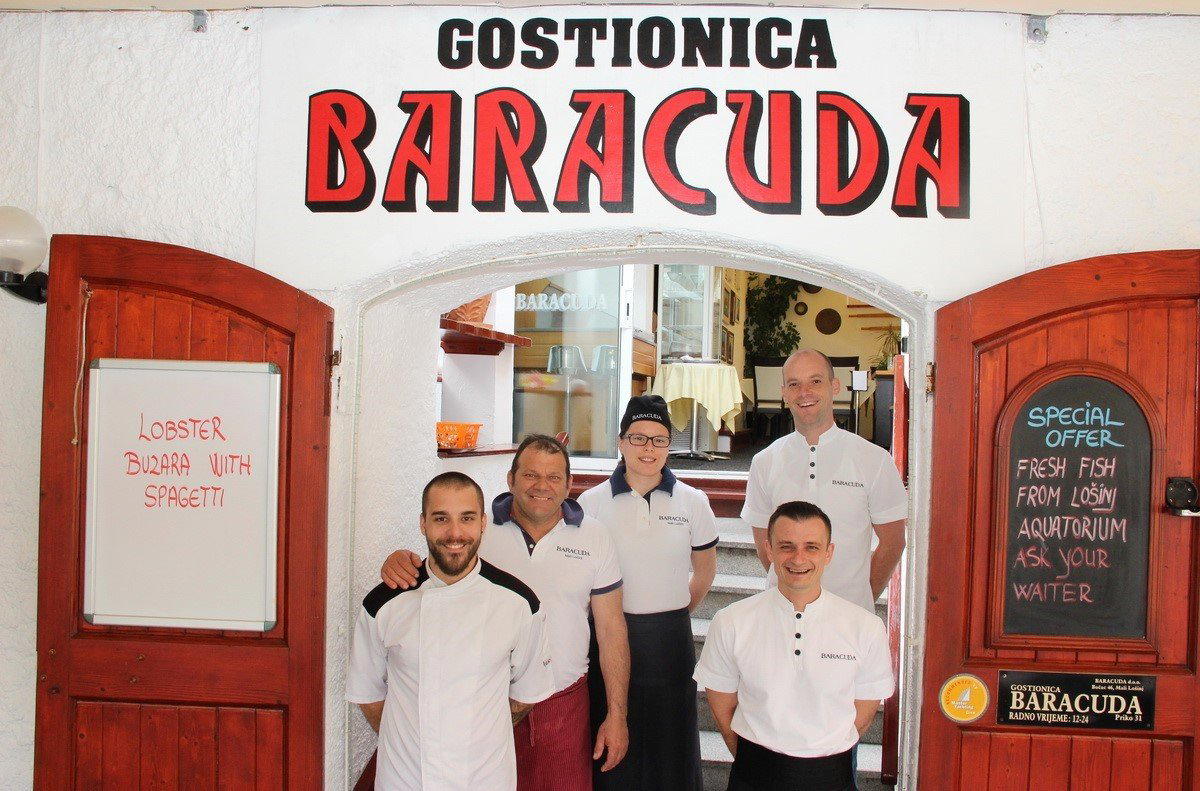
Within Mali Lošinj specifically, the dining scene spans that range. Baracuda, BoccaVera, Corrado, and Artatore each occupy a slightly different position on the spectrum from casual tavern to considered restaurant. Our full Mali Lošinj restaurants guide maps the full range if you are building an itinerary across several meals.
The Setting as Context, Not Decoration
A harbourfront address on a Croatian island sounds like a simple amenity, but the promenade setting on Šetalište Dr. Alfreda Edlera von Manusso Montesole functions as something more structural. Mali Lošinj's inner harbour is an active working space that remains connected to its fishing economy even as the town has developed substantial tourist infrastructure. Eating on or near the harbour situates a meal within that economy rather than apart from it, the fish on the plate and the boats on the water occupy the same local system. That physical relationship between the dining room and the source is precisely what the konoba format has always claimed as its defining characteristic, and a harbourfront position makes the claim legible rather than simply asserted.
Seasonality governs this kind of restaurant more directly than it governs a kitchen working with global supply chains. The Adriatic fishing calendar, local harvest rhythms, and the island's pronounced tourist season all shape what is available and when. Lošinj's peak months run from June through September, when the promenade is in full use and bookings across the island's restaurants become considerably tighter. Visiting in May or October places you in a different version of the island: quieter, cooler, and often closer to the rhythms that define the place outside its tourist season.
Placing Konoba Cigale in the Wider Croatian Dining Argument
Croatia's restaurant scene has developed considerably over the past decade. Destinations like Restaurant 360 in Dubrovnik, Nebo by Deni Srdoč in Rijeka, and Dubravkin Put in Zagreb operate at the level where international critics take notice, and Boskinac in Novalja has positioned island dining as a serious proposition within Croatian wine country. Krug in Split and Korak in Jastrebarsko point to the depth of the inland tradition alongside the coastal one.
Against that increasingly sophisticated national scene, the konoba format holds its position not by competing on the same terms but by remaining legible to a different set of values. The formats that have earned international comparison, the tasting-menu restaurants, the wine-destination properties, the Michelin-tracked addresses, draw their energy from refinement and from a specific kind of ambition. The konoba draws its energy from continuity and proximity. Both are coherent positions. Neither cancels the other out.
For reference on how sea-driven cooking operates at the level of international critical recognition, Le Bernardin in New York City remains the canonical example of what seafood cooking looks like when it is pushed to its technical limits. The distance between that kind of operation and a harbourfront konoba on a Kvarner island is not a distance measured in quality, it is a distance measured in ambition, scale, and the kind of experience the kitchen is trying to construct. Atomix in New York City offers another useful calibration point for how a tasting-format kitchen builds a cultural argument through its menu structure. Konoba Cigale is making a different argument, one rooted in the Adriatic rather than in the competitive international dining circuit.
Planning Your Visit
Konoba Cigale is located at Šetalište Dr. Alfreda Edlera von Manusso Montesole 4, 51550, Mali Lošinj, on the inner harbour promenade. For a broader view of where Cigale sits within the island's dining options, the full Mali Lošinj restaurant guide provides comparative context across formats and price points.
Frequently asked questions
Where do I go for Konoba Cigale?
Konoba Cigale is located at Šetalište Dr. Alfreda Edlera von Manusso Montesole 4, 51550, Mali Lošinj, Croatia, Mali Losinj.
Is Konoba Cigale a good option for dinner on the Mali Lošinj promenade compared to other island restaurants?
Konoba Cigale occupies a specific position on the Mali Lošinj harbour promenade at Šetalište Dr. Alfreda Edlera von Manusso Montesole 4, a setting that places it within the island's main evening circuit rather than off the beaten path. Where Croatia's awarded restaurants like Restaurant 360 in Dubrovnik or Nebo in Rijeka emphasise formal progression, the konoba tradition here prioritises straightforward Adriatic cooking over production. For visitors whose priority is Kvarner Gulf seafood in a working harbour context, that distinction matters.
What dish is Konoba Cigale famous for?
Konoba Cigale draws on the Kvarner Gulf's fishing tradition, where locally caught Adriatic seafood forms the core of the menu. The konoba format in Croatia typically centres on grilled fish, shellfish, and preparations rooted in the day's catch rather than a fixed signature dish. Mali Lošinj's position in the northern Adriatic places it close to some of the Kvarner's most productive fishing grounds, which shapes what appears on the plate.
Can I walk in to Konoba Cigale?
Konoba Cigale sits on the inner harbour promenade at Šetalište Dr. Alfreda Edlera von Manusso Montesole 4 in Mali Lošinj, a stretch that draws steady foot traffic through the summer season. Walk-in availability depends heavily on the time of year, peak summer months on Lošinj compress dining options across the island, and harbourfront tables fill quickly in the evening. Arriving early or visiting outside July and August improves your chances.
What's the defining dish or idea at Konoba Cigale?
The konoba concept itself is the organising idea: a format rooted in Croatian coastal tradition where the kitchen follows the fishing boat, not the other way around. At Konoba Cigale's promenade address in Mali Lošinj, that means Kvarner Gulf seafood prepared with the restraint typical of northern Adriatic island cooking, olive oil, local herbs, and technique that doesn't obscure what the sea provides. It is the opposite of the tasting-menu approach that defines Croatia's more decorated urban restaurants.
Can Konoba Cigale adjust for dietary needs?
Traditional konoba kitchens are built around fish and seafood, with meat secondaries and relatively little plant-forward flexibility by default. Guests with specific dietary requirements should communicate these clearly when booking or on arrival, as sourcing on an island like Lošinj operates differently from a mainland city with multiple daily suppliers. The konoba format rewards directness, asking the kitchen what is possible on a given day is the practical approach here.
Cost Snapshot
| Venue | Cuisine | Price | Awards | Notes |
|---|---|---|---|---|
| Konoba CigaleThis venue (the venue you are viewing) | Traditional Adriatic Seafood | $50–100 | Not listed | Not listed |
| Alfred Keller | Modern Mediterranean Fine Dining | $100–150 | 1 Michelin Star · La Liste Top Restaurants | Modern Cuisine |
| Matsunoki | Japanese Fusion with Mediterranean Influences | $100–150 | Michelin Plate · Wine Spectator Best of Award of Excellence | Japanese Contemporary |
| Konoba Lanterna | Croatian Grill & Seafood | $50–100 | Not listed | Not listed |
| Baracuda | Fresh Croatian Seafood | $20–30 | Not listed | Not listed |
| BoccaVera | Mediterranean Seafood | $50–100 | Not listed | Not listed |
Continue exploring
More in Mali Losinj
Restaurants in Mali Losinj
All restaurants in Mali Losinj →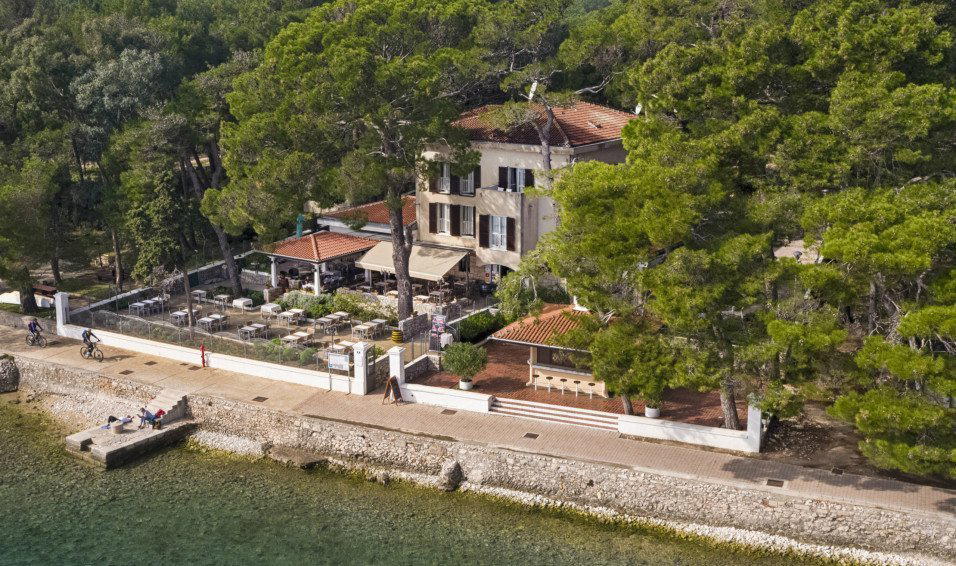
Bars in Mali Losinj
All bars in Mali Losinj →
Hotels in Mali Losinj
All hotels in Mali Losinj →
Wineries in Mali Losinj
Browse all →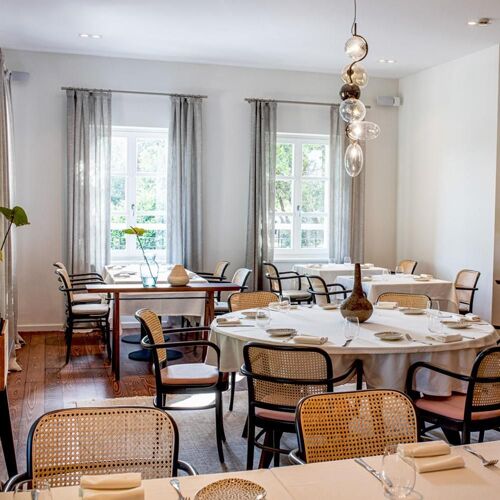
Details
- Rustic
- Scenic
- Romantic
- Classic
- Date Night
- Group Dining
- Special Occasion
- Casual Hangout
- Waterfront
- Garden
- Terrace
- Standalone
- Extensive Wine List
- Local Sourcing
- Sustainable Seafood
- Waterfront
- Garden
- A La Carte
- Croatian Wines
- Wine
- Vegetarian Friendly
- Pescatarian Friendly
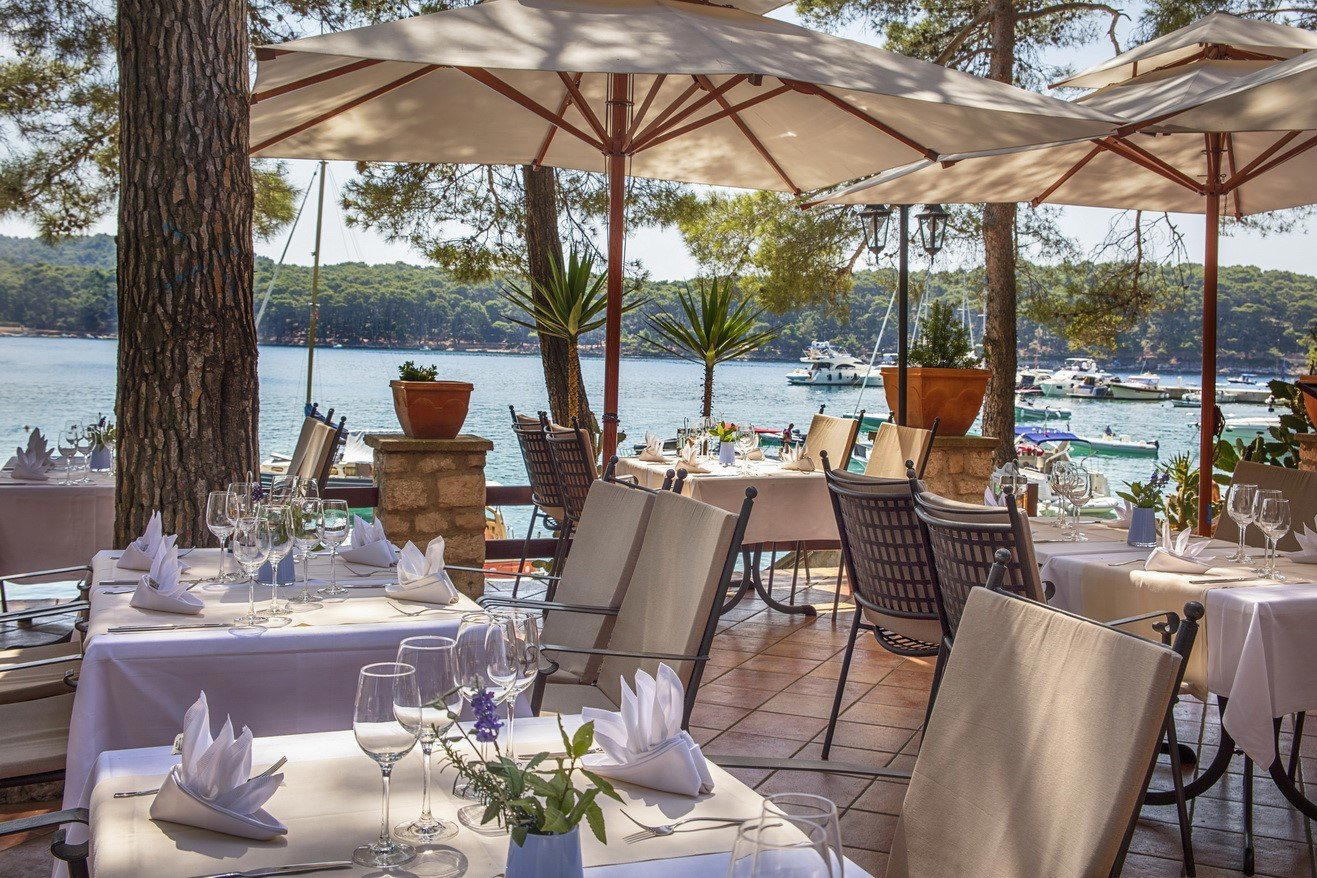
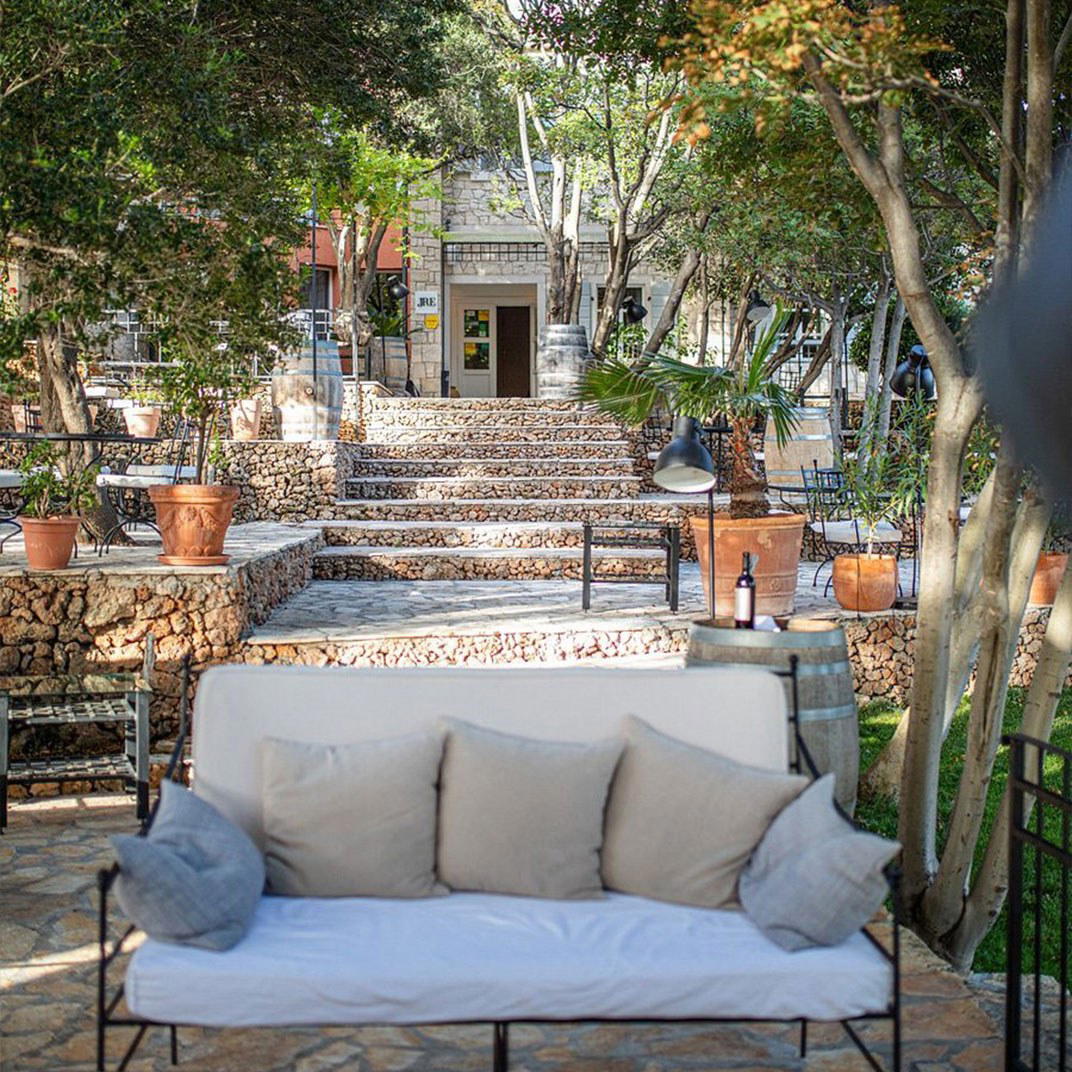
Shaded garden setting beneath pine forests with sea views; rustic and authentic island atmosphere with natural lighting from the waterfront location.