
Tabelog 100 #82
Our verdict
Komatsu places Tokyo’s unagi tradition in a quieter Suginami register: small scale, reservation-led, and priced for occasion dining rather than a casual eel lunch. Its Tabelog 100 Unagi selections in 2018, 2019, 2022, and 2024 give it a clear credential within a category where craft, pacing, and advance planning matter.

Pearl is the En Primeur Club membership app, where members save venues, book tables and use the concierge.
The menu
What to order
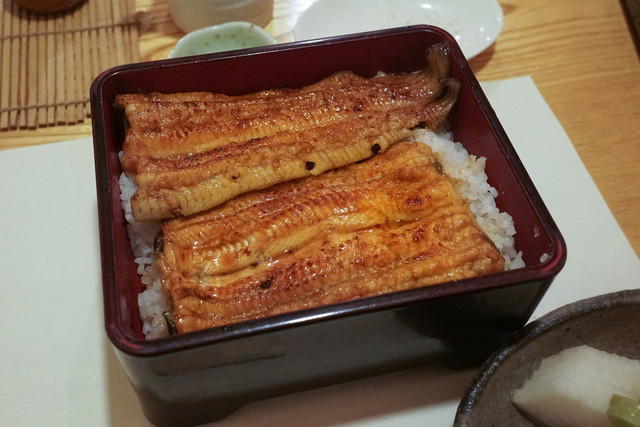
- Shirayaki (white-grilled eel)
- Kabayaki (sauce-grilled eel)
- Unaju / Unadon (eel over rice)
- Uzaku (vinegared eel and cucumber)
Tokyo sets a quieter mood before dinner begins. Away from the city’s most conspicuous dining circuits, Komatsu presents unagi as neither a quick station meal nor high-counter theatre, but a deliberate occasion: eel, rice, smoke, sauce, and time compressed into a meal that asks for thoughtful planning.
Komatsu sits in Tokyo’s smaller category of unagi restaurants where value lies in focus, not breadth. Listed for Unagi (Eel), it was selected for Tabelog 100 Unagi in 2024. That signal matters because eel is a specialist field, not a general Japanese genre. A strong unagi meal is judged by repetition and control: preparation discipline, rice handling, tare balance, and the confidence to keep the menu centred on a narrow craft.
Tokyo gives occasion unagi a quieter frame
Tokyo’s celebration dining is often mapped through polished counters, composed Japanese rooms, and hotel restaurants. Komatsu offers another model: a specialist setting where ceremony comes less from luxury staging than category discipline. For travellers who know the city’s central dining circuits, it is a useful correction. The point is not discovery for its own sake, but seeing how Tokyo’s serious food culture extends beyond the most obvious visual cues of prestige.
That distinction sharpens when Komatsu is compared with everyday Tokyo comfort formats. Sanuki no Udon Hana wa Saku Shin nakano honten, Jun Teuchi Daruma, and Raamen Yama to Ki show how excellent noodle culture can remain casual and frequent-use. Komatsu, at JPY 10,000 to JPY 14,999, belongs to another rhythm: a birthday dinner, small family milestone, or meal arranged around one ingredient rather than a neighbourhood stop between errands.
The comparison is not hierarchy. Tokyo is one of the few cities where a modest udon shop, specialist ramen counter, and eel house can all be serious in different ways. SEN YO sits closer in occasion feel, while Acala naatha occupies a more accessible dining lane. Komatsu’s role is narrower: an unagi meal with enough ceremony to feel intentional, without the grand dining-room vocabulary that often surrounds milestone meals in larger cities.
Why eel still carries celebration weight in Tokyo
Unagi has long held a special place in Japanese dining because it combines comfort with expense. The dish looks simple, but preparation is laborious, and the ingredient has become costly enough that regular eel dining now carries a sense of decision. In Tokyo, unagi naturally suits occasions needing gravity without formality: a parent’s visit, compact anniversary dinner, or meal with friends where conversation matters as much as food.
Komatsu’s Tabelog 100 Unagi 2024 selection places it in a recognized conversation around eel specialists. Tabelog’s Hyakumeiten lists are not Michelin-style star ratings, but in Japan they are meaningful category signals, especially for genres such as unagi, ramen, soba, tonkatsu, and yakitori, where local diners compare narrowly within one form. The 2024 listing gives Komatsu a clear marker within that specialist field.
The appeal reinforces the occasion logic. Komatsu’s score is listed at 3.56, and its dinner budget is listed as JPY 10,000 to JPY 14,999, placing the meal firmly in planned-dinner territory. In a city where many premium meals chase performance, the restraint of a specialist eel house can feel more adult than another tasting-menu progression.
How to place Komatsu in a Tokyo dining itinerary
For visitors building a wider Tokyo plan, separate this meal from the city’s louder categories. A day might include other Tokyo dining rooms, cafés, counters, or casual specialists, but eel benefits from a less crowded schedule. It is rich, focused, and better as the main event than one stop in a grazing day.
Tokyo’s breadth rewards genre separation. Other Tokyo dining can explain different parts of the city’s food culture, while specialist eel at Komatsu asks for its own expectations. The useful itinerary does not stack prestige; it understands format: counter, table, noodle shop, grill, curry room, and specialist house each ask for different expectations.
Practical planning matters because Komatsu sits in a higher dinner budget band than casual meals, with Tabelog listing Dinner: JPY 10,000 - JPY 14,999 and Lunch: -. Its category is Unagi (Eel), and its listed phone number is +81-80-8734-1091. Beyond those essentials, travellers should confirm current details directly before going, especially if timing, payment, or availability will affect the plan.
For broader planning, use a full Tokyo restaurants guide to balance unagi with other formats, then map drinks through a full Tokyo bars guide. Travellers extending the trip can compare regional Japanese dining generically across other cities and styles. For the non-restaurant side of the city, Tokyo hotels, wineries, and experiences guides keep the itinerary grounded. Outside Japan, Japanese formats travel in many forms, but Tokyo’s eel houses remain their own category: compact, precise, and built for meals needing occasion without theatrical excess.
Comparable Options
Comparable venues by price and recognition.
| Venue | Cuisine | Price | Awards | Notes |
|---|---|---|---|---|
| KomatsuThis venue (the venue you are viewing) | Traditional Unagi (Eel) Restaurant | $30–50 | Tabelog 100 #82 | Not listed |
| Sanuki no Udon Hana wa Saku Shin nakano honten | Sanuki Udon & Tempura | $10–20 | Tabelog 100 #99 | JPY 1,000 - JPY 1,999 JPY 1,000 - JPY 1,999 |
| SEN YO | Shenzhen-inspired regional Chinese | Not listed | Tabelog 100 #73 | JPY 8,000 - JPY 9,999 JPY 1,000 - JPY 1,999 |
| Acala naatha | Sri Lankan curry restaurant | $10–20 | Tabelog 100 #40 | JPY 3,000 - JPY 3,999 - JPY 999 |
| Jun Teuchi Daruma | Handmade Noodle Ramen (Light Shoyu) | $10–20 | Tabelog 100 #7 | JPY 1,000 - JPY 1,999 JPY 1,000 - JPY 1,999 |
| Raamen Yama to Ki | Classic Tokyo Ramen Counter | $10–20 | Tabelog 100 #82 | JPY 1,000 - JPY 1,999 JPY 1,000 - JPY 1,999 |
Recognition history
Dated appearances from independent guides and award organizations, with the underlying list record or original source where available.
Tabelog 100 #82 · No. 82
Tabelog · Tabelog 100 - Unagi - 2024
Continue exploring
More in Tokyo
Restaurants in Tokyo
All restaurants in Tokyo →



Bars in Tokyo
All bars in Tokyo →





Details
- Classic
- Cozy
- Intimate
- Well Known
- Date Night
- Business Dinner
- Solo
- Special Occasion
- Chefs Counter
- Standalone
- A La Carte
- Set Menu
- Counter Dining
- Sake
- Beer
- Pescatarian Friendly
Current opening hours
- Monday
- Closed
- Tuesday
- 11:30 AM–8 PM
- Wednesday
- 11:30 AM–8 PM
- Thursday
- 11:30 AM–8 PM
- Friday
- 11:30 AM–8 PM
- Saturday
- 11:30 AM–8 PM
- Sunday
- 11:30 AM–8 PM
Hours can change for holidays and private events. Last verified .
A small, classic neighborhood unagi restaurant with a quietly nostalgic feel; simple traditional decor, counter and table seating, and the aroma of charcoal-grilled eel creating a warm, intimate atmosphere suited to calm, focused dining rather than noisy groups.