Kogi BBQ Taco Truck & Catering


LA Taco Best Tacos in LA #69
Our verdict
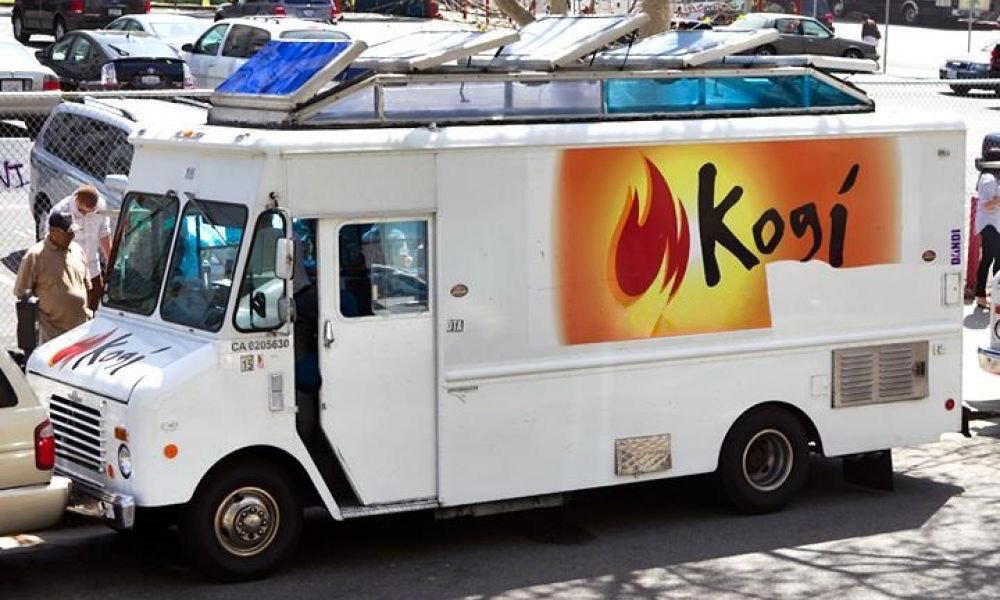
Launched in 2008, Kogi BBQ is the Los Angeles food truck that ignited the modern street food movement by fusing Korean BBQ with Mexican taqueria tradition. The Korean short rib taco became a cultural touchstone, drawing lines across the city long before the gourmet truck format was widely imitated. Today the fleet operates citywide alongside a brick-and-mortar location, the Alibi Room.
The menu
What to order
- Short Rib Tacos
- Kimchi Quesadilla
- Spicy Pork Tacos
- Calamari Tacos
- Blackjack Quesadilla
The Truck That Changed How Los Angeles Eats
In late 2008, a small truck began posting its locations to Twitter and drawing lines that stretched around city blocks. The format was new, the cuisine was newer, and the combination of Korean braised short rib folded into a corn tortilla landed at exactly the moment Los Angeles was ready for it. Kogi BBQ did not simply introduce a fusion dish; it demonstrated that street food could operate as a cultural event, that social media could replace a fixed address, and that the gap between taqueria and fine-dining technique was narrower than anyone had assumed. Food cities from New York to Seoul took notice, and the gourmet food truck category that followed owes its basic operating logic to what Kogi proved in its first year.
Korean-Mexican Fusion Before It Had a Name
The cuisine Kogi popularized is now taught in culinary schools and replicated on menus across the country, but in 2008 it did not have a widely accepted category label. The short rib taco placed gochujang-marinated beef, grilled to caramelized edges, against the acid and crunch that Mexican street tacos use to cut fat. The two traditions are more structurally compatible than they appear: both rely on bold marinades, high-heat cooking, and the balance of richness against brightness. Kogi made that structural logic visible, and the dish became a reference point for a generation of chefs thinking about how immigrant food cultures in Los Angeles could talk to each other rather than past each other.
The O.G. Taco with Tofu extends the same framework to a plant-based format, applying the Korean BBQ marinade and char to tofu without retreating from the intensity that defines the meat versions. In a city where the range of dietary requirements at any given gathering is wide, that parallel menu track has always been part of Kogi's operating design rather than an afterthought.
The Ritual of the Truck: How This Meal Actually Works
Eating at Kogi is one of the few remaining dining experiences in Los Angeles that still asks something of the customer. There is no reservation, no host stand, and no table to claim in advance. The truck's location on a given night is announced through social media, and the act of showing up, queuing, and eating at the edge of a parking lot or on a curb is the format. That deliberate informality is not a shortcoming of the operation; it is the point. The meal begins before the food arrives, in the shared patience of the line and the specific pleasure of eating something hot and assembled to order in the open air.
The pacing is compressed and focused. There is no first course and no dessert to manage. The decision is largely about quantity rather than selection, and the eating is immediate, hand-held, and consumed against the ambient noise of wherever the truck has parked that evening. Against the elongated tasting menus and reservation-heavy formats that define much of Los Angeles's current prestige dining circuit, including Michelin-starred counters like Hayato or the tightly controlled progression at Kato, the Kogi experience operates at the opposite end of the ritual spectrum without being any less considered.
The Alibi Room and the Fixed Address
The brick-and-mortar location, the Alibi Room, offers access to the same food without requiring the truck-tracking step. It serves a different audience and a different occasion than the truck does, and it extends the brand's reach into a format that accommodates groups and walk-ins who prefer a fixed point. The existence of a permanent location is also evidence of how the operation has matured since 2008 without abandoning its original format. The trucks remain active; the Alibi Room runs alongside them rather than replacing them.
Why Kogi Belongs in Any Serious Account of Los Angeles Dining
Los Angeles's restaurant culture is often discussed through its Michelin-starred dining rooms. Providence anchors the city's fine seafood tradition; Somni represents its experimental edge; Osteria Mozza has defined Italian-American dining in the city for nearly two decades. But any account that excludes Kogi misreads the city. Los Angeles's food identity was shaped as much by its taco trucks and Korean BBQ houses as by its fine dining rooms, and Kogi's contribution was to make that existing cross-cultural energy legible to a national audience and to prove that it could generate the same level of attention and critical interest as a starred restaurant. The influence runs outward from Los Angeles to cities like San Francisco, New York, and Chicago, where the gourmet truck format took root in the years that followed.
The Korean-Mexican fusion category Kogi established also opened a wider conversation about how immigrant culinary traditions interact in American cities. The food truck was the beginning of that story, not a footnote to it.
Planning a Visit
The truck operates across multiple Los Angeles locations and the current schedule is posted through Kogi's social media channels. The Alibi Room at 12236 W Washington Blvd, Los Angeles, CA 90066, provides a fixed alternative for those who prefer a set address. No reservation is required for either format; the truck operates on a first-come basis, and the Alibi Room accepts walk-ins. The price point is significantly below the city's mid-range sit-down restaurants, making Kogi one of the most accessible entry points into Los Angeles's broader food culture. For more on what the city offers across all price tiers and formats, see our full Los Angeles restaurants guide, as well as guides to hotels, bars, wineries, and experiences across the city.
Frequently asked questions
Is Kogi BBQ Taco Truck & Catering Michelin-listed?
Kogi BBQ Taco Truck & Catering has received recognition including: Famous Taco: O.G. Taco with TofuDescription: Kogi BBQ is a pioneering food truck company that launched in 2008, fusing Korean BBQ with Mexican street food, and is credited with igniting the modern food truck movement. Founded by Chef Roy Ch….
Where do I go for Kogi BBQ Taco Truck & Catering?
Kogi BBQ Taco Truck & Catering is located at 12236 W Washington Blvd,Los Angeles,CA,90066, Los Angeles.
What do regulars order at Kogi BBQ Taco Truck & Catering?
The Korean short rib taco is the dish that built Kogi's reputation from 2008 onward and remains the default order for first-timers and regulars alike. The O.G. Taco with Tofu is the vegetarian counterpart and appears in Kogi's own awards documentation as a signature item. Both sit within a menu format that applies Korean BBQ flavour profiles to Mexican street-food structure.
Do I need a reservation for Kogi BBQ Taco Truck & Catering?
No reservation is required or possible for the trucks. Kogi posts its locations through social media ahead of each service, and queues form accordingly, sometimes significantly. The brick-and-mortar Alibi Room at 12236 W Washington Blvd, Los Angeles offers a fixed address for anyone who prefers to skip the truck-tracking step.
What is Kogi BBQ Taco Truck & Catering known for?
Kogi is credited with two things treated as settled history in American food culture: founding the Korean-Mexican fusion format and catalysing the gourmet food truck movement when it launched in 2008. Founded by Chef Roy Choi, the operation grew from a single truck to a fleet with a permanent location, and the Korean short rib taco it popularised is now replicated on menus across the country.
Cuisine Context
| Venue | Cuisine | Price | Awards | Notes |
|---|---|---|---|---|
| Kogi BBQ Taco Truck & CateringThis venue (the venue you are viewing) | Korean-Mexican Fusion Tacos | Not listed | LA Taco Best Tacos in LA #69 | Not listed |
| Kato | Modern Taiwanese Fine Dining | $300–500 | 2 Michelin Stars · World's 50 Best #49 | New Taiwanese, Asian |
| Hayato | Traditional Japanese Kaiseki | $300–500 | 2 Michelin Stars · La Liste Top Restaurants | Japanese |
| Vespertine | Avant-Garde Tasting Menu | $200–300 | 2 Michelin Stars · La Liste Top Restaurants | Progressive, Contemporary |
| Camphor | Modern French with Southeast Asian influences | $150–200 | Michelin Plate · World Best Burgers World's 101 Best Burgers #15 | French-Asian, French |
| Gwen | Contemporary American Steakhouse | $50–100 | Michelin Plate · Wine Spectator Best of Award of Excellence | New American, Steakhouse |
Recognition history
Dated appearances from independent guides and award organizations, with the underlying list record or original source where available.
LA Taco Best Tacos in LA #69
LA Taco
Robb Report 100 Greatest American Restaurants of the 21st Century #72
Robb Report
Continue exploring
More in Los Angeles
Restaurants in Los Angeles
All restaurants in Los Angeles →
Bars in Los Angeles
All bars in Los Angeles →
Hotels in Los Angeles
All hotels in Los Angeles →

Wineries in Los Angeles
All wineries in Los Angeles →
Details
- Trendy
- Well Known
- Casual Hangout
- Solo
- Group Dining
- Late Night
- Open Kitchen
- A La Carte
- Counter Dining
- Sodas
- Water
Casual, fast-paced food truck environment with efficient ordering and service; often features long lines but quick execution; informal outdoor eating experience.