KJUN occupies a quiet stretch of East 39th Street in Murray Hill, a block removed from Midtown's main commercial corridors. The name signals a Korean-Cajun register that sits outside New York City's more established fine-dining categories. For the full picture on booking, format, and what to expect from the kitchen, the detail below covers the ground.
 Discover on Pearl
Pearl is the En Primeur Club membership app — saves, bookings, and concierge access live there. Same editors, same standards.
- Address
- 154 E 39th St, New York, NY 10016
- Phone
- +1 347 675 8026
- Website
- kjun-nyc.com
Murray Hill's Quiet Block and What It Says About the Room
KJUN is a Korean-Cajun Fusion restaurant at 154 E 39th St, New York, NY 10016. Murray Hill runs quieter than the blocks immediately to the north and south, and restaurants here tend to serve the neighbourhood rather than draw cross-city reservation traffic. That context matters for KJUN, because a room on a low-footfall block in a residential-leaning zip code operates differently from one on a corner in the West Village or in the dense restaurant corridors of Midtown's mid-forties. The physical approach, a single address on a street that most Manhattan diners pass through rather than stop at, frames the experience before you reach the door. In New York, where location shorthand carries a great deal of weight in how a restaurant is received and reviewed, a Murray Hill address puts a place in a particular tier of expectation and, often, a particular tier of pricing.
That geography also places KJUN at some distance from the city's highest-density fine-dining cluster. Addresses like Le Bernardin on West 51st, Per Se in the Time Warner Center, or Eleven Madison Park on 24th Street each carry neighbourhood associations that are, themselves, part of the dining signal. KJUN's East 39th Street location operates outside those associations, which is not a disadvantage, it is a positioning statement, whether intentional or not.
Korean-Cajun in New York: Where This Register Sits
The pairing of Korean and Cajun cooking traditions is not a casual accident of fusion terminology. Both cuisines share structural logic: fermented heat, layered spice, slow-cooked proteins, and an economy-of-the-whole-animal approach that privileges depth over elegance. Korean gochugaru and Cajun cayenne are not interchangeable, but they operate along similar axes of capsaicin-driven flavour building. Korean jjigae and Cajun étouffée share a willingness to let liquid reduce and intensify over time. The two traditions can speak to each other without one flattening the other.
In New York's dining map, that combination places KJUN in a small cohort. The city's Korean food scene is concentrated in Koreatown along 32nd Street and in Flushing, while Southern and Cajun cooking in Manhattan has a thinner presence than in cities like New Orleans, where Emeril's helped define the genre's modern arc. A restaurant drawing on both simultaneously occupies a niche that is not crowded, which means the comparative frame for assessing it is less obvious than it would be for, say, a new omakase counter assessed against Masa or a Korean tasting menu placed alongside Atomix.
The Korean-Cajun register, when executed with discipline, is not novelty cooking. It is a genuine synthesis that rewards the kitchen's willingness to commit to both sides of the equation rather than defaulting to one with the other as decoration. Whether KJUN commits fully to that synthesis is the central question the room answers.
The Neighbourhood as Context for the Diner
Murray Hill dining has historically skewed toward casual and neighbourhood-serving: Indian and South Asian restaurants on Lexington in the high twenties and low thirties, sports bars along Third Avenue, and a handful of mid-range American options scattered through the grid. The area does not carry the density of reservation-driven dining that defines blocks further north or south. For a restaurant attempting something with a more defined culinary identity, that can be an advantage: less competition for the specific diner looking for a particular kind of meal, and lower baseline noise levels that allow a room to establish its own atmosphere rather than compete with an established street-level energy.
The practical implication for visitors: KJUN is on East 39th Street in Murray Hill, a short walk from Grand Central Terminal and convenient for Midtown dining plans. For diners coming from downtown, from the neighborhoods where Blue Hill at Stone Barns devotees or the farm-to-table circuit tends to cluster, the journey is longer and requires a deliberate decision rather than a spontaneous detour.
That deliberateness is, in a sense, a filter. The diners who make the trip to East 39th Street are coming specifically, not stumbling in. In markets where intentional dining is the norm at any meaningful price point, and New York City is certainly one of those markets, that self-selection shapes the room's energy and, over time, its reputation.
Planning a Visit
Reservations are recommended at KJUN, and current booking availability should be checked directly. Reservation platforms active in New York, Resy, OpenTable, and Tock, are the standard channels for restaurants in this segment of the market, and any of the three is worth checking. For diners with specific dietary requirements or allergy concerns, confirm details with the restaurant before arriving.
KJUN is in the $30-per-person range, with casual dress and recommended reservations. For a broader view of where KJUN sits in the context of New York City's full dining map, EP Club's complete New York City restaurants guide covers the city's range from Michelin-tracked tasting menus through to neighbourhood standbys worth knowing. Additional reference points for comparison, for those thinking about how a Korean-Cajun register compares to more established American regional fine dining, include Single Thread Farm in Healdsburg, Providence in Los Angeles, Addison in San Diego, The French Laundry in Napa, The Inn at Little Washington, Frasca Food and Wine in Boulder, and internationally, Atelier Moessmer Norbert Niederkofler in Brunico and Dal Pescatore in Runate.
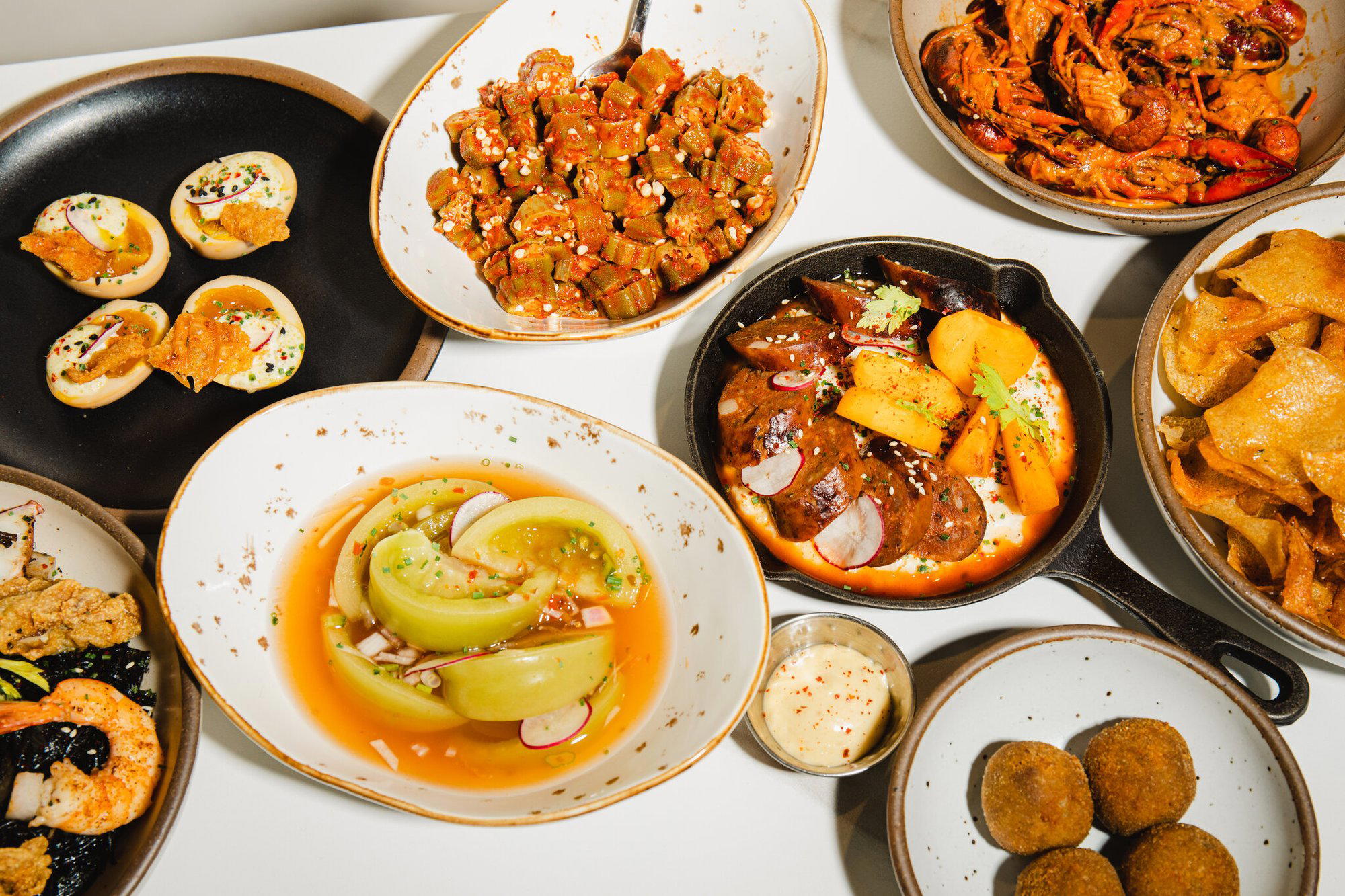
- Seafood Jjajangmyun
- Kimchi Jambalaya
- Okra Kimchi
- Gumbo
- Boudin Balls
- Fried Green Tomatoes
A Pricing-First Comparison
Comparable venues nearby, for context on price, style, and recognition.
| Venue | Cuisine | Price | Awards | Notes |
|---|---|---|---|---|
| KJUNThis venue — the venue you are viewing | $$ | , | ||
| Pig and Khao - LES | Lower East Side, Thai-Filipino Fusion | $$ | , | |
| Red Bamboo | $$ | , | Greenwich Village, Vegan Global Comfort Food | |
| Beer & Buns | $$$ | , | Murray Hill-Kips Bay, Japanese-Korean Izakaya Gastropub | |
| Aureole | Dining | , | , | |
| Chococo Café (500 Madison Avenue flagship) | $$ | , | Midtown, British chocolate café & Chocolate House |
Continue exploring
More in New York City
Restaurants in New York City
Browse all →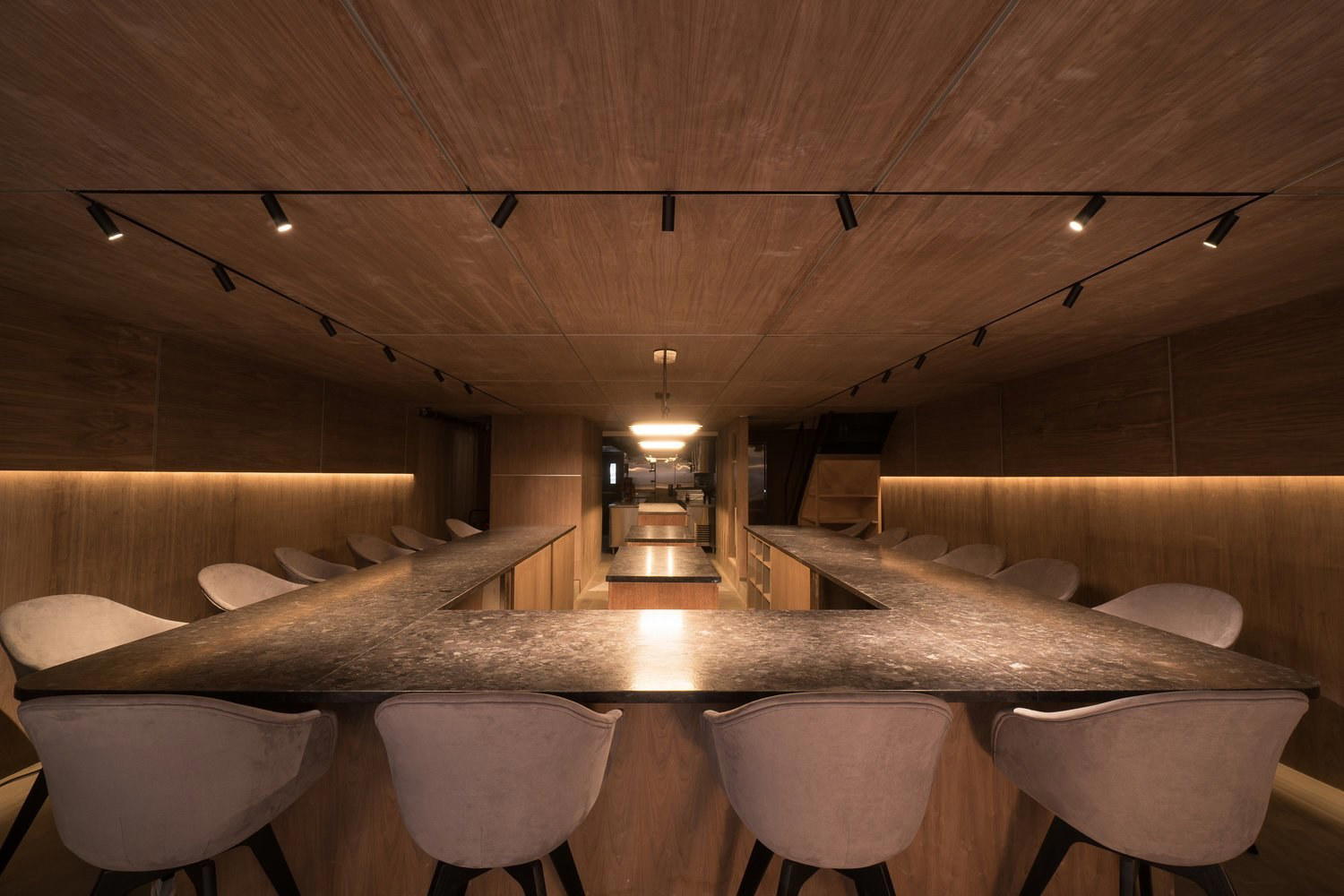
Bars in New York City
Browse all →
Hotels in New York City
Browse all →


At a Glance
- Trendy
- Lively
- Hidden Gem
- Casual Hangout
- Group Dining
- Special Occasion
- Open Kitchen
- Private Dining
- Craft Cocktails
Casual and fun with a lively atmosphere; the new bi-level space features a ground-floor bar with a la carte menu and an upstairs formal dining room.
- Seafood Jjajangmyun
- Kimchi Jambalaya
- Okra Kimchi
- Gumbo
- Boudin Balls
- Fried Green Tomatoes