Khao Kriab Pak Mor Talat Na San Jao

Michelin Plate
Our verdict
A Michelin Plate-recognised street food stall at Na San Jao market in Surat Thani, Khao Kriab Pak Mor has been producing thin steamed rice dumplings for decades. The filling of minced pork, crushed peanuts, and herbs in coconut milk sits inside a translucent wrapper with a texture that places this stall in a different register from the city's Thai-Chinese rice shops.

Pearl is the En Primeur Club membership app — saves, bookings, and concierge access live there. Same editors, same standards.
- Address
- 21/4 Tonpo Rd, Talat, Mueang Surat Thani District, Surat Thani 84000, Thailand
- Directions
- Get directions
The menu
What to order
- Khao_kriab_pak_mor
Na San Jao Market and the Street Food It Keeps
Surat Thani is a transit city for most visitors — a place to change buses or catch the overnight ferry to Koh Samui or Koh Phangan. That routing instinct means the city's own food culture receives a fraction of the attention directed at its islands. Na San Jao market, positioned along Tonpo Road in the Talat district of Mueang Surat Thani, is the kind of place that exists almost entirely for the people who live nearby. There is no curated food-hall presentation, no English-language signage optimised for passing tourists. What the market offers is the ordinary commerce of a provincial Thai city going about its morning, and tucked within that commerce, a dumpling stall that Michelin has now recognised two years running.
Street food recognition of this kind — a Michelin Plate in 2024 and again in 2025, tends to confirm what locals already know rather than reveal something they have overlooked. Khao Kriab Pak Mor Talat Na San Jao has been operating at this address for decades, and the stall's clientele is drawn from the neighbourhood rather than from guidebook circuits. That distinction matters for understanding what the experience actually involves: a market stall in a provincial capital, with the textures and informality that implies, alongside a product refined to a standard that places it in documented company.
The Dumpling in Southern Thai Context
Khao kriab pak mor is a steamed rice dumpling with a lineage that sits somewhere between Chinese dim sum technique and Thai flavour logic. The wrapper is made from rice flour, steamed until translucent and thin, with a texture that is simultaneously gooey and delicate, a combination that differentiates it sharply from the denser wheat-based wrappers common in Thai-Chinese teahouse formats. The filling at this stall uses minced pork, crushed peanuts, and fresh herbs, bound with coconut milk. That coconut milk element is distinctly Southern Thai: the south's food culture relies on coconut in ways that Central Thai cooking does not, and the creaminess it introduces softens what might otherwise be a sharply savoury filling.
The dish is not represented on most restaurant menus in Surat Thani. It belongs to a category of Thai food, precise, labour-intensive, regional, that has largely retreated to market stalls and home kitchens rather than expanding into formal dining rooms. The fact that this version has held Michelin recognition across consecutive years positions it alongside a broader pattern visible elsewhere in Southeast Asian food culture: single-dish street specialists, operating with minimal overhead and decades of accumulated technique, occasionally producing results that formal restaurants at multiple price tiers cannot replicate. Hill Street Tai Hwa Pork Noodle in Singapore and 545 Whampoa Prawn Noodles operate in that same tradition, though with a different urban context and price bracket around them.
What the Michelin Recognition Signals
A Michelin Plate does not carry the same hierarchical weight as a star, but it does represent a consistent editorial position: this is cooking worth the detour. In Thailand, Michelin coverage has expanded from Bangkok to include Phuket, Chiang Mai, and selected provincial spots, and the inspectors have shown a consistent willingness to recognise street food formats on their own terms rather than filtering for restaurant-style service. Sorn in Bangkok, operating at the starred tier with Southern Thai cuisine as its reference point, occupies the opposite end of the formality spectrum from a stall like this one. Both represent modes of Southern Thai food reaching an external standard of recognition, which says something about the range of the cuisine rather than about one format's superiority over the other.
For Surat Thani specifically, Michelin coverage of this stall functions as an editorial argument that the city has things worth eating that are not on Koh Samui. The provincial capitals of Southern Thailand, Surat Thani, Nakhon Si Thammarat, Phatthalung, carry regional food traditions that predate the island resort industry by generations. That food tends not to be visible to the tourist economy because the tourist economy rarely stops to look.
The Na San Jao Setting
The stall is at 21/4 Tonpo Road in Talat, the central district of Mueang Surat Thani. Na San Jao market operates as a neighbourhood food market rather than a tourist night market, which means the surrounding context rewards exploration. Surat Thani's food scene at the lower price tier includes several other stalls and shops worth noting alongside this one. Heng Khao Moo Daeng represents the Thai-Chinese red pork rice tradition at the single-baht tier. Keo Pla operates in the small-eats format. Khao Phra Ram Long Song Lao Ohw covers another strand of the city's modest, precise street food culture. These venues are not alternatives to each other so much as a map of the different traditions operating simultaneously in a Southern Thai provincial city.
For context on what the city looks like further up the price bracket, Day and Night covers the international format, and Lam Phu 2 addresses the seafood tier. Neither sits in the same competitive register as a market stall, but together they give a picture of what the city's dining options span.
Planning the Visit
Khao Kriab Pak Mor Talat Na San Jao operates as a street stall within a market, which means arrival timing governs the experience more than booking does. Market stalls in Thailand typically run through morning and into early afternoon, with sell-out risk increasing as the day progresses; arriving early maximises choice and avoids the possibility of the stall closing before you arrive. There is no phone number listed and no website, which is consistent with the format: this is cash, counter, and market rhythm. The price range sits at the single-baht tier, among the most accessible in the city. For visitors building a broader Surat Thani itinerary, the full picture of accommodation and activity options is available in our Surat Thani hotels guide, our Surat Thani bars guide, and our Surat Thani experiences guide. The full dining context is covered in our Surat Thani restaurants guide.
Elsewhere in Thailand, the Michelin-recognised Southern food tradition extends to venues like PRU in Phuket and Aeeen in Chiang Mai for those moving through the region. AKKEE in Pak Kret and Agave in Ubon Ratchathani speak to the geographic breadth of Thailand's recognised dining outside Bangkok. For reference on what the Surat Thani wineries scene involves, EP Club's guide covers that ground separately.
Frequently asked questions
What distinctions does Khao Kriab Pak Mor Talat Na San Jao have?
Khao Kriab Pak Mor Talat Na San Jao has received recognition including: The veteran stall-owner has been making her delicious dumplings for decades in this famous food cart in Na San Jao market. The thin steamed rice dumplings combine a sweet, gooey texture with a savoury filling, made with minced pork, crushed….
What's the must-try dish at Khao Kriab Pak Mor Talat Na San Jao?
The stall makes one thing: khao kriab pak mor, thin steamed rice dumplings filled with minced pork, crushed peanuts, and herbs in coconut milk. That singular focus is also the reason the stall has held a Michelin Plate in both 2024 and 2025. There is nothing else on the menu to consider.
What's the price range at Khao Kriab Pak Mor Talat Na San Jao?
Pricing at Khao Kriab Pak Mor Talat Na San Jao is listed as ฿.
What's the address for Khao Kriab Pak Mor Talat Na San Jao?
Khao Kriab Pak Mor Talat Na San Jao is located at 21/4 Tonpo Rd, Talat, Mueang Surat Thani District, Surat Thani 84000, Thailand, Surat Thani.
How far ahead should I plan for Khao Kriab Pak Mor Talat Na San Jao?
There is no reservation system at this street stall on Tonpo Road in Surat Thani's Talat district. Planning means arriving early in the market's operating window, since a single-product stall run by a veteran maker can sell out before midday. No phone or website is listed for advance contact.
What's the defining dish or idea at Khao Kriab Pak Mor Talat Na San Jao?
The defining idea is technical restraint applied to a labour-intensive format. Khao kriab pak mor requires consistent wrapper thickness and precise steaming to hold together a filling of pork, peanuts, and coconut milk without splitting or turning gummy. The stall owner has been producing this single preparation for decades at Na San Jao market, which is the credential behind two consecutive Michelin Plate recognitions.
A Lean Comparison
| Venue | Cuisine | Price | Awards | Notes |
|---|---|---|---|---|
| Khao Kriab Pak Mor Talat Na San JaoThis venue — the venue you are viewing | Thai Street Food Dumplings | Not listed | Michelin Plate | Not listed |
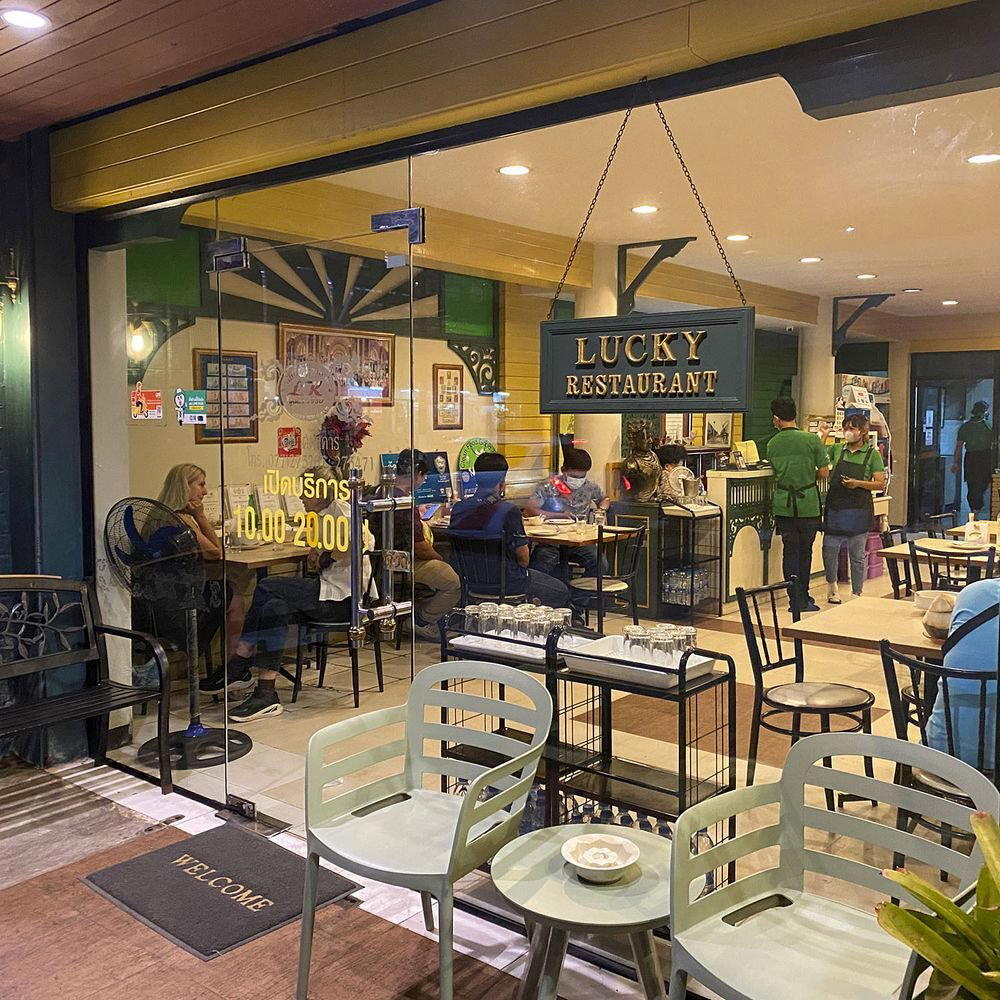
| Lucky | Southern Thai & Thai-Chinese | $10–20 | Michelin Bib Gourmand | Thai-Chinese, ฿฿ |
| Phunisa | Southern Thai | $10–20 | Michelin Bib Gourmand | ฿฿ |
| Day & Night | Thai-European Fusion | $10–20 | Michelin Plate · Wine Spectator Award of Excellence | International, ฿฿ |
| Heng Khao Moo Daeng | Thai-Chinese Street Food | $1–10 | Michelin Plate | Thai-Chinese, ฿ |
| Keo Pla | Thai Fish Noodle Shop | $1–10 | Michelin Bib Gourmand | Small eats, ฿ |
Recognition history
Dated appearances from independent guides and award organizations, with the underlying list record or original source where available.
Michelin Plate
Michelin
Full recognition history (3 entries)
Michelin Plate
Michelin
Michelin Plate
Michelin
Continue exploring
More in Surat Thani
Details
- Rustic
- Lively
- Casual Hangout
- Standalone
- A La Carte