Khanom Jeen Yai Pao

A market stall in Nakhon Ratchasima's Muen Wai district, Khanom Jeen Yai Pao serves khanom chin noodles paired with curries, including the Nam Ya Pradok, a coconut-based fish curry using fingerroot and fermented fish drawn from the Ban Pradok village tradition. The chicken red curry is among the other recommended choices. No booking exists; this is walk-in street eating at its most direct.
Pearl is the En Primeur Club membership app — saves, bookings, and concierge access live there. Same editors, same standards.
- Address
- Muen Wai, Mueang Nakhon Ratchasima District, Nakhon Ratchasima 30000, Thailand
- Phone
- +66 81 548 4097
- Website
- facebook.com
- Directions
- Get directions
 Saves & bookings on Pearl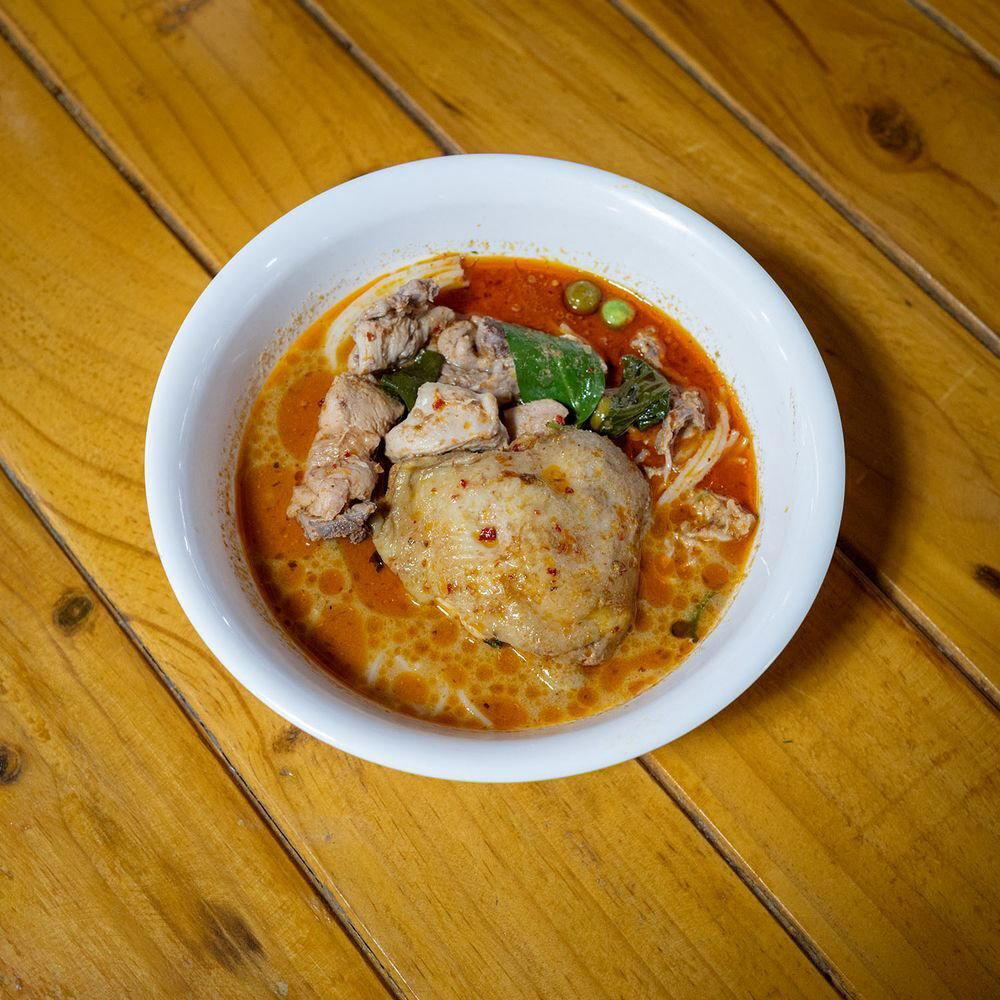
Noodles at Street Level: The Khanom Chin Tradition in Nakhon Ratchasima
Thailand's northeast has always fed itself differently from Bangkok. Where the capital's street food scene has grown increasingly self-conscious, catalogued by influencers and guide entries, the provinces still operate on older rhythms, early starts, fixed menus, stalls that close when the pot empties. Khanom Jeen Yai Pao, located in the Muen Wai area of Nakhon Ratchasima, belongs to that second category: a market stall built around one dish, one tradition, and no pretension about either. For anyone passing through Korat and curious about what provincial Thai eating actually looks like beyond the tourist-facing tier, this is a useful reference point.
Khanom chin, spelled khanom jeen in older romanisations, is a fermented rice noodle dish with deep roots across mainland Southeast Asia. The noodles themselves are soft and slightly chewy, with a faint sourness that distinguishes them from the wheat or egg noodles that dominate northern-style dishes. They are almost always served at room temperature, draped in a warm curry poured tableside or ladled at the counter. The format is communal and fast. You choose your curry, the noodles arrive in a tangle on a plate or bowl, and the meal is done in minutes. There is no wine list, no dessert course, and no decision fatigue. That simplicity is not a limitation, it is the whole point.
What the Menu Covers and Why Nam Ya Pradok Matters
The stall's menu is focused. Two options draw most of the attention: a chicken red curry and the Nam Ya Pradok, a coconut-based fish curry made with fingerroot and a measured amount of fermented fish. The latter is where the regional specificity becomes interesting. Nam Ya Pradok is a recipe traced to Ban Pradok, a local village, and it carries the kind of hyperlocal identity that larger restaurants rarely sustain. Fingerroot, krachai in Thai, gives the curry a peppery, faintly medicinal sharpness that contrasts with the smoothness of the coconut base. The fermented fish (pla ra) adds depth without overwhelming the dish, though diners sensitive to fermented flavours should note its presence.
That kind of village-recipe provenance is worth pausing on. Across Thailand, particularly codified regional dishes tend to survive in two places: domestic kitchens and stalls like this one, where the recipe has not been adjusted for outside palates. Restaurants working at the fine-dining level, Sorn in Bangkok, for instance, with its southern Thai focus, or AKKEE in Pak Kret, make a deliberate case for regional Thai cooking through composed tasting formats. The Muen Wai stall makes the same case through repetition and locality: one recipe, made the same way, from the same source community, for a local clientele that does not require explanation.
How the Booking Experience Actually Works
There is no booking here, and that is the first thing to understand before arriving. No reservation system, no website to consult, no phone line listed publicly. This is walk-in eating in the strictest sense, which means the logistics fall entirely on timing. Market stalls of this type in Nakhon Ratchasima typically operate in the morning and through midday, aligning with the province's established rhythm of eating khanom chin as a breakfast or early lunch dish. Arriving late in the afternoon is likely to mean the pots are empty.
The address, Muen Wai, Mueang Nakhon Ratchasima District, places the stall within a local market or roadside area rather than a defined restaurant block. Navigation by map application is one reliable approach; searching the Thai name directly often returns more precise results than romanised versions. There is no dress code, no seat minimum, and no need to budget extensively: the stall sits at a low price tier, making it one of the more accessible options in Korat. For context on what that price bracket looks like across Nakhon Ratchasima's eating scene, the Kai Yang Saeng Thai grill stall and Jay Noi Kratoke operate in a similar register.
Placing This Stall in the Wider Korat Eating Scene
Nakhon Ratchasima sits at the western edge of the Isan region, and its food identity reflects that position: Isan staples like grilled meats and fermented-fish preparations share space with central Thai influences carried by the city's role as a regional transit hub. Jum Khao handles the Isan rice-dish register at a slightly higher production level. Banmai Chay Nam works the broader Thai category at the ฿฿ tier. Gin-D occupies a different segment entirely. Khanom Jeen Yai Pao does not compete with any of them, it operates in a category defined by specificity of product rather than breadth of menu or setting.
That specificity is, increasingly, what food travellers in Thailand are looking for. The country's most formalised regional-cuisine projects, PRU in Phuket, Aeeen in Chiang Mai, build tasting menus around exactly the kind of sourcing and village-recipe logic that stalls like this one practice without ceremony. The difference is format and audience: fine-dining rooms translate these ideas for international visitors; the Muen Wai stall simply feeds the neighbourhood. Both are legitimate and neither replaces the other, but for understanding the source material, the stall tends to be more instructive.
Price Lens
Comparable venues nearby, for context on price, style, and recognition.
| Venue | Cuisine | Price | Awards | Notes |
|---|---|---|---|---|
| Khanom Jeen Yai PaoThis venue — the venue you are viewing | Nai Meuang, Thai Khanom Chin Street Food | $ | Michelin Plate | Not listed |
| Jay Noi Kratoke | Not listed | $ | Michelin Plate | Nong Phai Lom, Mueang Nakhon Ratchasima, Traditional Isan Thai |
| Khanom Ochin | Nai Mueang, Thai Street Food | $ | Bib Gourmand | Not listed |
| Nub | Not listed | $ | Bib Gourmand | Nai Mueang, Traditional Thai Beef Noodles |
| Radna Suanmak | Not listed | $ | Michelin Plate | Nai Mueang, Mueang Nakhon Ratchasima, Traditional Thai Noodles & Rice Dishes |
| Laab Somphit | Nai Mueang, Authentic Isan | $$ | Bib Gourmand | Not listed |
Recognition history
Dated appearances from independent guides and award organizations, with the underlying list record or original source where available.
Michelin Plate
Michelin
Continue exploring
More in Nakhon Ratchasima
At a Glance
- Lively
- Rustic
- Casual Hangout
- Open Kitchen
- Local Sourcing
Current opening hours
- Monday
- 9 AM–5 PM
- Tuesday
- 9 AM–5 PM
- Wednesday
- 9 AM–5 PM
- Thursday
- 9 AM–5 PM
- Friday
- 9 AM–5 PM
- Saturday
- 9 AM–5 PM
- Sunday
- 9 AM–5 PM
Hours can change for holidays and private events. Last verified .
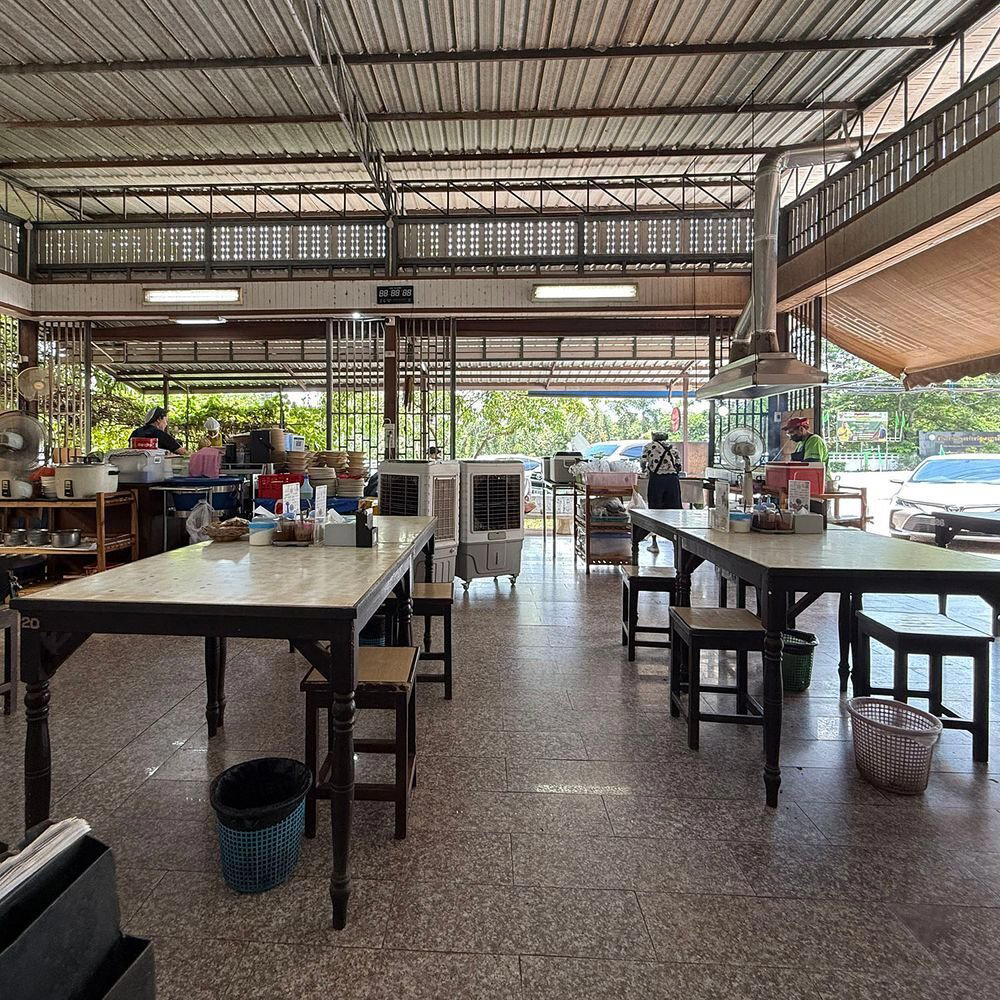
Open-air market atmosphere with natural daylight, steam from curry pots, plastic tables, and lively shopper bustle.