We're Smart World 3 Radishes
Our verdict
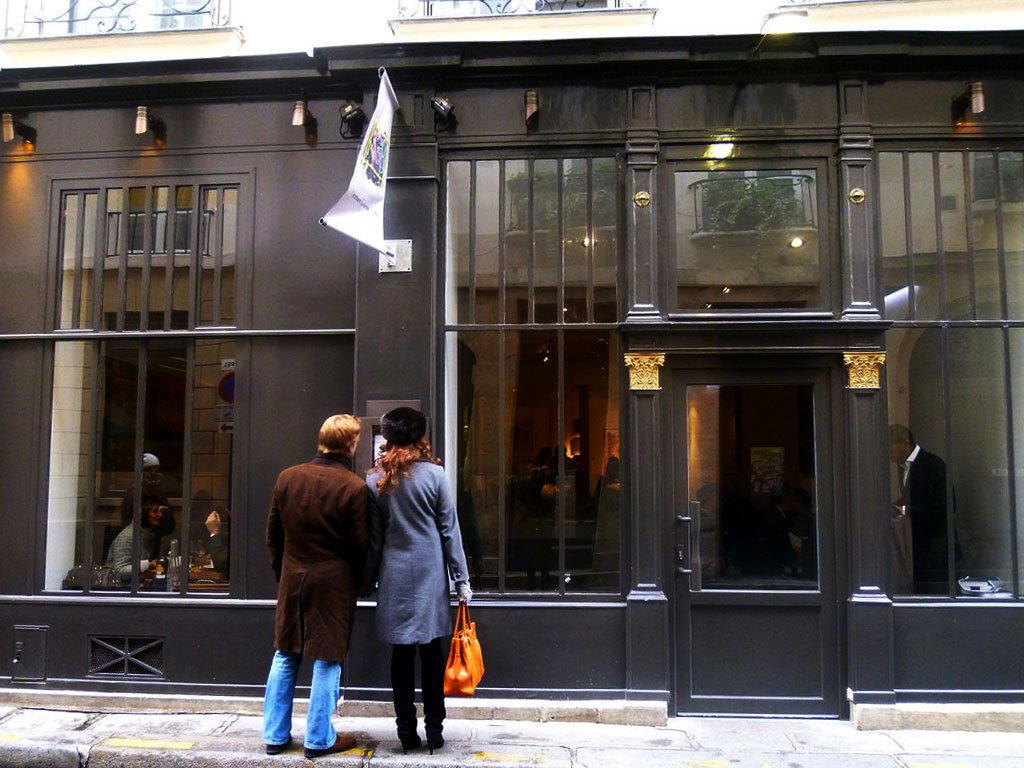
KGB (Kitchen Galerie Bis) on Rue des Grands Augustins places William Ledeuil's Southeast and East Asian ingredient palette firmly inside a Saint-Germain-des-Prés address. Coconut milk replaces cream, Thai basil stands in for parsley, and citrus frames dishes where richer European kitchens would default to butter. The result is a cooking register that reads as French in discipline and broadly Asian in flavour architecture.

Pearl is the En Primeur Club membership app — saves, bookings, and concierge access live there. Same editors, same standards.
- Address
- 4 Rue des Grands Augustins, 75006 Paris, France
- Phone
- +33 1 44 32 00 32
- Hours
- Mon–Fri 12:15–1:45 PM, 7:15–9 PMSat–Sun Closed
- Website
- zekitchengalerie.fr
- Directions
- Get directions
The menu
What to order
- Pork_spring_rolls
- Beef_tartare
- Tuna_with_carrots
Saint-Germain and the Question of What French Cooking Borrows
Rue des Grands Augustins in the 6th arrondissement carries a specific kind of Parisian culinary gravity. The street sits within walking distance of the Seine and deep inside a neighbourhood that has housed serious French kitchens for decades. It is not a street where casual concepts survive long, and the addresses that do endure tend to have a clear point of view. KGB, short for Kitchen Galerie Bis, occupies one of those addresses with a cooking philosophy that places it some distance from the classic French registers of the 6th. Where neighbours and peers like L'Ambroisie anchor themselves to the traditions of French classic cuisine, KGB works from a different set of references entirely.
The broader question the restaurant poses, and which places it in an interesting position within the Paris dining scene, is about where French technique ends and its borrowed materials begin. That conversation has been a live one in Paris for some years. Kitchens such as Kei have approached it from a Japanese angle, while the creative programmes at addresses like Alléno Paris au Pavillon Ledoyen have worked through extraction and sauce innovation. Ledeuil's approach is more ingredient-led: the borrowed materials are Southeast and East Asian staples used not as garnish but as structural components.
The Ingredient Architecture: Asia as Foundation, Not Accent
The specific substitutions Ledeuil makes are worth attending to, because they describe a cooking logic rather than a theme. Coconut milk replaces cream in preparations where a classical French kitchen would reach for dairy to provide richness and texture. The effect is a lighter, more aromatic base with less fat saturation. Thai basil substitutes for parsley, shifting the herbal register from the grassy flatness of European herbs toward something anisic and slightly floral. Broths with pasta appear on the menu in a way that would be unusual in both a strict French and a strict Asian context, sitting instead in a mid-point that neither tradition fully claims.
Citrus is Ledeuil's consistent anchor across this approach. In French cooking, citrus more often finishes a sauce or balances a rich element; here it appears as a primary flavour driver, which is closer to its role in Vietnamese and Thai cooking than in classical French preparation. The cumulative effect of these substitutions is a kitchen that uses French discipline in its cooking methods but Asian herbaceous and aromatic materials as its main flavour vocabulary. For context within the broader French dining conversation, this places KGB in a different register than the Burgundy- and Escoffier-rooted programmes at addresses like Le Cinq or the technically intensive kitchens represented by Arpège.
The Culinary Geography Behind the Menu
Ledeuil has spoken publicly about extended travel through Vietnam, Thailand, Japan, and India as formative to his cooking vocabulary. The culinary traditions of these countries treat freshness, colour, and textural contrast as primary concerns rather than secondary refinements. Vietnamese cooking, for instance, deploys herbs, raw vegetables, and acid at levels that most European cuisines reserve for garnish. Thai cooking uses aromatic pastes and coconut-based liquids as the backbone of a dish rather than its finishing note. Japanese cooking exercises a precision around ingredient quality and seasonality that aligns with, rather than conflicts with, French discipline.
What KGB represents, in the broader French dining context, is an argument that these traditions are not exotic additions to a French base but viable structural frameworks in their own right, run through a French kitchen's technical capacity. That argument has precedents: Michel Bras at Bras in Laguiole built an entire language around the vegetable world and natural environments of the Aubrac; the multi-generational kitchens of Troisgros have incorporated Japanese influence over decades. Mirazur in Menton draws from garden produce and the coastal proximity of the French-Italian border. KGB's version of this impulse happens to be rooted in Southeast Asia rather than domestic terroir or Alpine produce.
Seasonality as the Discipline
Within this framework, seasonality operates as the organising principle. The produce-forward and vegetable-focused character of the menu means that what arrives on the plate tracks closely to what is available and at peak condition at any given point in the year. This is not unusual among Paris restaurants at a serious level, but it is worth stating as an operational reality: a visit in spring will present a different menu than one in autumn, and the dishes built around citrus or herbs will shift accordingly.
This places KGB within a cluster of Paris kitchens where return visits yield genuinely different experiences rather than a fixed signature menu. Compared to addresses where the menu is more stable and the cooking identity more monument than seasonal document, the approach here rewards multiple visits over time. The vegetable world, as the kitchen frames it, is its own archive of flavour, and the menu functions as a record of what that archive contains at the moment of the visit.
Where KGB Sits in the Paris Picture
Paris at the top of the dining market has several distinct registers. There is the classical French axis represented by houses like L'Ambroisie and anchored in centuries of codified French technique. There is the modernist and creative axis at addresses like Alléno Paris. And there is a smaller, less institutionalised register of kitchens working with non-European ingredients and frameworks as primary rather than supplementary. KGB belongs to this third category, which makes it less legible against the formal Michelin and 50 Best hierarchies than addresses whose cooking sits more squarely inside French tradition. For comparison, kitchens like Le Bernardin in New York demonstrate how rigorous French technique applied to a single non-traditional product category can produce a stable, critically recognised identity. KGB's version of that logic is applied to a more diverse set of Asian ingredients and a rotating seasonal canvas.
Elsewhere in France, the conversation about what French cooking absorbs from the world around it has produced very different results: Auberge de l'Ill in Illhaeusern and Paul Bocuse have remained anchored to regional identity, while Flocons de Sel in Megève draws from Alpine specificity. KGB's response to that same question is to look outward toward Asia rather than inward toward French territory, and to do so in one of the most traditionally minded dining neighbourhoods in the city.
Planning a Visit
KGB is located at 25 Rue des Grands Augustins in the 6th arrondissement. The address places it in the Saint-Germain-des-Prés area, accessible from the Odéon or Saint-Michel metro stations. Booking ahead is advisable for dinner service on weekends, given the size of the room relative to its reputation. For a complete picture of dining options in the neighbourhood and across the city, our full Paris restaurants guide maps the range of registers and price points. Visitors planning a longer stay can also consult our Paris hotels guide, our Paris bars guide, and our Paris experiences guide for a fuller picture of what the city offers across categories.
Frequently asked questions
What distinctions does KGB have?
KGB has received recognition including: William Ledeuil dedicates his restaurant to nature in all its glory. Season, freshness, colours and textures are the keywords. His imagination and his memories of long journeys, from Vietnam to Thailand via Japan or India, do the rest to su….
Where do I go for KGB?
KGB is located at Rue des Grands Augustins 25, 75006 Paris, France, Paris.
What dish is KGB famous for?
KGB does not anchor its reputation to a single fixed dish. The kitchen's identity is built around recurring ingredient logic: coconut milk in place of cream, Thai basil standing in for parsley, broths paired with pasta, and citrus running through the menu. What changes is the produce, shaped by season; what stays constant is the structural substitution of Asian materials for French defaults.
What's the best way to book KGB?
KGB is a smaller address in the 6th arrondissement, where popular rooms tend to fill two to three weeks ahead, particularly at dinner. Booking directly through the restaurant is the standard approach for this tier of the Paris market. Arriving with flexibility on days and service times improves your chances at shorter notice.
What's the standout thing about KGB?
The clearest distinction is how systematically William Ledeuil has integrated Southeast and East Asian materials into a French seasonal framework. Coconut milk, Thai basil, and citrus are not garnishes or curiosity additions; they function as structural ingredients that replace the conventional fats and aromatics of classical French cooking. The result is produce-driven food that reads as French in discipline and broadly Asian in flavour orientation.
Cost Snapshot
Comparable venues nearby, for context on price, style, and recognition.
| Venue | Cuisine | Price | Awards | Notes |
|---|---|---|---|---|
| KGBThis venue — the venue you are viewing | Asian-Influenced Contemporary French Bistro | $50–100 | We're Smart World 3 Radishes | Not listed |
| Fugue | Franco-Japanese Bistronomic | $50–100 | Michelin Plate | Gare de l'Est (10th arrondissement), Franco-Japanese Bistronomic |
| Central Chapelle | Multi‑chef street‑food & bar hub | Not listed | Not listed | La Chapelle / Paris 18e, Multi‑chef street‑food & bar hub |
| SHIRO | Franco-Japanese Fusion | Not listed | Not listed | 6th Arrondissement, Franco-Japanese Fusion |
| Kokodak - Paris 6 | Korean-Italian Fusion | $30–50 | Not listed | 6th arrondissement, Korean-Italian Fusion |
| Canopé | Bistronomique créative fusion | $30–50 | Not listed | Paris 8 - Saint Lazare, Bistronomique créative fusion |
Recognition history
Dated appearances from independent guides and award organizations, with the underlying list record or original source where available.
We're Smart World 3 Radishes
We're Smart World