Our verdict
Kebab Master occupies a specific corner of Tartu's fast-casual scene, where the doner tradition intersects with Estonia's growing appetite for accessible global street food. Set in the 51004 postal district, it serves a city that increasingly reads its dining options against a wider European reference frame. For visitors moving between Tartu's university quarter and its riverfront, it represents the kind of no-ceremony stop that anchors daily eating life.

Pearl is the En Primeur Club membership app, where members save venues, book tables and use the concierge.
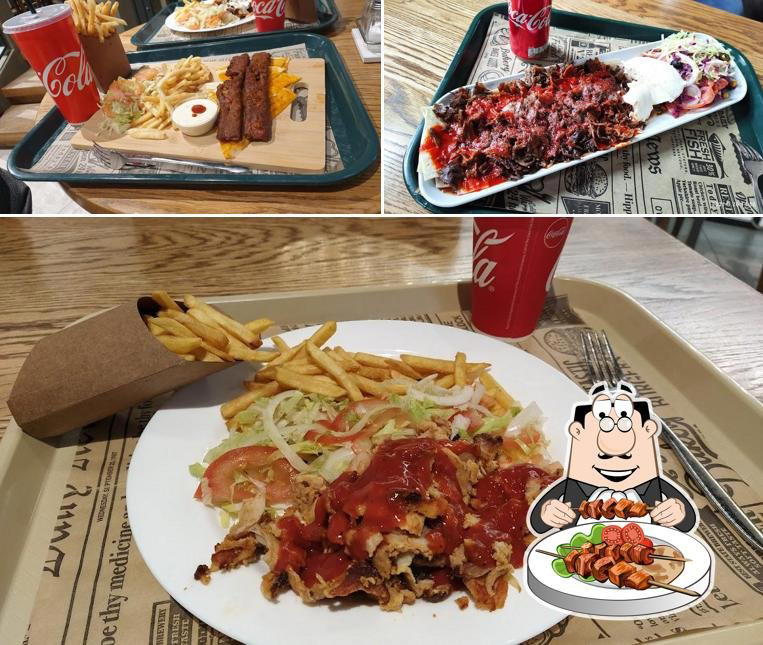
The menu
What to order
- Kebabs
- Baklava
Street Food Logic in a University City
Tartu operates on a different register from Tallinn. Where the capital tilts toward Nordic fine dining and international hotel restaurants like 180° by Matthias Diether, Estonia's second city runs on student rhythms, academic calendars, and a food culture that prizes efficiency and directness over ceremony. The kebab format fits that logic precisely. Across Central and Northern Europe, the doner has long served as the connective tissue between working populations and the cities they move through, Berlin, Vienna, Stockholm, and Helsinki each developed distinct local inflections on the form. Tartu is no different, and Kebab Master operates inside that tradition rather than apart from it.
The broader context matters here. Estonia's food scene has spent the past decade sorting itself into two distinct tiers: an upper bracket of ingredient-focused modern restaurants, places like Hõlm in Tartu, which works at the €€€ level with modern cuisine technique, and a wide base of accessible, everyday venues where the meal is functional, fast, and honest. Kebab Master sits in that second tier, which is not a diminishment. In any functional city, that base tier does significant cultural work.
The Global Technique, the Local Appetite
The editorial angle worth examining at a kebab shop in Estonia is what happens when a culinary tradition built in Anatolia and refined through decades of German-Turkish street food culture arrives in the Baltic states. The technique is imported wholesale: the vertical rotisserie, the layered meat pressing, the flatbread-plus-sauce architecture of the finished product. What shifts is the context, the customer base, the surrounding food culture, the price expectations, and the competition from adjacent formats.
In Tartu, that competition is instructive. Ihamaru Pizza occupies one corner of the fast-casual market; Eva Sushi occupies another. Both represent global formats adapted to local appetite and local price tolerance. The kebab sits in its own distinct niche: higher protein density than most pizza slices, faster service than most sushi operations, and a price point that tracks below the city's mid-tier sit-down restaurants. For a city where the university population sets the pace of street-level food culture, that position is coherent and durable.
Across the wider Estonian restaurant circuit, from Everest Thai/Nepalese in Pärnu to Kolm. Restoran in Võru, the pattern of imported culinary forms finding local footing is consistent. Estonia is a small country with an unusually high density of foreign food formats relative to its population, partly a function of its proximity to Scandinavian markets, partly a product of its post-Soviet appetite for culinary range. The kebab is, in that reading, less an exotic arrival and more a naturalized citizen of the Estonian fast-casual scene.
Tartu as a Dining City: Where the Kebab Fits
Understanding where Kebab Master sits requires a working map of Tartu's food geography. The city's more considered dining options cluster around the old town and the area adjacent to the Emajõgi river. Cafe Truffe and Humal represent different points on the sit-down spectrum, while the university district generates demand for faster, cheaper, more portable formats. The 51004 postcode, where Kebab Master operates, is embedded in a residential and commercial zone that serves daily life rather than destination dining.
That distinction shapes the experience. A venue functioning as a neighbourhood fast-casual anchor in a university city is not in direct competition with Tartu's modern cuisine tier, it serves a different need at a different moment in the day. Lunch between lectures, a meal after a late seminar, a stop on the way home: these are the occasions the format is built for. Comparing Kebab Master to Hõlm would be a category error, in the same way that comparing a corner ramen-ya in Shinjuku to the prix-fixe counters of Ginza misreads what both are doing.
For visitors building a multi-day Tartu itinerary, our full Tartu restaurants guide maps the city's dining options across price tiers and formats, from fast-casual through to the modern cuisine bracket. Those planning to move between Estonian cities might also find value in the wider regional picture: Franzia in Narva-Jõesuu, Kohvik in Viljandi, Kohvik Kaar in Narva, Kuur in Vihtra, Valgeranna Veinitall in Audru, Wana Kala Kõrts in Neeme, and KABE Beach in Kaberneeme each illustrate how different Estonian towns have developed their own fast-casual and mid-tier dining characters.
Planning Your Visit
Kebab Master is located at 51004 Tartu. As with most venues in this format category across Northern Europe, walk-in service is standard, the doner format is built around immediacy, not reservation logic. Tartu's compact central core makes most of the city's eating options accessible on foot from the main university buildings and the old town square, meaning that coordinating a stop at a fast-casual venue like this with other errands or sightseeing involves minimal detour.
Seasonal timing is worth noting for Tartu generally: the city's energy peaks between September and May when the university is in full session, and that academic calendar drives demand across the fast-casual sector. Summer months see a quieter, more tourism-facing version of the city, with different rhythm and lower baseline foot traffic in the student zones.
Frequently asked questions
Where is Kebab Master located?
Kebab Master is located at 51004 Tartu, Tartu.
Is Kebab Master a good late-night food option in Tartu?
Tartu's status as a university city, home to the University of Tartu, one of the oldest in Northern Europe, means demand for late-night counter dining runs consistently through term time. Counter-format kebab venues in this city context typically absorb that post-evening crowd, and Kebab Master at 51004 Tartu operates within that local role.
What should I eat at Kebab Master?
The doner kebab is the operational anchor of any venue in this format category, and Tartu's student-heavy population puts consistent pressure on volume and value. At a counter-service kebab shop in this city, the wrapped doner, meat shaved to order, dressed with sauce and salad, is the dish the kitchen is built around.
Can I walk in to Kebab Master?
Walk-in service is standard for counter-format venues of this type across Northern Europe, and Kebab Master at 51004 Tartu follows that pattern. No reservation system is documented for the venue. Queue times will track with the university city rhythm, lunch rushes and late evenings after events are the busiest windows.
What's the defining dish or idea at Kebab Master?
The doner is the structural idea: a technique with roots in Anatolia, adapted through decades of European street food migration, and now a fixture in university cities from Helsinki to Tartu. What the format delivers at its core is speed, portion weight, and a meat-to-bread ratio that sustains a student city's appetite. Kebab Master sits within that tradition in Tartu's food geography.
Can Kebab Master handle vegetarian requests?
Kebab shops across Northern Europe increasingly carry falafel or vegetable-based alternatives alongside the standard doner menu, but confirming availability directly at the 51004 Tartu address before visiting is advisable.
Comparable Spots
| Venue | Cuisine | Price | Awards | Notes |
|---|---|---|---|---|
| Kebab MasterThis venue (the venue you are viewing) | Middle Eastern Kebab | $1–10 | Not listed | Not listed |
| Hõlm | Modern European Fine Dining | $30–50 | Michelin Plate · White Guide Baltic Restaurants - Very Fine Level | Modern Cuisine |
| Joyce | Modern European Brasserie | $50–100 | Michelin Plate · White Guide Baltic Restaurants - Very Fine Level | Modern Cuisine |
| Eva Sushi | Japanese Sushi & Poke | $10–20 | Not listed | Not listed |
| La Dolce Vita | Authentic Italian Pizza and Pasta | $20–30 | Not listed | Not listed |
| Humal | French-inspired Bistro | Not listed | Not listed | Not listed |
Continue exploring
More in Tartu
Restaurants in Tartu
All restaurants in Tartu →
Hotels in Tartu
All hotels in Tartu →
Details
- Casual
- Casual Hangout
- Solo
- A La Carte
Casual fast food environment with quick service and takeout-oriented setup.