

1 Michelin Star · The Best Chef One Knife
Our verdict
Kazuo holds a Michelin star in both 2024 and 2025, placing it among a compact tier of São Paulo restaurants where Japanese technique meets Brazilian ingredients. Located in Jardim Europa, Chef Kazuo Harada's room draws a crowd that treats the counter as destination rather than convenience. For São Paulo's Asia-influenced fine dining scene, it functions as a reliable reference point.

Pearl is the En Primeur Club membership app — saves, bookings, and concierge access live there. Same editors, same standards.
- Address
- Rua Prudente Correia, 432 - Jardim Europa, São Paulo - SP, 01450-030, Brazil
- Phone
- +55 11 96640-7596
- Hours
- Mon–Thu 12–3 PM, 7–11 PMFri 12–3 PM, 7 PM–12 AMSat 12–4 PM, 7 PM–12 AMSun 12–5 PM
- Website
- kazuorestaurante.com.br
- Directions
- Get directions
- Booking
- Book on the venue's website
The Quiet Discipline of Jardim Europa
Jardim Europa sits at the wealthier edge of São Paulo's dining geography, a neighbourhood where understated facades tend to conceal serious kitchens. The street-level approach to Rua Prudente Correia places you in a residential stretch where restaurants earn their footfall rather than inherit it from tourist flow. It is the kind of address that rewards knowing where you are going — and that self-selection shapes the room before a single plate arrives.
Asian-influenced fine dining in São Paulo occupies a different register than it does in Tokyo or Hong Kong. Here the tradition is filtered through a century of Japanese immigration to Brazil, one of the largest such diasporas in the world outside Japan itself. That demographic history created a local fluency with Japanese ingredients and techniques that goes well beyond fashion. Restaurants working in this vein are not importing a trend; they are drawing on something that has been absorbing into the city's palate for generations. Kazuo sits squarely within that tradition — not as a novelty act, but as a practitioner of a form that São Paulo has quietly made its own.
A Michelin Star, Held Twice
In 2024 and again in 2025, the Michelin Guide awarded Kazuo a single star, placing Chef Kazuo Harada in a consistent peer group alongside other one-starred São Paulo addresses. In the city's current fine dining configuration, that consistency matters. A first star can reflect a strong year; a second consecutive star indicates a kitchen that has stabilised its ambition at a high register. For Asian-influenced cuisine specifically, a category where São Paulo's Michelin pool runs narrower than its French or contemporary Brazilian equivalents, two consecutive recognitions position Kazuo as a credible anchor of the category.
Michelin's São Paulo constellation runs from two-star houses like D.O.M. and Evvai down through a broader one-star tier. Within that one-star grouping, Kazuo's particular orientation toward Asian technique gives it a distinct niche. The comparison set at this price point ($$$ rather than $$$$) includes Maní, which works Brazilian and international registers at a comparable price tier, and Jun Sakamoto, which operates at similar pricing through a more strictly Japanese framework. Kazuo's "Asian Influences" classification suggests a wider aperture than single-origin Japanese cooking, a point that becomes relevant when assessing how the kitchen positions itself against both peers.
What Asian Influences Mean in a Brazilian Context
The label "Asian Influences" covers a broader creative territory than Japanese cuisine alone. In São Paulo, where Liberdade has functioned as the city's Japanese-Brazilian cultural district for decades, chefs working in this space often move fluidly between Japanese precision, Chinese technique, and Southeast Asian ingredient vocabulary. The interesting question for any restaurant in this category is which influences are primary and which are accent, and how Brazilian produce either grounds or complicates that conversation.
Brazil's ingredient diversity is not incidental to this kind of cooking. Amazonian fruits, native herbs, regional proteins, and a year-round growing season that produces quality produce without the seasonal constraints of temperate climates, these elements change what Asian-influenced cooking can do when it lands in São Paulo rather than Sydney or London. The most accomplished kitchens in this mode use Brazilian ingredients not as a marketing point but as a practical expansion of their palette. Where that synthesis succeeds, the result is neither fusion for its own sake nor a faithful reproduction of an Asian original, it is something that only makes sense in this specific city.
For broader reference across São Paulo's creative dining scene, the city's ambition is visible in venues like Tuju, which holds its own Michelin recognition for creative work with Brazilian ingredients. The same critical apparatus that rewards Tuju is watching what kitchens like Kazuo do with a different cultural inheritance.
Placing Kazuo in the São Paulo Fine Dining Map
São Paulo's restaurant scene runs deep. With a metropolitan population exceeding 21 million and a culture that treats eating out as serious social business rather than occasional treat, the city supports a density of fine dining that surprises visitors accustomed to measuring South American cuisine primarily through Rio or Buenos Aires. The Michelin Guide's São Paulo edition has grown steadily since the guide's Brazil debut, and the one-star tier has become genuinely competitive.
Within that tier, Kazuo's Jardim Europa address places it in a neighbourhood cluster of serious restaurants rather than a standalone destination. The area's residents and regular diners tend to have international exposure and formed opinions about Asian fine dining from time spent elsewhere. That shapes what the room expects, and in turn shapes what the kitchen must deliver to hold its rating year on year.
For context across Brazil's wider Michelin-recognised dining scene, the standard set elsewhere includes Lasai in Rio de Janeiro, Manu in Curitiba, and Manga in Salvador, each of which anchors its region's fine dining conversation.
Asian-influenced fine dining appears in other Brazilian cities, Mee in Rio de Janeiro occupies a comparable category niche in a different market, but São Paulo remains the primary stage for this kind of work, largely because the Japanese-Brazilian community is most concentrated here and because the city's dining culture is most willing to support a full fine dining investment in a non-European register.
The Broader São Paulo Table
Visitors building a São Paulo itinerary around serious dining will find Kazuo fits into a sequence rather than standing alone. The city's restaurant scene rewards planning: Fame Osteria covers the Italian contemporary register; D.O.M. and Tuju anchor the modern Brazilian conversation; Kazuo represents the Asian-influenced thread that runs through the city's culinary history in a way that few other South American cities can match.
At the $$$ price point, Kazuo sits at a tier where the expectation is serious food without the full ceremonial weight of a $$$$ house. That positioning makes it accessible to a wider range of diners than the very best of the market while still demanding focused attention to the meal.
For those extending their São Paulo exploration beyond restaurants, our full São Paulo hotels guide, bars guide, and experiences guide cover the wider picture. The full São Paulo restaurants guide maps the entire fine dining scene in more detail, including how venues across different cuisine categories and price points compare. For those also exploring the wine side, our São Paulo wineries guide rounds out the picture.
Further afield, the appetite for careful, precise fine dining in non-obvious formats shows up in places like Mina in Campos do Jordão and Orixás North Restaurant in Itacaré, both of which suggest that Brazil's serious dining culture extends well beyond its two largest cities. And for those tracking Asian-influenced fine dining across very different contexts, MAIN TOWER Restaurant in Frankfurt operates in the same broad category in a European setting, offering an instructive point of contrast for how the same culinary orientation plays differently across latitudes and cultural contexts. Closer to home, Castelo Saint Andrews in Gramado rounds out the regional picture in southern Brazil.
Know Before You Go
- Address: Rua Prudente Correia, 432, Jardim Europa, São Paulo, SP 01450-030
- Cuisine: Asian Influences
- Price tier: $$$ (mid-to-upper fine dining)
- Awards: Michelin 1 Star (2024, 2025)
- Guest rating:
- Neighbourhood: Jardim Europa, affluent, low-density, leading reached by car or rideshare
- Booking: Contact the restaurant directly; advance reservations are advisable given the Michelin profile
What Do Regulars Order at Kazuo?
Without access to the current menu, it would be irresponsible to name specific dishes here. What the kitchen's profile does indicate is that regulars at a restaurant of this orientation, Asian-influenced, Michelin-recognised, working in the São Paulo market, are likely to order around the chef's selection rather than à la carte, allowing the kitchen to express its range. At one-star houses where the cuisine draws on Japanese precision and Brazilian ingredient access, the dishes that hold repeat loyalty tend to be those where the two registers intersect most clearly rather than where either dominates. The anchors in Kazuo's awards record are cuisine and chef, both of which point toward a kitchen with a defined point of view, the kind of restaurant where trusting the format typically produces a better result than over-directing the meal from the guest side.
Frequently asked questions
Who is the chef connected to Kazuo?
The chef associated with Kazuo is Kazuo Harada.
How do I find Kazuo?
Kazuo is located at Rua Prudente Correia, 432 - Jardim Europa, São Paulo - SP, 01450-030, Brazil, São Paulo.
What do regulars order at Kazuo?
Kazuo's current menu is not published online, which means specific dish names circulate mainly through word of mouth and social media rather than any official source. What the kitchen's two consecutive Michelin stars (2024 and 2025) do confirm is that Chef Kazuo Harada's output is consistent enough to reward repeat visits. Regulars in Jardim Europa's dining circuit tend to follow the chef's judgment rather than anchoring to a fixed order, which points toward a tasting-format or omakase-adjacent structure. Booking ahead and asking the room directly about the current menu is the practical approach.
What should I budget for a meal at Kazuo?
Pricing at Kazuo is listed as $$$.
What kind of recognition has Kazuo received?
Kazuo has received recognition including: Chef: Kazuo Harada document.addEventListener("DOMContentLoaded", function { var el = document.getElementById("Achievements_chefs"); if (el && el.parentNode) { el.parentNode.removeChild(el); } });; Michelin 1 Star (2025); Michelin 1 Star (….
Category Peers
A small set of peers for context, based on recorded venue fields.
| Venue | Cuisine | Price | Awards | Notes |
|---|---|---|---|---|
| KazuoThis venue — the venue you are viewing | Pan-Asian Fine Dining | Not listed | 1 Michelin Star · The Best Chef One Knife | Not listed |
| Evvai | Modern Italian-Brazilian Fusion | $200–300 | 3 Michelin Stars · World's 50 Best #95 | Contemporary Italian, Modern Cuisine |
| D.O.M. | Modern Brazilian Amazonian Fine Dining | $150–200 | 2 Michelin Stars · World's 50 Best #74 | Modern Brazilian, Creative |
| Maní | Modern Creative Brazilian | $50–100 | 1 Michelin Star · World's 50 Best #67 | Brazilian - International, Creative |
| Jun Sakamoto | Japanese Omakase | $100–150 | 1 Michelin Star · La Liste Top Restaurants | Sushi, Japanese |
| A Casa do Porco | Modern Brazilian Pork-Centric | $30–50 | Michelin Bib Gourmand · World's 50 Best #25 | Regional Brazilian, Brazilian |
Recognition history
Dated appearances from independent guides and award organizations, with the underlying list record or original source where available.
Michelin 1 Star
Michelin
The Best Chef One Knife
The Best Chef
Full recognition history (4 entries)
Michelin 1 Star
Michelin
Michelin 1 Star
Michelin
Continue exploring
More in São Paulo
Restaurants in São Paulo
Browse all →
Bars in São Paulo
Browse all →
Details
- Sophisticated
- Elegant
- Modern
- Intimate
- Date Night
- Special Occasion
- Business Dinner
- Chefs Counter
- Private Dining
- Open Kitchen
- Sake Program
- Extensive Wine List
- Organic
- Local Sourcing
- Tasting Menu
- A La Carte
- Omakase
- Sake
- Wine
- Vegetarian Friendly
Current opening hours
- Monday
- 12–3 PM, 7–11 PM
- Tuesday
- 12–3 PM, 7–11 PM
- Wednesday
- 12–3 PM, 7–11 PM
- Thursday
- 12–3 PM, 7–11 PM
- Friday
- 12–3 PM, 7 PM–12 AM
- Saturday
- 12–4 PM, 7 PM–12 AM
- Sunday
- 12–5 PM
Hours can change for holidays and private events. Last verified .
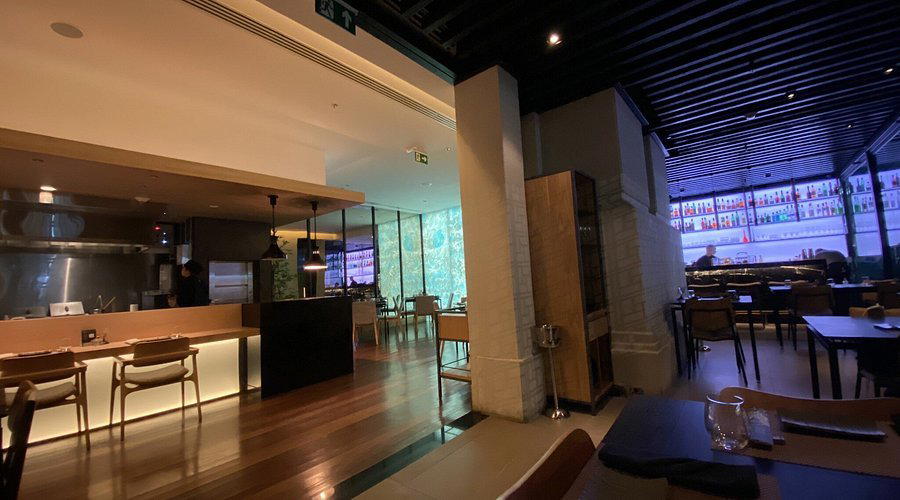
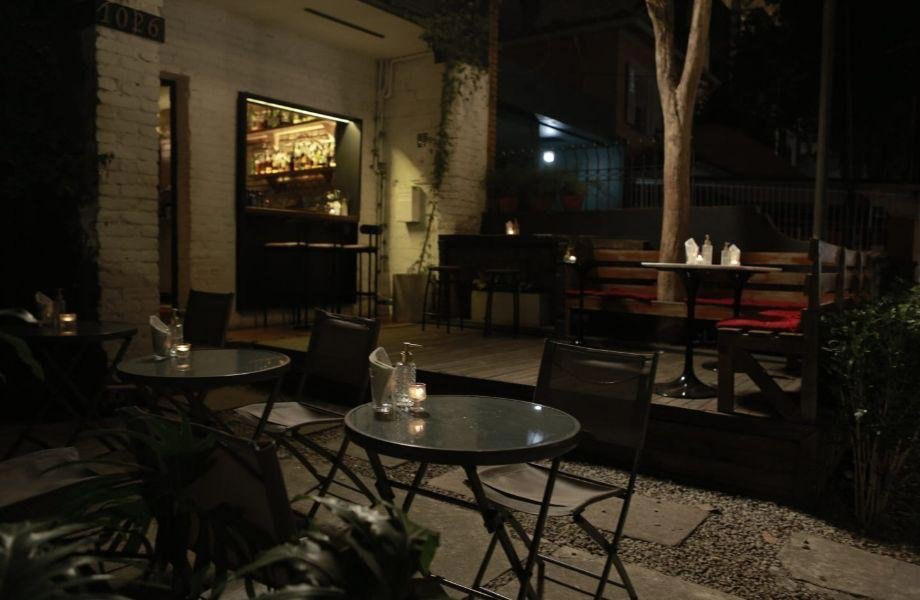
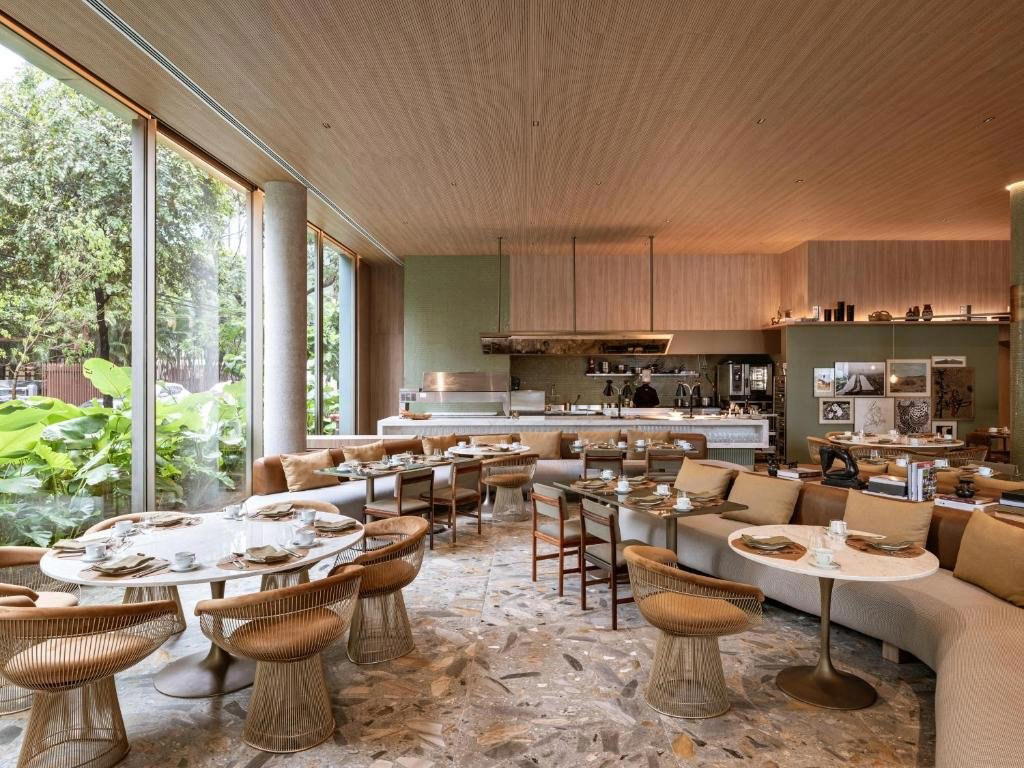
Sophisticated and immersive atmosphere with modern design, intimate sushi bar, open dining room, and private terrace, ideal for special occasions.