
Tabelog 100 #35
Our verdict
Kakkou Ya puts Iwate’s sweet-shop tradition in a rural Ichinoseki setting, closer to a regional food ritual than a conventional restaurant meal. Its Tabelog 100 selection for Japanese traditional sweets and Japanese sweets cafés in EAST 2023 gives it a clear credential, while the format remains modest, casual, and rooted in local day-trip culture.

Pearl is the En Primeur Club membership app — saves, bookings, and concierge access live there. Same editors, same standards.
- Address
- 岩手県一関市厳美町字滝ノ上211
- Phone
- +81191292031
- Website
- ichitabi.jp
- Directions
- Get directions
The menu
What to order
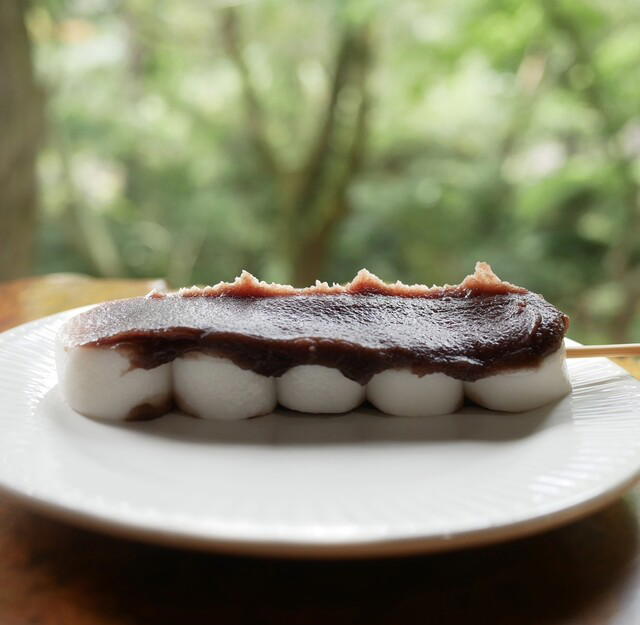
- Kakko Dango (Flying Dango)
- Tamura plum shiso dango
- Sesame paste dango
Approaching Kakkou Ya in Iwate, the pace changes before the food does: a regional travel rhythm, modest surroundings, and the kind of pause that makes a sweets stop feel part of the outing rather than an add-on. In Iwate, Japanese confectionery is not only an urban tea-room habit. It belongs to station routes, family drives, temple-town detours, and scenic pauses, where a small order can carry more regional meaning than a full formal meal.
Kakkou Ya belongs to that older Japanese category of destination sweets shop, where the draw is not a chef-led tasting format or a luxury dining room but the combination of Japanese traditional sweets and a café featuring Japanese sweets. Its Tabelog Hyakumeiten recognition in 2023 places it inside a national conversation about regional confectionery, but the appeal remains plain-spoken: an affordable Iwate stop whose listed budget sits in the lowest band.
Iwate sweets culture, seen through a rural café format
Japanese sweets cafés occupy a different role from patisserie counters or restaurant dessert courses. Wagashi is built around season, texture, tea culture, and regional memory; it often reads quietly, with rice, bean, sugar, starch, and local custom doing the work that butter and cream do elsewhere. In metropolitan Japan, the genre can become polished and collectible. In provincial settings, it often stays closer to roadside hospitality and family travel.
That distinction matters in Iwate. The prefecture’s food identity is frequently discussed through noodles, coastal seafood, beef, and mountain produce, yet confectionery has its own travel logic. Sweets shops along regional routes function as social punctuation: a short stop after sightseeing, a family-friendly-style pause, a purchase to carry onward. Kakkou Ya sits in this pattern rather than in the high-spend restaurant bracket occupied by other Iwate dining rooms such as Ryuen.
The Tabelog 100 recognition is useful because it separates the address from the mass of casual sweet shops without turning it into a luxury proposition. A 3.59 Tabelog score and inclusion in the 2023 recognition signal sustained public attention in a field where everyday affordability and repeat custom matter. This is not the competitive frame of counters such as Tempura Shoshin An or destination restaurants such as Kesennuma Kuromori; it is a narrower, culturally specific category where restraint and familiarity carry weight.
Why the experience is shorter, cheaper, and more local than a restaurant reservation
The practical rhythm is closer to a countryside café than a booked dining event. The listed spend sits in the under-JPY 999 band for both lunch and dinner. That tells experienced Japan travellers a great deal: come prepared, treat timing as part of the day’s route, and do not expect the choreography of a tasting-menu room. The reward is access to a type of food culture that is easy to overlook when itineraries chase only counter sushi, kaiseki, or ramen queues.
For visitors building an Iwate itinerary, the useful comparison is not only between restaurants but between formats. Fuller meals, regional dining rooms, casual cafés, and unnamed local stops answer different questions about the prefecture. Kakkou Ya answers a smaller but sharper one: how does local sweetness fit into the structure of a day in Iwate?
That question is worth asking because Japan’s regional food culture is not only built from formal meals. It is also built from counters, cafés, roadside purchases, and places where grandparents, children, and travelling friends can share the same stop without changing the tone of the day. The category matters here, because wagashi and Japanese sweets café culture often crosses the line between eating in and carrying something away.
How to place it in an Iwate itinerary
Kakkou Ya makes the most sense as part of an Iwate route rather than as a stand-alone dining pilgrimage. Its sweets-café format suits a daylight schedule and gives travellers access to a different face of the prefecture from more formal dining circuits. As with many regional venues, checking current opening information before travelling is sensible.
EP Club readers mapping the region should treat this as a cultural stop with a credible award signal, not as a substitute for a full meal. For broader planning, use Our full Iwate restaurants guide alongside Our full Iwate hotels guide, Our full Iwate bars guide, Our full Iwate wineries guide, and Our full Iwate experiences guide. The better itinerary gives each format its place: regional sweets in the afternoon, a fuller restaurant booking later, and enough time between them to let Iwate feel like more than a transit point.
Travellers comparing Japanese casual formats beyond Iwate can also read across the wider EP Club Japan and diaspora map through unnamed cafés, bars, counters, and casual stops in other cities. The through-line is not cuisine sameness; it is format literacy, knowing when a modest stop explains a place more clearly than a longer meal.
Frequently asked questions
Is Kakkou Ya a family-friendly restaurant?
Kakkou Ya is best understood as a Japanese traditional sweets and Japanese sweets café stop in Iwate. Check the venue's official channels for the latest details.
What's the vibe at Kakkou Ya?
It reads more like a regional sweets café than a formal dining room. Its Tabelog Hyakumeiten recognition for Japanese traditional sweets and Japanese sweets café in 2023 gives it added context.
How much does it cost to eat at Kakkou Ya?
Pricing at Kakkou Ya is listed as - JPY 999 - JPY 999.
What is Kakkou Ya known for?
Kakkou Ya is known for Japanese traditional sweets and as a café featuring Japanese sweets in Iwate.
Budget Reality Check
Side-by-side context: comparable cuisine and price.
| Venue | Cuisine | Price | Awards | Notes |
|---|---|---|---|---|
| Kakkou YaThis venue — the venue you are viewing | Traditional Japanese Dango Teahouse | $1–10 | Tabelog 100 #35 | Not listed |
| Ryuen | Yakiniku with Maesawa Beef | $30–50 | Tabelog 100 #1 | Mizusawa, Yakiniku with Maesawa Beef |
| THE BURGER HEARTS | Gourmet hamburger & cafe | $10–20 | Tabelog 100 #9 | Sakari, Gourmet hamburger & cafe |
| Chinese jiu | Chinese Fine Dining | $50–100 | Tabelog 100 #57 | Hizume, Chinese Fine Dining |
| PIZZERIA 5 | Traditional Italian Pizzeria & Cafe | $20–30 | Tabelog 100 #28 | Hanamaki, Traditional Italian Pizzeria & Cafe |
| Ren | Modern Chinese with French-influenced seasonal courses | $50–100 | Tabelog 100 #35 | Hanamaki, Modern Chinese with French-influenced seasonal courses |
Recognition history
Dated appearances from independent guides and award organizations, with the underlying list record or original source where available.
Tabelog 100 #35 · No. 35
Tabelog · Tabelog 100 - Japanese traditional sweets / Japanese sweets cafe - EAST - 2023
Continue exploring
More in Iwate
Details
- Scenic
- Cozy
- Rustic
- Family
- Group Dining
- Casual Hangout
- Solo
- Special Occasion
- Waterfront
- Panoramic View
- Standalone
- Historic Building
- Sake Program
- Local Sourcing
- Waterfront
- Mountain
- A La Carte
- Tea
Simple and rustic like a traditional teahouse, with guests sitting outdoors in a riverside pavilion overlooking the gorge while enjoying dango delivered in a clanging basket from the opposite bank; the focus is on the playful, scenic experience rather than refined decor.