
Tabelog 100 #81
Our verdict
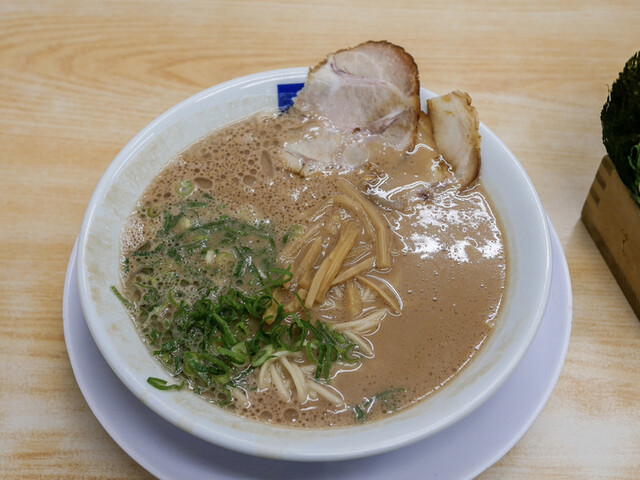
Kairyuu Hakata honten belongs to Fukuoka’s serious ramen circuit: low-friction, local in rhythm, and recognized in Tabelog’s Ramen WEST 100 selections from 2023 through 2025. Its appeal is less about ceremony than repetition: a ramen meal built around pace, counter discipline, and the city’s long habit of treating noodles as an everyday craft rather than a special-occasion performance.

Pearl is the En Primeur Club membership app, where members save venues, book tables and use the concierge.
The menu
What to order
- 魁龍全部のせラーメン (Kairyu Zenbu Nose Ramen)
- 煮玉子ラーメン (Nitamago Ramen)
- ワンタンメン (Wonton Ramen)
- チャーシューメン (Chashu-men)
- 魁獣みそ (spicy Kaijuu miso topping)
Approach in Fukuoka and the meal reads less like destination dining than a neighborhood ritual: a ramen room, practical habits, and the steady turnover that defines Fukuoka noodle culture. The soundscape is familiar across the city’s stronger ramen shops: quick decisions, bowls landing quickly, groups eating with purpose, and little interest in stretching the table. Kairyuu Hakata honten fits that grammar. It is not trying to convert ramen into a tasting-menu format; it works inside the local expectation that a serious bowl should arrive without theatre and justify itself before the noodles soften.
Fukuoka’s ramen reputation is often flattened into a single idea, but the city’s actual ramen culture is more varied in tempo and use. Some shops function as late-night recovery stops, others as commuter meals, others as everyday rooms where ease matters as much as the bowl itself. The useful distinction for travelers is not only flavor, but format: how quickly the room moves, how much ceremony is expected, and whether the meal asks for advance planning or casual timing. In that sense, Kairyuu Hakata honten sits closer to the everyday specialist than the destination counter, with the validation of Tabelog’s Ramen recognition in 2025.
Ramen as routine, not performance
The ritual here belongs to a Fukuoka tradition that values decisiveness. Ramen is ordered, eaten, and cleared with an efficiency that can feel abrupt to visitors used to lingering over a meal. That pace is part of the point. Noodles are time-sensitive, broth cools, and the room’s rhythm depends on diners reading the format correctly. A good Fukuoka ramen stop rewards focus: arrive hungry, decide quickly, eat while the bowl is at temperature, and treat conversation as secondary to timing.
That approach separates the city’s noodle culture from more formal Japanese dining categories. There is no need to impose sushi-counter reverence or kaiseki pacing on ramen. The better comparison is with other Fukuoka everyday institutions in the accessible bracket, including Tempura Dokoro Hirao Honten and Hagakure Udon, where value, repetition, and service speed create their own form of discipline. Against higher-spend local formats such as Yakiniku Tagyu Ekiminami ten or Teppanyaki Rikaen, ramen occupies a different dining lane entirely: less leisurely, more democratic, and more dependent on immediate execution.
The recognition matters because Tabelog’s Hyakumeiten lists tend to capture shops that have earned sustained diner attention within a crowded field. A 3.67 Tabelog score and 2025 Ramen recognition place Kairyuu Hakata honten inside a competitive regional conversation rather than a tourist-only ramen map. That does not make the meal formal. It makes the ordinariness more telling: in Fukuoka, a ramen shop can be both routine and heavily scrutinized.
The room tells you how to eat
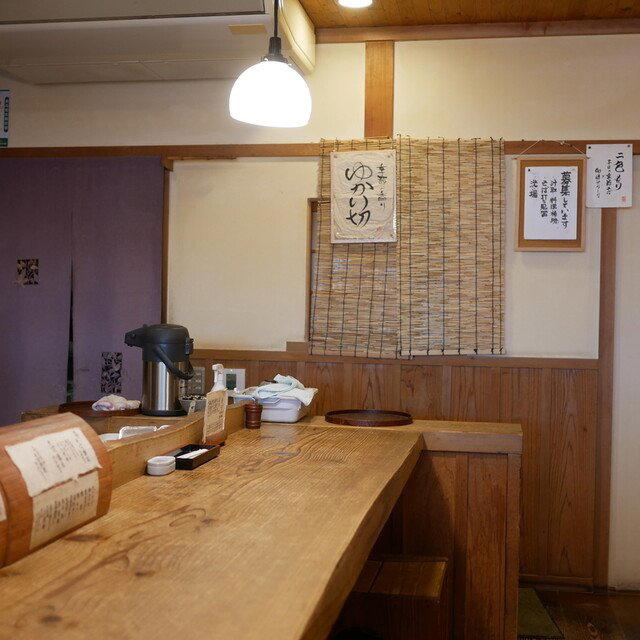
The setup and pace signal a broader everyday audience than the narrow solo-counter archetype. That matters in Fukuoka, where ramen is not reserved for lone diners or after-hours eating. The practical format widens the ritual: office workers, friends, and repeat local diners can all use the space without changing the essential pace of the meal. The point is not luxury or lingering comfort, but a room that keeps attention on the bowl and the rhythm around it.
For visitors building a Fukuoka food itinerary, this is where the decision becomes useful. Kairyuu Hakata honten works better as a ramen-specific stop than as a catch-all introduction to the city’s dining range. Pairing it with other local categories gives a clearer picture of Fukuoka’s appetite: everyday counters, casual noodle rooms, tempura specialists, grilled-meat formats, and other dining rooms across the city. For a wider city edit, use Our full Fukuoka restaurants guide, then cross-check where to stay through Our full Fukuoka hotels guide, drinking rooms through Our full Fukuoka bars guide, regional bottles through Our full Fukuoka wineries guide, and city programming through Our full Fukuoka experiences guide.
How it fits a Japan-wide eating map
Ramen’s strength in Fukuoka is its refusal to behave like a luxury category, even when award lists and online ratings intensify attention. That restraint is useful for travelers moving across Japan. A bowl in Fukuoka should not be judged by the same criteria as more formal dining, high-spend counters, café culture, regional comfort food, international cooking, or bar-led meals elsewhere. Each format has its own etiquette. Here, the etiquette is speed, attention, and respect for a bowl designed to be eaten immediately.
The editorial case for Kairyuu Hakata honten is therefore not rarity or spectacle. It is evidence of how Fukuoka protects ramen as a working meal while still subjecting it to serious public ranking. For travelers who already understand that Fukuoka ramen is not a monolith, the venue adds a grounded counterpoint to convenience-led and late-night noodle hunting. For first-time visitors, it offers a clean lesson in the city’s ramen manners: do not overcomplicate the order, do not linger unnecessarily, and let the room’s pace explain why this category remains central to Fukuoka’s food identity.
Frequently asked questions
What are the operating hours at Kairyuu Hakata honten?
Operating hours for Kairyuu Hakata honten are not specified here; confirm current hours before visiting.
What's Kairyuu Hakata honten's location?
Fukuoka.
What does dinner at Kairyuu Hakata honten typically cost?
Pricing at Kairyuu Hakata honten is listed as - JPY 999 - JPY 999.
What is Kairyuu Hakata honten known for?
Kairyuu Hakata honten is known as a ramen venue in Fukuoka, with Tabelog Hyakumeiten recognition in 2025 and a listed score of 3.67.
Style and Standing
Comparable venues to calibrate price, style, and recognition.
| Venue | Cuisine | Price | Awards | Notes |
|---|---|---|---|---|
| Kairyuu Hakata hontenThis venue (the venue you are viewing) | Traditional Hakata/Kurume Tonkotsu Ramen | $1–10 | Tabelog 100 #81 | Not listed |
| Tanakadashiki Seafood Shokudo Uochu | Tanakadashiki-style seafood set-meal diner | $20–30 | Tabelog 100 #71 | Chūō |
| Hakata Gion Tetsu Nabe | Hakata izakaya & iron-pan gyoza | $10–20 | Tabelog 100 #94 | Hakata |
| 枯淡 | Edomae Sushi Omakase | $200–300 | Not listed | Chūō |
| SACHiA Beef stroganoff | Beef stroganoff-focused Yoshoku (Japanese-style Western) | $10–20 | Tabelog 100 #41 | Higashi |
| Daikoro Youha / Tonkatsu Youha | Tonkatsu & Japanese Izakaya | $30–50 | Tabelog 100 #82 | Chūō |
Recognition history
Dated appearances from independent guides and award organizations, with the underlying list record or original source where available.
Tabelog 100 #81 · No. 81
Tabelog · Tabelog 100 - Ramen - WEST - 2025
Continue exploring
More in Fukuoka
Restaurants in Fukuoka
All restaurants in Fukuoka →
Details
- Well Known
- Lively
- Classic
- Solo
- Casual Hangout
- After Work
- Family
- Group Dining
- Late Night
- Standalone
- A La Carte
- Counter Dining
Current opening hours
- Monday
- 11 AM–8:30 PM
- Tuesday
- 11 AM–8:30 PM
- Wednesday
- 11 AM–8:30 PM
- Thursday
- 11 AM–8:30 PM
- Friday
- 11 AM–8:30 PM
- Saturday
- 11 AM–8:30 PM
- Sunday
- 11 AM–8:30 PM
Hours can change for holidays and private events. Hours as of .