KAIF
Our verdict
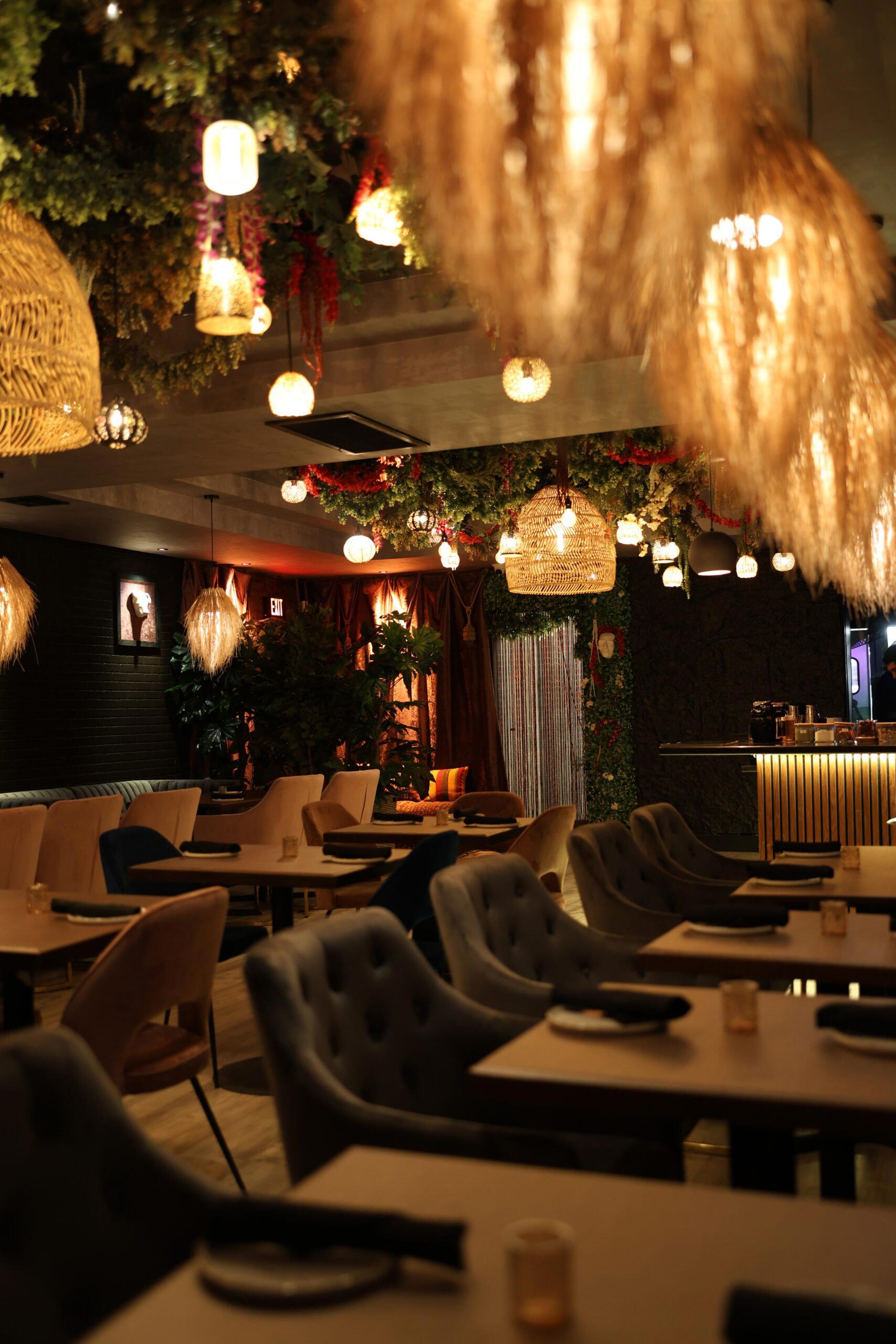
KAIF on West Pico Boulevard sits in the quieter stretch of West Los Angeles where the dining room speaks before the menu does. The kitchen draws on an ethos of ethical sourcing and environmental awareness that has become a genuine competitive marker in the city's serious-dining tier, rather than a marketing afterthought. For the West Side, it occupies a position that rewards the reader who plans ahead.

Pearl is the En Primeur Club membership app — saves, bookings, and concierge access live there. Same editors, same standards.
- Address
- 11538 W Pico Blvd, Los Angeles, CA 90064
- Phone
- (310) 903-6449
- Hours
- Mon–Tue 6 PM–1:30 AMWed–Sat 6 PM–2 AMSun 4 PM–1:30 AM
- Website
- kaifla.com
- Directions
- Get directions
- Booking
- Book on OpenTable
West Pico's Quieter Frequency
West Los Angeles has never been the loudest room in the city's dining conversation. That distinction has long belonged to the Eastside and the coastal corridors, where press cycles move fast and reservation queues are public sport. The stretch of Pico Boulevard around the 11500 block operates on a different register: lower foot traffic, longer tenancies, a neighbourhood that tends to reward operators who are building something rather than launching something. KAIF sits at 11538 W Pico Blvd, in exactly that kind of address — the sort that doesn't advertise itself from the pavement, and where the dining room's atmosphere does the persuading once you're inside.
For context on how the West Side fits into the city's broader dining structure, our full Los Angeles restaurants guide maps the competitive tiers from Koreatown to the coast. KAIF's positioning on Pico places it outside the most trafficked corridors, which is increasingly a considered choice rather than an accident of real estate.
The Sustainability Signal in Los Angeles Dining
Across serious American dining, the gap between restaurants that claim environmental consciousness and those that have structured their supply chains around it has become a meaningful editorial distinction. In Los Angeles specifically, where the growing season rarely pauses and Southern California's farming infrastructure sits within close reach, the excuses for performative sourcing are thinner than in most American cities. Operators who are genuinely committed to waste reduction and ethical procurement tend to build supplier relationships that show up in the menu's range and consistency, not just in a line of copy on the website.
Single Thread Farm in Healdsburg has made farm-to-table integration a structural feature of the business rather than a seasonal garnish. Blue Hill at Stone Barns in Tarrytown has arguably defined what a full-commitment agricultural dining model looks like at the high end of the American market. KAIF occupies a different scale and city context, but the orientation toward sourcing integrity as a primary editorial frame — rather than a supporting talking point, places it in that broader category of restaurants where the supply chain is part of the story the kitchen is telling.
In Los Angeles, that conversation intersects with a dining culture that has produced some of the country's most structurally interesting restaurants. Kato, which operates in the $$$$-tier with a New Taiwanese framework, and Hayato, with its Japanese kaiseki discipline, both represent kitchens where sourcing precision is an expected baseline rather than a differentiator. The question for any restaurant entering this conversation is whether the ethical sourcing commitment runs through the entire operation or surfaces only when convenient.
What the Pico Boulevard Address Signals
Restaurant addresses in Los Angeles carry more information than they appear to. A Pico Boulevard location in the low-11000s puts KAIF west of the Mid-City concentration of Korean and Japanese dining, south of the Brentwood premium corridor, and away from the Venice and Santa Monica coastal cluster where rents and tourist traffic pull menus toward safe international appeal. This is a neighbourhood address, which in Los Angeles means the dining room earns its regulars slowly and keeps them through consistency rather than through the velocity of opening press.
That geographic logic matters for visitors, too. West Side dining trips are rarely single-destination evenings. The proximity to Century City and Westwood means KAIF can anchor an itinerary that doesn't require crossing the basin. For travellers already working through the Providence or Osteria Mozza tier of the city's established institutions, a Pico address offers a different tempo: less production, more kitchen-forward focus.
The American Context for Ethical Sourcing at the Table
The broader American dining conversation about sustainability has fractured into several distinct positions. There are restaurants that have integrated waste-reduction into their kitchens operationally, running whole-animal programs, fermenting byproducts, and composting at scale. There are others that have built supplier-specific menus tied to named farms and documented growing practices. And there is a third category, the largest, where sustainability appears as brand positioning without structural backing.
Restaurants that have made the commitment operational rather than rhetorical tend to sit in specific competitive relationships with each other. Lazy Bear in San Francisco has built a communal dining format around the idea that sourcing transparency and cooking craft are inseparable. Addison in San Diego brings French technique to a Southern California sourcing context. Further afield, Bacchanalia in Atlanta has operated a farm-linked model for long enough that it functions as a regional anchor rather than a trend participant. What connects these restaurants across geographies is that the ethical sourcing frame shapes the kitchen's decisions, not just its marketing.
At the international level, the same structural commitment appears in very different culinary vocabularies. Le Bernardin in New York City has long positioned seafood sourcing as a technical and ethical responsibility rather than a menu flourish. Alinea in Chicago and Somni in Los Angeles operate in the molecular and progressive registers, where ingredient provenance informs technique at a granular level.
KAIF's position within this broader frame is, at this stage, defined more by its address and its apparent orientation than by a documented track record of awards or press recognition in the public record. That is not unusual for a West Side restaurant in this neighbourhood tier, Los Angeles's media infrastructure skews toward the Eastside and the coast, and West Pico has produced serious operators who have taken years to reach the editorial radar. The structural comparison, though, is valid: a restaurant that builds its identity around environmental consciousness and ethical sourcing is competing, in reputational terms, with restaurants that have made the same commitment and documented it publicly.
Planning Your Visit
KAIF is located at 11538 W Pico Blvd, Los Angeles, CA 90064. The West Side address is direct by car, with parking more accessible than in denser dining corridors. For comparison venues operating at the $$$$-tier in Los Angeles, among them Kato and Hayato, reservation lead times of several weeks are standard, so arriving without prior planning carries risk regardless of venue.
For visitors building a broader itinerary, the West Side positions KAIF as an anchor that pairs naturally with institutions in the adjacent neighbourhoods. The French Laundry in Napa, The Inn at Little Washington, Atomix in New York City, Emeril's in New Orleans, and 8 1/2 Otto e Mezzo Bombana in Hong Kong each represent how a commitment to sourcing integrity and culinary seriousness plays out across different cities and formats, useful reference points for calibrating expectations before a first visit to KAIF.
Frequently asked questions
What do regulars order at KAIF?
Do they take walk-ins at KAIF?
What's the defining dish or idea at KAIF?
Is KAIF good for vegetarians?
How does KAIF compare to other sustainability-focused restaurants in Los Angeles?
Cost and Credentials
Comparable venues nearby, for context on price, style, and recognition.
| Venue | Cuisine | Price | Notes |
|---|---|---|---|
| KAIFThis venue — the venue you are viewing | Modern Mediterranean with Ukrainian influences | Not listed | Not listed |
| The Exchange | Israeli-Mediterranean Fusion | $30–50 | Financial District, Israeli-Mediterranean Fusion |
| Deme | Eastern Mediterranean | Not listed | Downtown, Eastern Mediterranean |
| Carmel | Modern Israeli-Levantine Mediterranean | $50–100 | Melrose, Modern Israeli-Levantine Mediterranean |
| Chateau Marmont Restaurant | California Mediterranean | $50–100 | Sunset Hills, California Mediterranean |
| Written Hand | Mediterranean-inspired Small Plates | $50–100 | Hollywood, Mediterranean-inspired Small Plates |
Continue exploring
More in Los Angeles
Restaurants in Los Angeles
Browse all →
Bars in Los Angeles
Browse all →
Hotels in Los Angeles
Browse all →
Wineries in Los Angeles
Browse all →
Details
- Trendy
- Modern
- Elegant
- Brunch
- Date Night
- Casual Hangout
- Standalone
- Small Plates
- A La Carte
- Vegetarian Friendly
Current opening hours
- Monday
- 6 PM–1:30 AM
- Tuesday
- 6 PM–1:30 AM
- Wednesday
- 6 PM–2 AM
- Thursday
- 6 PM–2 AM
- Friday
- 6 PM–2 AM
- Saturday
- 6 PM–2 AM
- Sunday
- 4 PM–1:30 AM
Hours can change for holidays and private events. Last verified .
Sparkling with sunshine and laughter during brunch events, offering a thoughtfully crafted dining experience.