
Kaen places Chinese cooking inside Osaka’s low-waste, low-friction lunch culture rather than the city’s luxury dining circuit. Its 2026 selection for Tabelog 100 Chinese WEST gives it a clear quality signal, while the counter-friendly room, no-smoking lunch setting, and Minamihorie location make the appeal practical rather than ceremonial.
Pearl is the En Primeur Club membership app — saves, bookings, and concierge access live there. Same editors, same standards.
- Address
- 大阪府大阪市西区南堀江1-20-23 ダイアパレス堀江公園
- Website
- tabelog.com
 Saves & bookings on Pearl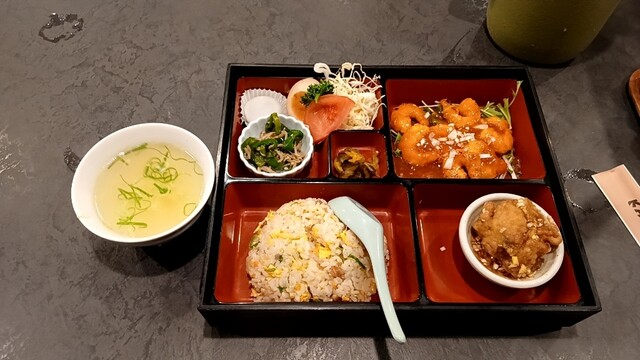
Minamihorie does not announce itself with Namba theatre or Umeda department-store polish. Around Horie Park, the register is smaller: design shops, cafés, compact dining rooms, and weekday lunch counters where turnover matters as much as polish. Here, Chinese cooking can behave differently: quick, tightly portioned, materially efficient, and closer to Osaka’s everyday appetite than banquet-room ceremony.
That is the useful way to read Kaen. Its selection for Tabelog 100 Chinese WEST 2026 places it within a regional group of Chinese restaurants recognised for consistency, but the format points away from luxury signalling. This is not Osaka Chinese dining built around private-room formality, heavy ordering, or a long evening progression. It belongs to a leaner category: focused cooking, counter seating, a no-smoking lunch environment, and a small-room rhythm that rewards solo diners and pairs as much as groups.
Chinese cooking in Horie, scaled for a city that hates waste
Osaka dining has always had a practical streak. The city respects appetite, speed, and value, and Chinese restaurants often sit where those meet. In Minamihorie, that intersection is especially clear because the neighbourhood is not a corporate dining district. Restaurants here must work for people moving through the day: residents, shop staff, office workers, and visitors crossing between Yotsubashi, Nishi-Ohashi, and Sakuragawa.
The sustainability story is embedded in scale, not slogan. Compact rooms create less excess than sprawling formats. Counter seating supports measured production. Lunch-focused service concentrates demand into a shorter window instead of stretching mise en place across a half-empty day. Cash-only payment and no parking also point to an older, lower-infrastructure urban model built around foot traffic and nearby transit rather than destination consumption.
That matters because Osaka’s dense restaurant ecology makes small formats viable. A Chinese kitchen need not perform abundance to be serious; it can show discipline through menu restraint, portion logic, and repeat local use. The Tabelog 100 Chinese WEST 2026 recognition gives Kaen a public quality marker, but the sharper signal is category tension: a recognised Chinese restaurant operating in a modest, neighbourhood-scaled register.
Nearby comparison makes that clearer. LE PINEAU Kitahorie honten and Patisserie Chocolaterie Ordinaire speak to Horie’s café-and-sweets traffic; curry condor shows how single-focus comfort food fits the same streets; Ajikitcho Horieten sits in a more formal Japanese register; Okonomi Tamachan Viva belongs to Osaka’s louder shared-table vocabulary. Against that mix, Chinese cooking here reads as urban utility with awards credibility attached, not a grand occasion imported into the neighbourhood.
The room favours solo lunches, small groups, and repeat use
The listed counter seating is a meaningful clue. Counters change the social contract: they reduce ceremony, normalise solo dining, and keep focus on pacing rather than spectacle. In a city where premium dining can become reservation theatre, a counter-friendly Chinese restaurant in Nishi-ku offers pleasure that is efficient, direct, and easier to fold into an actual day.
Private rooms are not part of the format, and that absence is useful. It keeps the experience closer to a shared urban room than closed-door entertaining. Private use is listed for groups up to 20 people, suggesting flexibility without turning the restaurant into an event space. For sustainability-minded diners, that flexibility matters less as a green claim than as sensible capacity: a small room serving individuals, friends, or a contained group without demanding a waste-heavy banquet structure.
There is also a cultural point. Chinese cuisine in Japan often splits between everyday chuka, hotel Cantonese, regional specialist cooking, and high-polish modern Chinese. Osaka supports all of them, but its strongest restaurants tend to earn loyalty by matching format to context. In Minamihorie, a restrained Chinese address with a recognised 2026 Tabelog placement says something about the city’s standards: excellence does not always arrive with ceremony, and price need not carry the whole argument.
For travellers building a wider Osaka food map, this stop sits between headline dining and casual grazing. It pairs naturally with neighbourhood planning rather than a single-purpose itinerary. EP Club’s wider Osaka coverage can help frame choices across restaurants, hotels, bars, wineries, and experiences.
How to place it in an Osaka itinerary
Kaen makes strongest editorial sense as part of a Minamihorie or Yotsubashi day rather than a cross-city pilgrimage. The location works for travellers already moving through Horie’s shops, Shinsaibashi-adjacent streets, or western central Osaka. The absence of parking reinforces the point: arrive by rail or on foot, and treat the meal as part of the neighbourhood’s compact rhythm.
Reservations are listed as available, the sensible route for an award-recognised small room. The Tabelog score of 3.65 and 2026 Chinese WEST selection will draw diners who follow Japanese rating culture, but the practical mood remains low-key. Choose it for disciplined Chinese cooking at city scale, not a long celebratory dinner.
Readers comparing formats across Japan may want to look laterally rather than hierarchically. Osaka’s casual depth differs from the tighter specialism found at [ki:] in Kyoto, the regional specificity of.know in Kumamoto, or the category focus of [Curry Senmon Ten] Maruyama Kyoju. in Sapporo. The same planning logic applies internationally, from Jōdo Saké Bar in Los Angeles to Onigiri Time in Pasadena: small formats often communicate more about a city’s eating habits than larger dining rooms.
Within Osaka, contrast sharpens the reading. A day can move from coffee at.cafe to bread at 52CHO-ME BAKERY, pork buns at 551 Horai (551蓬莱), pizza at 99 Pizza Napoletana Gourmet, or Italian cooking at a canto (Italian). Further afield, reference points such as -Grilled beef Sukiyaki- KAMAKURA TANUKIAN 鎌倉 たぬき庵 in Kamakura. 鮪と炭火焼き うお炭 秋葉原店 in Tokyo, and (Shoku) Vietnam in Kawasaki show how Japan’s smaller restaurants can carry a city’s food identity without needing a grand frame.
Comparison Snapshot
Comparable venues by cuisine and price in the same metro.
| Venue | Cuisine | Price | Notes |
|---|---|---|---|
| KaenThis venue — the venue you are viewing | Casual Chinese lunch counter | $ | Not listed |
| Az/ Bifun Azuma Oosaka ten | Chinese Bistro | $$ | Kita |
| Fukushima Koto | Cantonese Chinese | $$ | Kita |
| Chitose Udon | Osaka Nikusui Udon | $ | Namba |
| Lakshmi | Indian Curry House | $ | Nishi |
| Rashansen | Modern Cantonese-influenced Chinese with natural wines | $$$ | Nishi |
Recognition history
Dated appearances from independent guides and award organizations, with the underlying list record or original source where available.
Tabelog 100 #72 · No. 72
Tabelog · Tabelog 100 - Chinese cuisine - WEST - 2026
Continue exploring
More in Osaka
Restaurants in Osaka
Browse all →




Bars in Osaka
Browse all →


Hotels in Osaka
Browse all →



Wineries in Osaka
Browse all →
At a Glance
- Cozy
- Solo
- Casual Hangout
- After Work
- Group Dining
- Standalone
Simple, relaxed neighborhood Chinese restaurant with counter seating and a modest, comfortable interior suited to solo diners and casual lunches with friends.