Kachka

Portland's most serious Russian kitchen, Kachka on SE 11th brings the fermented, foraged, and preserved pantry of the former Soviet republics to a city better known for Pacific ingredients. Chef Bonnie Morales has built a program recognized twice by Opinionated About Dining in its North America casual rankings, making it a reference point for Russian cuisine well beyond the Pacific Northwest.
Pearl is the En Primeur Club membership app — saves, bookings, and concierge access live there. Same editors, same standards.
- Address
- 960 SE 11th Ave, Portland, OR 97214, United States
- Phone
- +1 503-235-0059
- Website
- kachkapdx.com
- Directions
- Get directions
 Saves & bookings on Pearl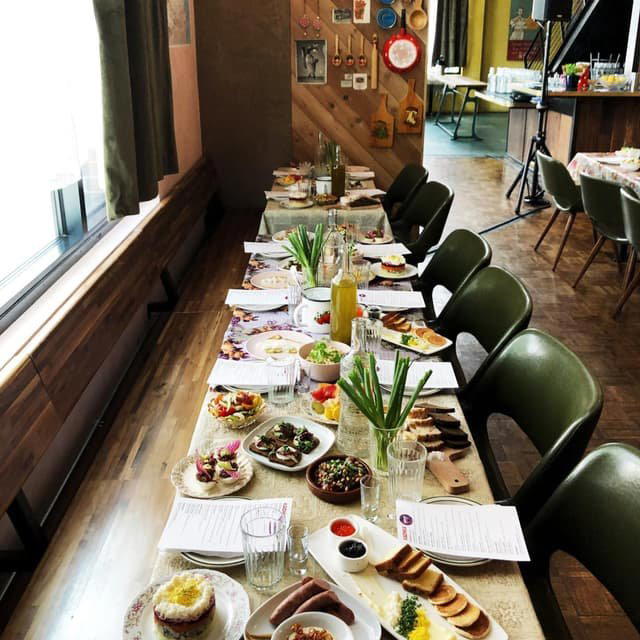
Where Portland Meets the Russian Table
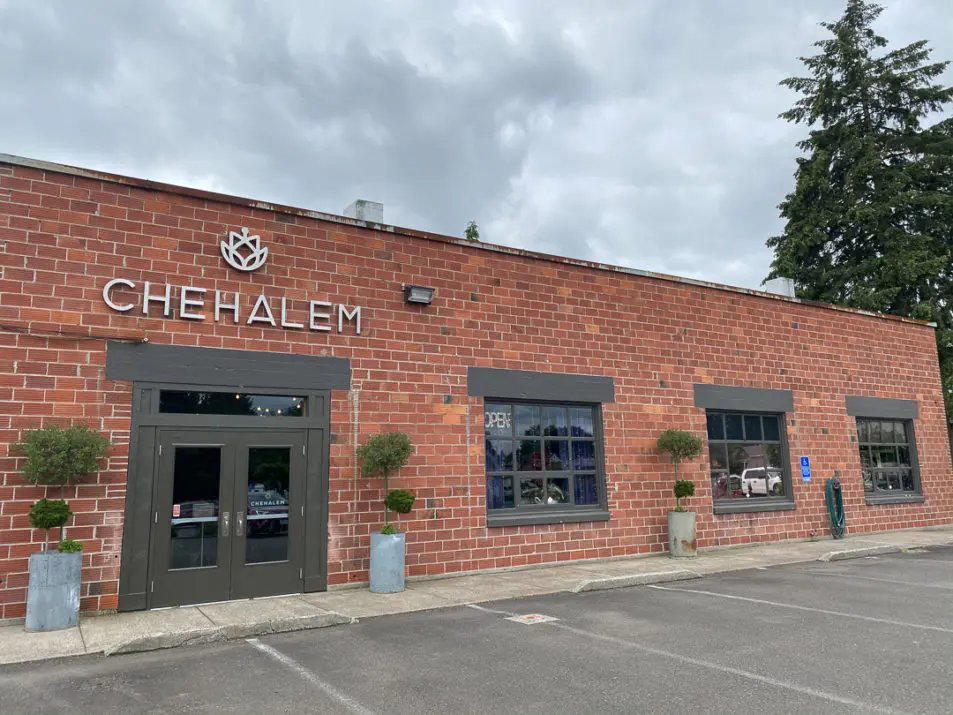
Walk up to 960 SE 11th Ave on any weekday evening and the scene outside reads like a cross-section of Portland's restaurant-going public: regulars who know to arrive early for the split lunch-to-dinner service, first-timers drawn by word of mouth, and a fair number of visitors who planned their evenings around a reservation. The exterior is understated by design. Inside, hand-painted motifs, Soviet-era ephemera, and a soundtrack that tilts toward post-Soviet folk. The room does not cosplay nostalgia; it uses visual shorthand to signal that what follows is specific and considered, not generalized Eastern European.
Russian cuisine occupies a narrow lane in American dining. The post-Soviet diaspora kitchen, built around preserved vegetables, cured fish, rye breads, fat-forward broths, and pelmeni filled with meat or potato, has no deep footprint in North America outside a handful of immigrant-community enclaves in New York, Los Angeles, and Chicago. In Portland, a city whose dining identity runs toward Japanese, Vietnamese, Mexican, and Italian, a serious Russian program is structurally unusual. That structural gap is part of why Kachka has drawn consistent critical attention: ranked #370 in North America Casual in 2024, #662 in 2025, and listed as Highly Recommended in its Gourmet Casual category in 2023. Those placements do not measure dominance in a crowded field; they signal that the kitchen maintains standards in a category with few peers at this level anywhere in the country.
The Sourcing Logic Behind a Preserved-Foods Kitchen
The editorial angle most useful for understanding Kachka is ingredient sourcing, and specifically what it means to run a pantry-forward Russian kitchen in the Pacific Northwest. Traditional Russian and post-Soviet cooking is, at its structural core, a cuisine of preservation: brined cucumbers, pickled mushrooms, cured herring, fermented cabbage, smoked fish, rendered fat. These are not garnishes or nostalgic touches; they are the architecture of flavor. Every dish that involves a pickle, a brine, or a cure is making a sourcing decision months before it reaches the table.
Portland's geography creates specific conditions for this approach. The Willamette Valley and the Oregon Coast supply ingredients that translate well into the preservation-heavy pantry of the Russian tradition: wild mushrooms from Oregon's coastal forests, cold-water fish from the Pacific, root vegetables and alliums from regional farms. The match is not well-suited, Siberian pine nuts are not Oregon pine nuts, and Kamchatka crab is not Dungeness, but the logic of building a larder from the leading available local material and then preserving, fermenting, or curing it is one that Portland producers and farmers understand intimately. The city's food culture has spent two decades developing exactly this kind of supplier relationship, and a kitchen like Kachka's benefits directly from that infrastructure even as it applies it to a culinary tradition from the opposite side of the hemisphere.
Chef Bonnie Morales, who grew up in a Russian-speaking immigrant household, brings biographical fluency to that translation. The biographical detail matters here not as personal narrative but as a sourcing credential: the recipes are grounded in a living tradition, not reconstructed from cookbooks. That difference is audible in the food, which skews toward the domestic and communal end of Russian cooking rather than the imperial-era showmanship that defines higher-end Russian dining elsewhere. For comparison, Palkin in St. Petersburg and 1924 Istanbul both operate in the tradition of czarist-era formality; Kachka's reference point is the kitchen table, which is a different and harder register to execute with consistency.
Where Kachka Sits in Portland's Wider Dining Pattern
Portland's most-discussed restaurants in recent years have clustered around two poles: technically ambitious tasting-menu formats and deeply ingredient-driven casual operations. Kachka falls firmly in the second category and shares a comparable set with places like Berlu (Vietnamese fermentation and preservation) and Langbaan (Thai regional specificity), kitchens that are technically serious but structured around the communal rhythms of a cuisine rather than around a tasting-menu format. That peer group contrasts with Portland's wood-fired Italian contingent, represented by Nostrana and Ken's Artisan Pizza, or the Haitian program at Kann, which operates in a different immigrant-cuisine tradition but shares the same commitment to cooking from a specific cultural root.
On a national scale, the comparison set is thin by definition. The restaurants most often cited in the same conversation about serious, non-tasting-menu cooking at this recognition level include places like Lazy Bear in San Francisco, though that kitchen is format-different. The OAD placement in the same rankings that track programs as different as Le Bernardin, Alinea, Single Thread, and The French Laundry reflects an unusually broad critical consensus that Russian casual dining at this level competes across cuisine lines, not just within its own category. Emeril's in New Orleans offers a useful structural parallel: a kitchen defined by a regional culinary tradition that operates at a seriousness level above what the cuisine is typically assigned by critics.
Planning a Visit
Kachka operates seven days a week with split service: lunch runs 11am to 3pm across all days, and dinner begins at 4pm, closing at 9pm Sunday through Thursday and extending to 10pm on Fridays and Saturdays. The Friday and Saturday dinner window is especially in-demand, and booking ahead is advisable for those nights. The SE 11th address puts the restaurant in the inner Southeast corridor, walkable from multiple neighborhoods and well-served by the city's eastside transit grid. For visitors structuring a Portland trip around food, the surrounding blocks offer enough other dining options to anchor an evening's itinerary.
The restaurant holds,500 reviews, a volume that suggests the kitchen's consistency extends well beyond the critical audience that generates OAD placements.
What Regulars Order at Kachka
Among regulars and visitors who engage most closely with the menu, the zakuski spread, the Russian tradition of small plates designed for grazing alongside drinks, tends to anchor most tables. The format maps naturally onto how Portlanders already eat out: shareable, moderately paced, built for conversation. The herring preparations, whatever format they take on the current menu, draw consistent attention as a test of the kitchen's relationship with cured fish, which is foundational to the Russian table. Pelmeni, the stuffed dumplings that function as a comfort anchor across post-Soviet cuisines, appear in multiple form variations and serve as a useful entry point for those unfamiliar with the format. The vodka program, drawn from across the former Soviet republics, is treated as seriously as the food and is not an afterthought: pairing a well-chosen vodka with the brinier, fattier components of a zakuski spread is a practice with a century of logic behind it, and the bar at Kachka follows that logic rather than treating spirits as a category separate from the food.
A Tight Comparison
Comparable venues nearby, for context on price, style, and recognition.
| Venue | Cuisine | Price | Notes |
|---|---|---|---|
| KachkaThis venue — the venue you are viewing | Russian | $$$ | Not listed |
| Gado Gado | Hollywood, Indonesian-Malaysian Fusion | $$$ | Not listed |
| Magna Kusina | Hosford-Abernethy, Modern Filipino | $$ | Not listed |
| Higgins Restaurant & Bar | Not listed | $$$ | Downtown, Pacific Northwest Farm-to-Table |
| Astera | Not listed | $$$$ | Belmont District, Pacific Northwest Plant-Based Tasting Menu |
| Farmhouse Kitchen Thai Cuisine | Hawthorne District, Modern Thai Cuisine | $$$ | Not listed |
Recognition history
Dated appearances from independent guides and award organizations, with the underlying list record or original source where available.
Opinionated About Dining Casual in North America Recommended
Opinionated About Dining
Opinionated About Dining Casual in North America Ranked #662
Opinionated About Dining
Opinionated About Dining Casual in North America Ranked #370
Opinionated About Dining
Opinionated About Dining Gourmet Casual Dining in North America Ranked #165
Opinionated About Dining
Opinionated About Dining Casual in North America Highly Recommended
Opinionated About Dining
Continue exploring
More in Portland
Restaurants in Portland
Browse all →
Bars in Portland
Browse all →
Hotels in Portland
Browse all →
At a Glance
- Lively
- Energetic
- Rustic
- Whimsical
- Well Known
- Group Dining
- Celebration
- Casual Hangout
- Special Occasion
- Standalone
- Open Kitchen
- Extensive Wine List
Current opening hours
- Monday
- 11 a.m.–2 p.m., 4–9 p.m.
- Tuesday
- 11 a.m.–2 p.m., 4–9 p.m.
- Wednesday
- 11 a.m.–2 p.m., 4–9 p.m.
- Thursday
- 11 a.m.–2 p.m., 4–9 p.m.
- Friday
- 11 a.m.–2 p.m., 4–10 p.m.
- Saturday
- 11 a.m.–2 p.m., 4–10 p.m.
- Sunday
- 11 a.m.–2 p.m., 4–9 p.m.
Hours can change for holidays and private events. Last verified .
Warm and convivial with hand-sewn tablecloths, Soviet-era posters, and a comfortable rustic elegance; the room reverberates with laughter and energy despite crowding, creating an atmosphere of elegant rustica.