Jhen Pin
.png)
A no-frills duck specialist in Xinzhuang District, Jhen Pin has built its following over more than a decade on original recipes and sourcing discipline. The sliced duck platter, shredded ginger duck soup, and braised duck rice with fried shallot anchor a focused menu that rewards repeat visits. For New Taipei's working-lunch crowd, this is a reference point for Taiwanese braised duck done with consistency.
Pearl is the En Primeur Club membership app — saves, bookings, and concierge access live there. Same editors, same standards.

Where Xinzhuang's Duck Tradition Sits on the Plate
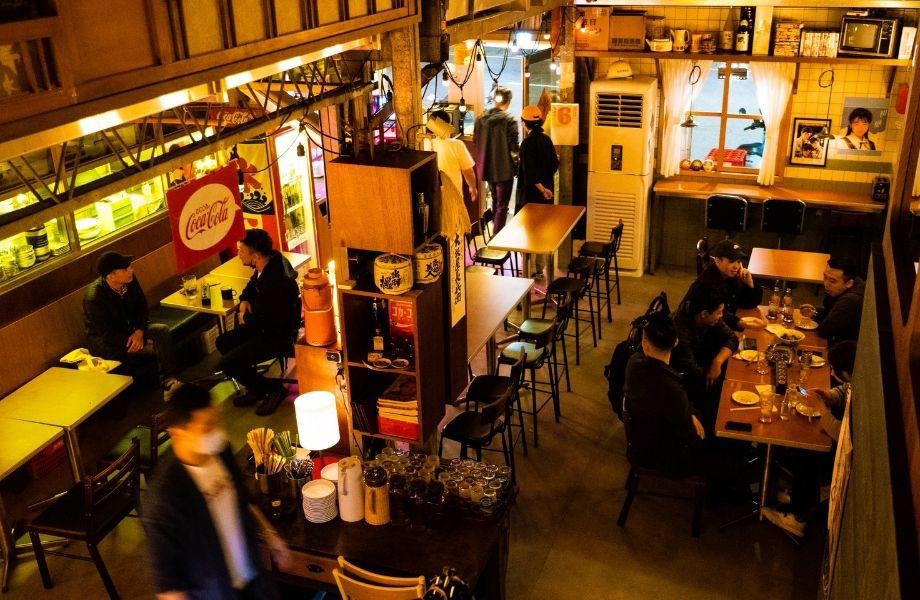
There is a particular register of Taiwanese eating that neither Michelin inspectors nor food-tourism platforms reliably capture: the neighbourhood specialist, open for over a decade, serving a focused repertoire to a crowd that already knows exactly what to order. Xinzhuang District in New Taipei has its share of these places, and Jhen Pin, at 97 Section 1 Fuxing Road, is one of the more instructive examples. The room is no-frills in the most literal sense: the emphasis is entirely on what arrives at the table, not on how the space frames it. That austerity is itself a signal. In Taiwan's braised-meat culture, stripped-back surroundings often correlate with focused sourcing and a cook who has spent years narrowing rather than expanding.
Duck-specialist shops occupy a specific lane in Taiwanese street-food culture, distinct from the broader lu wei (braised items) tradition and from the Cantonese roast-duck houses that operate at a different price and presentation tier. The leading of them tend to be single-focus operations where the owner's accumulated knowledge of the bird, its sourcing, and its preparation defines everything. Jhen Pin fits that pattern. The operation launched more than ten years ago as a second career, and the intervening years have produced original recipes rather than inherited ones, which places it in a slightly different category from shops that simply replicate a regional template.
The Arc of the Meal: From Soup to Sliced Duck
The menu at Jhen Pin organises itself around three signature preparations, and understanding how they sequence is the practical key to eating well here. The meal tends to open with the shredded ginger duck soup, a dish whose logic is rooted in Taiwanese postpartum cooking traditions where ginger, sesame oil, and rice wine are used to warm and restore. In a restaurant context, the soup functions as a palate-setter: the ginger cuts through the richness that the duck's fat will later introduce, and the broth carries the accumulated depth of a long simmer without becoming heavy. It is not a dramatic opening, but it is a structurally intelligent one.
The braised duck rice with fried shallot follows as the mid-register dish. Braised duck rice is a category that appears across New Taipei and greater Taipei with enough variation to reward comparison. The fried shallot component here is not decorative. In southern Taiwanese cooking, crispy shallot stirred into braised-meat rice adds a textural counterpoint and a sweetness that moderates the soy and five-spice base. The proportion matters, and it is the kind of detail that separates a recipe that has been worked over time from one assembled to a general formula.
Sliced duck platter is where Jhen Pin's sourcing decision becomes legible. The shop uses mule ducks from southern Taiwan, a crossbreed valued for its larger breast and more developed fat layer relative to standard Pekin ducks. The slow-cooking process, carried out over two hours, achieves a tenderness that straight roasting cannot. Served sliced, the platter allows you to assess the cook's control over temperature and timing in a way that a whole duck presented at the table does not. The juiciness that results from this method is a function of the fat rendering slowly through the muscle rather than seizing under high heat. It is the kind of preparation that reads simple but requires sustained attention over a long cooking window.
New Taipei's Specialist-Shop Tradition in Context
To understand where Jhen Pin sits in New Taipei's eating culture, it helps to map the city's food scene against Taiwan's broader dining geography. The haute end of Taiwanese cooking has migrated to platforms like JL Studio in Taichung and logy in Taipei, both of which have attracted international recognition for their approach to ingredient-led fine dining. Further afield, GEN in Kaohsiung, Zhu Xin Ju in Tainan, and Akame in Wutai Township demonstrate how deep the country's regional restaurant culture runs. But these venues operate at a different register entirely from the neighbourhood specialists that define daily eating in districts like Xinzhuang.
New Taipei's own food scene covers a wide range. Around Jhen Pin, the city offers the taro-ball specialists (A Gan Yi Taro Balls and A-ba's Taro Ball), the Shanghainese cooking at Amajia, the bak kut teh format at BAK KUT PAN, and the broader Taiwanese menu at Chi Yuan. Each occupies a distinct category. The duck specialist is its own lane, and Jhen Pin has held that lane consistently for over a decade, which in Taiwan's competitive food-shop market is itself a form of credential. Longevity in this context is not passive; it reflects a sustained local preference that has survived the opening of competitors.
For those planning wider exploration, our full New Taipei restaurants guide covers the city's range in more depth, and for those staying in the area, our New Taipei hotels guide maps accommodation options across the districts. The New Taipei bars guide, wineries guide, and experiences guide round out the picture for multi-day visits. At a different scale entirely, venues like Le Bernardin in New York City, Emeril's in New Orleans, and Volando Urai Spring Spa & Resort in Wulai District represent how differently 'restaurant destination' can be defined across contexts.
Planning Your Visit
Jhen Pin is located at 97, Section 1, Fuxing Road in Xinzhuang District, New Taipei. The shop operates as a working neighbourhood canteen rather than a destination dining address, which means the practical experience is calibrated accordingly: counter or simple table seating, direct ordering, no dress expectations. Phone and website details are not publicly listed in available records, and the most reliable approach for first-time visitors is to arrive during standard Taiwanese lunch or early dinner hours, when the full menu is available. Walk-in is the expected mode of arrival; this is not a reservation-format restaurant. For the most current operating hours and any seasonal closures, checking with local directories or the Xinzhuang District food community is advisable before a special trip from outside the area.
Similar Picks
A compact peer snapshot based on similar venues we track.
| Venue | Cuisine | Price | Notes |
|---|---|---|---|
| Jhen Pin | This venue | ||
| A Gan Yi Taro Balls | |||
| A-ba's Taro Ball | |||
| Amajia | |||
| BAK KUT PAN | |||
| Chi Yuan |
Continue exploring
More in New Taipei
Restaurants in New Taipei
Browse all →Bars in New Taipei
Browse all →Hotels in New Taipei
Browse all →Wineries in New Taipei
Browse all →At a Glance
- Rustic
- Casual Hangout
- Standalone