Our verdict
JB Ah Meng on Geylang Road operates in a register that Singapore's fine-dining corridor rarely touches: late-night, outdoor-style zichar cooked with the kind of consistency that earns repeat rankings.

Pearl is the En Primeur Club membership app, where members save venues, book tables and use the concierge.
The menu
What to order
- White Pepper Crab
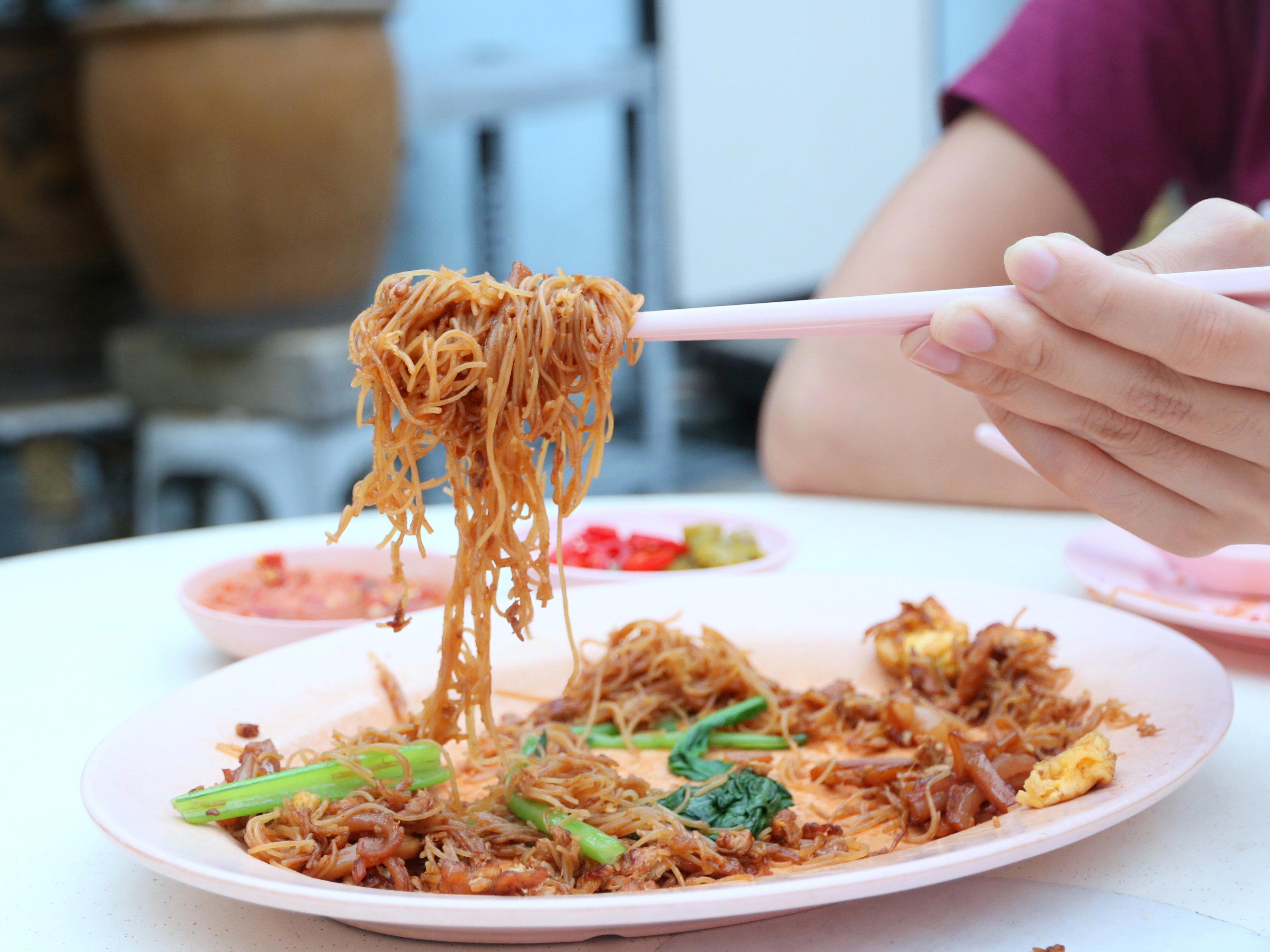
- JB San Luo Meehoon
- Fried Bee Hoon
- Garlic Chili Clams
- Prawn Paste Chicken
Geylang After Dark, and What It Means for Singapore Zichar
Geylang Road after nightfall operates by different rules than the polished restaurant corridors of Tanjong Pagar or the CBD. The street lamps are closer to orange than white, the traffic never fully quiets, and the cooking smells, fermented tofu, wok hei drifting through open fronts, shellfish hitting hot oil, arrive before any signage does. This is where Singapore's appetite for honest, technically demanding food has always been least filtered. JB Ah Meng at 534 Geylang Road sits inside that tradition: a zichar operation that opens at 5 pm and runs until 2 am seven nights a week, positioning itself in the part of the city where the serious eating happens late and without ceremony.
Zichar as a category deserves framing before any single venue gets attention. The format, loose Chinese home-cooking dishes, cooked to order, shared across a table, emerged in Singapore as a way for hawker-trained cooks to expand their repertoire beyond a single-dish stall. What distinguishes the better zichar houses from the generic is wok discipline: the ability to maintain high heat across a multi-dish order, to time disparate proteins and vegetables so that everything arrives at the right moment, and to build flavour through char rather than sauce volume. These are not decorative skills. They require the kind of repetition and heat management that sits closer to professional brigade cooking than casual street food. Keng Eng Kee Seafood represents a parallel point on that spectrum, with a similarly serious approach to zi char in a different part of the city.
Ranking Context: What the OAD Casual Asia List Actually Signals
Opinionated About Dining runs its lists on the basis of aggregated critic and enthusiast scores rather than institutional committee decisions, which makes its casual category a reasonable proxy for sustained peer respect rather than a single promotional moment. JB Ah Meng's trajectory on that list is direct evidence of consistency: ranked #5 in the Casual Asia category in 2023, #3 in 2024, and #3 again in 2025. A restaurant that holds a ranking across three consecutive years under the same scoring methodology is not riding novelty. It is cooking at a level that survives repeat scrutiny from people who eat widely and comparatively.
That ranking also places JB Ah Meng in a different competitive conversation than Singapore's Michelin-decorated dining rooms. The city's fine-dining tier, represented by European-focused operations like Zén at the four-symbol price point, Jaan by Kirk Westaway, or the long-established Les Amis, operates in a register defined by tasting menus, service protocols, and wine programs. The equally decorated Odette belongs to that same conversation. JB Ah Meng operates in none of those frames. Its recognition comes from a different axis entirely: the quality of execution within a format that has no safety net of elaborate plating or extended service to absorb an off night in the wok station.
Local Ingredients, the Wok, and the Logic of Singaporean Chinese Cooking
Singaporean Chinese cooking in the zichar tradition draws from a specific pantry shaped by the island's position at a maritime trade intersection: preserved soybean pastes, dried seafood, local shellfish, tropical aromatics like pandan and galangal sitting alongside classically Cantonese or Hokkien technique. The wok itself is the central instrument, and wok hei, the volatile, smoky quality produced when food meets a correctly seasoned wok at high enough temperature, is not reproducible by home equipment or induction burners. It requires industrial gas pressure and iron that has absorbed thousands of cooking cycles.
Under chef Wang Feng, JB Ah Meng applies this technique within a framework that the OAD ranking confirms is operating at a high level relative to its category peers across the broader Asia region. The cooking intelligence is in the execution, not the raw material price point.
This places JB Ah Meng in a meaningful conversation with high-technique casual operations internationally. The discipline required to hold a #3 position on a competitive Asia-wide list while running a late-night format in an open-air adjacent environment is a different kind of achievement than what a tasting-menu kitchen pursues, but it is not a lesser one. Diners who have eaten at Lazy Bear in San Francisco or Le Bernardin in New York, and who understand what sustained technical execution looks like across different formats, will find the comparison instructive rather than incongruous. Similar register-crossing observations apply to venues like Atomix in New York and Alinea in Chicago, where format and tradition define the execution standard separately from price tier. The Cantonese-influenced fine dining of 8½ Otto e Mezzo Bombana in Hong Kong and European institutions like Alain Ducasse at Louis XV or Alléno Paris au Pavillon Ledoyen occupy a different price register entirely, but they share the same underlying logic: reputation built on repeatability, not on single-visit spectacle. Emeril's in New Orleans offers another reference point for how regional cooking traditions sustain serious critical credibility outside the tasting-menu format.
The Geylang Positioning and What It Means Practically
Geylang is the kind of address that sorts diners quickly. The neighbourhood's mixed character, residential, commercial, historically associated with nightlife of various kinds, puts off visitors who have calibrated Singapore entirely around the Marina Bay corridor or the Orchard Road hotels. That sorting effect is not incidental. It means that the dining room at JB Ah Meng, on any given evening, skews toward people who came specifically for the food rather than for the surroundings.
The late operating window, 5 pm to 2 am daily, is a structural feature rather than an accident. Serious zichar eating in Singapore has always anchored to the hours when the city's restaurant-going crowd shifts from scheduled dinner reservations to something looser: post-work groups, families eating late, night-shift workers, food-focused travellers who have already done the tasting-menu circuit and want to eat something that tastes like the city rather than like an international fine-dining convention.
For broader planning in Singapore, EP Club maintains full guides to restaurants, hotels, bars, wineries, and experiences.
Know Before You Go
- Address: 534 Geylang Rd, Singapore 389490
- Hours: Monday to Sunday, 5 pm – 2 am
- Chef: Wang Feng
- Awards: Opinionated About Dining Casual Asia #3 (2024, 2025); #5 (2023)
- Booking: No booking method confirmed; walk-in format typical for this category
- Price: Not confirmed; zichar format typically operates at mid-range per-head spend
- Getting There: Geylang is accessible by MRT (Aljunied or Kallang stations) or taxi; the address sits along the main Geylang Road corridor
Frequently asked questions
Is JB Ah Meng suitable for children?
The format is a casual open-air zichar setup on Geylang Road, running 5pm to 2am daily. Families with older children eat here without issue, though the late-night hours and the neighbourhood's character mean it suits parents who already know Geylang. The shared-dish structure of Singaporean Chinese cooking, rice, a few plates per table, works well for groups of mixed ages.
How would you describe the vibe at JB Ah Meng?
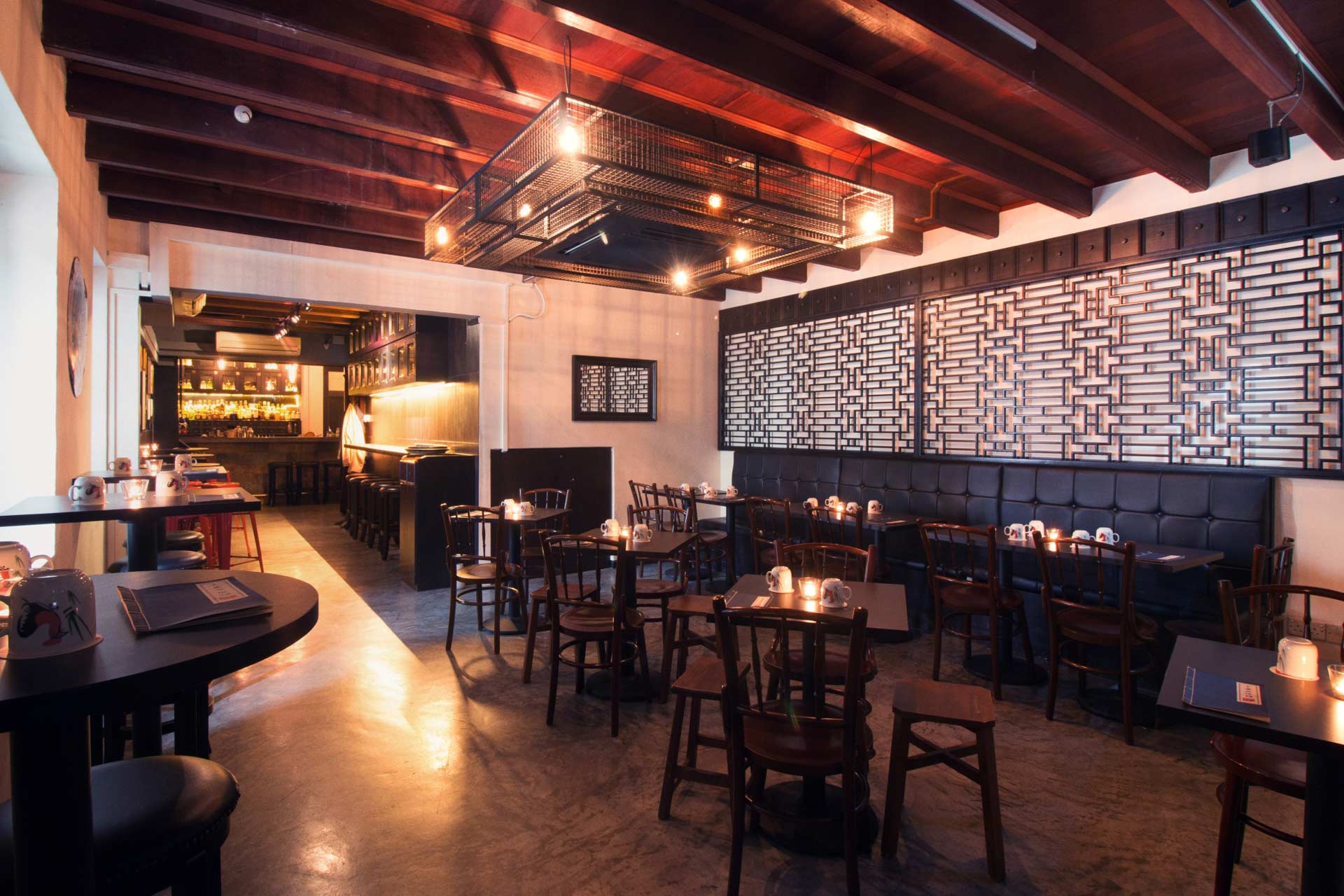
Loud, functional, and completely unpretentious, the kind of setup where the food does the talking and the OAD Casual Asia #3 ranking (2025) arrives as a surprise only to first-timers. Tables fill fast after 7pm, the wok smoke is part of the atmosphere, and the crowd runs from neighbourhood regulars to diners who have tracked the restaurant down specifically because of its awards.
What awards or recognition does JB Ah Meng have?
JB Ah Meng has received recognition including: Opinionated About Dining Casual in Asia Ranked #3 (2025); Opinionated About Dining Casual in Asia Ranked #3 (2024); Opinionated About Dining Casual in Asia Ranked #5 (2023).
What dish is JB Ah Meng famous for?
The OAD Casual Asia ranking, held at #3 in both 2024 and 2025, points to consistent execution across the menu rather than a single standout dish.
What kind of cuisine does JB Ah Meng serve?
Price and Positioning
| Venue | Cuisine | Price | Awards | Notes |
|---|---|---|---|---|
| JB Ah MengThis venue (the venue you are viewing) | Johor Bahru-Style Zi Char | $20–30 | Not listed | Not listed |
| Zén | Yakitori & Japanese Izakaya | $50–100 | Tabelog 100 #92 | European Contemporary |
| Jaan by Kirk Westaway | Modern British Fine Dining | $200–300 | 2 Michelin Stars · Michelin Guide 2 Stars | British Contemporary |
| Burnt Ends | Modern Australian Barbecue | $100–150 | 1 Michelin Star · Michelin Guide 1 Star | Australian Barbecue, Barbecue |
| Summer Pavilion | Michelin-Starred Cantonese | $100–150 | 1 Michelin Star · Michelin Guide 1 Star | Cantonese |
| Born | Contemporary Fusion Fine Dining | $200–300 | 1 Michelin Star · Michelin Guide 1 Star | Creative Cuisine, Innovative |
Recognition history
Dated appearances from independent guides and award organizations, with the underlying list record or original source where available.
Opinionated About Dining Casual in Asia Ranked #5
Opinionated About Dining
Full recognition history (4 entries)
Opinionated About Dining Casual in Asia Ranked #3
Opinionated About Dining
Opinionated About Dining Casual in Asia Ranked #3
Opinionated About Dining
Opinionated About Dining Casual in Asia Ranked #5
Opinionated About Dining