
1 Michelin Star
Our verdict
At 22 rue Cambacérès, Irwin Durand's seven-table room operates on the logic of classical French technique applied with contemporary restraint. Trained under Joël Robuchon, Bernard Loiseau, and Guy Savoy, Durand runs a seasonal surprise menu alongside executive chef Camille Larquemin and pastry chef Tessa Ponzo. The format is intimate and deliberate, placing it squarely in Paris's emerging tier of chef-driven rooms that trade scale for precision.

Pearl is the En Primeur Club membership app — saves, bookings, and concierge access live there. Same editors, same standards.
- Address
- 22 rue Cambacérès
- Phone
- +33 1 89 40 04 19
- Hours
- Mon–Fri 12–1:30 PM, 7:30–9:30 PMSat–Sun Closed
- Website
- irwin.paris
- Directions
- Get directions
- Booking
- Book on TheFork
The menu
What to order
- Vanilla dessert
- Langoustine with caviar
- Mullet
Seven Tables in the 8th: What Intimacy Actually Means in Paris Dining
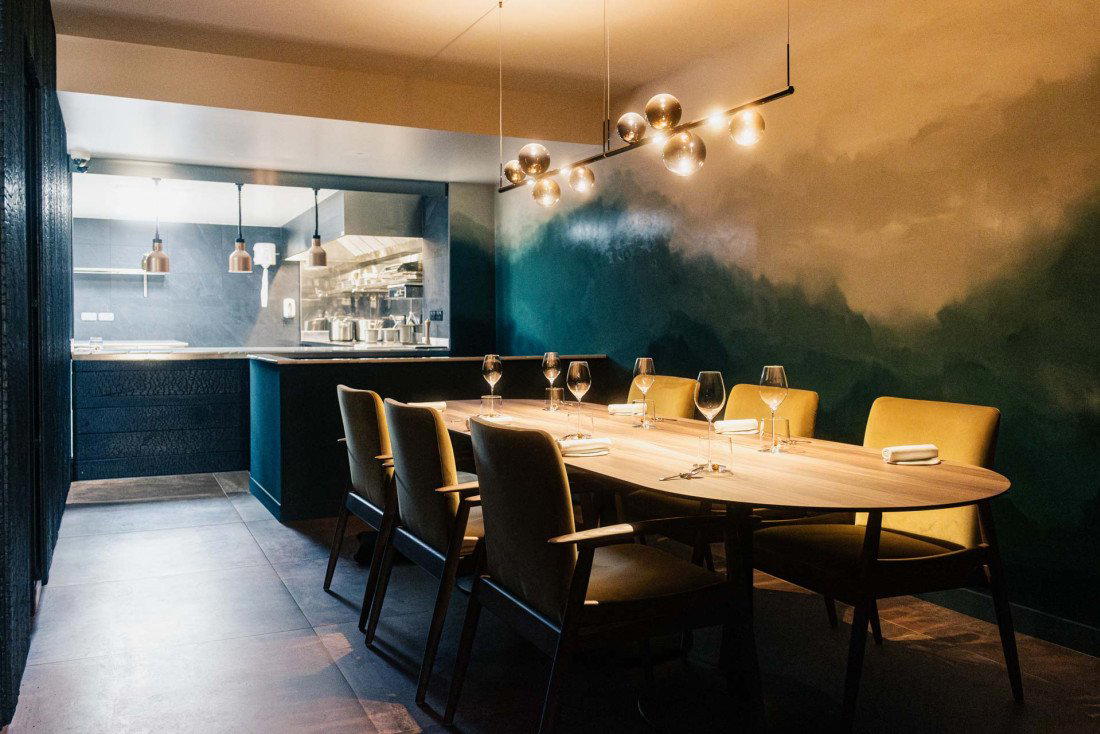
The 8th arrondissement has long been the address of institutional French grandeur. Le Cinq at the Four Seasons George V anchors one end of the spectrum; L'Ambroisie across the river sets another register entirely. But a quieter category has been taking shape in Paris over the past decade: small, chef-owned rooms where the kitchen-to-cover ratio inverts the economics of traditional grand dining, and where a handful of tables allows a level of menu responsiveness that larger establishments structurally cannot match. Irwin, at 22 rue Cambacérès, sits in this category. Seven tables and a table d'hôte counter define the room's capacity. That number is not incidental — it is the operating logic around which everything else is built.
The Formation Behind the Format
French haute cuisine has always been transmitted through lineage, and the kitchens a cook passes through function as a kind of professional genealogy. The training record attached to this address is unusually dense for a chef not yet 40. Irwin Durand worked at L'Oustau de Baumanière in Les Baux-de-Provence, a property with deep roots in the postwar French restaurant tradition that shares a broader regional conversation with places like Mirazur in Menton and Flocons de Sel in Megève. He then trained under Joël Robuchon and Bernard Loiseau, two figures who shaped the grammar of late-20th-century French cooking in fundamentally different ways — Robuchon through extreme technical refinement, Loiseau through reduction and clarity. After that came work under Alan Geaam, followed by positions within the Guy Savoy group: sous-chef at La Monnaie de Paris, then chef at Le Chiberta.
What this sequence produces is a cook formed by institutions that represent almost every register of French technique, luxury country house, Parisian palace dining, contemporary bistro, and mid-tier brasserie refinement. The opening of a room under his own name represents not a first act but a consolidation of those influences into a single, smaller format. The parallel with Troisgros in Ouches or Auberge de l'Ill in Illhaeusern, kitchens where generational depth becomes its own argument, operates at a very different scale, but the underlying logic of formation-as-credential applies across both ends of the spectrum.
The Menu as Method
Seasonal surprise menus have become a defining format in Paris's mid-to-upper tier over the past several years. The structure asks guests to trust the kitchen's market judgment rather than anchor to a fixed repertoire, which rewards regulars and concentrates the kitchen's buying power on whatever is in peak condition. At Irwin, this format is described as market-fresh-led, with dishes that demonstrate both technical range and a willingness to work across classical French references. The documented dishes from the current direction, a ballotine of meagre prepared grenobloise-style, veal sweetbreads with Meaux mustard and peas in reduced veal jus, and a vanilla and miso crémeux dessert, map a kitchen that is comfortable within classical French idioms while allowing precise departures. The grenobloise preparation for meagre is a move that works against fashionable novelty: it takes a less-prestige fish and applies a sauce format more commonly associated with skate or sole, which requires technical confidence rather than spectacle. The veal sweetbread dish sits in the tradition of organ-meat refinement that runs through the Robuchon and Loiseau lineages both. The miso crémeux signals where the menu allows itself more latitude.
The presence of two named collaborators matters here. Executive chef Camille Larquemin and pastry chef Tessa Ponzo each represent professional depth that shapes the consistency of the room's output. Paris's serious restaurant scene has increasingly produced kitchens where the founding chef's name carries the reputation while the day-to-day programme depends on a tight core team. The seven-table format makes that collaboration visible in a way that larger kitchens do not always permit.
Where This Sits in the Paris Conversation
Paris's restaurant tier between neighbourhood bistro and three-star institution has grown more structured and more competitive over the past decade. Kei represents one version of this middle register, fusing French technique with Japanese precision. Alléno Paris au Pavillon Ledoyen sits above it in formality and price. Arpège occupies a separate niche where ingredient sourcing has become the primary narrative. Irwin does not attempt to position against any of these rooms directly. This is a format that aligns more closely with what has happened at chef-driven counters in Tokyo or at the kind of small-producer-focused rooms emerging across provincial France, including conversations happening around places like Bras in Laguiole and Paul Bocuse's Auberge du Pont de Collonges. The international reference point for what this kind of classical-to-contemporary arc produces in a different context is Le Bernardin in New York, where French technique applied with discipline to premium protein has always been the argument.
Planning a Visit
The address, 22 rue Cambacérès, in the 8th, places Irwin within walking distance of the Madeleine and a short distance from the Golden Triangle, which means it sits in a neighbourhood densely populated with expense-account dining. The room itself reads differently from that context: the modern decor is described as elegant rather than grand, and the table d'hôte counter seats guests alongside the kitchen rather than at a distance from it. For anyone assembling a Paris programme, the full EP Club Paris restaurants guide maps the broader category landscape, while the Paris hotels guide, Paris bars guide, Paris wineries guide, and Paris experiences guide cover the surrounding programme. At seven tables, bookings should be secured well in advance; walk-ins are structurally unlikely at this cover count, particularly for dinner service. Those travelling from the United States who have previously visited Emeril's in New Orleans or similar chef-driven rooms will recognise the format logic, even if the idiom is distinctly Parisian.
Frequently asked questions
What part of town is Irwin in?
Irwin is located at 22 rue Cambacérès, Paris.
Is Irwin award-winning?
Irwin has received recognition including: Having trained at L'Oustau de Baumanière and under Joël Robuchon and Bernard Loiseau, Irwin Durand went on to hone his craft working for Alan Geaam and Guy Savoy (sous-chef at La Monnaie de Paris, chef at Le Chiberta). Not yet 40, he has us….
What do regulars order at Irwin?
There is no fixed à la carte at Irwin. The format is a seasonal surprise menu, so the kitchen determines what appears at the table based on market availability. Dishes from the current rotation have included ballotine of meagre prepared grenobloise-style, veal sweetbreads with Meaux mustard and peas, and a vanilla-miso crémeux to finish — though these shift with the season.
Do they take walk-ins at Irwin?
With seven tables and a table d'hôte counter, Irwin's total capacity is small enough that walk-in seats are rarely available, especially at dinner. Booking ahead is the practical approach for anyone planning around a specific date.
What's the standout thing about Irwin?
The density of Irwin Durand's formation is unusual for a room this size. He trained at L'Oustau de Baumanière and under both Joël Robuchon and Bernard Loiseau before serving as sous-chef at Guy Savoy's La Monnaie de Paris and chef at Le Chiberta — all before turning 40. That résumé is channelled into seven tables, not a brigade-heavy grand salle, and the kitchen is backed by executive chef Camille Larquemin and pastry chef Tessa Ponzo.
Is Irwin allergy-friendly?
The seasonal surprise menu format means the kitchen sets the dishes rather than guests selecting from a fixed list, which makes dietary restrictions worth communicating clearly at the time of booking. Given the small scale of the room — seven tables and a table d'hôte — the kitchen has the capacity for direct dialogue with guests, but specific accommodation policies are best confirmed directly with the restaurant at 22 rue Cambacérès.
How does Irwin Durand's training background shape the cooking at his Paris restaurant?
Durand's path through L'Oustau de Baumanière, Joël Robuchon, Bernard Loiseau, Alan Geaam, and Guy Savoy's group gives the kitchen at rue Cambacérès a technical base that reaches across classical French traditions rather than a single house style. That range shows up in the surprise menu format, where technique is applied to market ingredients without anchoring the room to any one chef's signature vocabulary. Executive chef Camille Larquemin and pastry chef Tessa Ponzo extend the collaborative approach beyond Durand alone.
City Peers
Comparable venues nearby, for context on price, style, and recognition.
| Venue | Cuisine | Price | Awards | Notes |
|---|---|---|---|---|
| IrwinThis venue — the venue you are viewing | Modern French Gastronomic | $100–150 | 1 Michelin Star | Not listed |
| Tracé | Modern French Fine Dining | $100–150 | Michelin Plate | 1st arrondissement |
| Au Trou Gascon | Modern Southwest French Bistro | $50–100 | Michelin Plate | Picpus |
| Nolinski | Traditional French Bourgeois Brasserie | $50–100 | Michelin Plate | Palais-Royal |
| Quelque Part | Modern French Seafood Tasting Menu | $150–200 | Michelin Plate | 9th arrondissement (9e) |
| La Table Cachée par Michel Roth | Modern French Fine Dining | $50–100 | Michelin Plate | Marais |
Recognition history
Dated appearances from independent guides and award organizations, with the underlying list record or original source where available.
Michelin 1 Star
Michelin
Continue exploring
More in Paris
Restaurants in Paris
Browse all →

Bars in Paris
Browse all →
Hotels in Paris
Browse all →
Details
- Intimate
- Elegant
- Modern
- Sophisticated
- Date Night
- Special Occasion
- Open Kitchen
- Private Dining
- Sommelier Led
- Local Sourcing
- Tasting Menu
- Prix Fixe
Current opening hours
- Monday
- 12–1:30 PM, 7:30–9:30 PM
- Tuesday
- 12–1:30 PM, 7:30–9:30 PM
- Wednesday
- 12–1:30 PM, 7:30–9:30 PM
- Thursday
- 12–1:30 PM, 7:30–9:30 PM
- Friday
- 12–1:30 PM, 7:30–9:30 PM
- Saturday
- Closed
- Sunday
- Closed
Hours can change for holidays and private events. Last verified .
Intimate and refined atmosphere with elegant modern decor, warm lighting, and a zen-like setting.