Il Baretto
Il Baretto occupies a quiet corner of Marylebone's Blandford Street, where the neighbourhood's Italian restaurant tradition runs deeper than most visitors realise. The address sits within walking distance of several of London's most established dining rooms, yet operates at a register that prioritises the rhythms of a proper trattoria over destination-dining spectacle.
- Address
- 45 Blandford Street, London, England, W1U 7HF, United Kingdom
- Phone
- 020 7486 7340
- Website
- ilbaretto.co.uk
- Directions
- Get directions
Marylebone's Italian Dining Tradition and Where Il Baretto Sits Within It
London's Italian restaurant scene has always had a split personality. On one side sit the grand, white-tablecloth institutions of Mayfair and Knightsbridge, where pasta functions as a prelude to a bill that rivals a flight to Milan. On the other sit the neighbourhood trattorias that survive on repeat custom, where regulars negotiate their way through an unwritten menu and the kitchen takes its cues from what arrived at market that morning. Marylebone, with its village-within-a-city character, has long supported the latter type. Blandford Street, where Il Baretto operates at number 45, sits in a cluster of streets where independent restaurants tend to outlast the trends that periodically sweep through larger postcodes.
For readers familiar with the multi-course sequencing of rooms like CORE by Clare Smyth or The Ledbury, Il Baretto operates from a different premise entirely. Where those kitchens build a narrative arc across eight or ten courses, the Italian trattoria format organises itself around a looser, more conversational progression: something to eat with a drink, an antipasto, a primo, a secondo, a dolce if the evening is going well. This is not a lesser format; it is a different contract between kitchen and guest, one that places the quality of individual components above the choreography of the whole. The success of any individual trattoria rests on how well it executes within that contract.
The Meal as It Tends to Unfold
The trattoria progression has a logic that Italian kitchens understand instinctively and that London rooms have historically struggled to replicate. The antipasto course in particular separates the committed Italian restaurants from those using the format as a loose frame. Properly executed, it sets the register for everything that follows: light enough not to crowd the primo, specific enough to signal the kitchen's sourcing priorities. Cured meats and bruschetta are placeholders; salt-cured fish, artichoke preparations, and regional cheese selections indicate a kitchen paying attention to the Italian larder rather than approximating it.
The primo is the structural centre of any credible Italian tasting sequence. Pasta and risotto courses carry more weight here than almost anywhere else in European cooking, because the format offers nowhere to hide: the quality of the pasta, the coherence of the sauce, and the timing of the service are all legible in a single plate. London's Italian rooms have improved markedly on this front over the past decade, partly driven by a generation of Italian-trained chefs returning to the city and partly by the increased availability of 00-grade and heritage grain flours that allow for more expressive fresh pasta work. In a neighbourhood room of this type, the prima piatti are the point at which reputation is built or lost.
Secondi in the Italian format tend to run simpler: a grilled fish, a piece of meat with minimal intervention, a contorno ordered separately. This restraint is philosophically Italian rather than logistically convenient. The idea is that the primo has done the creative work and the secondo exists to satisfy without overwhelming. It is a sequencing logic that contrasts sharply with the tasting menu formats practiced at rooms like Sketch, The Lecture Room and Library or Restaurant Gordon Ramsay, where each course is engineered to escalate in complexity and sensory load. Neither approach is superior; they answer different questions about what a meal is for.
Placing Il Baretto in Its comparable set
Marylebone has developed a recognisable tier of Italian and Mediterranean rooms that function as the neighbourhood's default fine-casual infrastructure: places where business lunches and anniversary dinners and post-theatre suppers can all be accommodated without the formality of a tasting menu or the chaos of a no-bookings queue. The restaurant's address on Blandford Street places it within that cohort. The competitive set at this level is not Dinner by Heston Blumenthal or the Michelin-starred rooms of the West End; it is the collection of independently run Italian rooms that have earned neighbourhood loyalty through consistency rather than critical attention. That is a harder thing to sustain than a single review cycle, and restaurants that manage it for more than a decade deserve the recognition that comes from simply still being there.
L'Enclume in Cartmel and Moor Hall in Aughton represent the destination-dining end of the British spectrum, while Hand and Flowers in Marlow and hide and fox in Saltwood sit in the fine-casual register that restaurant also occupies, albeit through a British rather than Italian lens. Internationally, the contrast is equally instructive: rooms like Le Bernardin in New York City or Atomix in New York City operate in a hyper-formalised multi-course idiom that is the structural opposite of what a neighbourhood trattoria is trying to do.
Planning Your Visit
The restaurant is located at 45 Blandford Street, London W1U 7HF, in the heart of Marylebone. The nearest Underground stations are Bond Street and Baker Street, both within a short walk. Dress: no confirmed dress code, but Marylebone's dining culture leans smart-casual; the room is unlikely to suit board shorts. Timing: weekday lunch tends to offer a quieter version of the same kitchen; evening service, particularly on Fridays, reflects the neighbourhood's after-work dining culture.
Recognition Snapshot
Comparable venues nearby, for context on price, style, and recognition.
| Venue | Cuisine | Price | Notes |
|---|---|---|---|
| Il BarettoThis venue — the venue you are viewing | Authentic Italian with Robata Grill | $$$ | Not listed |
| Alto by San Carlo | Italian Rooftop Tapas | $$$ | Marylebone |
| Quadrato | Modern Italian | $$$ | Limehouse |
| Caffè Concerto Northumberland Avenue | Traditional Italian with French Influences | $$$ | Covent Garden |
| Osteria Fiorentina | Authentic Tuscan | $$$ | West Brompton |
| Piccolino Tower Bridge | Authentic Regional Italian | $$$ | Borough |
Continue exploring
More in London
Restaurants in London
Browse all →
Bars in London
Browse all →
Hotels in London
Browse all →
Wineries in London
Browse all →
At a Glance
- Elegant
- Lively
- Cozy
- Group Dining
- Celebration
- Business Dinner
- Open Kitchen
- Extensive Wine List
- Craft Cocktails
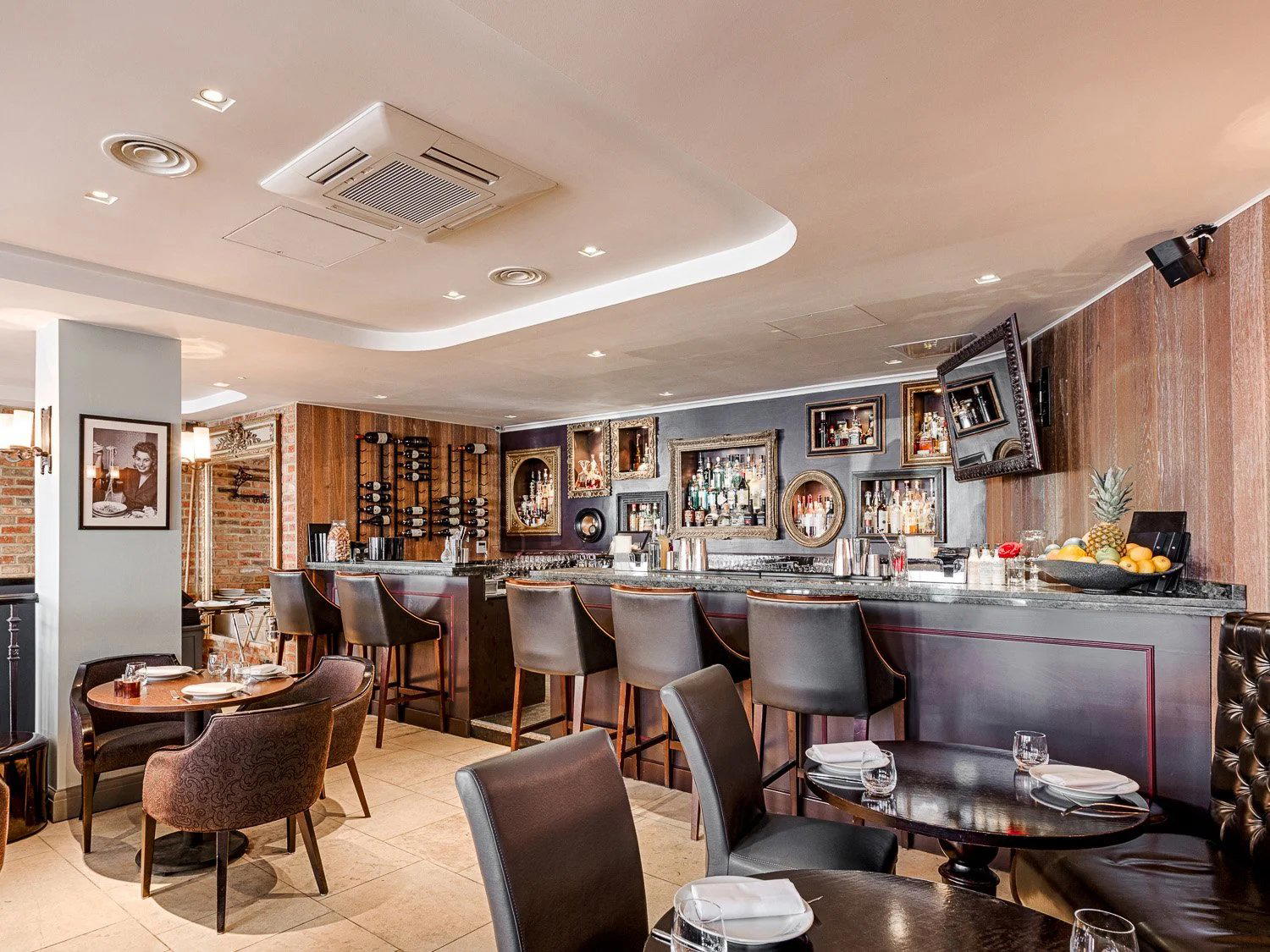
Cool, stylish basement dining room with mirrors, black and white prints, and a busy atmosphere.