
1 Michelin Star
Our verdict
IKO holds a Michelin star in Osnabrück, a city where fine dining operates far from the metropolitan spotlight. Chef Guillermo Gassan leads the kitchen at Stadtweg 38A, delivering modern cuisine that has earned consecutive Michelin recognition in 2024 and 2025.

Pearl is the En Primeur Club membership app — saves, bookings, and concierge access live there. Same editors, same standards.
- Address
- Stadtweg 38A, 49086 Osnabrück, Germany
- Phone
- +49 541 44018030
- Hours
- Mon–Tue ClosedWed–Sat 6 PM–12 AMSun Closed
- Website
- iko-restaurant.de
- Directions
- Get directions
- Booking
- Book on the venue's website
A Star in an Unexpected City
Osnabrück is not a city that appears on most fine-dining itineraries. It sits in Lower Saxony between Münster and Hannover, known more for its role in the Peace of Westphalia than for any contemporary culinary reputation. That is precisely what makes IKO's position in this city worth understanding. Michelin-starred restaurants do exist outside Germany's metropolitan centres — in Baiersbronn, in Piesport, in Perl — and their presence usually signals something specific: a kitchen serious enough to pull attention to a place the market would otherwise overlook. IKO has done that in Osnabrück for two consecutive years, holding its star through the 2024 and 2025 guides.
The address, Stadtweg 38A, places IKO away from the historic Altstadt, in a part of the city that does not carry the ambient prestige of a central square or a waterfront setting. There is no architectural theatre on approach. What that absence does is focus everything onto the dining room itself, and onto the cooking that has justified the recognition twice over.
Chef Guillermo Gassan and the Modern Cuisine Category
Modern cuisine, as a Michelin category, is a deliberately broad designation. It encompasses everything from Nordic minimalism to Franco-Japanese fusion, from ingredient-driven restraint to technically elaborate tasting menus. What it consistently implies is a kitchen not bound by a single national tradition, one drawing on multiple reference points to produce something with its own internal logic. At IKO, that logic runs through Chef Guillermo Gassan.
Gassan's name carries a Spanish register in a German city, a biographical detail that matters more for what it signals about culinary formation than for any geographic sentiment. Germany's starred kitchens have increasingly absorbed chefs trained across European traditions: JAN in Munich built its identity around Dutch-influenced thinking, and Victor's Fine Dining by Christian Bau in Perl draws openly on Franco-Asian frameworks. The cross-cultural formation of a chef in this tier is now less a novelty than a standard credential, but it still shapes how a kitchen reads its ingredients and structures its menus.
What consecutive Michelin recognition tells us about Gassan's approach is the most reliable data point available. The Michelin inspector's methodology rewards consistency above almost any other quality. A single star held across two guide cycles is not a moment of brilliance; it is evidence of a kitchen that performs at the same level regardless of which inspector visits, which evening of the week, or which position in the service. For a restaurant operating in a city without the competitive density of Hamburg or Munich, that consistency is harder to sustain, because there is no surrounding ecosystem of suppliers, sommeliers, and front-of-house talent to draw from. IKO has managed it.
Where IKO Sits in the German Fine-Dining Tier
Germany's Michelin map has a specific shape. Three-star kitchens concentrate in predictable locations: Aqua in Wolfsburg, Schwarzwaldstube in Baiersbronn. Two-star operations like CODA Dessert Dining in Berlin, Vendôme in Bergisch Gladbach, and ES:SENZ in Grassau tend to occupy either major urban centres or well-established culinary destinations. One-star restaurants are geographically more distributed, but even within that tier, there is a distinction between those operating in cities where fine dining is already institutionalised and those making the case in places where they are largely alone in doing so.
IKO belongs to the latter group. In Osnabrück, it operates without the reinforcement of a dozen peer restaurants at the same price point. The €€€€ positioning is a deliberate signal in this context: it sets IKO against national and international comparators rather than against the local market. Guests who book a table here are not choosing between several comparable options in the same postcode; they are making a specific decision to come to this address. That selective demand base tends to produce a more attentive dining room, where the ratio of committed diners to casual walk-ins skews toward the former.
For regional comparison, Restaurant Haerlin in Hamburg and Schanz in Piesport represent what sustained ambition looks like in different German contexts. IKO's trajectory follows a similar logic: careful kitchen work in a location that forces the food to do all the justification.
The Dining Room Experience
Negative outliers exist at any restaurant, and a body of reviews that size absorbs them without moving the needle significantly if the baseline is strong.
The modern cuisine format at this price level typically implies a tasting menu structure, or at minimum a menu that moves in courses with deliberate pacing. The format rewards guests who approach the evening without a fixed end time in mind. Booking ahead is advisable at any Michelin-starred restaurant in a city of this size, where seating capacity is unlikely to be large and the restaurant cannot rely on walk-in volume to fill gaps.
Osnabrück's Dining Scene Around IKO
Osnabrück's broader restaurant scene operates in distinct registers. Kesselhaus represents the creative end of the city's dining outside the starred tier, while Wilde Triebe takes a country cooking approach that positions itself in an entirely different part of the market. That isolation is both an advantage, in terms of audience exclusivity, and a constraint, in that it places the entire weight of the city's serious dining reputation on a single address.
For visitors building a full Osnabrück itinerary, the city's hospitality infrastructure extends beyond the restaurant. Our full Osnabrück hotels guide, our full Osnabrück bars guide, our full Osnabrück wineries guide, and our full Osnabrück experiences guide cover the surrounding options. Our full Osnabrück restaurants guide maps the wider dining picture across price points and styles.
International Reference Points
IKO's modern cuisine designation and its position within a broader European fine-dining conversation place it alongside restaurants operating at the intersection of technical precision and cross-cultural influence. Frantzén in Stockholm and FZN by Björn Frantzén in Dubai represent how chefs with a distinct culinary identity extend their reach across geographies. Gassan at IKO is operating at a different scale, but the underlying question, what does a kitchen with a clear point of view do in a city that lacks an established fine-dining culture to push against, is the same one those larger projects answer in their own contexts.
Planning a Visit
IKO is located at Stadtweg 38A, 49086 Osnabrück. The price range sits at €€€€, placing it at the upper end of what the city offers and at the entry point for serious fine dining nationally. Osnabrück is accessible by rail from major German cities, with Osnabrück Hauptbahnhof serving direct connections from Hamburg, Dortmund, and Hannover. For reservations, contacting the restaurant directly is the appropriate route; booking several weeks in advance is a reasonable precaution given the level of demand a starred restaurant at this price point typically manages in a mid-sized city.
Frequently asked questions
Does IKO work for a family meal?
IKO sits at €€€€ with consecutive Michelin stars in 2024 and 2025, which positions it as a destination for a deliberate dining occasion rather than a casual family outing. The modern cuisine format under Guillermo Gassan is designed for adult diners focused on the food. Families with older teenagers who take fine dining seriously would fit; those looking for a relaxed, flexible meal would not.
Is IKO better for a quiet night or a lively one?
IKO's Michelin-starred standing and €€€€ pricing in Osnabrück, a city without a high-tempo fine-dining circuit, point toward a room built for focused conversation and serious eating. Guillermo Gassan's modern cuisine format tends to reward attention rather than noise. If you want energy and a buzzing crowd, this is the wrong address; if you want to concentrate on the food, it is the right one.
What's IKO known for in terms of accolades?
IKO has received recognition including: Michelin 1 Star (2025); Michelin 1 Star (2024).
What's the signature dish at IKO?
What the two consecutive Michelin stars (2024, 2025) confirm is that Guillermo Gassan's modern cuisine output consistently meets the standard the Guide requires for recognition. The safest move is to check the venue's official channels at Stadtweg 38A, Osnabrück, and ask what is defining the current menu.
In Context: Similar Options
| Venue | Cuisine | Price | Awards |
|---|---|---|---|
| IKOThis venue — the venue you are viewing | Modern French-Japanese Fusion | $100–150 | 1 Michelin Star |
| Schwarzwaldstube | French, Classic French | Not listed | Michelin 3 Star |
| Aqua | Contemporary German, Italian/Japanese, Creative | Not listed | Michelin 3 Star |
| CODA Dessert Dining | Creative | Not listed | Michelin 2 Star |
| Tantris | Modern French, French Contemporary | Not listed | Michelin 2 Star |
| Vendôme | Modern European, Creative | Not listed | Michelin 2 Star |
Recognition history
Dated appearances from independent guides and award organizations, with the underlying list record or original source where available.
Michelin 1 Star
Michelin
Full recognition history (3 entries)
Michelin 1 Star
Michelin
Michelin 1 Star
Michelin
Continue exploring
More in Osnabrück
Restaurants in Osnabrück
Browse all →
Bars in Osnabrück
Browse all →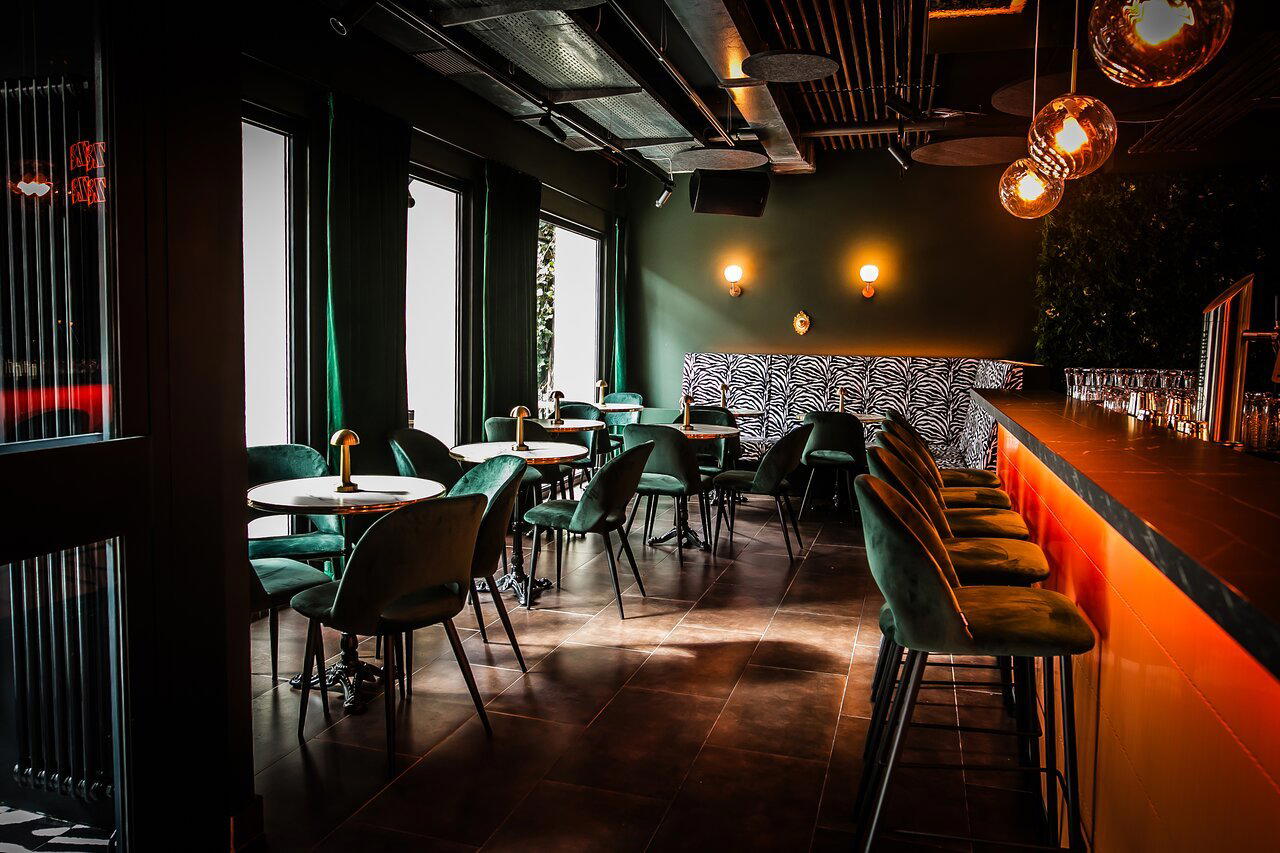
Details
- Modern
- Cozy
- Trendy
- Rustic
- Date Night
- Special Occasion
- Open Kitchen
- Garden
- Craft Cocktails
- Local Sourcing
- Garden
- Tasting Menu
- Set Menu
- Vegetarian Friendly
- Vegan Options
Current opening hours
- Monday
- Closed
- Tuesday
- Closed
- Wednesday
- 6 PM–12 AM
- Thursday
- 6 PM–12 AM
- Friday
- 6 PM–12 AM
- Saturday
- 6 PM–12 AM
- Sunday
- Closed
Hours can change for holidays and private events. Last verified .
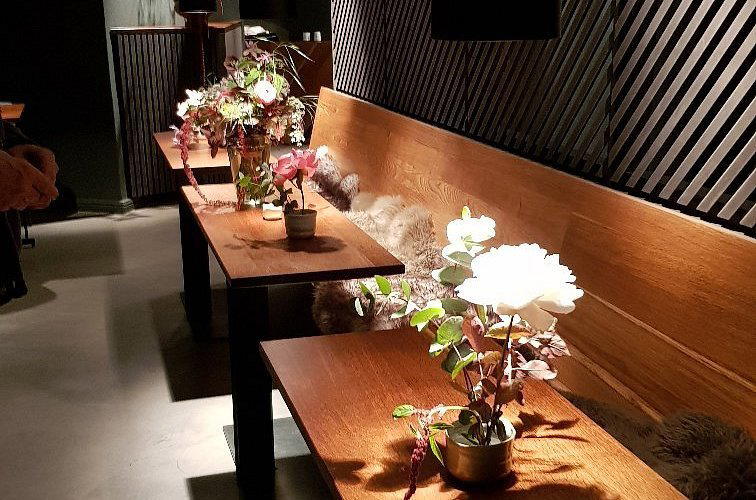
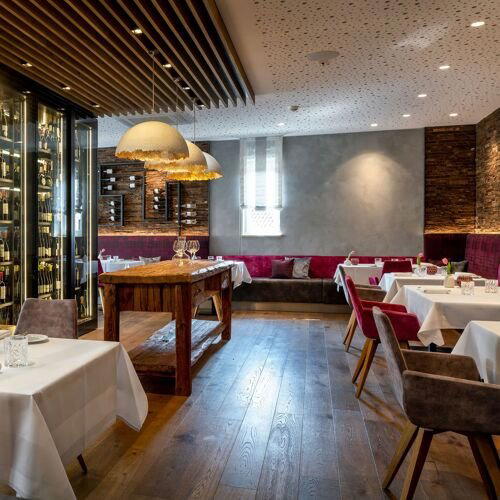
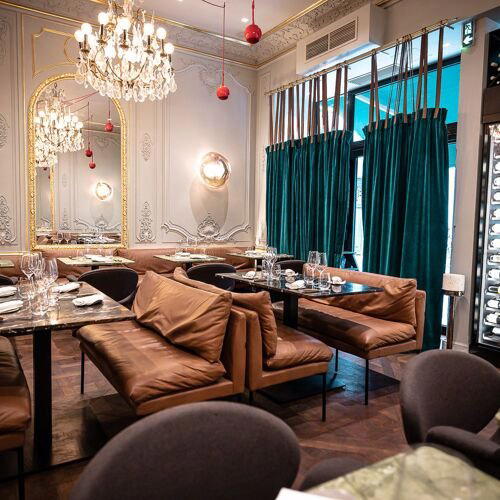
Sleek modern interior with trendy rustic feel, dark colors for feel-good atmosphere, open kitchen, and relaxed casual service.