Google: 4.8 · 848 reviews
.png)
A Michelin Plate-recognised modern cuisine address on Rue Brûlée in Honfleur's historic core, Huître Brûlée sits in the mid-range tier (€€) alongside peers like Entre Terre et Mer and SaQuaNa. With a 4.7 Google rating across 800 reviews, it earns consistent recognition within a town where the Norman coastal larder — oysters, cream, cider — sets the terms for any serious kitchen.
 Discover on Pearl
Pearl is the En Primeur Club membership app — saves, bookings, and concierge access live there. Same editors, same standards.
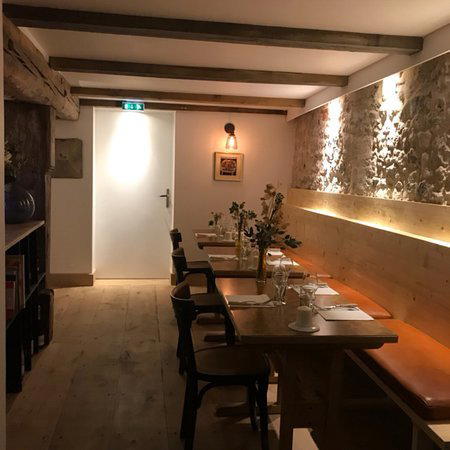
Honfleur's Old Town and the Weight of the Norman Table
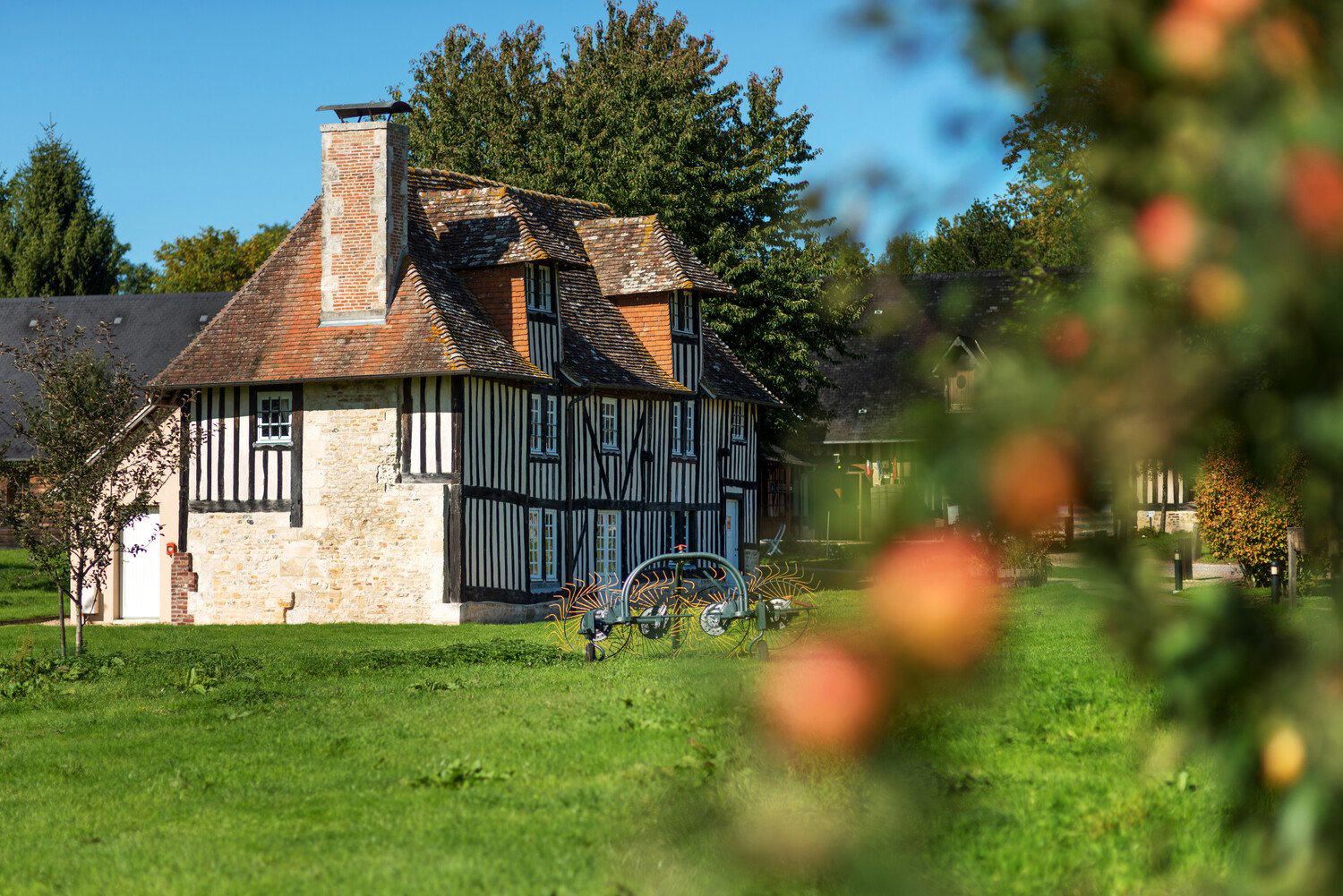
Approaching Honfleur's Vieux Bassin from the inland side, the streets narrow into a grid of half-timbered houses and salt-weathered stone that has barely changed in architectural terms since the 17th century. Rue Brûlée cuts through this fabric quietly, without the harbour-front foot traffic that funnels most visitors toward the tourist-facing brasseries. It is the kind of address where the room fills with locals as much as visitors, which in a town as photogenic and commercially saturated as Honfleur signals something worth noting.
Huître Brûlée operates at the €€ price point, placing it in a mid-range bracket that in Honfleur is genuinely competitive. The town's dining offer runs from tourist-trap moules-frites counters up to the formal heights of Entre Terre et Mer and L'Âtre (rated €€€), with La Fleur de Sel and Le Lingot also staking claims across the spectrum. At the €€ level, Huître Brûlée competes directly with Entre Terre et Mer and the creative French-leaning SaQuaNa. A Michelin Plate in both 2024 and 2025 — the guide's marker for kitchens producing food of good quality — puts Huître Brûlée in a defined tier: recognised but not yet starred, which at this price point and in this town is a meaningful position to hold.
The Norman Coastal Larder as Editorial Frame
Normandy's culinary identity is among the most coherent in France. The region is bounded by the Atlantic and the English Channel on one side and by dairy pasture and apple orchards on the other. What emerges from that geography is a cuisine built on fat, salt, and fermentation: cream sauces thickened without apology, Calvados as both cooking spirit and digestif, cider used where a Loire valley kitchen might reach for white wine, and oysters harvested from beds that stretch from the Bay of Seine westward toward Cancale. The Cotentin peninsula and the Calvados coast between them produce some of the most consistently regarded bivalves in France.
Honfleur sits at the mouth of the Seine estuary, which gives its kitchens access to both the Norman dairy interior and the full coastal larder. The name Huître Brûlée is itself a culinary signal: huître is oyster, brûlée implies heat and caramelisation. In a region where oysters are traditionally served raw on crushed ice with a mignonette, a kitchen willing to apply fire to the shell is already staking out a position relative to classical Norman convention. Modern cuisine as a classification, which the venue carries in its category designation, suggests technique applied in dialogue with tradition rather than in opposition to it.
That positioning fits a pattern visible across French regional dining over the past decade, where mid-range addresses in historically rich food towns have found success by working the tension between regional identity and contemporary method. Flocons de Sel in Megève and Bras in Laguiole operate at far higher price and recognition tiers, but both demonstrate the same underlying logic: that the most persuasive modern French restaurants are those that make the regional larder the subject of the cooking rather than its backdrop. At the Michelin Plate level, Huître Brûlée appears to be working within that tradition at an accessible price.
Where Huître Brûlée Sits in the Honfleur Scene
Honfleur's dining ecology rewards some examination. The harbour front draws volume; the streets behind it tend to concentrate the more considered restaurants. L'Endroit and Le Lingot both operate within the same general neighbourhood logic. The town is small enough that no restaurant is more than a short walk from the Vieux Bassin, but address still functions as a proxy for intent: Rue Brûlée is not a through-route for harbour-gazing tourists, and a kitchen on it has self-selected away from casual passing trade.
The 4.7 Google rating across 800 reviews is a useful data point here. In a town with Honfleur's tourist volume , the Vieux Bassin is one of the most visited harbour scenes in northern France , sustaining that average across that many reviews suggests genuine consistency rather than a lucky run of early enthusiasts. By comparison, starred establishments in France's provincial towns sometimes carry lower volume ratings precisely because their clientele is more self-selecting and more likely to calibrate expectations carefully before visiting. At Huître Brûlée, the breadth of the sample adds weight to the score.
For context on the broader French modern cuisine conversation, readers tracking multi-starred kitchens can look at Alléno Paris au Pavillon Ledoyen, Mirazur in Menton, or Troisgros - Le Bois sans Feuilles in Ouches , addresses where the Michelin conversation operates at a different register. For Nordic-inflected modern cuisine operating internationally, Frantzén in Stockholm and FZN by Björn Frantzén in Dubai represent how the modern cuisine category has spread beyond its French roots. Auberge de l'Ill in Illhaeusern sits closer to Huître Brûlée's regional French identity, though at a different tier of age and recognition.
Within Honfleur specifically, the mid-range tier is where most diners will make their choice. Entre Terre et Mer occupies the same price band and shares the modern cuisine classification, making it the most direct peer. SaQuaNa, which leans into creative contemporary French cooking, offers a slightly different register at an equivalent spend. The decision between them is less about price than about what kind of cooking experience fits the evening.
Planning a Visit
Huître Brûlée is at 8 Rue Brûlée, 14600 Honfleur. The €€ pricing puts it in the range where a full meal with wine should remain within reach of most travellers who have already committed to visiting Normandy's premium coastal towns. Honfleur is most visited between April and October, when the harbour light attracts both tourists and weekend visitors from Paris, roughly two hours by road. Given the Michelin Plate recognition and the volume of positive reviews, reservations in peak season are advisable well in advance; tables at recognised addresses in small Norman towns fill faster than their low-profile streets might suggest. For accommodation, transport, and wider orientation, our full Honfleur hotels guide covers the town's lodging options, and our full Honfleur restaurants guide maps the full dining spectrum. Our full Honfleur bars guide, wineries guide, and experiences guide round out the planning picture for a longer stay in the Calvados coast.
Price and Recognition
A quick peer reference to anchor this venue in its category.
| Venue | Price | Awards | Notes |
|---|---|---|---|
| Huître Brûlée | €€ | Michelin Plate (2025); Michelin Plate (2024) | This venue |
| SaQuaNa | €€ | Contemporary French, Creative, €€ | |
| Les Impressionnistes - La Ferme Saint-Siméon | €€€€ | Modern Cuisine, €€€€ | |
| L'Âtre | €€€ | Modern Cuisine, €€€ | |
| Le Breard | |||
| Entre Terre et Mer | €€ | Modern Cuisine, €€ |
Continue exploring
More in Honfleur
Restaurants in Honfleur
Browse all →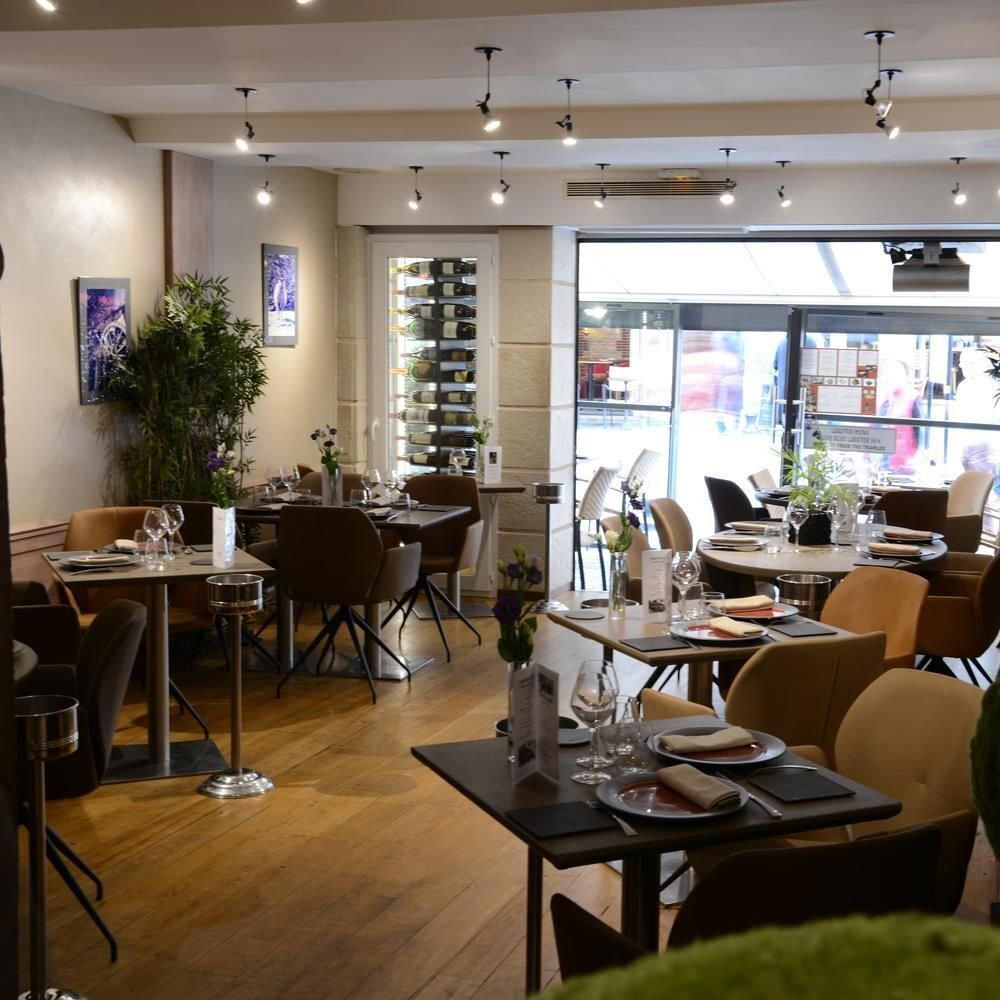
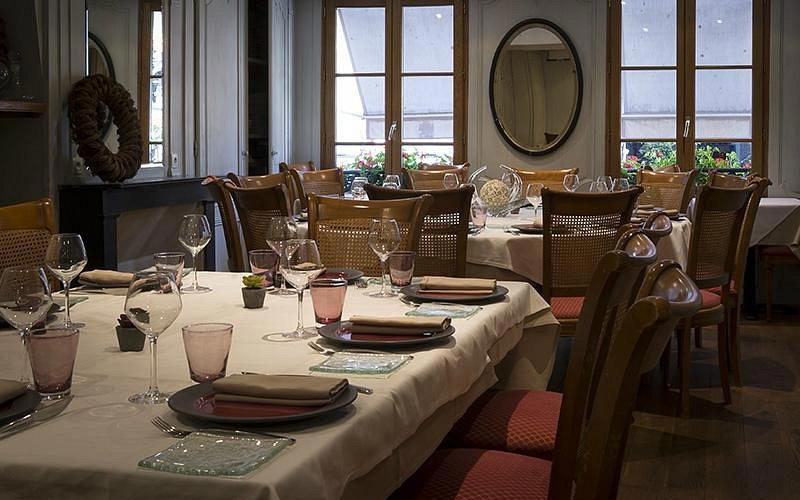
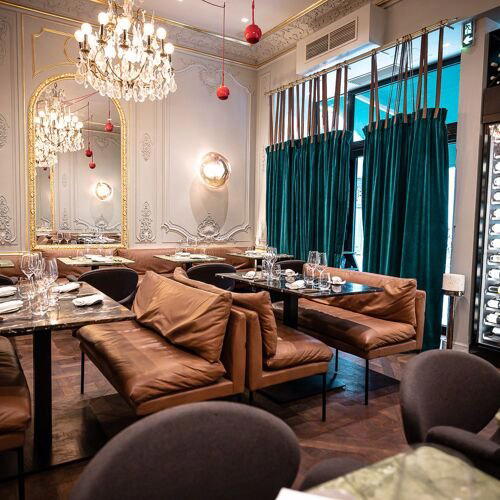
Bars in Honfleur
Browse all →
Hotels in Honfleur
Browse all →
At a Glance
- Cozy
- Elegant
- Intimate
- Rustic
- Date Night
- Special Occasion
- Terrace
- Natural Wine
- Local Sourcing
- Sustainable Seafood
Cozy and warm with natural light from a large verrière, elegant simplicity, and a charming patio for pleasant outdoor dining.