
Michelin Plate
Our verdict
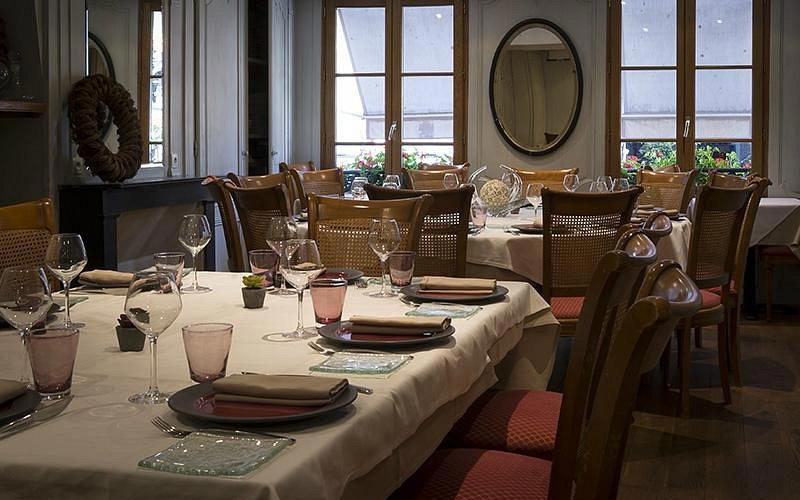
A Michelin Plate-recognised address on Place Hamelin, Entre Terre et Mer sits in the middle tier of Honfleur's dining scene, where the cuisine draws on the town's dual identity: Norman agricultural land to one side, the Channel estuary to the other. Priced at the accessible end of the local spectrum, it offers a practical entry point into the region's produce-led cooking without the formality of the higher-end tables nearby.

Pearl is the En Primeur Club membership app, where members save venues, book tables and use the concierge.
The menu
What to order
- Saint-Jacques
- Huître de Veules les Roses
- Langoustine
Where the Estuary Ends and the Bocage Begins
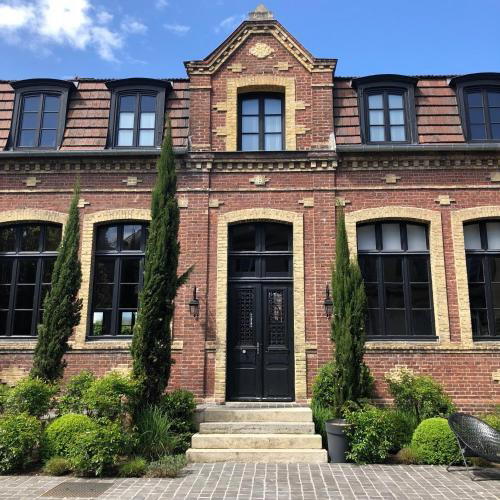
Honfleur's Place Hamelin sits a short walk from the Vieux-Bassin, far enough from the harbour's most trafficked restaurants to feel like a considered choice rather than an opportunistic one. The square itself is quieter than the quayside, fewer menus posted in English, fewer queue markers on the pavement. At number 12, Entre Terre et Mer occupies that particular Normandy-restaurant register: modest frontage, the kind of room where the light shifts noticeably between lunch and dinner, and a name that announces its culinary logic before you've sat down.
The name, Between Land and Sea, is a working brief rather than a poetic gesture. Normandy's cooking has always been structured around this dual inheritance: Channel fish and shellfish on one axis, cream, butter, apple orchards, and bocage-raised livestock on the other. In Honfleur specifically, that duality is more compressed than almost anywhere else in the region; the estuary of the Seine meets the sea here, which means the tidal range of available seafood is wider than the Atlantic coast further west, while the Pays d'Auge hinterland, arguably Normandy's most productive agricultural interior, begins almost immediately inland. A kitchen that takes both seriously is working with one of the densest ingredient maps in northern France.
Ingredient Geography and What It Means on the Plate
The terre-et-mer framing is common enough in Norman restaurants that it risks becoming shorthand rather than practice. The distinction lies in how rigorously a kitchen actually sources from both axes and how much the menu shifts with the availability of each. Honfleur sits at the mouth of the Seine estuary, which historically made it a natural landing point for Channel sole, turbot, and bar (sea bass), as well as the flat oysters and mussels cultivated along the Calvados coast. The oyster beds around Saint-Vaast-la-Hougue and the mussel farms of the Cotentin peninsula are within supplier reach; so are the apple producers and dairy farms of the Pays d'Auge, whose AOC-protected Camembert, Livarot, and Pont-l'Évêque cheeses represent centuries of accumulated terroir logic.
A kitchen drawing honestly from this geography doesn't need to strain for ambition. The ingredients carry density on their own. The question is one of edit: what arrives at the table should reflect the current moment in the local supply chain, not a fixed menu printed six months ago. At the price point Entre Terre et Mer occupies, the €€ tier, consistent with accessible mid-range in a Norman town with strong tourist trade, the expectation is that produce quality does the heavy lifting, with technique present but not performative.
For a sharper view of where this kitchen sits relative to its immediate neighbours, Huître Brûlée operates at the same price bracket and leans more aggressively into raw and simply-prepared shellfish, while L'Âtre at €€€ represents the next tier up, more formal service, higher-margin menus, still within the modern Norman idiom. La Fleur de Sel and Le Lingot both offer reference points for how the town handles the mid-range-to-premium transition in cooking style.
Michelin Plate Recognition in Context
Entre Terre et Mer holds a Michelin Plate for both 2024 and 2025, a designation that in current Michelin usage indicates food quality worth noting, distinct from Bib Gourmand (value-for-money metric) or a star (exceptional cooking). The Plate is the inspectors' signal that the kitchen is producing food that warrants attention without yet meeting the threshold of star candidacy. In a town where the full dining spectrum runs from casual harbour-side crêperies up to the Relais & Châteaux-associated formality of La Ferme Saint-Siméon's Les Impressionnistes at €€€€, holding a Plate at the €€ level is a useful positioning signal: this is the accessible end of the town's quality tier, not merely a convenient option.
For reference on what Michelin recognition means across different registers of French dining, the spread is wide. Alléno Paris au Pavillon Ledoyen in Paris, Mirazur in Menton, Troisgros - Le Bois sans Feuilles in Ouches, Auberge de l'Ill in Illhaeusern, and Bras in Laguiole all sit at the top of the star hierarchy in regional French cooking. Flocons de Sel in Megève is another reference point for what the guide treats as summit-level alpine French cuisine. Entre Terre et Mer operates far below that ceiling, but the Plate places it clearly above the undifferentiated middle of Honfleur's tourist-facing restaurant market.
Honfleur's Dining Map and Where This Fits
Honfleur is a small town with a disproportionate number of restaurant covers relative to its resident population, a function of its status as one of Normandy's most-visited harbour towns and its proximity, roughly two hours from Paris, to a weekend-trip market that has supported a more sophisticated dining tier than comparable coastal towns. L'Endroit represents another strand of the local scene; SaQuaNa at €€ is among the addresses operating the creative contemporary French register at accessible price points. The town's dining quality is uneven, there is a long tail of harbour-front restaurants running on tourist throughput rather than kitchen discipline, which means that Michelin attention at any level functions as a useful filter.
For visitors mapping the town across multiple meals, Entre Terre et Mer at Place Hamelin fits the lunch-or-relaxed-dinner slot: accessible pricing, produce-led cooking within the Norman tradition, and Michelin-validated quality control. It is a different proposition to the higher-formality tables, and an honest one. For modern cuisine comparisons outside Normandy's geography, Frantzén in Stockholm and FZN by Björn Frantzén in Dubai show how the modern cuisine category operates at the extreme formal end; Entre Terre et Mer's version of the same label is grounded in regional produce and local pricing rather than tasting-menu architecture.
Planning a Visit
Entre Terre et Mer sits at 12 Place Hamelin, Honfleur. The €€ price range makes it one of the more accessible Michelin-noted addresses in town, suited to a meal that doesn't require advance budgeting the way the €€€ and €€€€ tables do.
For a full picture of eating, drinking, and staying in the town, see our full Honfleur restaurants guide, our full Honfleur hotels guide, our full Honfleur bars guide, our full Honfleur wineries guide, and our full Honfleur experiences guide.
Frequently asked questions
Does Entre Terre et Mer have a Michelin star or similar recognition?
Entre Terre et Mer has received recognition including: Michelin Plate (2025); Michelin Plate (2024).
What should I order at Entre Terre et Mer?
The restaurant's name sets the ordering logic: Norman kitchens at this level tend to split their strength between locally landed seafood and produce from the Bocage interior. At a €€ price point with two consecutive Michelin Plate recognitions, the kitchen is committing to both sides of that equation rather than treating one as decoration. Ask the room which is cooking better on the day, staff at Michelin-noted addresses in small Norman towns usually answer that question directly.
What part of town is Entre Terre et Mer in?
Entre Terre et Mer is located at 12 Pl. Hamelin, 14600 Honfleur, France, Honfleur.
How hard is it to get a table at Entre Terre et Mer?
Honfleur draws significant visitor volume relative to its size, and a Michelin Plate in 2024 and 2025 puts Entre Terre et Mer on the shortlist for many itineraries passing through. At the €€ price range it is accessible enough to fill quickly in peak summer weeks. Booking at least a few days ahead is advisable from late spring through early autumn; the shoulder months are more forgiving.
How It Stacks Up
A quick peer list to put this venue’s basics in context.
| Venue | Cuisine | Price | Awards | Notes |
|---|---|---|---|---|
| Entre Terre et MerThis venue (the venue you are viewing) | Norman French Land and Sea | $50–100 | Michelin Plate | Not listed |
| SaQuaNa | Modern Fusion with Japanese Influences | $50–100 | Michelin Bib Gourmand | Contemporary French, Creative |
| Les Impressionnistes - La Ferme Saint-Siméon | Refined Norman French Fine Dining | $150–200 | Michelin Plate · Relais Chateaux Award | Modern Cuisine |
| L'Âtre | Modern French Norman Gastronomy | Not listed | Michelin Plate | Modern Cuisine |
| Le Breard | Modern French Fine Dining | Not listed | Not listed | Not listed |
| Huître Brûlée | Modern French Seafood | $50–100 | Michelin Plate | Modern Cuisine |
Recognition history
Dated appearances from independent guides and award organizations, with the underlying list record or original source where available.
Michelin Plate
Michelin
Full recognition history (3 entries)
Michelin Plate
Michelin
Michelin Plate
Michelin
Continue exploring
More in Honfleur
Restaurants in Honfleur
All restaurants in Honfleur →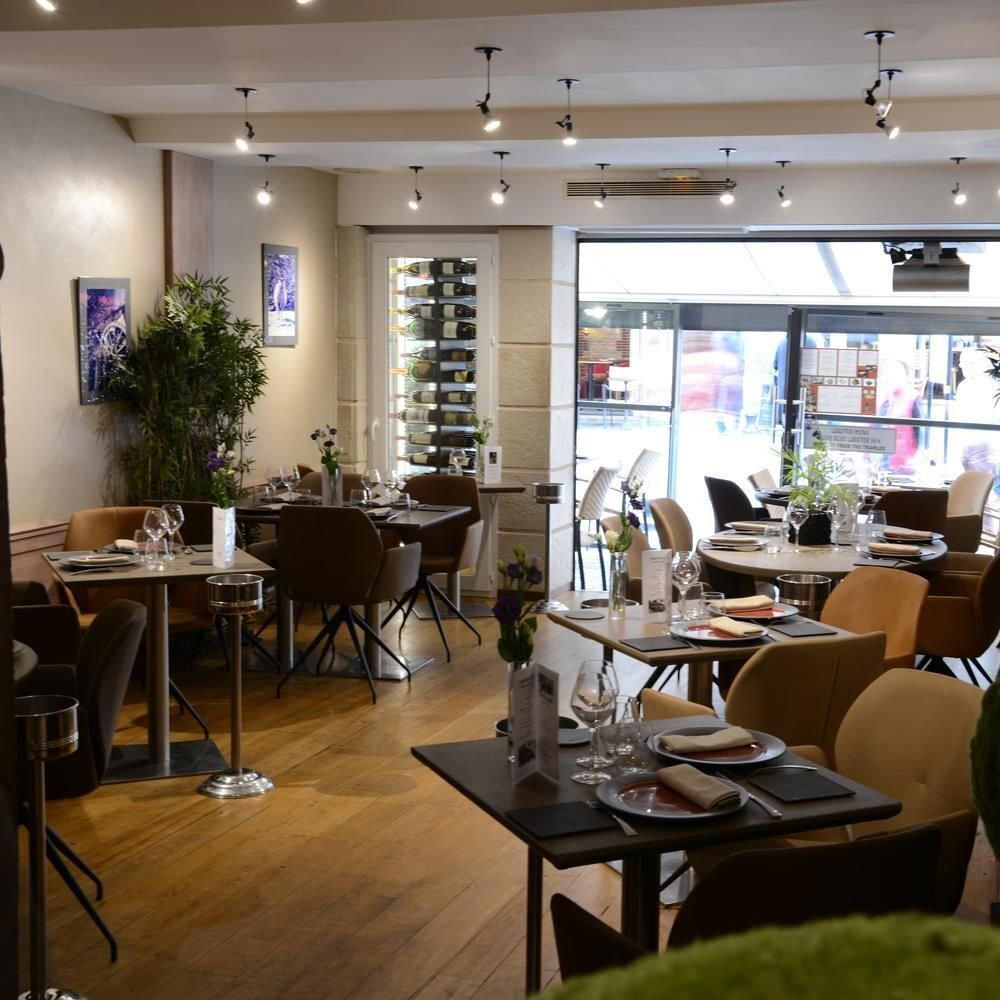
Entre Terre et Mer
The wine
- Wine program
- Deep wine list
- Extensive wine list
Details
- Rustic
- Cozy
- Elegant
- Classic
- Date Night
- Special Occasion
- Business Dinner
- Group Dining
- Terrace
- Historic Building
- Private Dining
- Extensive Wine List
- Local Sourcing
- Sustainable Seafood
- Street Scene
- A La Carte
- Prix Fixe
Current opening hours
- Monday
- 12:15–2:30 PM, 7:15–10 PM
- Tuesday
- 12:15–2:30 PM, 7:15–10 PM
- Wednesday
- 12:15–2:30 PM, 7:15–10 PM
- Thursday
- 12:15–2:30 PM, 7:15–10 PM
- Friday
- 12:15–2:30 PM, 7:15–10 PM
- Saturday
- 12:15–2:30 PM, 7:15–10 PM
- Sunday
- 12:15–2:30 PM, 7:15–10 PM
Hours can change for holidays and private events. Hours as of .
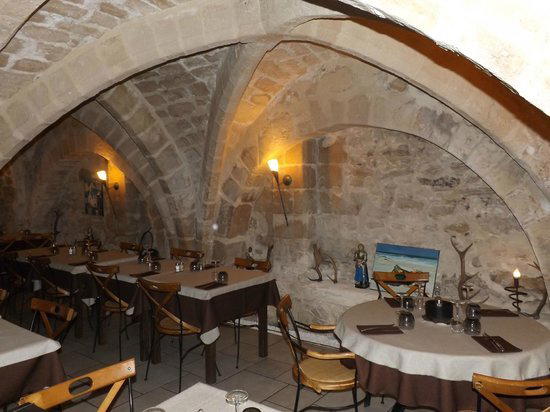
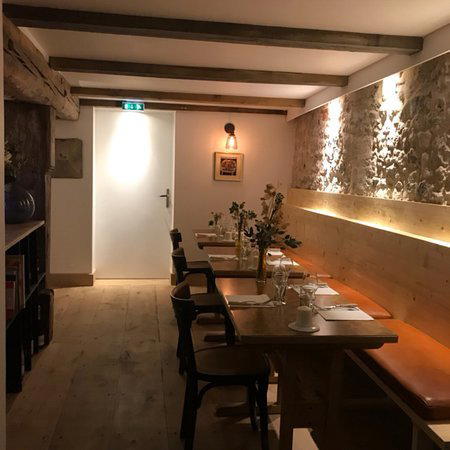
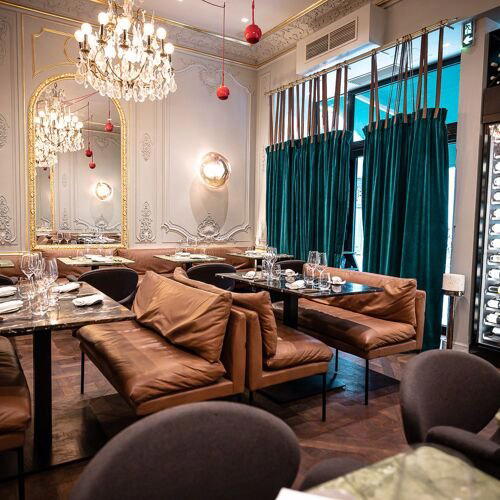
Néo-rustic with exposed beams and stones, warm parquet flooring, soft lighting in beige-rose tones, and a sunny terrace overlooking the old town.