Hotel Kyrimai

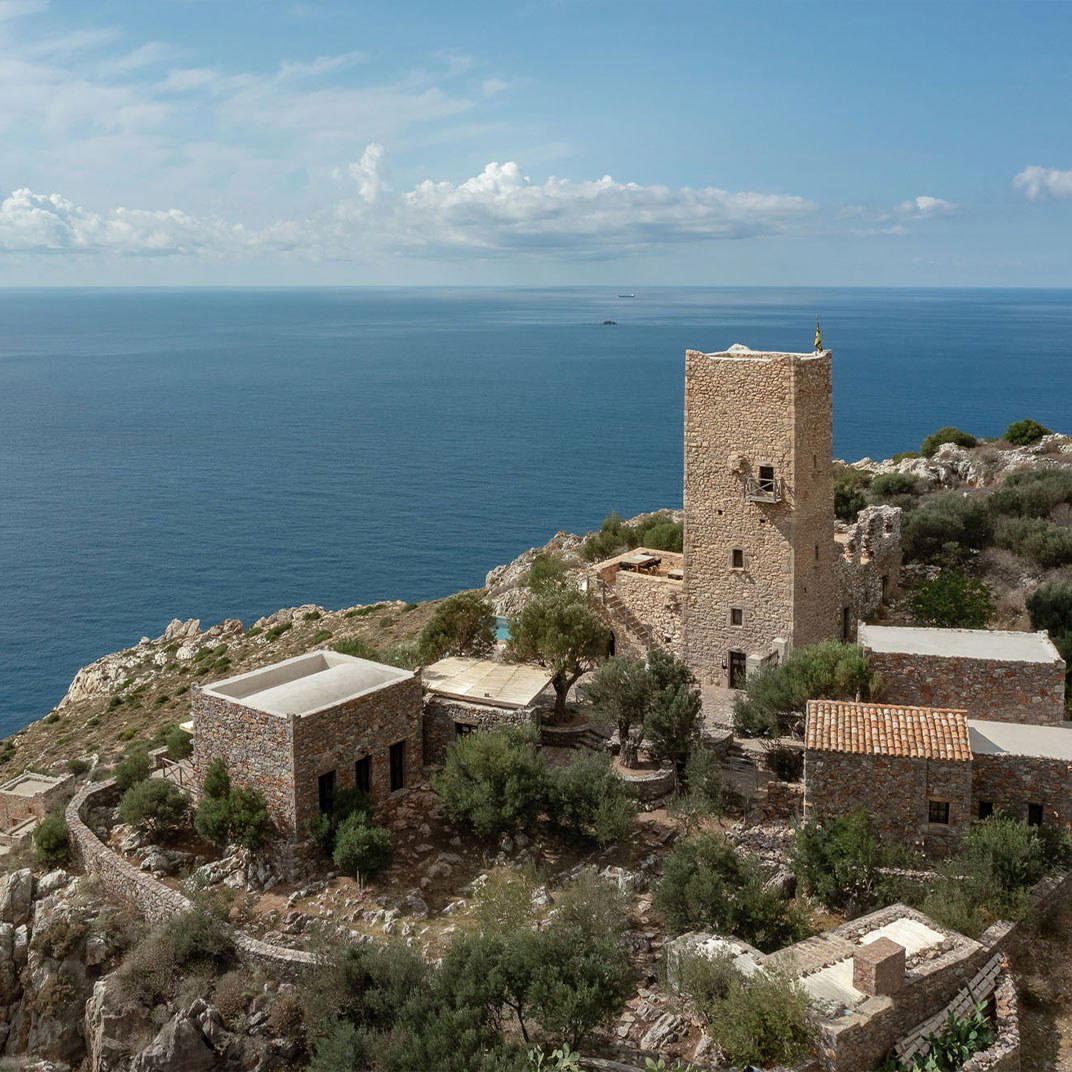
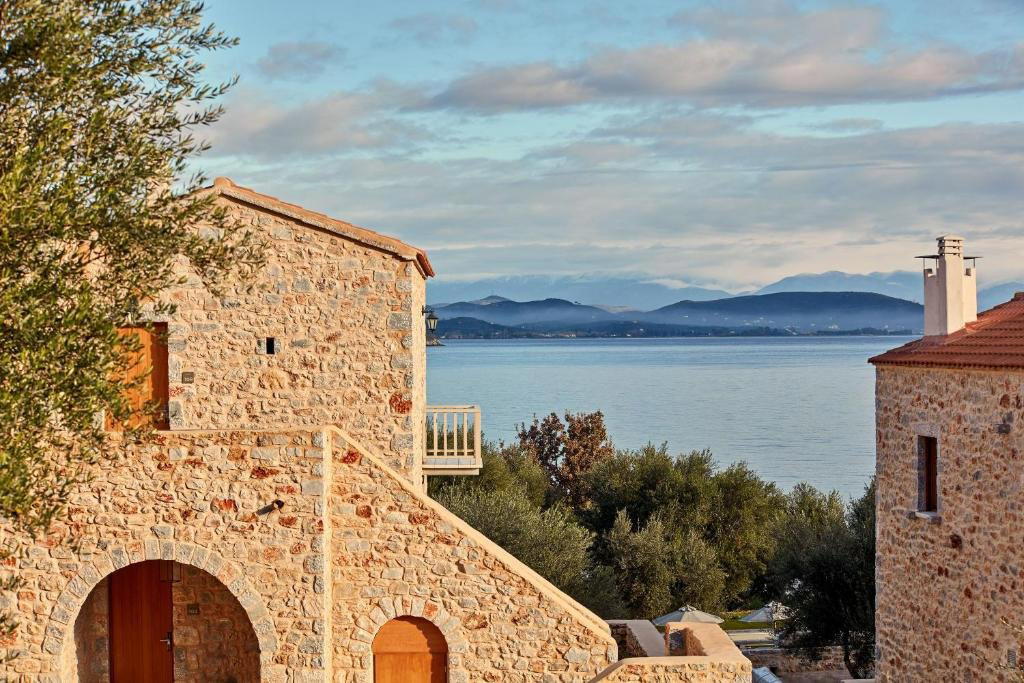
At the southern tip of the Mani peninsula, Hotel Kyrimai occupies a converted 19th-century sea captain's mansion in Gerolimenas, where the kitchen draws on one of Greece's most isolated and ingredient-driven regional traditions. The setting, a small harbour village largely unchanged by mass tourism, gives the food a context that purpose-built resort cooking rarely achieves. For travellers seeking the Peloponnese at its most unmediated, this is a serious reference point.
Pearl is the En Primeur Club membership app — saves, bookings, and concierge access live there. Same editors, same standards.
- Address
- Ν. Λακωνίας, Gerolimenas 230 62, Greece
- Phone
- +30 2733 054288
- Website
- kyrimai.gr
- Directions
- Get directions
 Saves & bookings on Pearl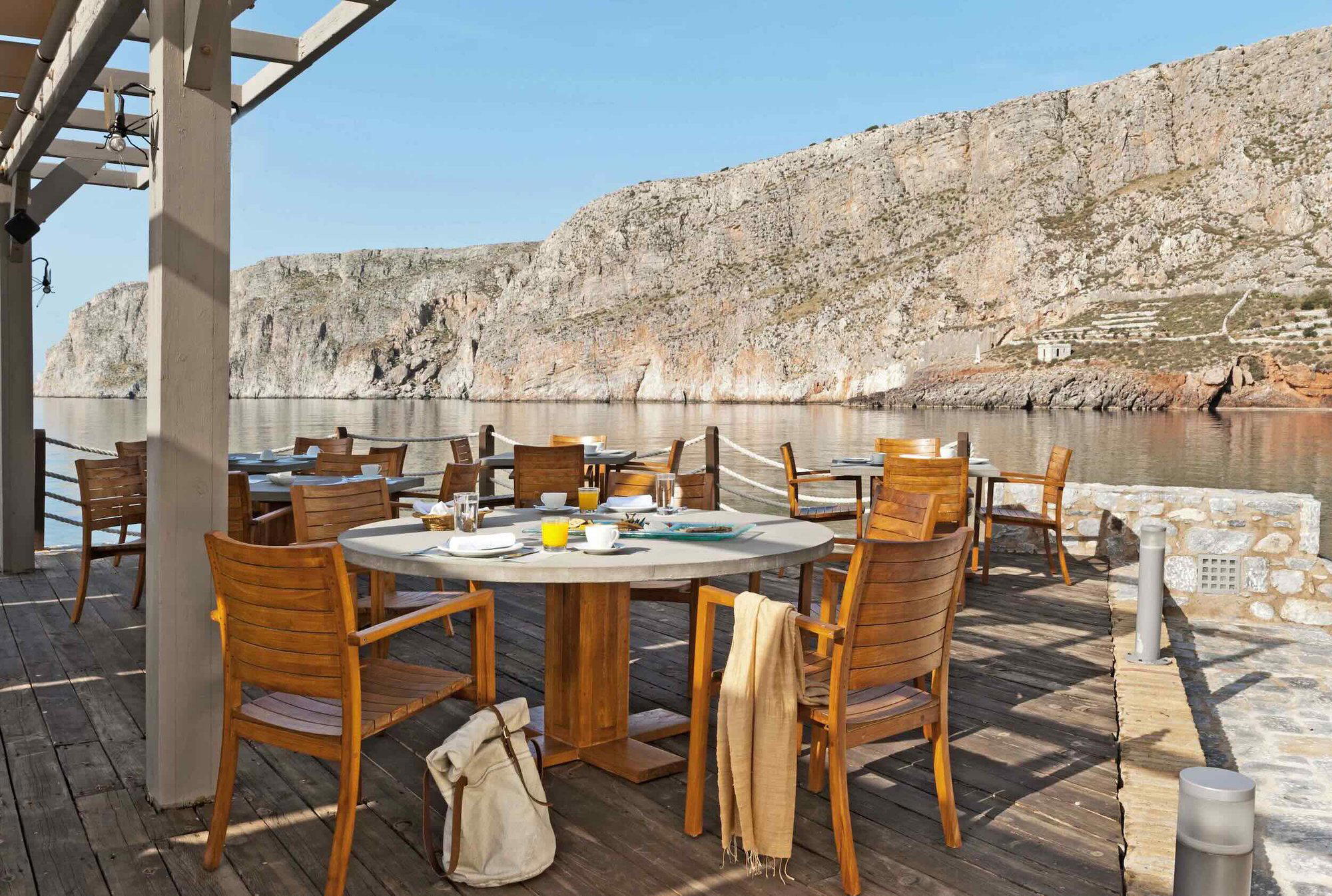
Where the Mani Peninsula Meets the Table
The deep Mani, the middle finger of the Peloponnese, has historically been among the more self-sufficient and geographically severe corners of Greece. Its villages traded in olive oil, capers, honey, and preserved meats not as artisanal affectation but as necessity, shaped by a landscape that offered little else. That history of enforced localism has left behind an ingredient culture with unusual integrity. When a property in this region builds its kitchen around what grows and is caught nearby, it is drawing on a tradition several centuries deep, not replicating a trend that arrived from Copenhagen or California.
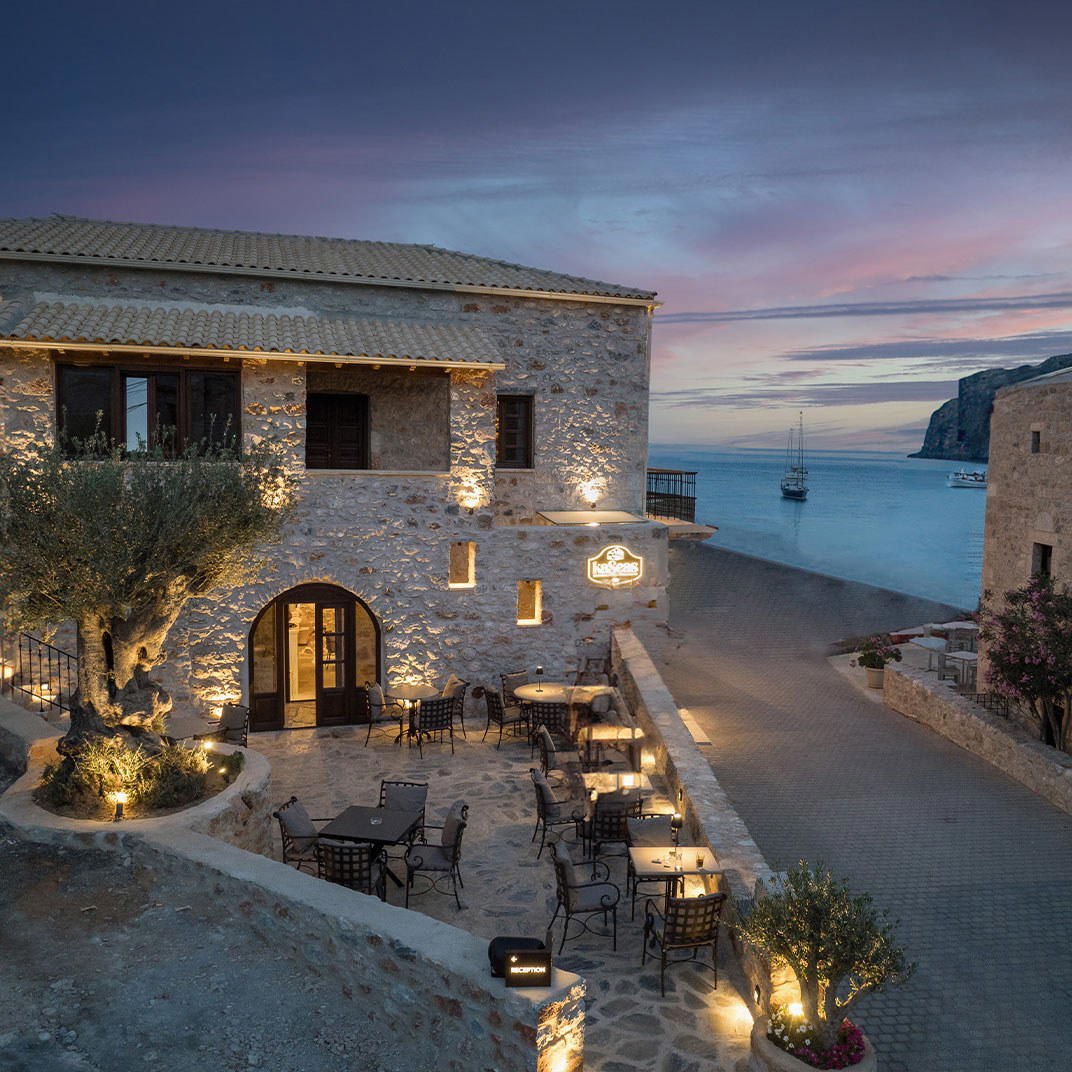
Hotel Kyrimai sits in Gerolimenas, a hamlet on the western flank of the outer Mani whose harbour is small enough that the fishing boats are visible from the dining tables. The building itself is a converted 19th-century merchant's warehouse, which means the structure pre-dates the vocabulary of boutique hospitality entirely. Stone walls, vaulted ceilings, and a direct relationship with the sea below are the architecture. The effect on arrival, particularly in the late afternoon when the light comes off the water at a low angle, is of somewhere that has not been designed so much as revealed.
The Source Logic Behind the Cooking
Regional Greek cuisine at this level is best understood through what does not appear on the plate. There is no ingredient flown in to add prestige. There are no protein formats imported from outside the regional food economy. The Mani produces some of Greece's most documented olive oils, PDO-protected and cold-pressed from Koroneiki olives grown on terraced groves that climb the hillsides above the coast. Those oils are not a garnish here; they are structural. Wild herbs, including thyme, oregano, and sage, grow without cultivation across the peninsula's rocky terrain, and their intensity in this dry, salt-laden air is measurably different from the same species cultivated further north.
The seafood supply follows the rhythms of the harbour rather than a wholesale distributor's catalogue. The Laconian Gulf, which borders this stretch of coastline, produces sea urchin, octopus, and smaller pelagic fish that form the backbone of a cooking tradition more closely related to subsistence than to gastronomy in the formal sense. What that produces at the table is cooking where the quality of the ingredient carries the weight, and technique plays a supporting rather than a transformative role. That restraint is not a style choice; it is a function of working with produce that does not need improvement.
This sourcing logic places the kitchen in an interesting position relative to the contemporary Greek restaurant scene. Properties like Delta in Athens and Selene in Santorini represent the end of the spectrum where Greek regional tradition is filtered through fine-dining technique and presentation. Hotel Kyrimai operates from the opposite premise: the tradition is the point, and the setting amplifies rather than reframes it. Neither approach is superior; they answer different questions about what Greek cooking is and where it is going.
The Setting as Part of the Experience
Gerolimenas is not a village that rewards visitors looking for a curated programme of activities. There is no spa circuit, no beach club, no organised excursion infrastructure of the kind that has become standard at coastal resorts elsewhere in the Mediterranean. What it offers instead is a particular quality of stillness that is genuinely difficult to locate in summer Greece. The Mani remains one of the few parts of the country where the rhythm of a morning belongs entirely to the traveller rather than to a hospitality schedule.
That context matters for how the hotel functions. A stay here is structured around the absence of distraction as much as around any specific amenity. The sea air referenced in accounts of the property is not a cliché in this geography: the combination of altitude changes, the absence of industry, and the Mediterranean wind patterns produces a clarity that is a physical fact of the location. It affects how long you want to sit over a meal and how seriously you take the glass of local wine in front of you.
How It Compares
Within Greece's coastal hotel and restaurant offer, the relevant comparable set is not the large-key island resorts. Properties like Myconian Utopia in Elia or Avaton in Halkidiki occupy a different market position, built around scale, amenity breadth, and international clientele. Hotel Kyrimai operates as a smaller, more specific proposition: limited keys, a defined geographical identity, and cooking that draws its authority from proximity to source rather than from technical ambition. The comparison that holds is with properties like Old Mill in Elounda or Etrusco in Kato Korakiana, where a specific regional tradition and a distinctive physical context are doing the primary work.
For reference points outside Greece, the logic is closer to properties like Olais in Kefalonia than to technically ambitious urban restaurants such as Le Bernardin in New York or Emeril's in New Orleans, which derive their authority from a different set of signals entirely.
Planning a Visit
At-a-Glance Comparison
Comparable venues nearby, for context on price, style, and recognition.
| Venue | Cuisine | Price | Notes |
|---|---|---|---|
| Hotel KyrimaiThis venue — the venue you are viewing | Modern Maniot Mediterranean | $$$$ | Not listed |
| Hotel Grande Bretagne | New Mediterranean Fine Dining | $$$$ | Syntagma |
| Hotel King George | Contemporary Greek Fine Dining | $$$$ | Syntagma |
| Feredini | Creative Greek-Mediterranean Fine Dining | $$$ | Oia |
| Deos | Modern Mediterranean with Japanese Fusion | $$$ | Psikhikón |
| Porto Zante Villas and Spa | Greek Mediterranean & Asian Fusion | $$$$ | Tragaki |
Recognition history
Dated appearances from independent guides and award organizations, with the underlying list record or original source where available.
We're Smart World 1 Radish
We're Smart World
Continue exploring
More in Peloponese
Restaurants in Peloponese
Browse all →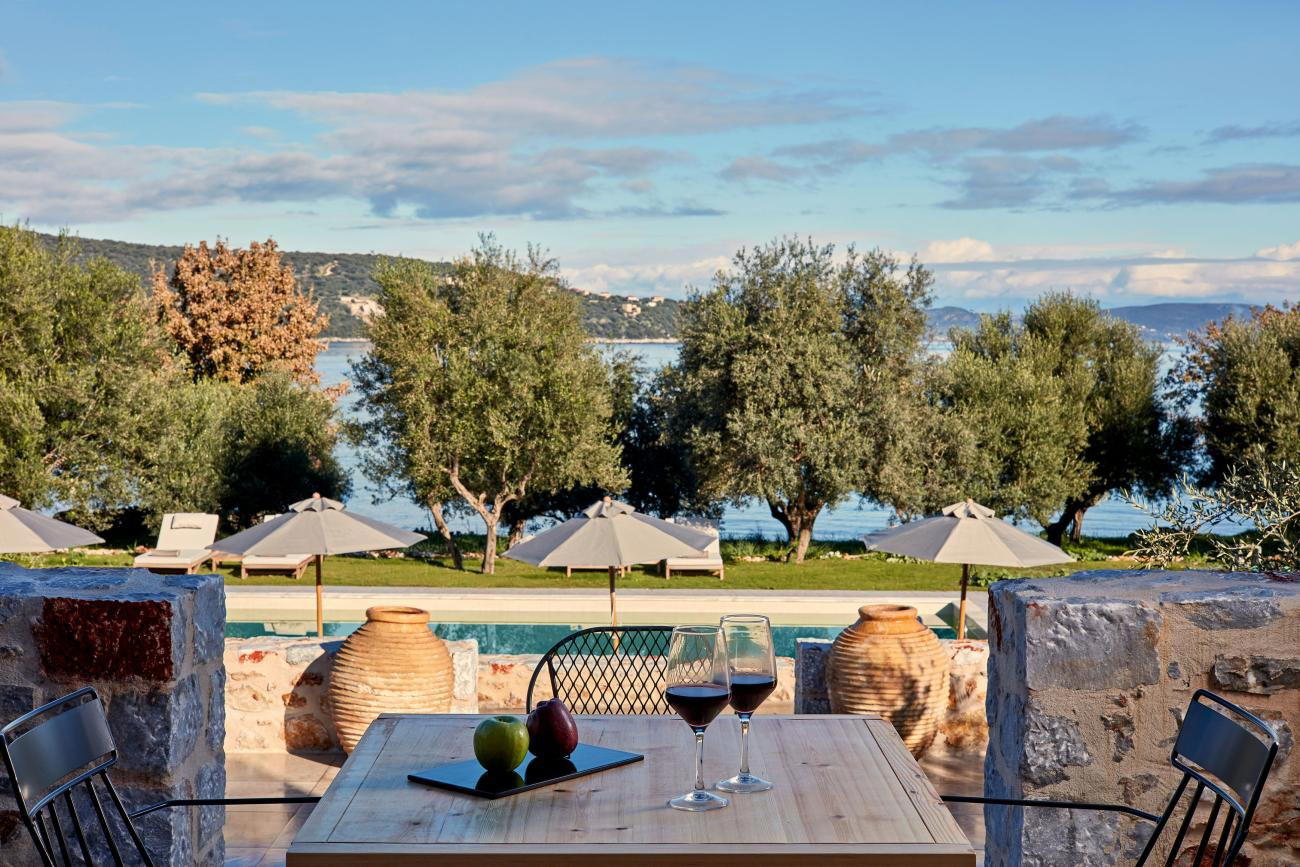
At a Glance
- Romantic
- Scenic
- Elegant
- Rustic
- Intimate
- Cozy
- Date Night
- Special Occasion
- Waterfront
- Terrace
- Hotel Restaurant
- Historic Building
- Extensive Wine List
- Local Sourcing
- Waterfront
Romantic stone-and-wood waterside setting with candlelit dining room, log fires in winter, and serene sea views from terraces.