
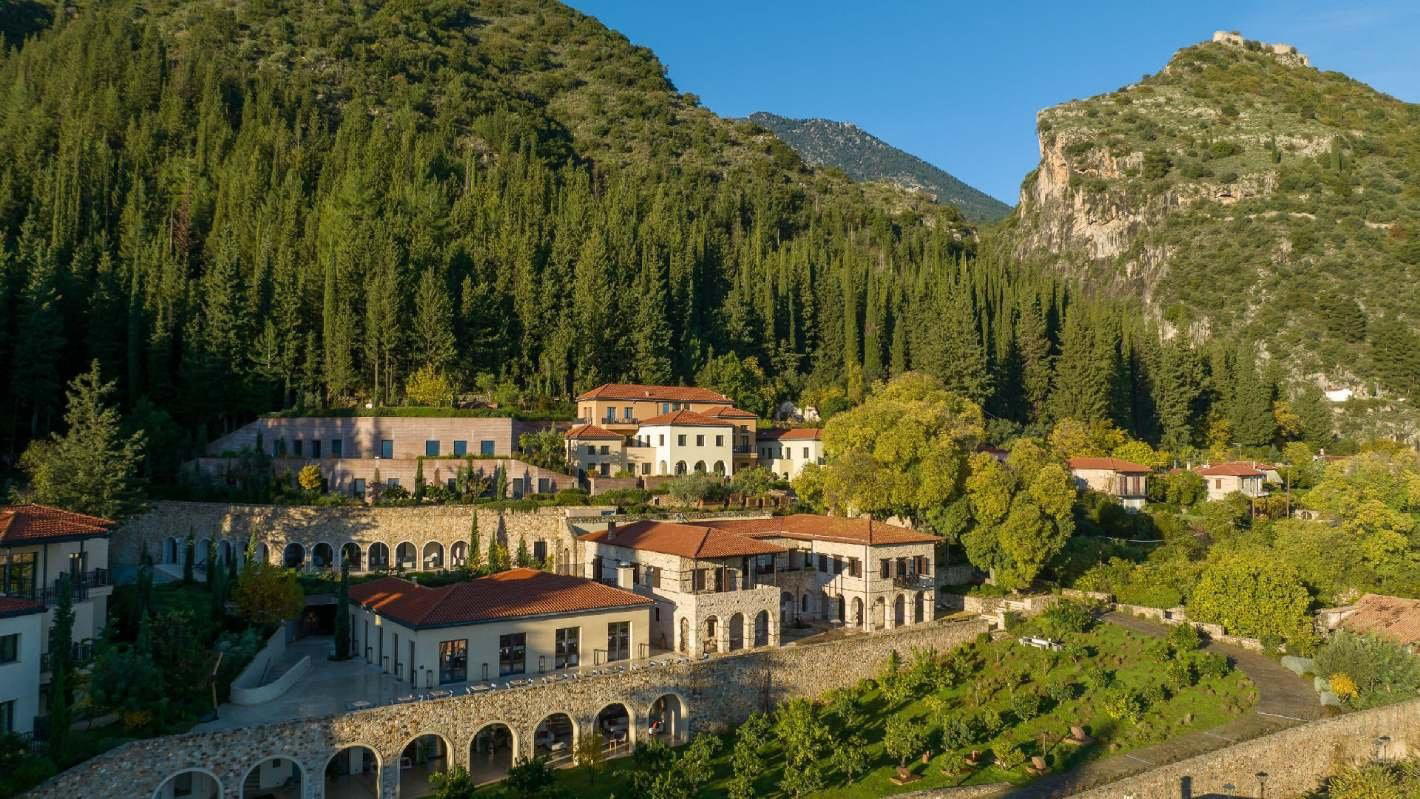
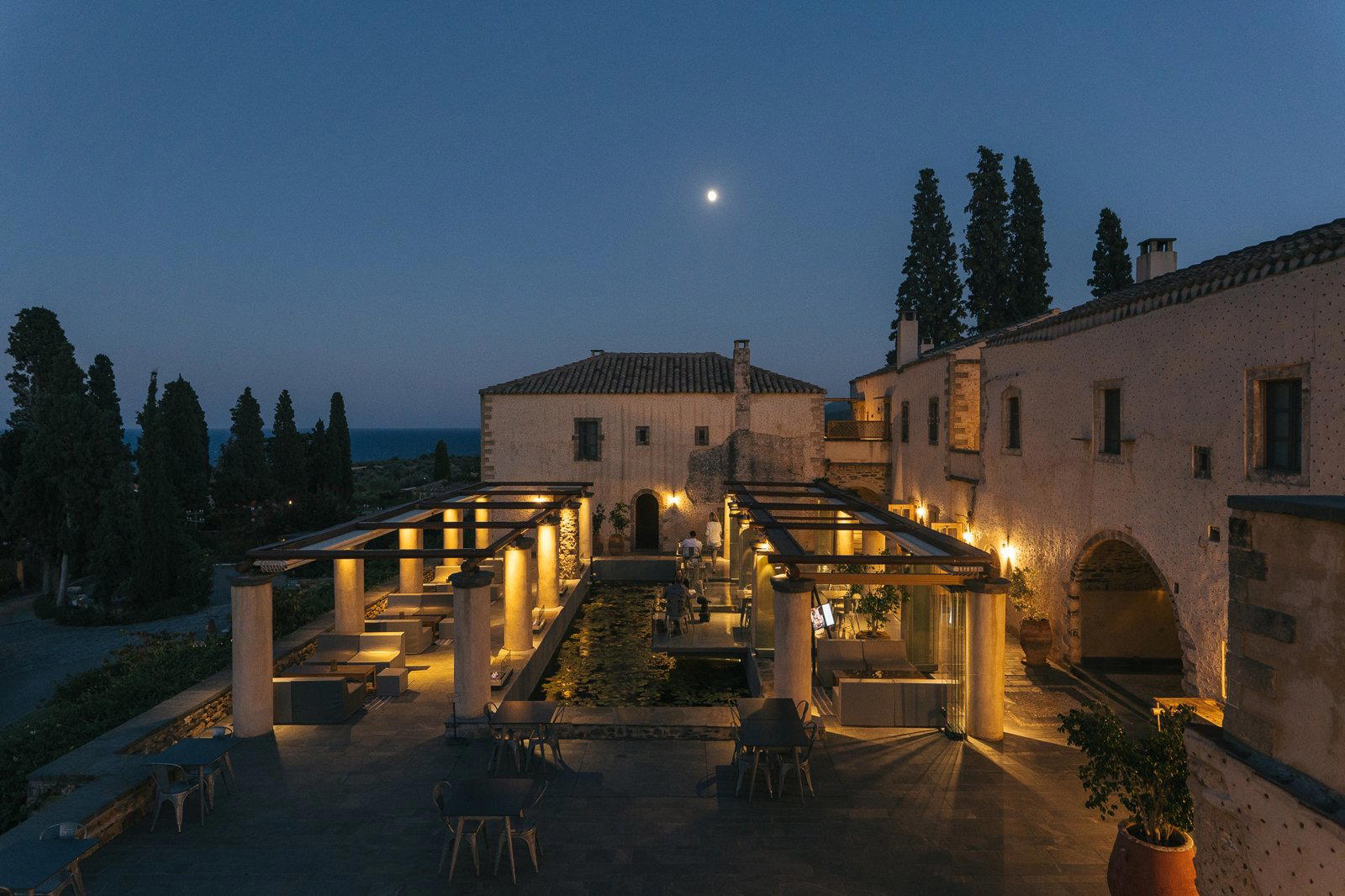
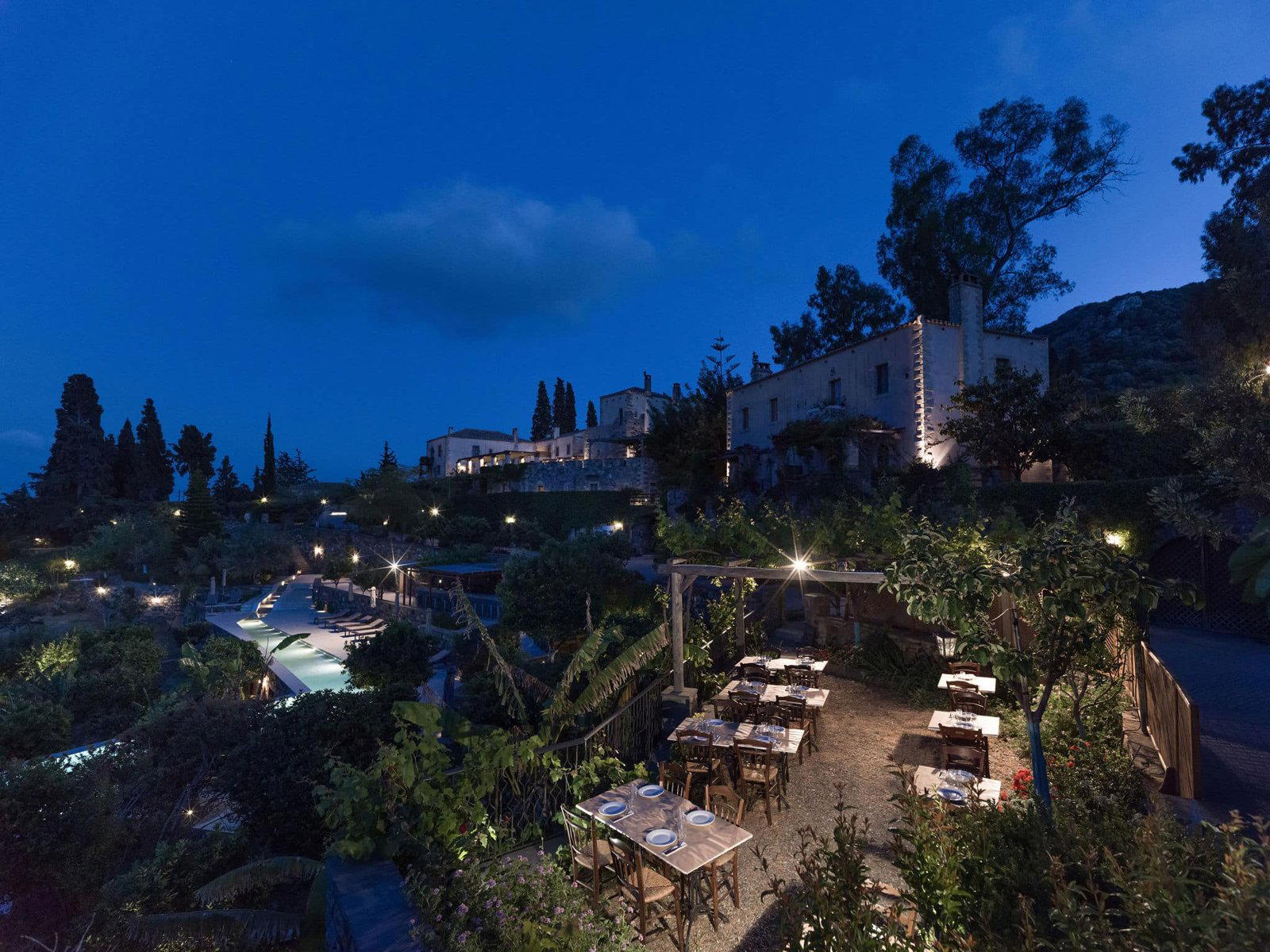
Built from the design language of the Mani Peninsula's ancient stone towers, 100 Rizes Seaside Resort sits above the Laconic Gulf in Gytheio, translating a rugged regional vernacular into a property that reads as village rather than resort. It occupies a corner of the southern Peloponnese that most Aegean-focused travellers overlook, placing it in a different competitive tier from the island properties that dominate Greek luxury travel.
Pearl is the En Primeur Club membership app — saves, bookings, and concierge access live there. Same editors, same standards.
- Address
- Unnamed Road, Anatoliki Mani 232 00
- Phone
- +30 2731 200307
- Website
- 100rizesseasideresort.com
- Directions
- Get directions
 Saves & bookings on Pearl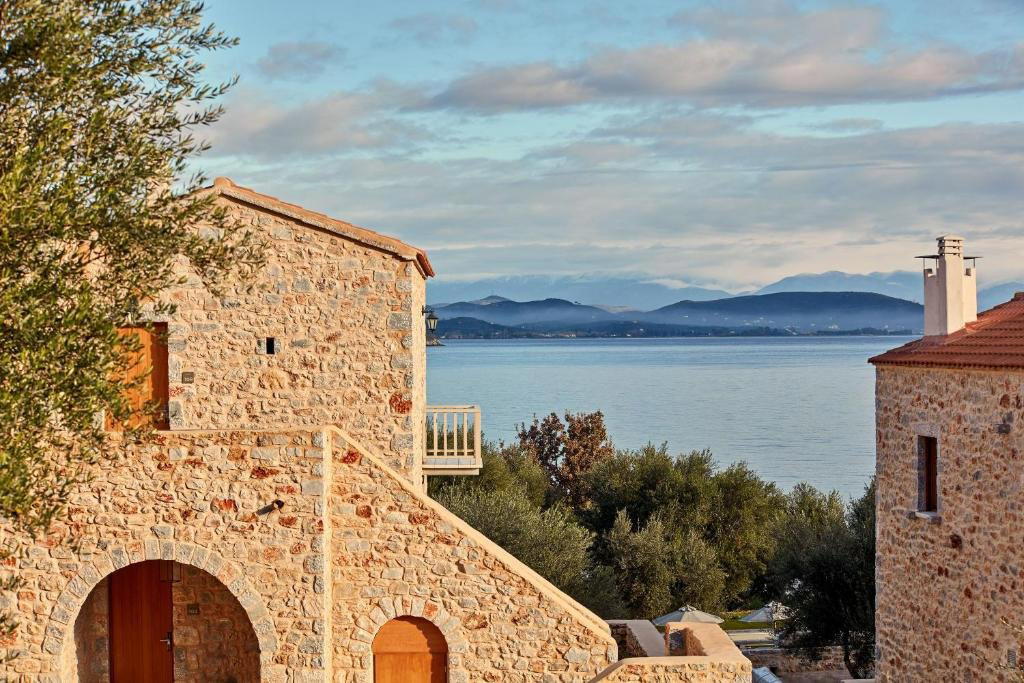
Stone, Sea, and the Mani Peninsula's Architectural Logic
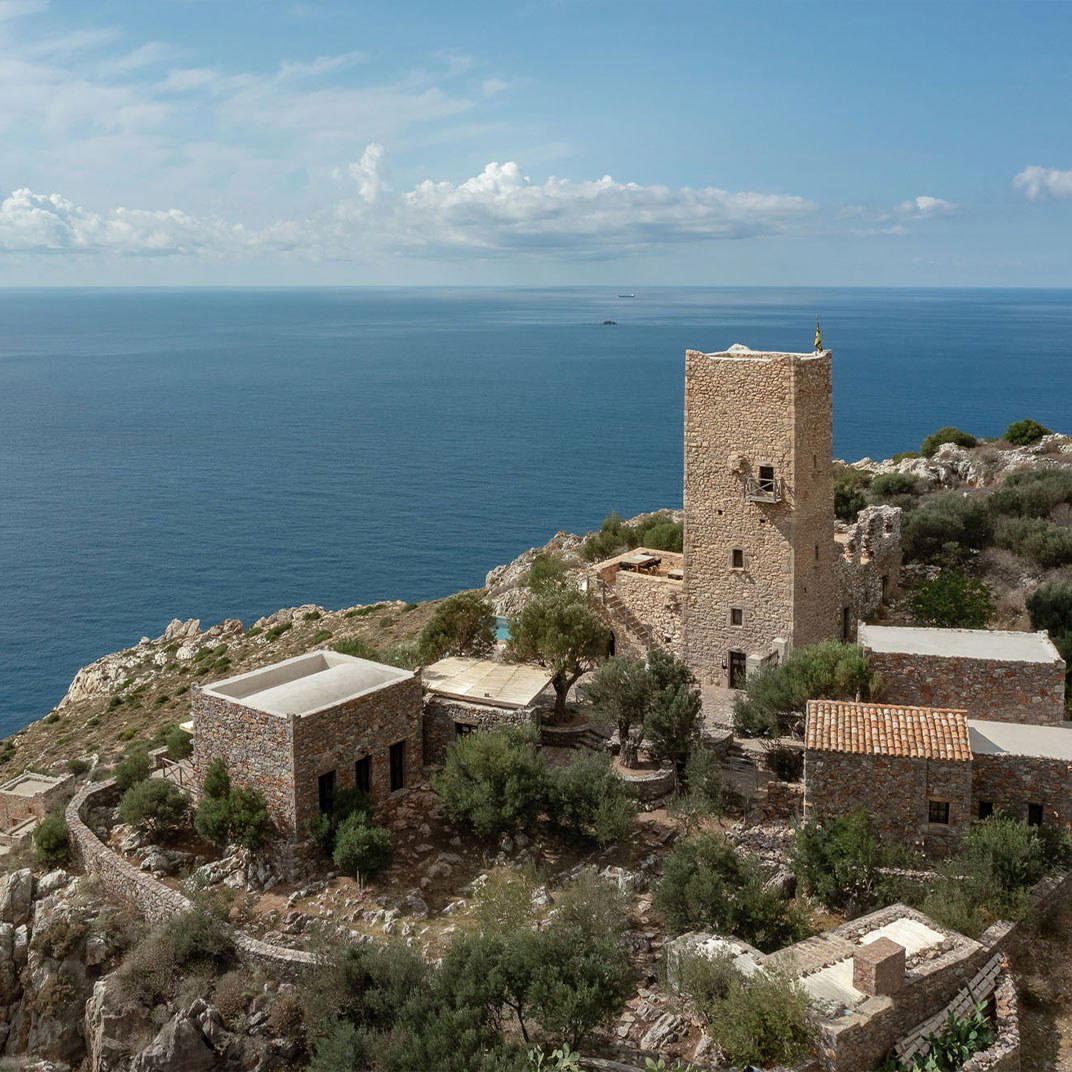
The southern Peloponnese operates on a different register from the whitewashed-Cycladic grammar that defines Greece's luxury hospitality image abroad. The Mani Peninsula, the middle finger of the Peloponnesian hand pointing into the Mediterranean, has its own architectural language: dense grey-stone tower houses built for defence and clan identity, structures that read as fortifications from a distance and as labyrinthine domestic spaces up close. This is the visual and material vocabulary that 100 Rizes Seaside Resort draws from, and the decision matters architecturally more than it might appear. Where many Greek resort properties default to the Santorini aesthetic because it photographs well and markets easily, a property anchored in Mani stonework is making a harder, more specific design argument.
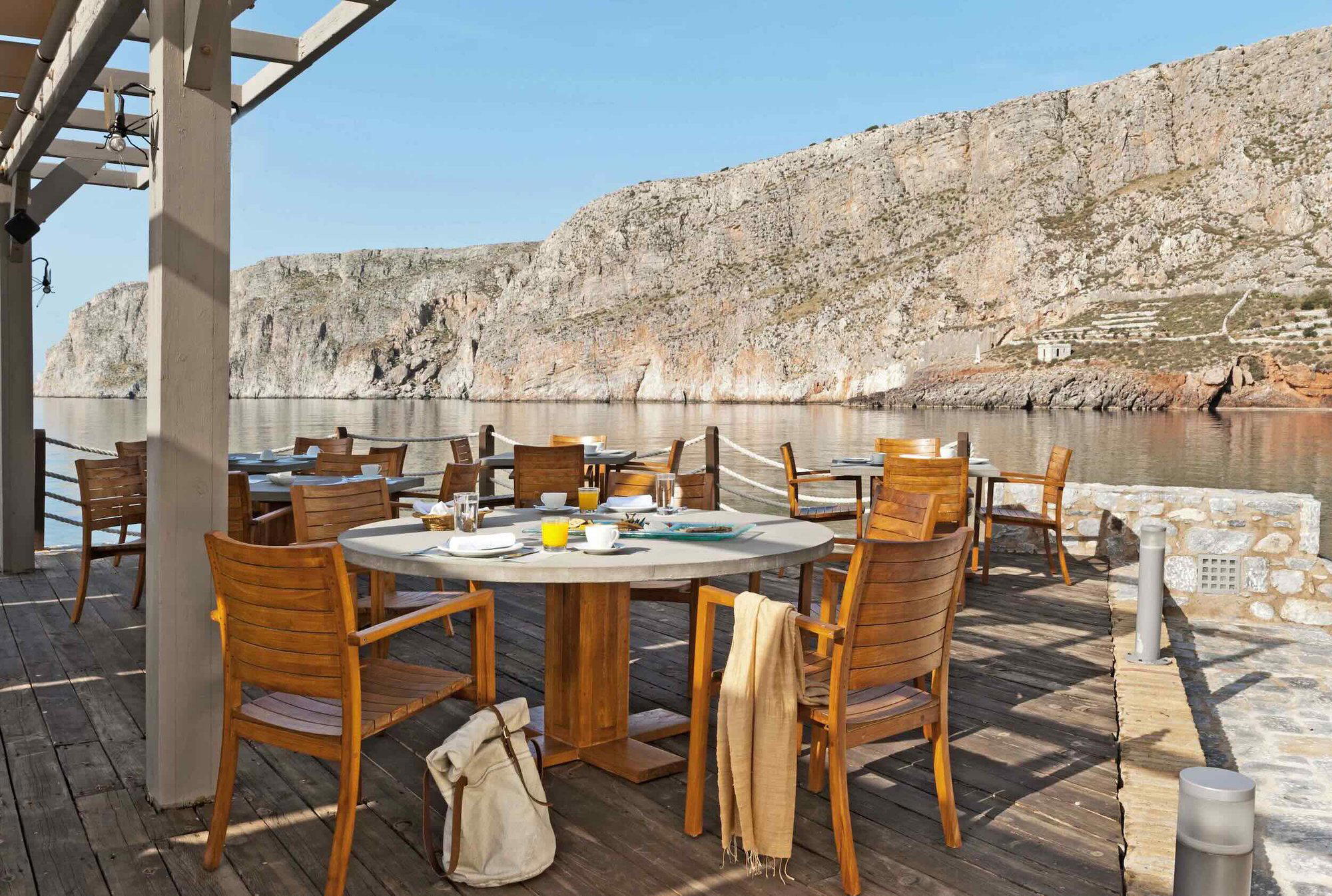
That argument extends to the resort's relationship with its site above the Laconic Gulf. The views from the property frame the same waters that defined trade, warfare, and identity across the ancient Spartan world, a context that Aegean island resorts simply cannot offer. The town of Gytheio below served as the principal harbour for ancient Sparta and retains a working-port character that distinguishes it from purpose-built resort destinations. Arriving here means encountering a place with economic and historical layers independent of tourism, which changes the texture of a stay considerably. For travellers comparing options across southern Greece, this matters: Amanzoe in Porto Heli delivers Aman-standard isolation with a Doric architectural vocabulary; 100 Rizes operates closer to the inhabited town, within a living regional context.
The Resort-as-Village Format in the Greek Context
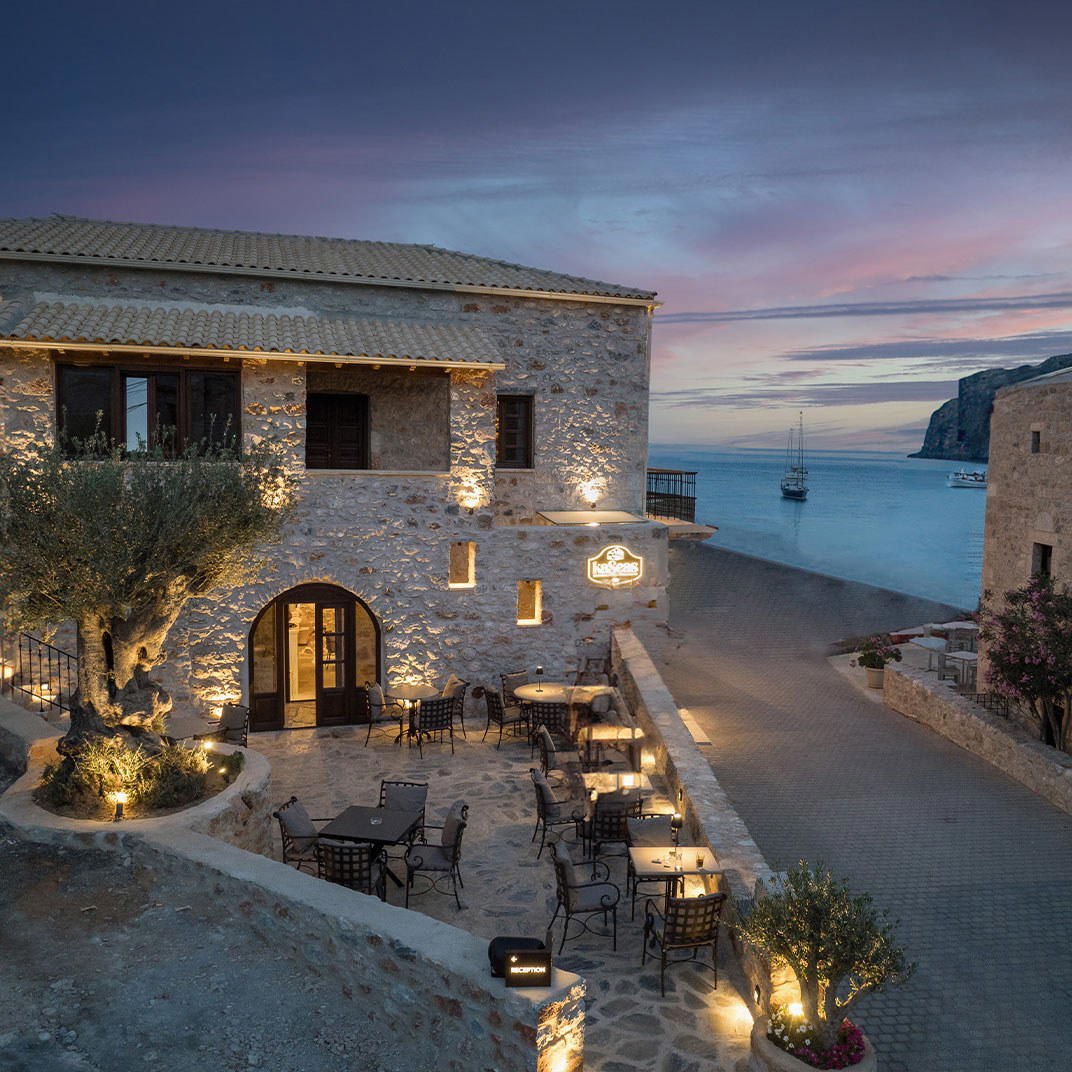
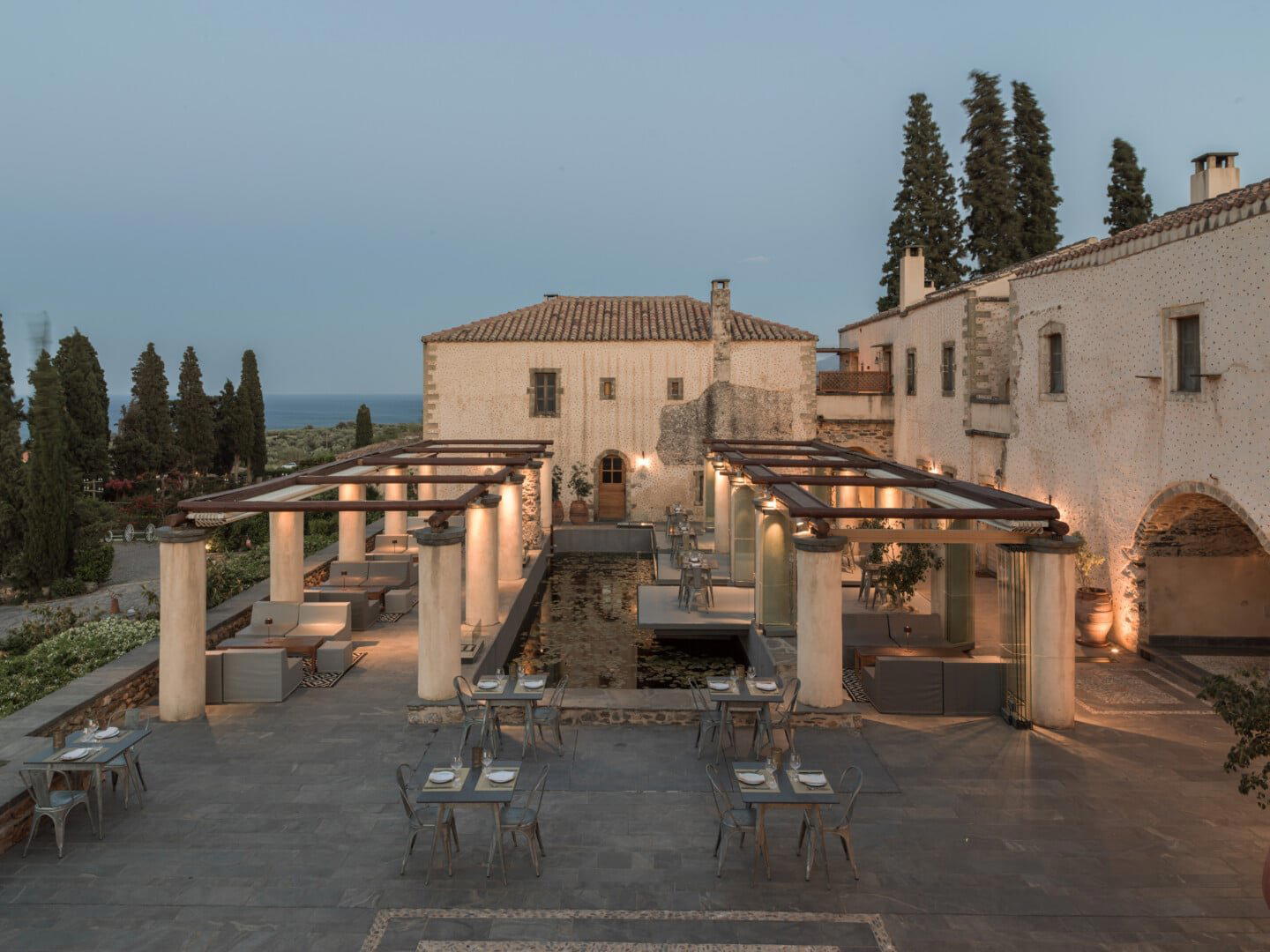
Greek hospitality has increasingly split between two formats. The first is the large, amenity-saturated resort that operates as a self-contained world, oriented inward toward pools, restaurants, and programming. The second is the smaller, design-led property that treats the surrounding territory as part of the offer, with architecture and materials that connect to place rather than transcend it. 100 Rizes belongs to the latter format, with a layout described as evoking a traditional Grecian village rather than a conventional hotel block. That structural choice, distributing accommodation across multiple buildings with communal outdoor spaces between them, aligns it with properties like Amoudi Villas in Oia, where the dispersed layout is itself the primary spatial experience.
The Mani's stone building tradition is not decorative pastiche in this context. The region's tower houses, some dating to the Byzantine period and built up through the Ottoman era, represent among the more distinctive vernacular building traditions in the Mediterranean. Using that language in a contemporary resort requires a degree of material honesty to work: rough-cut stone, controlled openings that manage the southern Greek light, and a massing that sits with rather than against the terrain. Properties elsewhere in Greece, including Acro Suites in Agia Pelagia and Pegasus Suites in Fira, work with the geological character of their sites in comparable ways, though from entirely different regional traditions.
Gytheio as a Destination: What the Location Means in Practice
Gytheio sits at the northern edge of the Mani, roughly equidistant between the architectural set pieces of the Deep Mani to the south and the Byzantine monastery city of Mystras to the north. That geographic position gives a stay here a different structure from a beach-only resort: the surrounding territory rewards movement. The Diros Caves, among the more extensive subterranean lake systems in Europe, lie within day-trip range. Areopoli, the traditional capital of the Mani and the town where the Greek War of Independence was declared in 1821, sits close enough to visit as an afternoon. For travellers building an itinerary through the Peloponnese, Gytheio functions as a logical base in a way that the more remote Deep Mani villages cannot.
In terms of Greek island alternatives, the property occupies a different category entirely from Cycladic or Cretan resort options. Properties like Le Méridien Sissi Crete or Abaton Island Resort and Spa in Chersonisos serve a market oriented around established Cretan tourism infrastructure. 100 Rizes addresses a traveller for whom the mainland Peloponnese, specifically its less-trafficked southern coast, is the draw. That is a smaller, more self-selecting audience, which tends to produce a different kind of property. For the broader Greece picture across the mainland and islands, our full Gytheio guide maps out the regional context in more detail.
How It Sits Within the Greek Luxury Tier
Greek luxury accommodation has expanded its reference points considerably over the past decade. The market used to read in a fairly narrow band: Athens grande dame hotels like Four Seasons Astir Palace Hotel Athens, and island properties that competed on cliff-edge drama and infinity-pool photography. The segment has since broadened to include design-led boutique properties anchored in regional architectural identity, a category that sits closer to Eréma in Milos or Gundari in Petousis than to the large-footprint international properties. 100 Rizes positions within that smaller, place-specific tier. Its competitive comparable set is not the Aegean mega-resort but the growing number of Greek properties using vernacular design and territorial specificity as their primary differentiator.
Across the wider Aegean and Greek mainland picture, properties like Andronis Minois in Paros, Anemos Luxury Grand Resort in Chania, and Archipelagos Hotel in Mykonos each anchor their identity in a specific island context. The Mani, as a mainland peninsula with a fiercer historical and topographical character, offers a different ground entirely. Whether that distinction justifies a stay depends on what the traveller is actually seeking. For those whose interest lies in Byzantine history, fortified vernacular architecture, and a coastline without the social density of Mykonos or the mass-tourism infrastructure of central Crete, the Gytheio location becomes a reason to choose 100 Rizes rather than a compromise.
Planning a Stay
The Peloponnese is most comfortably visited between April and October, with the shoulder months of May and September offering cooler temperatures and reduced visitor numbers across the region. Gytheio is accessible by road from Kalamata Airport, which receives seasonal European flights, or overland from Athens via the E65. The drive from Athens through the Peloponnese takes approximately three to three and a half hours by one direct route. Given the territory on offer, building at least three nights into an itinerary here allows meaningful engagement with the Mani's southern villages, Mystras, and the coastline around the Laconic Gulf. Further afield in Greece, properties like Ajul Luxury Hotel and Spa Resort in Halkidiki and Alkyna Lifestyle Beach Resort in Corfu serve the northern Greek peninsula and Ionian coast respectively, for travellers combining regions.
Comparable Spots, Quickly
Comparable venues nearby, for context on price, style, and recognition.
| Venue | Cuisine | Price | Awards | Notes |
|---|---|---|---|---|
| 100 Rizes Seaside ResortThis venue — the venue you are viewing | luxury seaside resort blending traditional Mani tower architecture with modern design | $$$$ | 4-Star | Not listed |
| The Zillers, Athens | Historic neoclassical boutique hotel blending heritage and contemporary luxury | $$$$ | 4-Star | Plaka |
| One&Only Aesthesis | Mid-century modern resort with nostalgic glamour and eco-friendly design | $$$$ | 5-Star | Glyfada |
| Contessina Hotel | Contemporary luxury resort with minimalist-chic design and compound-like layout emphasizing privacy and relaxation. | $$$$ | 5-Star | Tsilivi |
| Domes Novos Santorini | Cycladic minimalism with volcanic textures and serene sunlit spaces | $$$$ | 5-Star | Tholos |
| Nikki Beach Resort & Spa Porto Heli | Barefoot luxury blending modern Grecian village aesthetics with Nikki Beach's sleek, white-hot glamour. | $$$$ | 5-Star | Porto Heli |
Recognition history
Dated appearances from independent guides and award organizations, with the underlying list record or original source where available.
Small Luxury Hotels of the World Member
Small Luxury Hotels of the World
At a Glance
- Romantic
- Scenic
- Elegant
- Sophisticated
- Quiet
- Honeymoon
- Romantic Getaway
- Wellness Retreat
- Weekend Escape
- Beachfront
- Infinity Pool
- Panoramic View
- Pool
- Spa
- Fitness Center
- Sauna
- Massage
- Wi Fi
- Room Service
- Concierge
- Restaurant
- Waterfront
- Pool
- Spa
- Fitness Center
- Sauna
- Massage
- Wi Fi
- Room Service
- Concierge
- Restaurant
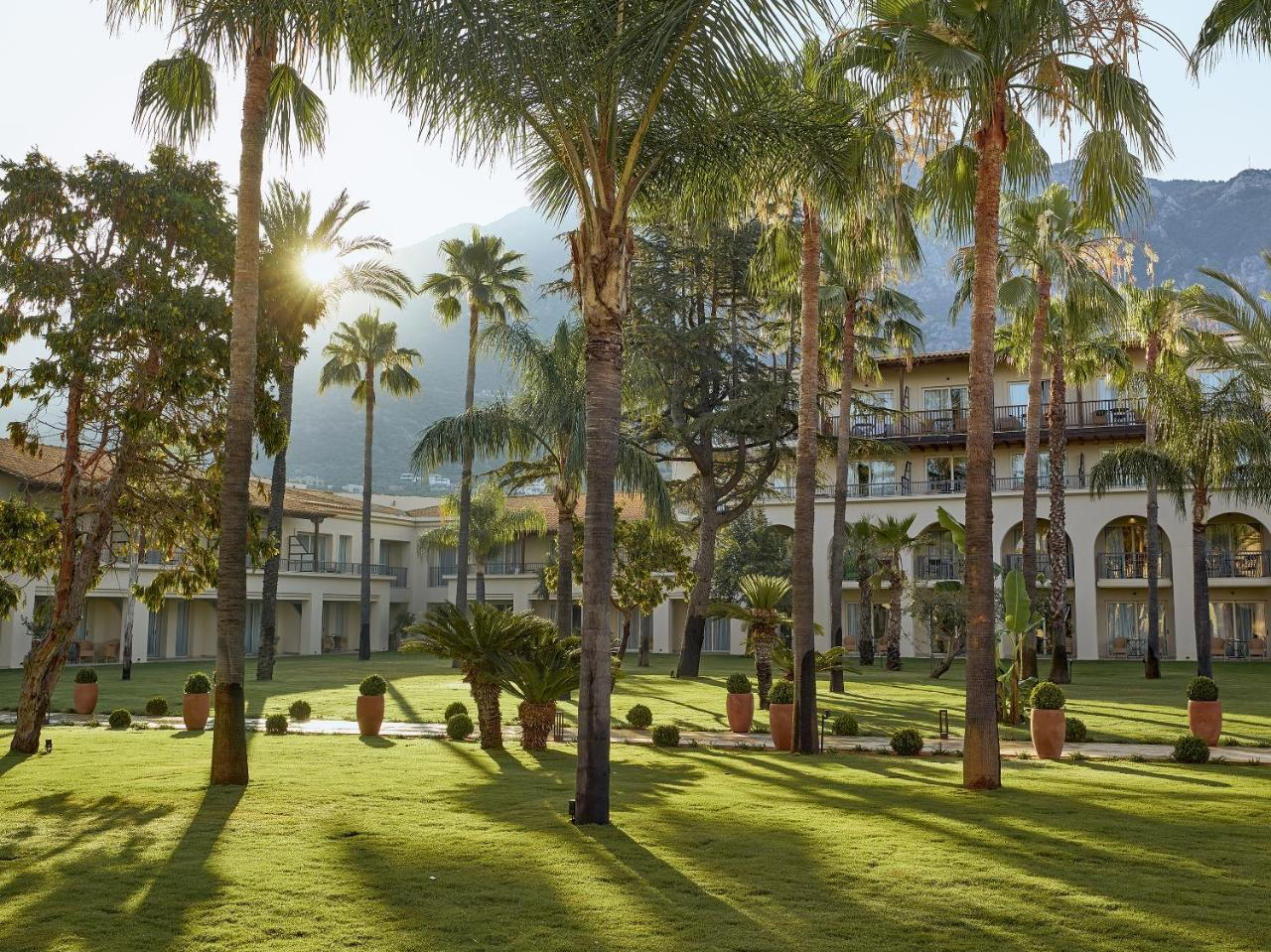
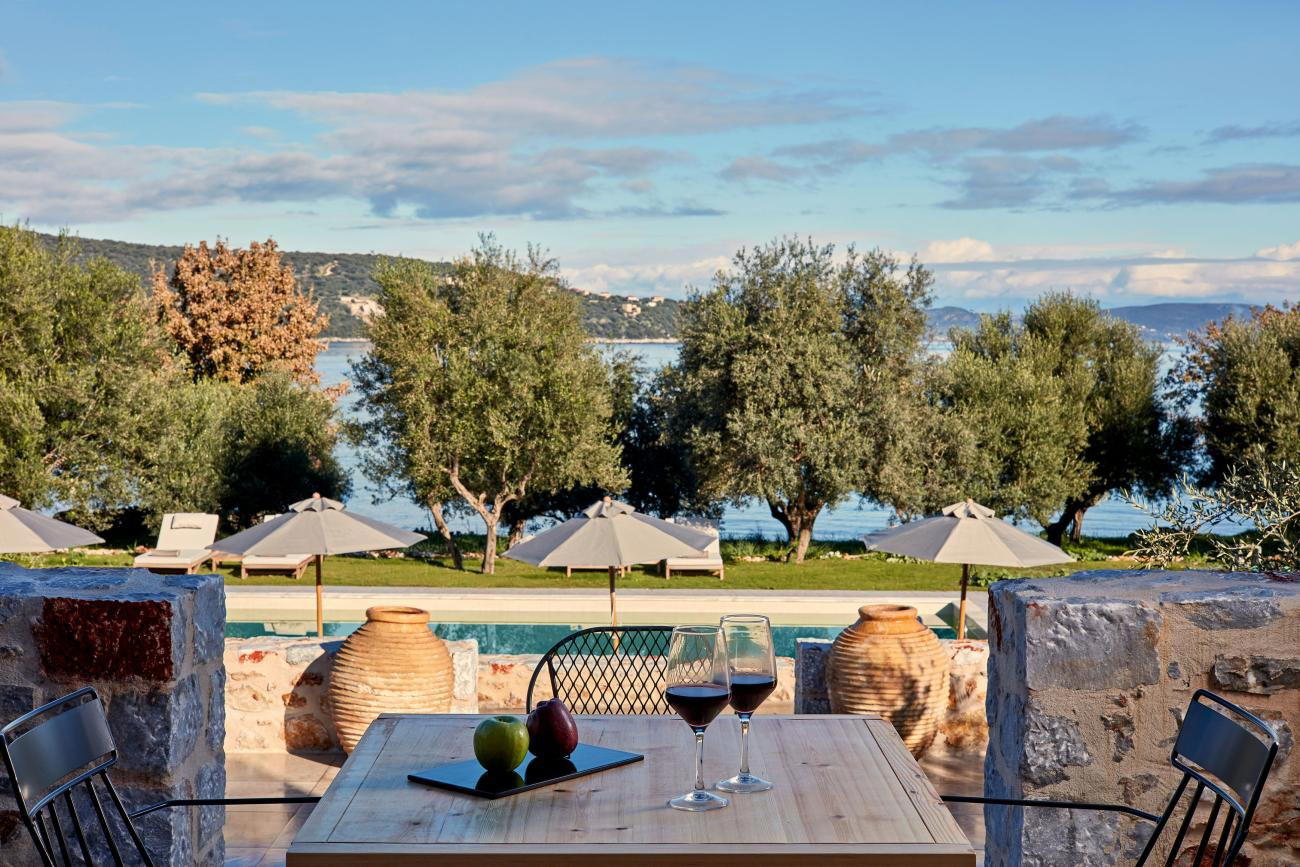
Serene and relaxing atmosphere with natural surroundings, crystal-clear pool waters, and calming spa facilities.