Hor Poh Cuisine
.png)
Hor Poh Cuisine has served authentic Hakkanese food from an unassuming shopfront in Taman Sri Sinar for over two decades, earning a Michelin Bib Gourmand in 2025. The lui cha, a sheeny green broth of ground sesame, peanuts, and mint served over steamed rice, is among the more faithful renditions of this Hakka staple in Kuala Lumpur. Prices sit firmly at street-food level, and the room fills quickly.
 Discover on Pearl
Pearl is the En Primeur Club membership app — saves, bookings, and concierge access live there. Same editors, same standards.
- Address
- 36, Jalan 6/38d, Taman Sri Sinar, 52100 Kuala Lumpur, Wilayah Persekutuan Kuala Lumpur, Malaysia
- Phone
- +60 12-233 4931
- Website
- facebook.com
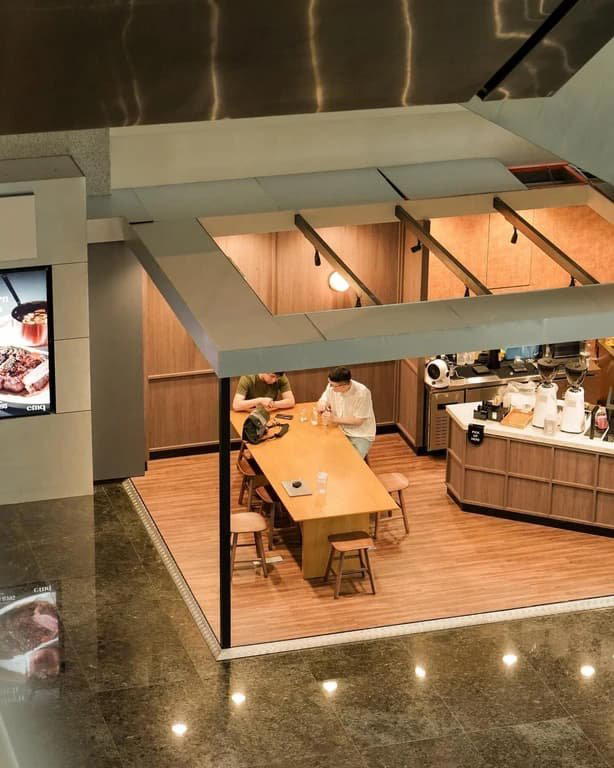
Twenty Years of Hakka, One Neighbourhood Shopfront
Hor Poh Cuisine is a casual restaurant in Kuala Lumpur serving authentic Hakka cuisine, with street-food pricing and a Michelin Bib Gourmand 2025 recognition. That context matters, because Hor Poh Cuisine has spent more than twenty years operating on those terms: no tourist foot traffic, no social-media location tags in the early years, no glossy fit-out designed to travel well on a phone screen. What drew people here, and what continues to draw them, is the cooking itself, specifically, a style of Hakka food that has fewer practitioners in KL than the city's broader Chinese dining scene might suggest.
Hakkanese cuisine occupies a distinct position within Malaysia's Chinese food traditions. Unlike the Cantonese and Hokkien cooking that dominates much of the country's hawker culture, Hakka food reflects the agricultural and migratory history of the Hakka people, who settled across Peninsular Malaysia in significant numbers during the nineteenth and early twentieth centuries. The flavour register is earthy, fermented, and herb-forward rather than sweet or umami-rich in the Cantonese sense. Dishes like lui cha, the pounded herb tea-soup that Hor Poh has built its reputation around, connect directly to that tradition, predating restaurant culture entirely. For much of the twentieth century, this was food made at home or at community gatherings, not sold in shopfronts. That Hor Poh has been selling it commercially for over two decades, and doing so to a largely local clientele, says something about both the shop's consistency and the depth of Hakka identity in this part of the city.
The Dish the Shop Is Known For
Lui cha is the kind of preparation that resists casual approximation. The base is ground: sesame seeds, peanuts, and mint leaves pounded together with additional herbs depending on the cook, producing a thick paste that is then thinned with hot water into a soup with a deep, opaque green colour and a surface sheen that signals the fat content of the sesame and peanut. At Hor Poh, this is served alongside steamed rice and an array of separately prepared toppings, typically blanched vegetables, preserved radish, tofu, and other components that the diner either combines into the bowl or takes alongside. The flavour is nutty, slightly bitter from the fresh herbs, and aromatic in a way that reads as clean rather than heavy. It is a preparation that rewards attention rather than speed, which perhaps explains why it has stayed a niche item rather than migrating into mainstream KL dining.
The Hor Poh dumpling is the second item the shop has become known for: a thin-skinned wrapper around a filling of dried tofu, garlic, and pickles. The use of pickled and fermented ingredients inside the filling reflects a Hakka preservation instinct that runs through much of the cuisine. The garlic presence is not subtle. These are not dumplings calibrated for a cautious palate, and that directness is precisely what the regulars come back for.
How the Shop Has Aged Into the Michelin Frame
The 2025 Michelin Bib Gourmand recognition arrives at a particular moment for this type of KL venue. Michelin's Malaysia guide has increasingly acknowledged the street-food and shophouse tier alongside the fine-dining rooms, Dewakan and Beta represent the starred end of that spectrum, while the Bib Gourmand category is where places like Hor Poh sit: consistent, affordable, and recognisable to food-literate locals long before any guide takes notice. The award does not change what the shop does. It changes who knows about it.
What is notable about Hor Poh's trajectory is that the shop has not evolved toward broader accessibility in the way that many long-running ethnic-specialist venues do when external recognition arrives. The cooking has not been softened or reframed for a new audience. The address remains the same, the price point remains at street-food level (single-dollar pricing for most items), and the format remains a simple shopfront where turnover is high and the room fills quickly. In a city where fine-dining venues such as DC. by Darren Chin, Molina, and Ling Long represent a very different register of ambition and price, Hor Poh's persistence at the affordable end of the Michelin-recognised tier is its own kind of statement. The shop has effectively aged into legitimacy without seeking it.
The Google rating of 4.3 across 821 reviews reflects that local esteem. A rating sustained at that level over a large sample at a neighbourhood shopfront is harder to earn than at a destination restaurant where guests arrive already primed to enjoy themselves. Hor Poh's reviewers are largely regulars and local diners rather than tourists ticking off a guide entry, which makes the aggregate score a more meaningful signal of day-to-day quality.
Hakkanese in a Regional Frame
Lui cha and Hakka dumpling traditions exist across the diaspora, and comparing how the cuisine travels is instructive. Hakkanese cooking in Taiwan, where venues like May Snow Hakka Food in Taipei and Niou Jia Juang in Taichung carry similar traditions, tends to be lighter in fermented flavours and more adapted to a broader dining public. The Malaysian Hakka tradition, shaped by a different migration history and a different set of available ingredients, has retained more of its original character. Hor Poh sits within that local lineage rather than a pan-diaspora one.
For comparison across the wider EP Club Malaysia network, Auntie Gaik Lean's Old School Eatery in George Town and Bee See Heong in Seberang Perai demonstrate how Malaysia's older Chinese culinary traditions hold strongest outside the fine-dining tier and in neighbourhoods that have remained residentially stable over decades. The Planters at The Danna in Langkawi points to an entirely different end of the Malaysian dining spectrum.
Planning a Visit
Hor Poh Cuisine sits at 36, Jalan 6/38d in Taman Sri Sinar, roughly within the mid-ring zone to the northwest of Kuala Lumpur city centre. The address is not walkable from central KL; a rideshare is the practical option from most hotel locations, and the journey is direct from Bangsar or Damansara-area accommodation. The shop operates at street-food pricing, this is a cash and low-cost category visit, not a reservation-required affair. The room fills during lunch and dinner hours, so arriving slightly outside peak times reduces waiting.
Awards and Standing
Comparable venues nearby, for context on price, style, and recognition.
| Venue | Cuisine | Price | Awards | Notes |
|---|---|---|---|---|
| Hor Poh CuisineThis venue — the venue you are viewing | Authentic Hakka Cuisine | $ | Bib Gourmand | |
| Jalan Ipoh Claypot Chicken Rice | Traditional Charcoal Claypot Chicken Rice | $ | Bib Gourmand | Kampong Batu Muda Tambahan |
| Nam Heong Chicken Rice (City Centre) | Traditional Hainanese Chicken Rice | $ | Bib Gourmand | City Centre |
| Wong Mei Kee | Cantonese Roast Meats | $ | Bib Gourmand | Bukit Bintang |
| Elegant Inn | Hong Kong Cantonese | $$$ | Michelin Plate | Kampong Baharu |
| Sek Yuen | Traditional Cantonese | $$ | Bib Gourmand | Pudu |
Continue exploring
More in Kuala Lumpur
Restaurants in Kuala Lumpur
Browse all →
Bars in Kuala Lumpur
Browse all →




At a Glance
- Rustic
- Lively
- Hidden Gem
- Casual Hangout
- Group Dining
- Family
Simple, no-frills casual dining setting with approximately 15 tables; clean and comfortable with a bustling neighborhood atmosphere, especially during peak hours.