Homestead
Fred and Elizabeth Sassen brought complementary résumés to Homestead's open kitchen on Piedmont Avenue: Fred had worked at Farallon and Camino, Elizabeth at Farallon and Waterbar, and together they built a neighborhood restaurant around the kind of seasonal Californian cooking that changes with the market rather than the marketing cycle. The menu shifted daily, which meant regulars returned not out of habit but out of genuine curiosity about what the kitchen was producing that week. The baked ricotta, made in-house and served with homemade pita, house-cured prosciutto, seasonal fruit, and salad, drew consistent attention from local press as the dish that best illustrated the kitchen's approach: familiar comfort food executed with the discipline of a fine-dining background. Elsewhere on the menu, homemade tortillas with posole and chiles, squid, duck, and horchata appeared across documented coverage, suggesting a California pantry drawn from multiple culinary traditions without forcing a single identity onto the plate. The room itself reinforced the cooking's ethos. An open kitchen gave diners a direct view of the work, the light was reportedly generous, and the atmosphere read as warm rather than formal. Prices ran slightly above the neighborhood average, which local reviewers noted without treating as a deterrent, given the quality of sourcing and execution on offer. For a restaurant on a residential stretch of Piedmont Avenue, Homestead established itself quickly in Oakland's food conversation, earning favorable coverage from local press that described the food as well-executed and the restaurant as one that had made a name for itself in a short time. The Piedmont Avenue corridor has long supported independent restaurants over chains, and Homestead fit that context without coasting on it. The Sassens' combined background across some of the Bay Area's more technically demanding kitchens gave the operation a credibility that a purely neighborhood-comfort concept might not have carried at the same price point. For diners willing to accept a menu that offers no guarantees from one visit to the next, that unpredictability was the point.
- Address
- 4029 Piedmont Ave (at 40th St), Oakland, CA 94611
- Directions
- Get directions
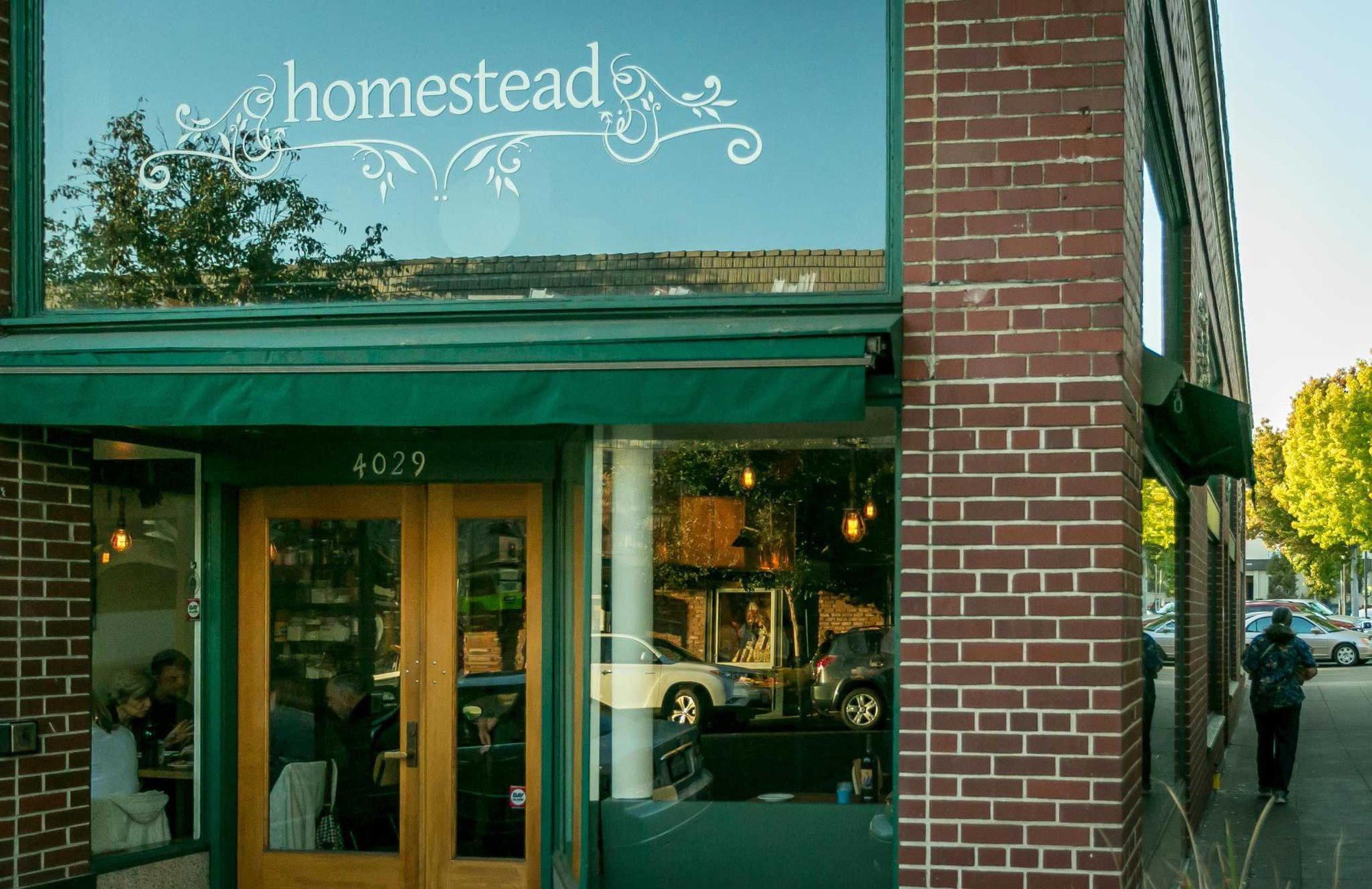
Fred and Elizabeth Sassen brought complementary résumés to Homestead's open kitchen on Piedmont Avenue: Fred had worked at Farallon and Camino, Elizabeth at Farallon and Waterbar, and together they built a neighborhood restaurant around the kind of seasonal Californian cooking that changes with the market rather than the marketing cycle. The menu shifted daily, which meant regulars returned not out of habit but out of genuine curiosity about what the kitchen was producing that week.
The baked ricotta, made in-house and served with homemade pita, house-cured prosciutto, seasonal fruit, and salad, drew consistent attention from local press as the dish that best illustrated the kitchen's approach: familiar comfort food executed with the discipline of a fine-dining background. Elsewhere on the menu, homemade tortillas with posole and chiles, squid, duck, and horchata appeared across documented coverage, suggesting a California pantry drawn from multiple culinary traditions without forcing a single identity onto the plate.
The room itself reinforced the cooking's ethos. An open kitchen gave diners a direct view of the work, the light was reportedly generous, and the atmosphere read as warm rather than formal. Prices ran slightly above the neighborhood average, which local reviewers noted without treating as a deterrent, given the quality of sourcing and execution on offer. For a restaurant on a residential stretch of Piedmont Avenue, Homestead established itself quickly in Oakland's food conversation, earning favorable coverage from local press that described the food as well-executed and the restaurant as one that had made a name for itself in a short time.
The Piedmont Avenue corridor has long supported independent restaurants over chains, and Homestead fit that context without coasting on it. The Sassens' combined background across some of the Bay Area's more technically demanding kitchens gave the operation a credibility that a purely neighborhood-comfort concept might not have carried at the same price point. For diners willing to accept a menu that offers no guarantees from one visit to the next, that unpredictability was the point.
In Context
Comparable venues nearby, for context on price, style, and recognition.
| Venue | Cuisine | Price | Notes |
|---|---|---|---|
| HomesteadThis venue — the venue you are viewing | Not listed | $$ | Not listed |
| Grand Lake Kitchen - Lake Merritt | Adams Point, American All-Day Cafe | $$ | Not listed |
| Mockingbird | Not listed | $$ | Downtown, Italian-inspired Northern California |
| Everett & Jones Barbeque | Produce and Waterfront, Oakland BBQ | $$ | Not listed |
| Smellys | Broadway Auto Row, Creole & Soul Food | $$ | Not listed |
| Homeroom | Temescal, American Mac and Cheese | $$ | Not listed |
Continue exploring
More in Oakland
Restaurants in Oakland
Browse all →
Bars in Oakland
Browse all →
Hotels in Oakland
Browse all →

At a Glance
- Cozy
- Intimate
- Date Night
- Casual Hangout
- Open Kitchen
- Farm To Table
- Local Sourcing
Current opening hours
- Monday
- Closed
- Tuesday
- Closed
- Wednesday
- 5–9 PM
- Thursday
- 5–9 PM
- Friday
- 5–9 PM
- Saturday
- 5–9 PM
- Sunday
- 5–9 PM
Hours can change for holidays and private events. Last verified .
Warm welcoming atmosphere with earthy, neighborhood bistro feel around the central hearth.